Introduction
When commercial buyers compare aquaponics proposals, they may hear two terms: coupled and decoupled. Both describe how water and nutrients move between the aquaculture and plant-production sides. They are not quality labels. Each model can be suitable when it matches the crop plan, fish plan, operating capability and risk tolerance of a specific project.
In a coupled system, water normally recirculates through fish and plant sections within one connected loop. In a decoupled system, the aquaculture and hydroponic loops can operate more independently; treated nutrient-rich water may move from fish to plants, while water does not necessarily return to fish. Real projects can also use hybrid arrangements. The purpose of this article is to help buyers ask better questions before committing to a layout.
The core principle remains the same: aquaponics is a managed ecosystem involving fish, plants and bacteria. FAO’s management overview is a useful reminder that equipment decisions must support biological management, not replace it.
The Short Answer for Buyers
Choose a coupled approach when you want a simpler shared-water operating model, your fish and plant targets can work within common water-quality ranges, and the operating team is prepared to manage the whole system as one balance. Consider a decoupled approach when the commercial plan requires more independent crop nutrition or pH control, when the plant and fish sides have materially different operating targets, or when the project has the expertise and budget to manage separate loops.
Neither decision should be based on a diagram alone. Ask for a written explanation of water flows, solids handling, nutrient additions, make-up water, discharge, monitoring and what happens when one side is paused.
How a Coupled Aquaponics System Works
One shared water loop
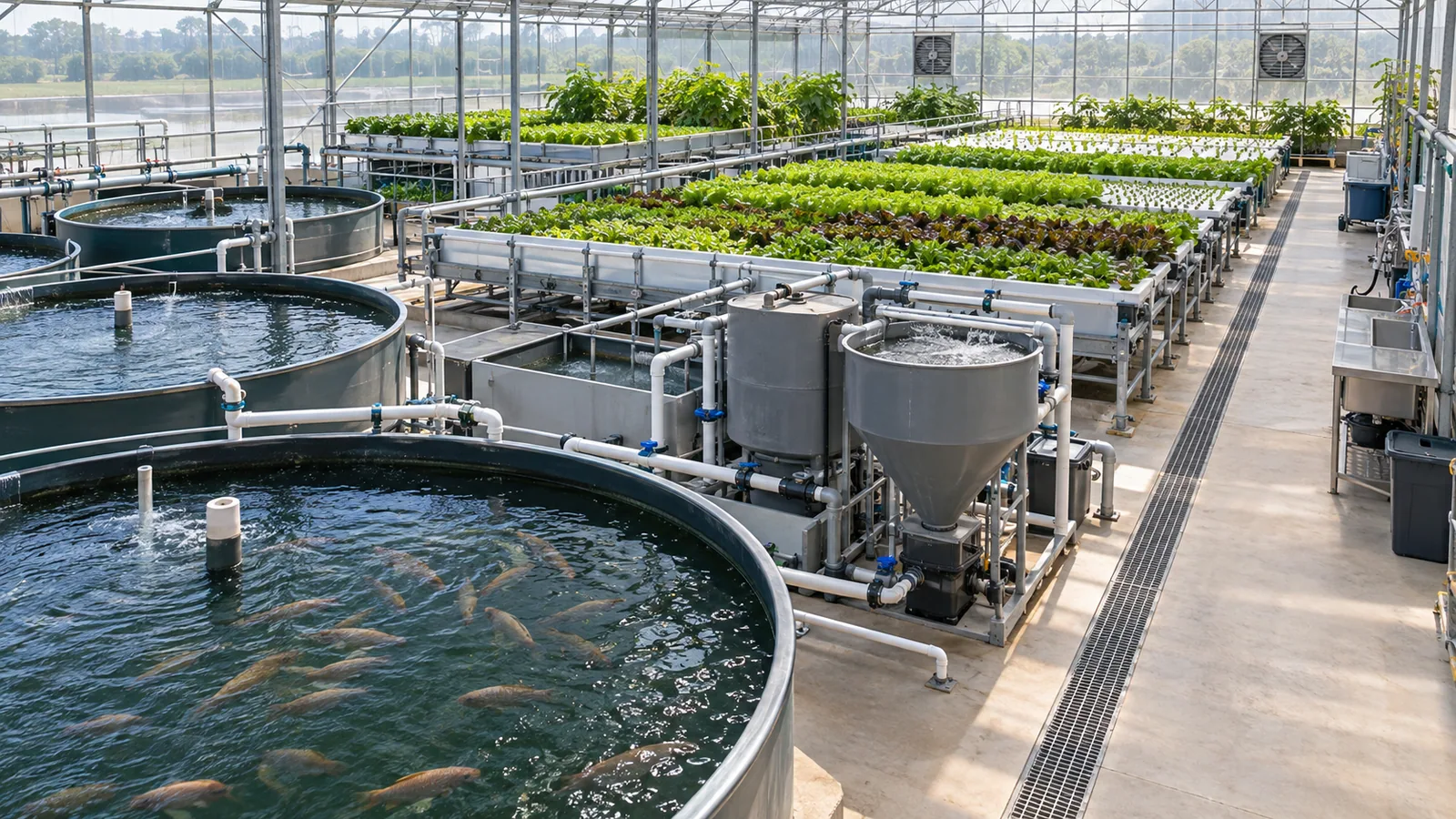
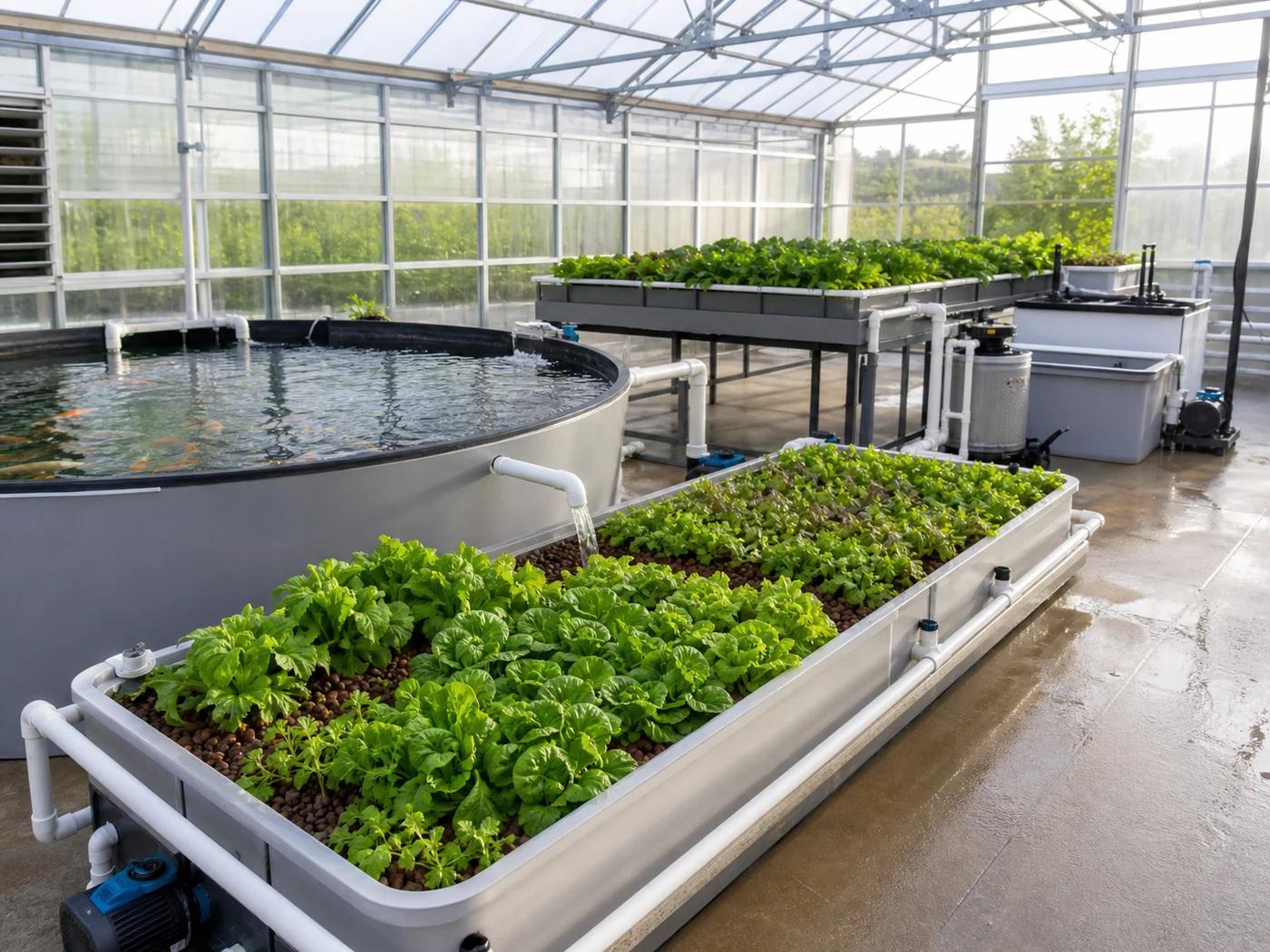
In the simplified coupled model, water leaves fish tanks, passes through solids and biological treatment, then moves through grow beds, rafts or channels before returning to the aquaculture section. Plant uptake and microbial activity support water quality; fish feed is the primary nutrient input. The attraction is clear: a shared loop can reduce duplicated infrastructure and offers a visually understandable “fish and plants together” system for schools, demonstration facilities and some farm operations.
However, one loop means one compromise. Fish, nitrifying bacteria and crops do not always have identical preferences for pH, temperature, nutrient strength or treatment inputs. The operator has to manage the acceptable overlap rather than independently optimize every zone.
What buyers should specify
For a coupled proposal, ask the supplier to show:
- Fish tank, solids removal, biofilter, sump, pump, aeration and grow-zone sequence.
- How solids are removed before water reaches roots or small channels.
- Where pH adjustment, top-up water and supplemental nutrients are introduced.
- Design assumptions for fish feed rate, crop type and plant area.
- How water returns to fish and how contamination risk is managed.
- Routine cleaning, sampling and corrective-action steps.
Oklahoma State University notes that growers must monitor ammonia, nitrite, nitrate, pH, temperature and dissolved oxygen, and that water quality management begins with appropriately sizing fish production relative to plant production. Its technical guidance is a helpful reference. Exact targets must be set for the selected species and local operation, not copied blindly from an online table.
How a Decoupled Aquaponics System Works
Two controllable production environments
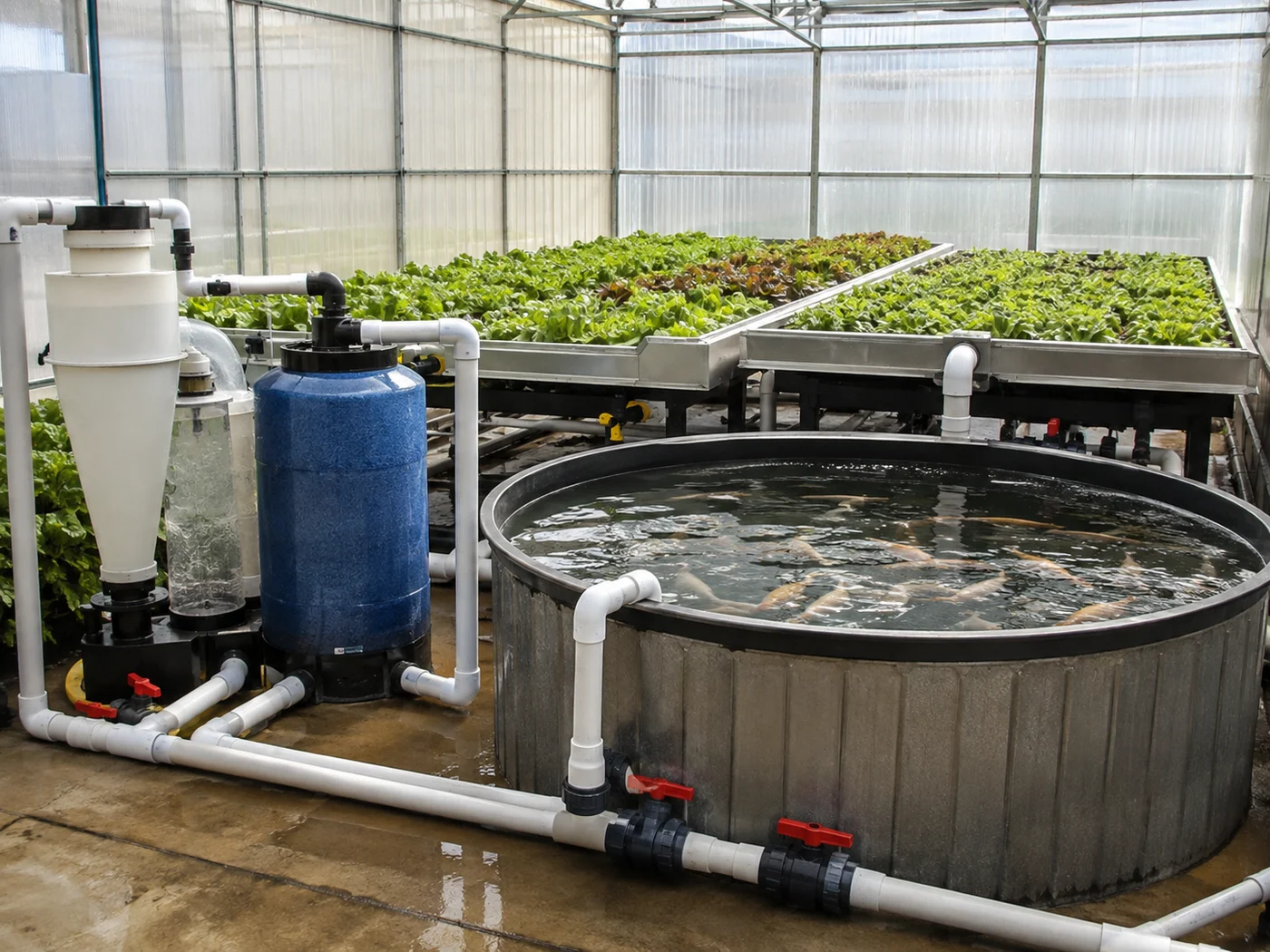
In a decoupled arrangement, the aquaculture side maintains its own recirculation and treatment process. Nutrient-bearing water can be transferred to a plant-production loop that does not continuously return water to the fish. That separation can give plant operators more freedom to manage crop-specific nutrient balance or pH without immediately changing fish-water conditions.
The trade-off is increased process definition. Decoupling is not a shortcut to easier management. It can add transfer pumps, storage, dosing points, separate monitoring, discharge or reuse planning and a more disciplined operating routine. The team must understand the purpose of each loop and document inputs and outputs.
When decoupling may be worth considering
Consider it when a project has distinct fish and high-value crop production goals, a diverse crop program, a need for independent operating windows, or a greenhouse team already comfortable with hydroponic procedures. It may also be relevant where the buyer wants clearer separation between aquaculture management and crop fertilization strategy.
Do not specify a decoupled layout simply because it sounds more advanced. If the project is educational, seasonal, operator-light or focused on a simple crop range, the additional complexity may not be justified. A careful supplier will discuss operating capacity and maintenance access before proposing it.
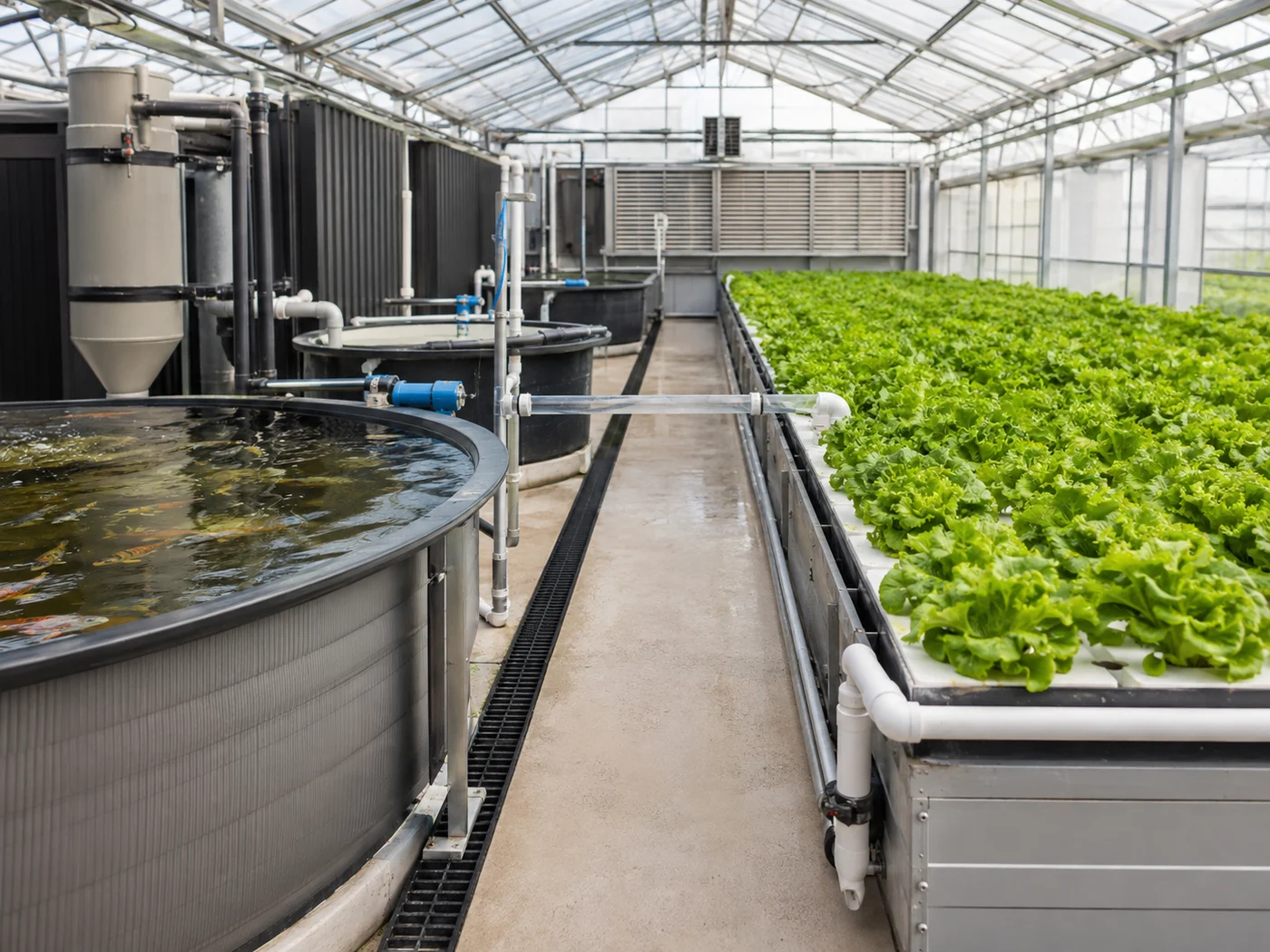
Mid-article CTA — Compare a Coupled and Decoupled Layout for Your Site
Send your crop list, fish plan, greenhouse dimensions and country. YAFAN can outline the information needed to compare water loops, equipment scope and installation interfaces. Contact our team to discuss your site.
Comparison: Coupled and Decoupled Systems
Water and nutrient control
Coupled systems work inside a shared balance. Changes intended for plant performance can affect fish and biofilter conditions, so interventions require discipline. Decoupled systems can offer more independent crop-side adjustments, but they add the responsibility to measure, record and manage a second process.
Equipment scope
Coupled systems often emphasize a single, well-designed treatment and circulation loop. Decoupled systems may require separate reservoirs, additional transfer logic, crop-loop circulation, more valves and additional measurement points. A quotation should show each item; “decoupled system” alone is not a specification.
Crop and product planning
Leafy greens and herbs are common starting points because they can fit controlled water-based production routines. Fruiting crops or a diverse crop mix can increase support, climate and nutrient-management requirements regardless of system architecture. The system selection should follow the crop plan and market—not the other way around.
Failure planning
Both designs need a response plan for power loss, blocked lines, pump failure, poor source water and extreme temperature. Decoupled systems can isolate some functions, but they also introduce more equipment and operating procedures. Specify alarms, backup equipment, manual bypasses, spares and responsible personnel.
Cost and operator workload
There is no universal cost premium that can be applied to every project. Site conditions, production scale, materials, electrical standard, climate equipment, automation, shipping and installation affect the result. The buyer should request an itemized scope and evaluate total installed and operated cost, not only factory equipment price.
A Procurement Checklist for Either Design
1. Request a process-flow diagram
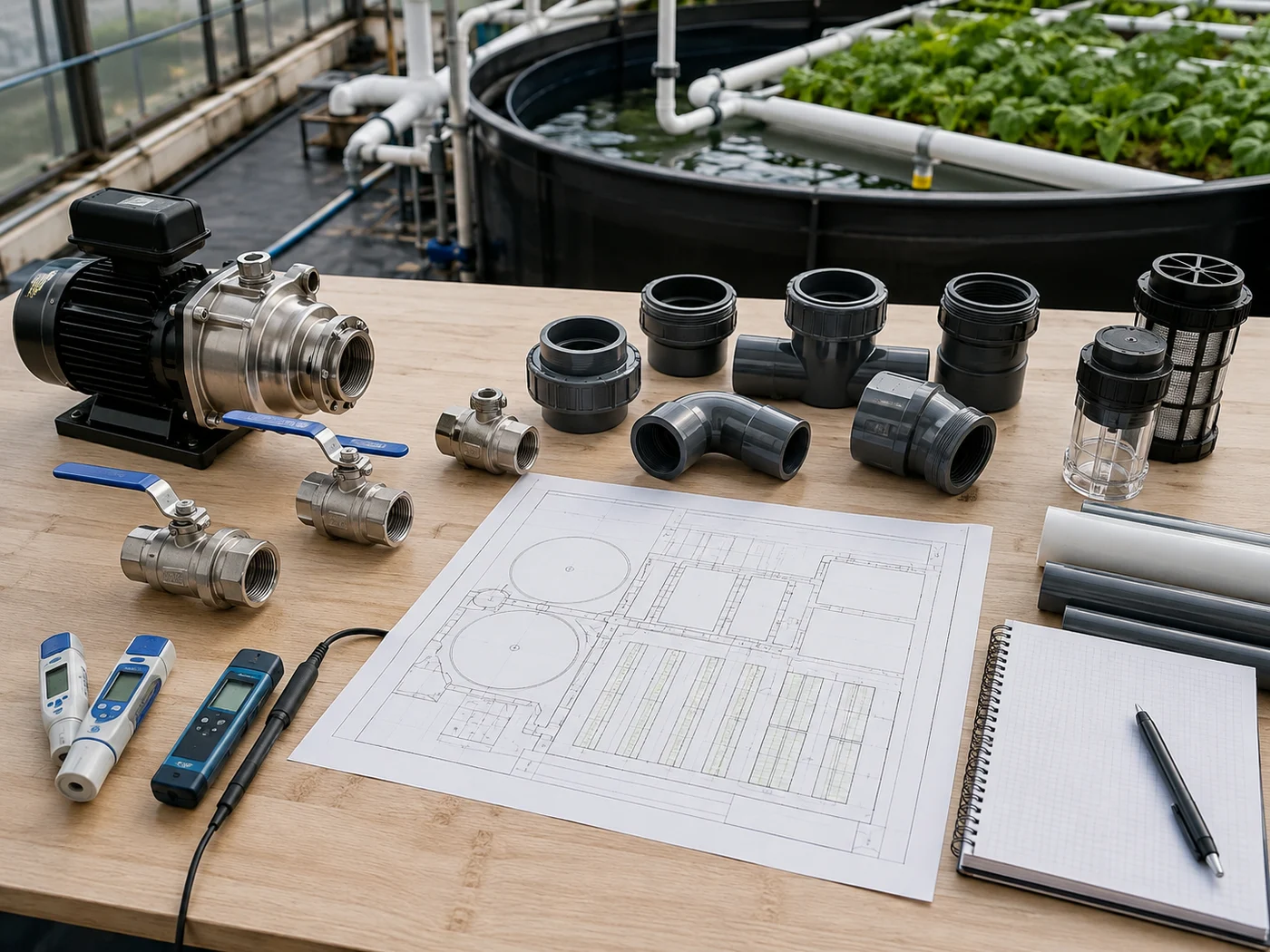
The diagram should identify every tank, filter, pump, air line, grow zone, drain, overflow, make-up water line and monitoring point. For decoupled systems, show transfer direction and whether any water returns to fish.
2. Ask for operating assumptions
Request the crop type, fish species, feed-rate basis, water source assumptions, ambient temperature range, power standard and operator tasks used in the supplier’s proposal. If the assumptions do not match your site, revise the proposal before production.
3. Separate supply scope from site scope
Clarify who provides greenhouse works, concrete or floors, drainage, power distribution, water treatment, local permits, insulation, cooling, heating, electrical connection and commissioning. This prevents a shipped system from arriving at an unprepared site.
4. Plan commissioning before the container leaves
Commissioning should include installation sequence, leak testing, electrical verification, circulation and aeration checks, sensor checks, water-conditioning plan, biological start-up and operator handover. A factory acceptance check can verify component models, labels and fit-up before shipment; it cannot replace the biological cycling and final checks needed at the project site.
5. Make supplier evidence specific
Ask for a packing list, annotated layout, equipment data sheets, factory testing records where applicable, shipment inspection photos and manuals. Evidence is strongest when it identifies a model, quantity, date or project scope—not when it is simply a polished image.
A Practical Decision Sequence for Project Teams
The most productive design conversations start with decisions that cannot be solved by choosing a product card. Work through this sequence before asking a supplier to finalize the layout.
Step 1: Define the operating owner
Who will test water, feed fish, clean filters, record readings and respond to alarms? A professional farm team, a school technician and a community volunteer group have different availability and technical experience. If daily monitoring is difficult, the design needs simpler routines, clear labelling and perhaps a more conservative project scope. Architecture cannot compensate for an undefined operating owner.
Step 2: Define the crop workflow
List the crop types, planting method, harvest schedule, expected plant density, support requirement and washing or packing workflow. Leafy greens, herbs, seedlings and fruiting crops place different demands on physical layout and crop-side management. A buyer should also decide whether the project will use one crop family initially or test a broad mix. Starting with a manageable crop plan can make commissioning and operator training more realistic.
Step 3: Define the fish plan and water source
The selected species, seasonal temperatures, stocking approach, feed supply and local rules influence the fish side. Source water quality may affect every loop. Ask whether the project needs storage, dechlorination, filtration or other pretreatment. Since water can carry treatment chemicals and dissolved salts, water analysis is an operating input—not a detail to postpone until after construction.
Step 4: Test whether common operating ranges are acceptable
This is the central coupled-versus-decoupled question. In a coupled design, ask whether fish health, nitrification and intended crops can be managed within a shared operating range. If the project needs crop-side treatment that conflicts with fish-side conditions, investigate whether a decoupled or hybrid process is appropriate. Document the reason for the choice in the design brief.
Step 5: Review consequences, not labels
For each proposed layout, list the additional tanks, pumps, filters, sensors, operator tasks, cleaning points, water uses and failure modes. Then list the benefits those additions provide. This prevents teams from buying complexity without a defined operational gain. It is also a practical way to compare suppliers: one may call a system “decoupled” while another provides a fully described transfer and crop loop.
Step 6: Decide the pilot and expansion strategy
Projects that expect future expansion should reserve space, access, utility capacity and pipe routes while avoiding unnecessary day-one complexity. Ask which components are modular, which are designed for a fixed flow range and which must be replaced to grow. A phased design is credible only when it identifies those limits in advance.
Use a written decision record
At the end of this process, record the selected architecture, the reasons it fits the project, known operating assumptions and open risks. This record becomes part of the RFQ, factory review and commissioning plan. It also helps new staff understand why a valve, reservoir or control point exists months after installation.
Practical Examples Without Overpromising Results
Education and research facility
An education project may prioritize visibility, safe access, modularity and learnability over maximum crop density. A coupled, clearly labelled flow path can make the biological relationship easier to teach. The proposal should still include solids management, aeration and water-quality monitoring, because a teaching system must remain safe and stable to be useful.
Commercial leafy-green greenhouse
A commercial greenhouse may prioritize repeatable crop workflow, harvest timing, hygiene access and climate interfaces. Either architecture could be considered, but the selection should be driven by crop requirements, team skill, local utilities and process control expectations. Include packhouse, cold-chain and market plans in the feasibility work; equipment alone does not create a business.
Phased export project
For an overseas buyer, phased expansion may be more valuable than maximum day-one capacity. Reserve space for future grow zones, oversized manifolds where justified, accessible pipe routes and electrical capacity. Ask the supplier to state what can be added later and what must be resized at the first phase.
FAQ
Is decoupled aquaponics always better for commercial farming?
No. It can offer more independent crop-side control, but it also introduces more equipment and procedures. It is suitable only when the production plan and team can use that flexibility.
Can a coupled system grow commercial crops?
Yes, provided the biological balance, water treatment, crop selection, operator routines and site conditions are designed for the intended scale. Commercial success also depends on market, labour, climate and compliance factors.
Does decoupling remove the need for filtration?
No. Fish-side treatment, solids management and water-quality control remain essential. The exact treatment train depends on fish production, feed, water flow and the process design.
What should a supplier include in a comparison proposal?
Ask for process diagrams, equipment lists, material and electrical specifications, operating assumptions, site requirements, exclusions, factory test scope, shipment documents, installation support and commissioning scope.
Conclusion
Coupled and decoupled aquaponics are different ways of organizing biological and operational control. A coupled system emphasizes a shared balance; a decoupled system creates more independence but requires more process discipline. The best choice is the one your crop plan, fish plan, site and operating team can actually support.
Final CTA — Request a System Design Comparison
Tell us your crops, fish, site dimensions, climate conditions and intended operating model. YAFAN can help define the RFQ questions that lead to a comparable coupled or decoupled proposal. Contact our team for a project-specific comparison.