Introduction
There is no safe universal number of fish for an aquaponics system. The right stocking plan depends on fish species and size, total biomass, daily feed input, water volume, filter capacity, aeration, plant-growing area, temperature, solids management and the operator’s ability to monitor the system. A “fish per gallon” rule can be a starting point for a discussion, but it is not a complete design method.
This distinction is important because fish grow. A tank that seems lightly stocked with fingerlings can become heavily loaded months later. At the same time, plant demand changes as seedlings mature and as crops are harvested. If the system is sized only by the number of fish placed in the tank on day one, it can become difficult to manage before the first planned harvest.
This guide explains how to think about stocking for a responsible starter or commercial-planning conversation. It does not replace a species-specific aquaculture plan, local regulation or qualified fish-health advice. If you have not selected a species yet, begin with What Fish Are Good for Aquaponics?.
Stop Counting Fish First—Start With Biomass and Feed
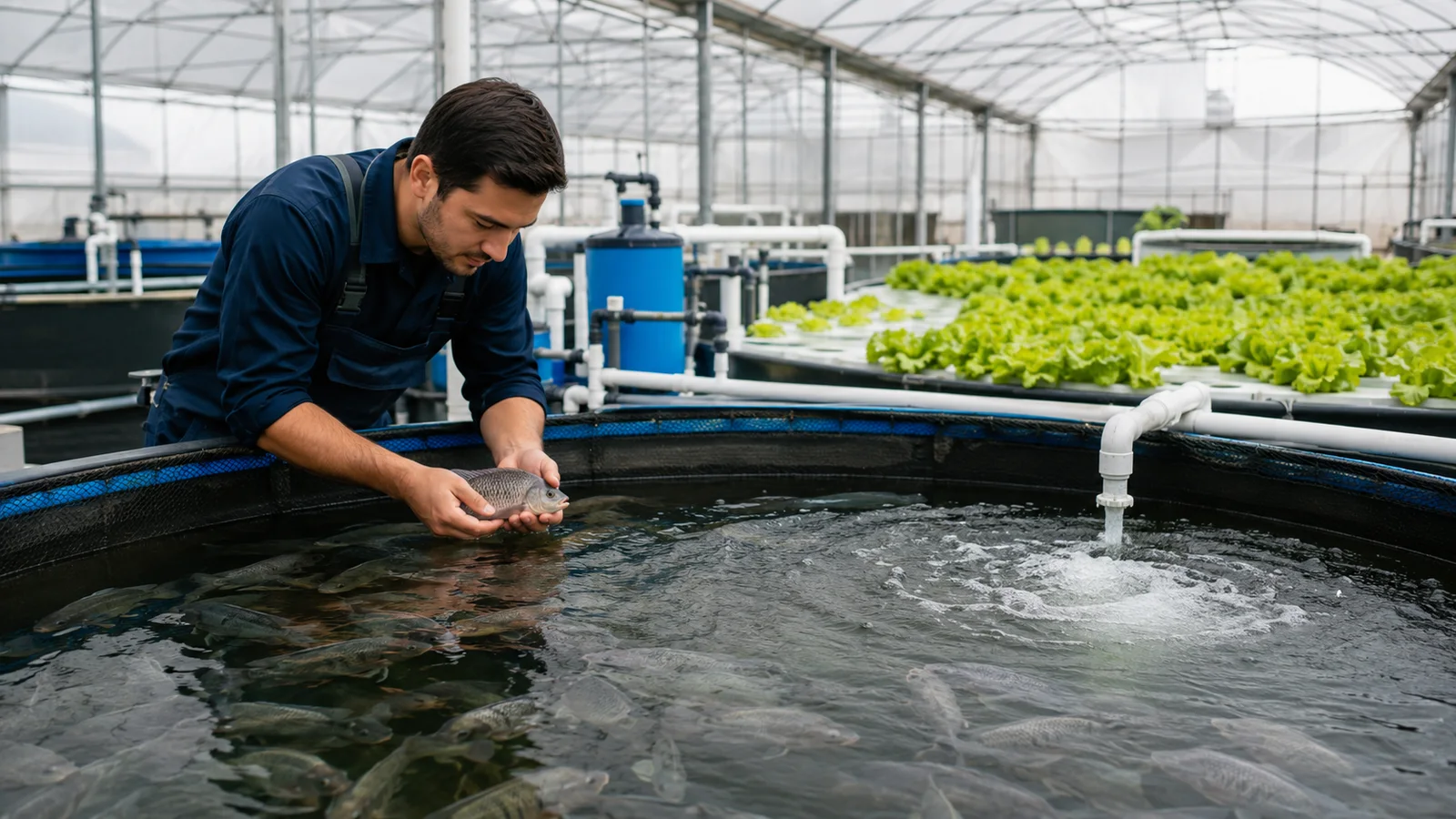
Two tanks may each hold 50 fish but have very different risks. Fifty small fingerlings create a very different oxygen and nutrient load from fifty near-harvest fish. What affects the system is not only headcount; it is the biomass, feed rate, fish behaviour, water conditions and how the filters and plants perform.
For planning, separate these related but different ideas:
- Initial stocking: the number and size of fish introduced at the beginning.
- Standing biomass: the combined live weight of fish in the system at a given time.
- Final harvest biomass: the expected total weight before harvest or thinning.
- Daily feed input: the feed added per day, which drives nutrient and solids loading.
- Feed-rate ratio: daily feed input compared with plant-growing area.
The University of the Virgin Islands (UVI) uses feed rate per plant-growing area as a core design principle for commercial raft systems. Its aquaponic systems guidance explains why steady feed input, staggered fish cohorts and plant area must be considered together.
The Main Factors That Set a Safe Stocking Plan
Fish species and expected harvest size
Species differ in temperature preference, oxygen demand, growth rate, behaviour, feed use and market size. A final biomass plan for tilapia is not automatically suitable for trout, catfish, carp or ornamental fish. Define the likely harvest size and timeline before calculating a stocking plan.
Ask the hatchery what size the fish will be at delivery, what water conditions they have been accustomed to, what feed they have received and how they should be acclimated. This reduces the temptation to stock a system before it is biologically ready.
Water volume and tank arrangement
Water volume matters because it influences dilution, temperature stability and the time available to respond when conditions change. Tank geometry, drains, circulation and solids movement also matter. A large but poorly circulated tank does not automatically provide a large safety margin.
Use total operating water volume, not the nominal capacity printed on an empty tank. Deduct the space occupied by air gaps, pipework, filters and normal operating levels. Then confirm how water moves during pump stops, cleaning and emergency conditions.
Biofiltration and solids management
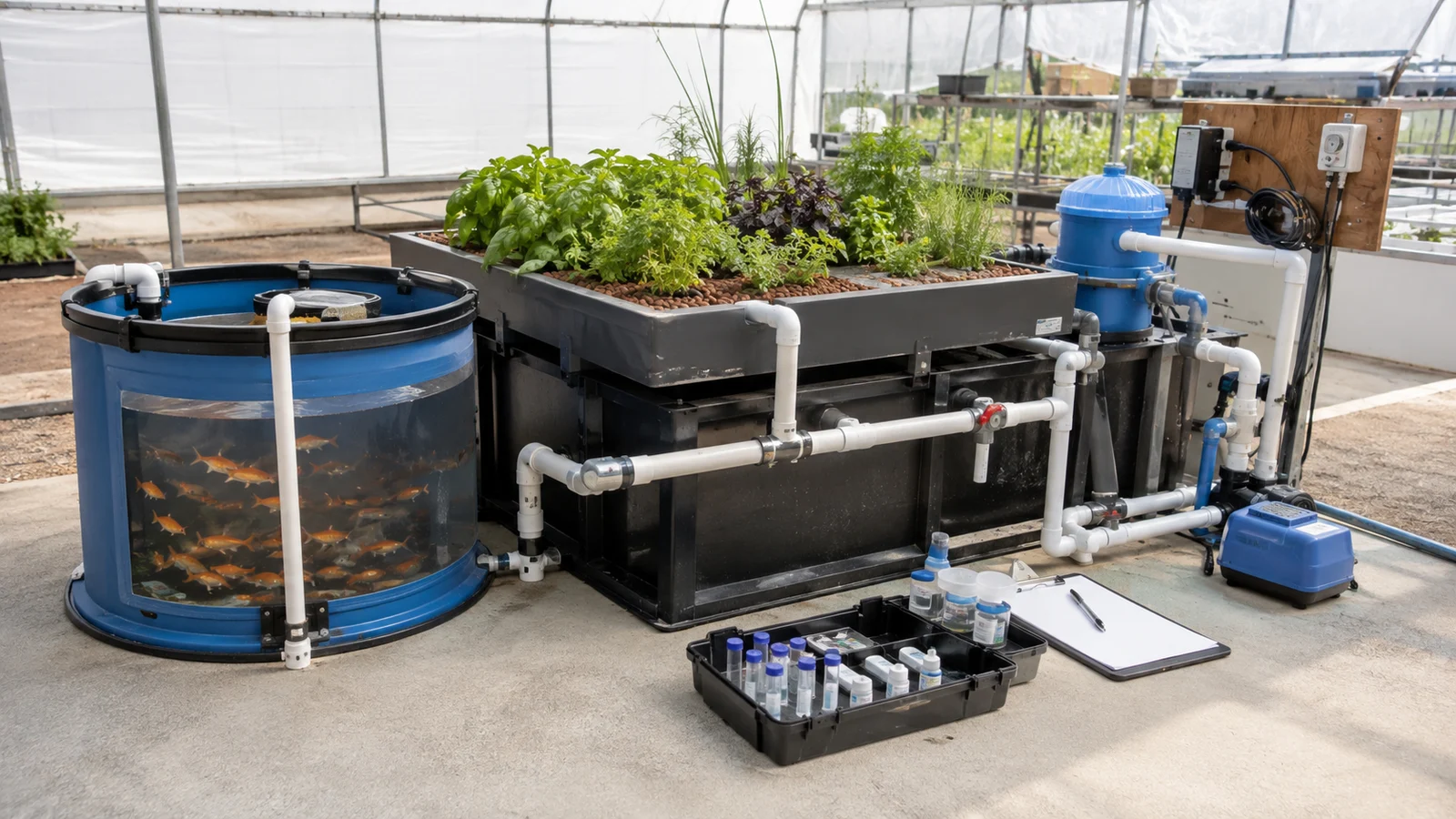
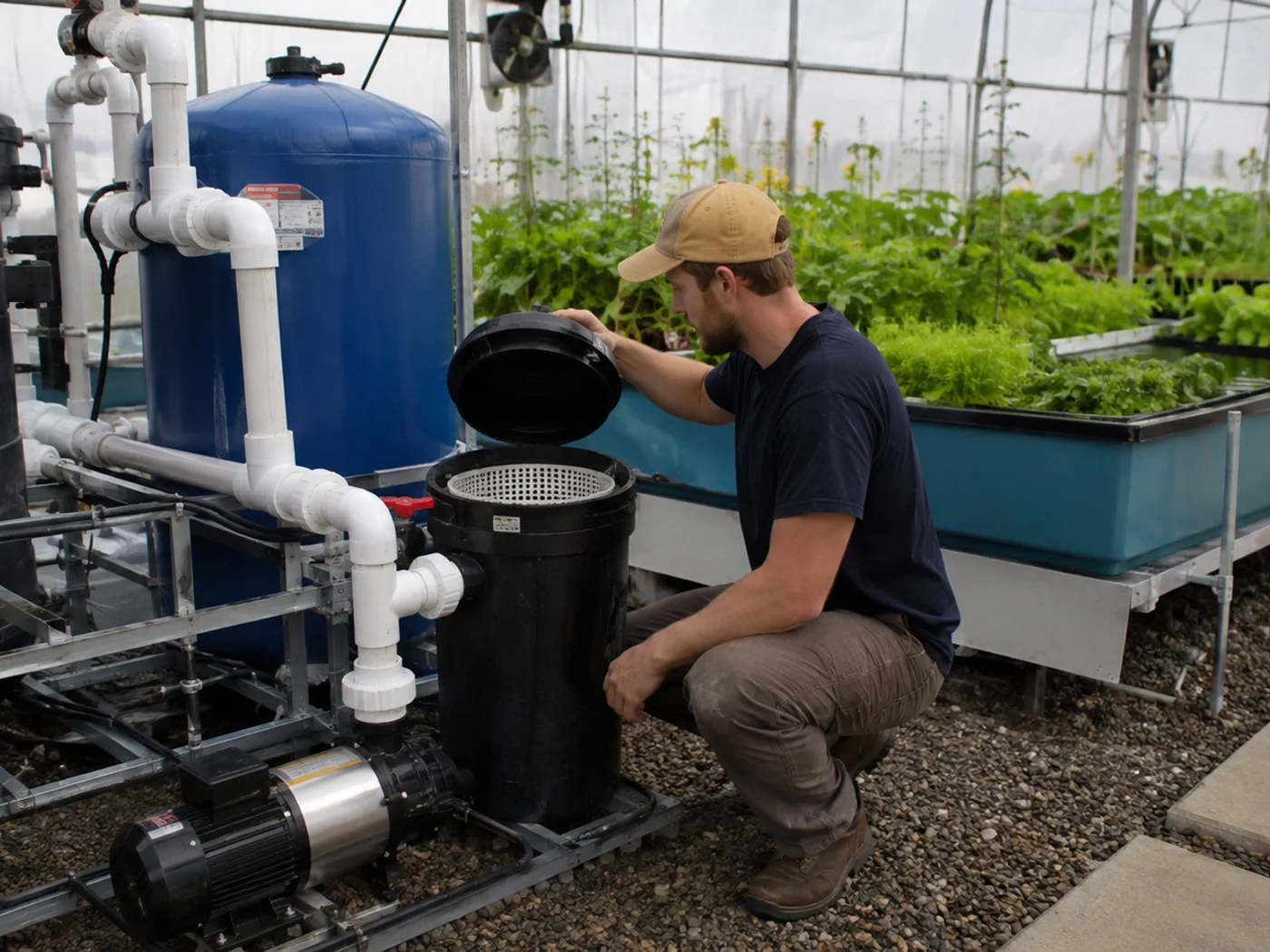
Fish waste must be handled as biomass rises. Mechanical stages manage particles; biological filtration supports nitrification; grow beds and plant roots have limits. Filter media volume alone is not a guarantee because water flow, oxygen, cleaning access and actual feed loading all affect performance.
At a factory functional test, a supplier may demonstrate pumps, aeration manifolds, valves and assembly. Final biofilter performance is established only after installation, cycling and steady operation with the selected fish and feed. Build a conservative start-up period into the project schedule.
Dissolved oxygen and backup capacity
Oxygen risk grows with fish biomass, warm water, feeding activity and equipment failure. Air blowers, diffusers, emergency oxygen or backup power must be chosen for the actual load and site conditions. A design should state what alarms exist, who receives them, how fast staff can respond and what keeps fish alive during an outage.
Do not plan a stocking level around ideal power reliability. Document the realistic fault scenario, especially for projects in hot climates or remote locations.
Plant-growing area and crop stage
Plants remove nutrients, but their uptake changes with crop type, health, age, light and temperature. Young seedlings cannot use the same nutrient load as a mature, fully planted lettuce raft. A harvest gap can also reduce demand suddenly.
This is why the phrase “fish-to-plant ratio” is only a shortcut. The feed-to-plant relationship and the active crop area are more informative. Plant in staggered batches where possible, and change fish feeding only through a documented operating plan.
Useful Reference Values—And Their Limits
Numbers can help a team discuss capacity, but they must be tied to a particular system design. Rutgers Cooperative Extension’s introduction to aquaponics systems explains that fish-tank sizing depends on nutrient needs, the number and adult size of fish, and the configuration of tanks and growing areas. It is a useful reminder that fish-rearing, water treatment and hydroponics must be sized as connected parts of one system.
For example, a feed-rate range developed for a raft-based commercial system should not be copied directly into an NFT channel, a heavily planted media bed or a new school system. Differences in solids removal, water exchange, crop density, source water and climate change the result. Treat reference values as engineering inputs to review—not as a permission to add fish.
For beginners, the conservative approach is usually best: establish the water loop, cycle the biofilter, add fish gradually, feed carefully, measure results and expand only when the system demonstrates stable performance. The fastest route to fish stress is trying to make a small, new system perform like a mature commercial facility.
Why a Headcount Rule Fails in Real Operation
Consider two farms that each begin with 100 fish. One receives very small fingerlings, has a large planted raft area, stable temperature, well-sized solids removal, reliable aeration and a trained operator. The other receives larger fish, has a partly planted system, warm water, limited filter access and no backup power. The headcount is identical, but the operating risk is not.
Headcount becomes even less useful as fish grow. Feed increases, solids increase and oxygen demand changes. If the plants are between crops or growing slowly because of low light or high temperature, they may not take up nutrients at the rate expected in the original plan. A practical capacity review therefore revisits biomass, feed and active plant area throughout the production cycle.
For this reason, avoid promising customers that a given tank “holds X fish” without stating the species, start size, final harvest size, fish purpose, water volume, treatment sequence, aeration and crop plan. A transparent answer may be less dramatic, but it gives a buyer a safer basis for planning equipment and labour.
Use a Capacity Table Instead of an Informal Estimate
Create one table for the planned fish cohorts and another for crops. The fish table should list delivery date, number, average weight, estimated biomass, daily feed, intended harvest or thinning date and mortality record. The crop table should list plant area, crop type, transplant date, expected harvest date, current growth stage and whether the area is actively using nutrients.
Review both tables alongside water-test and equipment logs. If fish biomass or feed rises while active plant area falls, the team can respond before nutrients or oxygen demand become unmanageable. If plant area rises while fish feed remains low, the team can evaluate whether nutrient supplementation, crop adjustment or a revised fish schedule is required under the approved operating plan.
This approach also improves supplier communication. Rather than asking only for a tank size, a buyer can supply the capacity table and request a review of filtration, aeration, pump duty, valves, monitoring points and installation layout. The resulting quotation is more likely to reflect the intended system than a generic package price.
Plan What Happens When Conditions Change
Every stocking plan should include decision points. Define what the team will do if ammonia or nitrite rises, if dissolved oxygen drops, if a pump fails, if water temperature moves outside the expected range, if feed is unavailable, or if crop harvest is delayed. Actions must be appropriate to the local system and qualified advice, but the responsibility and communication route should be agreed before an event occurs.
Keeping spare fittings, a backup air source where justified, test reagents, basic tools and accessible isolation valves can reduce downtime. Photograph the final pipework and label key valves during installation preparation. These routine steps are not substitutes for professional support, but they make an emergency response more orderly.
A Step-by-Step Way to Plan Fish Numbers
Step 1: Define the species, goal and final size
Write the species, number of fish, delivery size, expected harvest size, target harvest date and intended market or use. Do not mix food production, ornamental display and education objectives without deciding which requirement controls the design.
Step 2: Confirm operating water volume and equipment scope
Record the tank operating level, sump volume, grow-bed volume, filter stages, pump duty, aeration capacity, backup plan and plumbing layout. Verify that drains, valves and filters remain accessible after installation.
Step 3: Plan daily feed and plant area together
Estimate feed input through each fish-growth stage and compare it with the active plant area and crop demand. A supplier or qualified aquaculture adviser can help translate the chosen design into an operating schedule. Keep crop planting staggered if steady nutrient uptake is important.
Step 4: Set a conservative initial stock
Initial stocking should leave a safety margin while the biofilter matures and the team learns normal water conditions. Do not fill the tank to an assumed final capacity on the first day. Fish and plants can be added in stages when monitoring shows the system is stable.
Step 5: Monitor, record and adjust before the limit
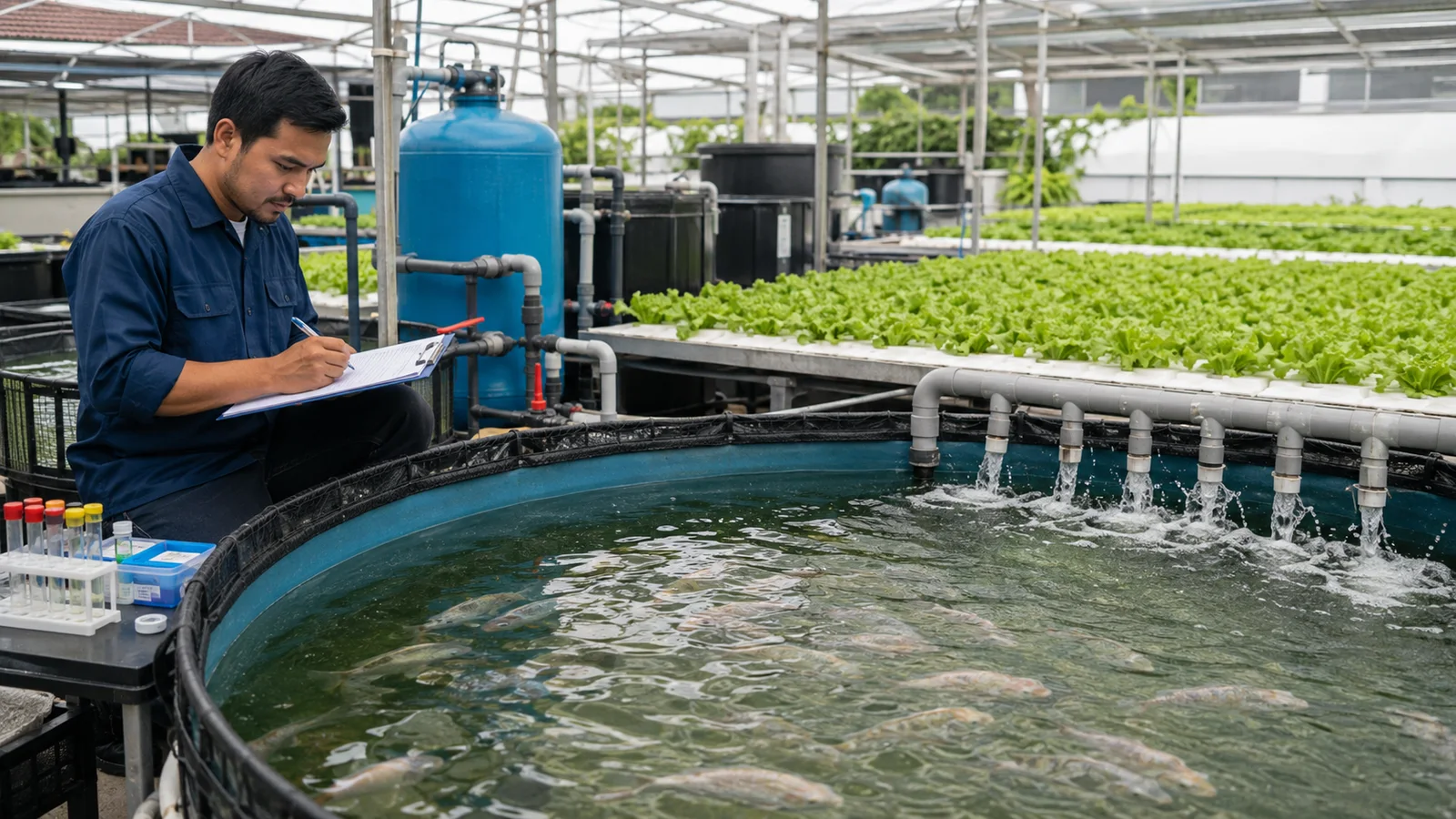
Keep a log of water temperature, pH, ammonia, nitrite, nitrate, dissolved oxygen where measured, feed quantity, fish behaviour, mortalities, plant observations, filter cleaning and equipment faults. Weigh or estimate fish biomass regularly. Plan thinning or harvest before conditions force an emergency response.
Common Mistakes When Calculating Fish Numbers
Using only “fish per gallon”
Tank volume is useful, but it does not describe feed, oxygen, filters, plant area, climate or fish size. A gallon-based rule without those details can give false confidence.
Forgetting that fish grow
Start-up numbers can look safe until fish gain weight. Use the expected maximum standing biomass, not only the delivery size, when assessing tank capacity and oxygen demand.
Adding fish before the system is cycled
Nitrifying microorganisms need time to establish. Introducing a full fish load to an uncycled or unstable system can create ammonia and nitrite risk. Use a deliberate commissioning and monitoring plan.
Treating plants as an emergency filter
Plants contribute to nutrient uptake but cannot safely correct a sudden overfeeding event, blocked pipe, failed pump or low-oxygen condition. Equipment and operating discipline remain essential.
Ignoring harvest and crop schedules
If all fish reach harvest size at once, or all plants are harvested at once, the nutrient relationship can change quickly. Staggering fish cohorts and crop batches can make production more stable.
What to Send With a Stocking-Plan Inquiry
For an equipment discussion, provide:
- Intended fish species, delivery size and final harvest size
- Target number of fish and expected biomass by stage
- Water volume and proposed tank arrangement
- Growing method and active plant area
- Intended crops and planting/harvest rhythm
- Expected feed plan, if known
- Local climate and water-temperature range
- Water source, electrical standard and outage risk
- Desired aeration, alarms and backup approach
- Site drawings, drainage and available maintenance access
This allows the supplier to discuss the tank, filtration, pump, air system and grow area as a connected scope. It also gives the receiving team a clear basis for installation preparation, shipment inspection and commissioning records.
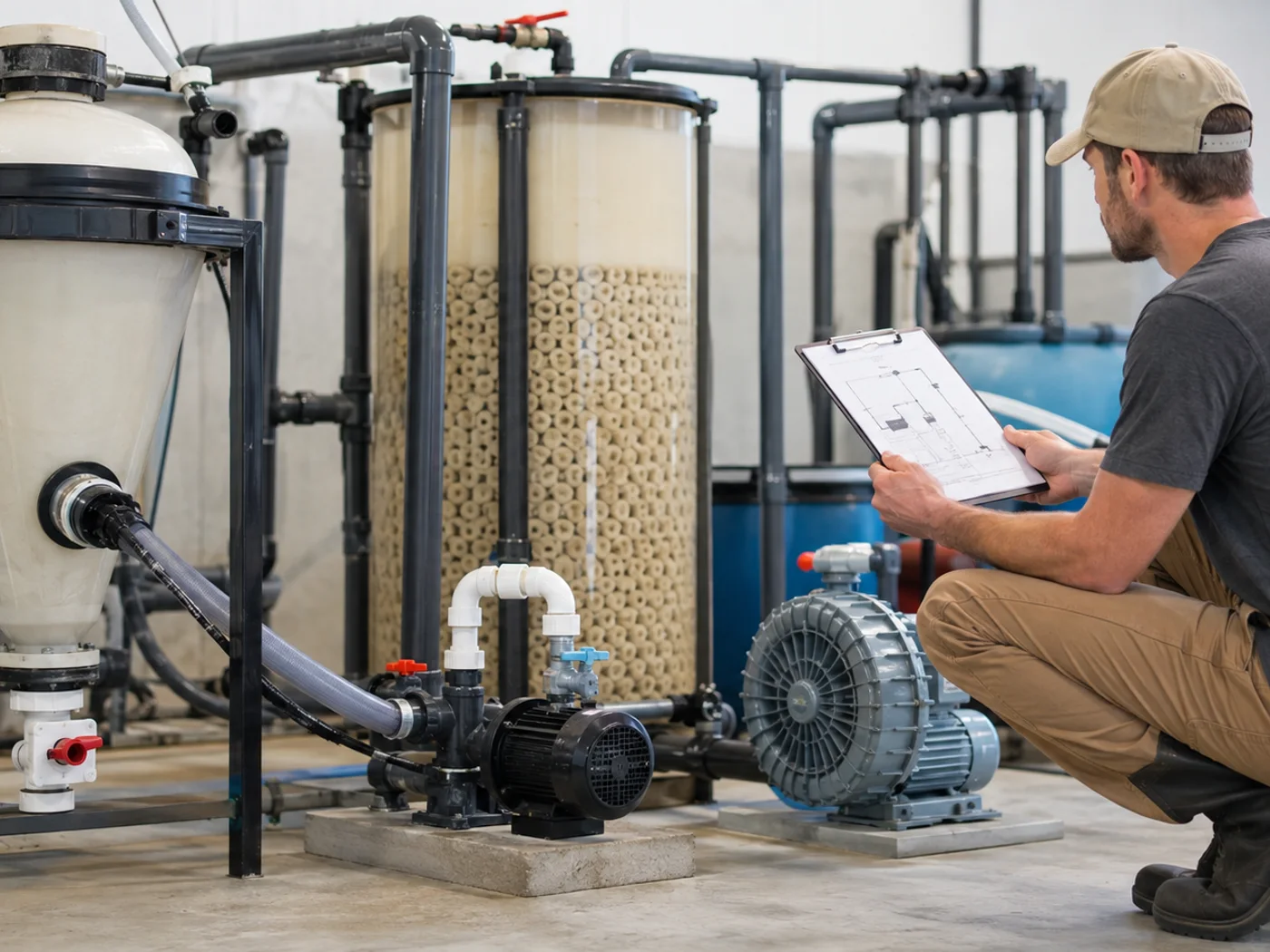
Mid-article CTA — Request a Capacity Discussion
Send YAFAN your tank volume, intended fish, plant area and location. We can help you prepare the equipment information needed for a practical system-capacity inquiry.
FAQ
How many fish can I put in a 100-gallon aquaponics tank?
There is no responsible single answer without the species, fish size, expected final biomass, filtration, aeration, water temperature, plant area and daily feed plan. Start conservatively and use a system-specific plan.
Is one fish for every two plants a rule?
It can be a simple educational reference in certain systems, but it does not replace calculations based on feed input, crop type, plant stage, fish biomass and water treatment capacity.
Should I add all fish at once?
Not usually in a new system. Add stock according to the biofilter’s maturity, water readings and operating plan. Heavy initial stocking can overwhelm a young system.
What is more important: fish count or feed rate?
For nutrient loading and plant balance, feed rate is often more informative than headcount. Both are important, but feed, biomass and active plant area should be considered together.
When should fish be harvested or thinned?
Plan harvest or thinning before the expected standing biomass approaches the system’s operating limit. Use measured water conditions, growth records and the approved production plan rather than waiting for stress signs.
Conclusion
The question is not simply how many fish fit in a tank. It is how much fish biomass, feed and oxygen demand the whole aquaponics system can safely support while filters and crops remain in balance. A conservative, recorded and staged plan gives the operator time to see how the system responds.
Use fish count as one line in a larger capacity plan that includes species, final biomass, feed, water volume, filters, aeration, plant area, crop schedule and emergency response. For start-up sequencing, see How to Start Aquaponics.
Final CTA — Send Your System Capacity Requirements
Contact YAFAN with your fish plan, tank volume, growing area, crop target and country for a preliminary system discussion.