Composting worms can help process fine organic matter in a mature aquaponics media bed, but they are not required in every aquaponics system and should not be counted by fish-tank gallons. A cautious commissioning range is approximately 100–200 composting worms per square metre of usable flood-and-drain media-bed surface—roughly 10–20 worms per square foot. Introduce them in stages, then let bed conditions and available organic matter determine whether the population grows.
That range is a practical starting point, not a universal stocking standard. There is limited aquaponics research establishing an ideal worm count for every media depth, fish load, crop and hydraulic cycle. A lightly loaded home bed may support fewer worms, while a mature bed receiving more captured solids may support a larger self-regulating population. Adding thousands of worms to a new, clean bed does not create nutrients or replace filtration; it can simply leave the worms without enough suitable food or oxygen.
The first decision is therefore not “how many?” It is whether the worms belong in the selected growing method at all.
The Short Answer
Use composting worms only in a suitable, established media bed where they can move through moist, oxygenated spaces and consume trapped organic particles. Do not intentionally add them to a fish tank, sump, NFT channel, deep-water culture trough, moving-bed biofilter or mechanical filter.
For an initial trial:
| Usable media-bed surface | Conservative starter colony | Commissioning approach |
|---|---|---|
| 0.25–0.5 m² | 25–100 worms | Add in two or three shaded locations |
| 0.5–1.5 m² | 75–300 worms | Begin near the low end and inspect after 4–6 weeks |
| More than 1.5 m² | About 100–200 worms/m² | Introduce by zones rather than loading the whole bed at once |
These figures describe an initial colony, not a required operating density or maximum capacity. Do not buy worms based only on water volume. A 500-gallon system with DWC rafts may have no appropriate worm habitat, while a much smaller system with a deep, aerated media bed may support a healthy colony.
What Worms Actually Do in a Media Bed
Fish feed enters the system, fish retain part of it for growth, and the rest contributes dissolved waste and solids. Mechanical filters should capture larger particles before they overload grow zones. In a media bed, however, smaller particles, sloughed roots and microbial material can still collect between pieces of media.
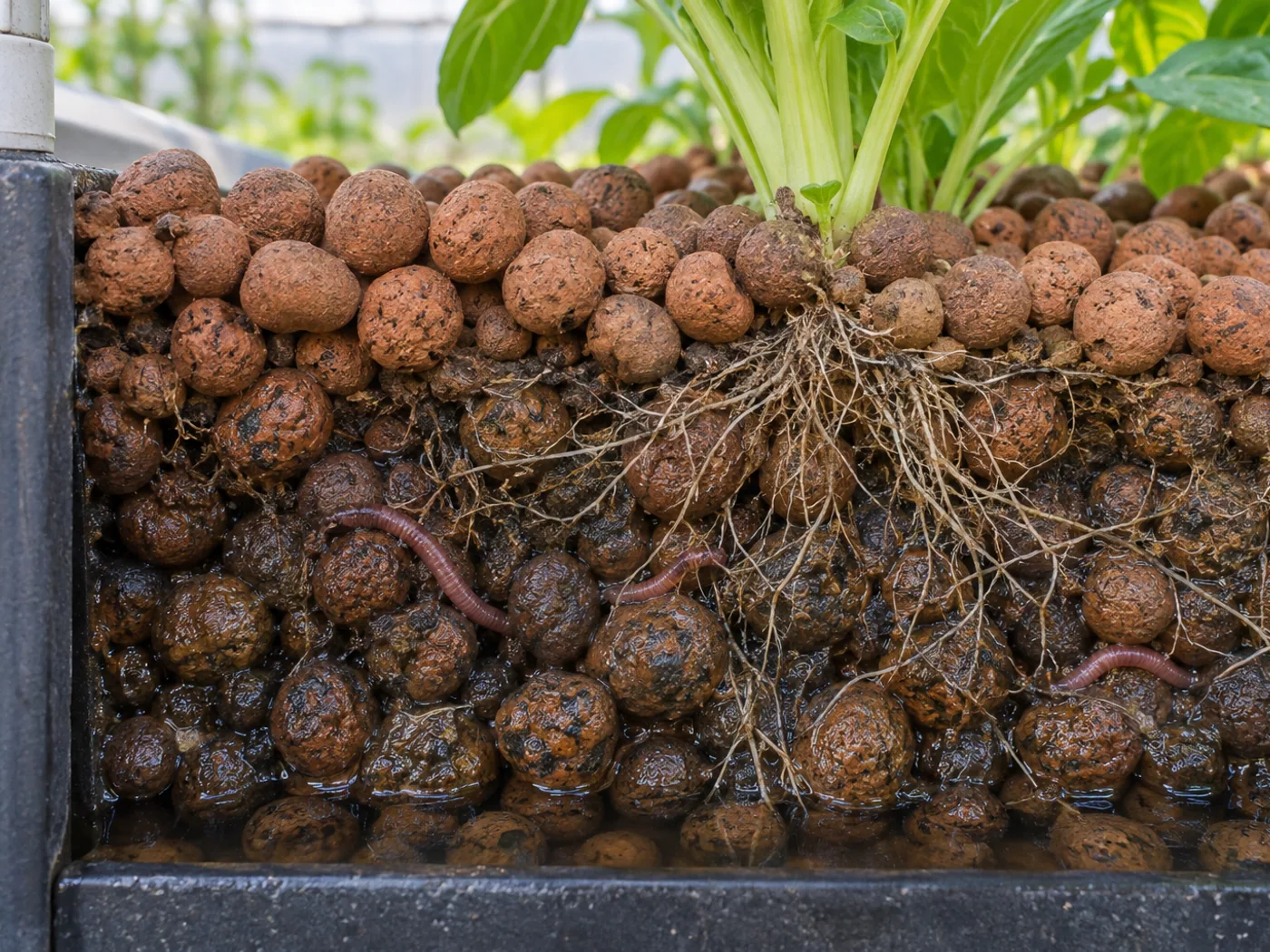
Composting worms fragment some of that organic matter. Their activity increases contact between organic particles and microorganisms involved in decomposition and mineralization. This can help release nutrients that were bound in solids, while reducing localized accumulations of soft organic material.
A peer-reviewed review of the aquaponics microbiome reports that composting worms can help control organic-solids accumulation in gravel media beds and identifies flood-and-drain beds as especially suitable because worms are not permanently submerged. It also notes that the roles and interactions of worms in aquaponics still require more research. See the Annals of Microbiology review on aquaponics microbial ecosystems.
A separate greenhouse-system study describes adding *Eisenia fetida* to a media bed to support mineralization, but reports that the worms alone were not sufficient to maintain the system and that a sedimentation tank was still necessary. The authors suggest that, at larger scale, separately managed vermiculture may offer more controllable treatment of captured organic solids. See the peer-reviewed study Designing Aquaponic Production Systems towards Integration into Greenhouse Farming.
That evidence supports using worms as one biological participant in the bed. It does not support treating them as a substitute for correctly sized solids removal, biofiltration or maintenance.
Worms Are Not Suitable for Every Aquaponics Method
Flood-and-drain media beds
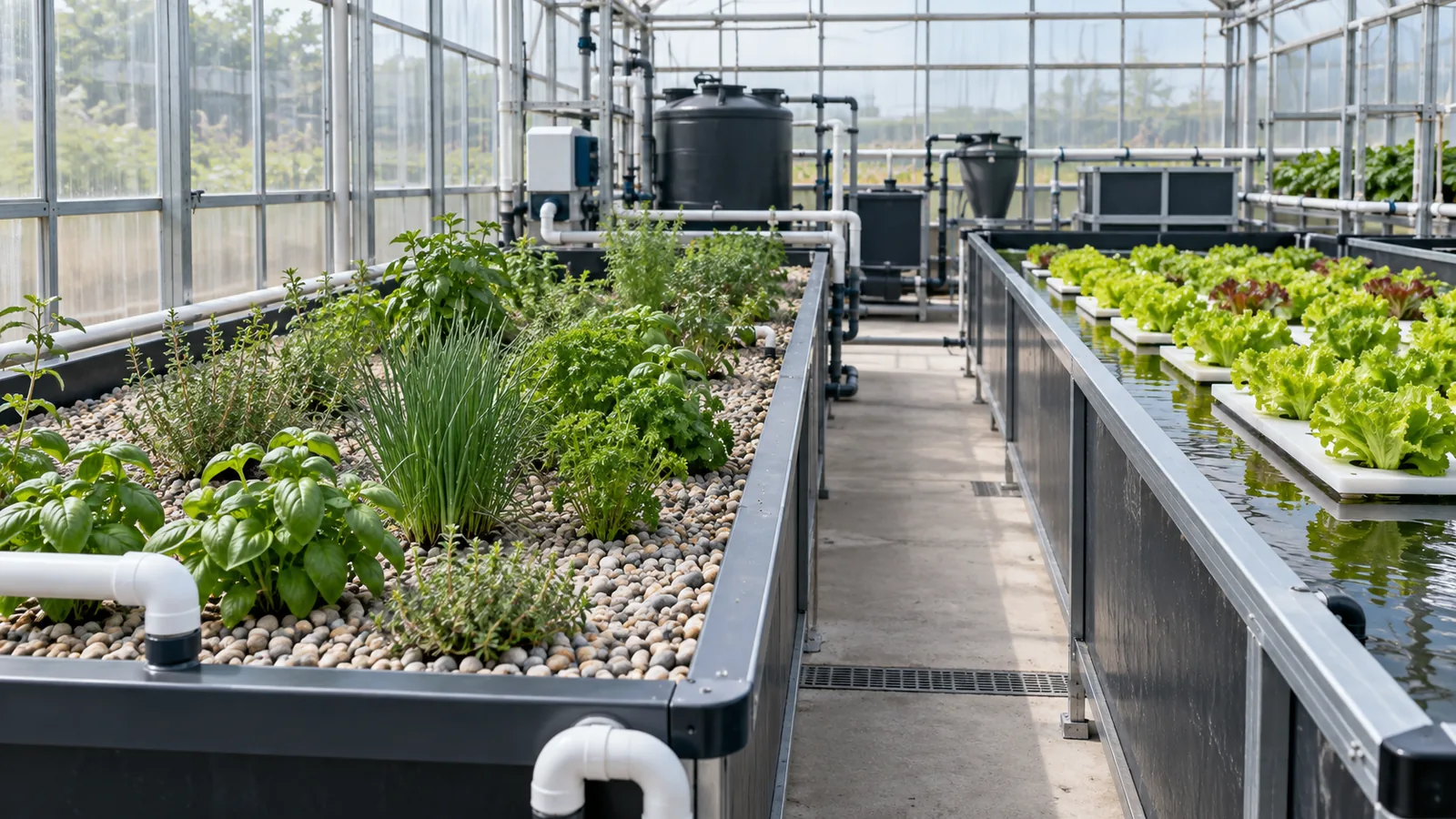
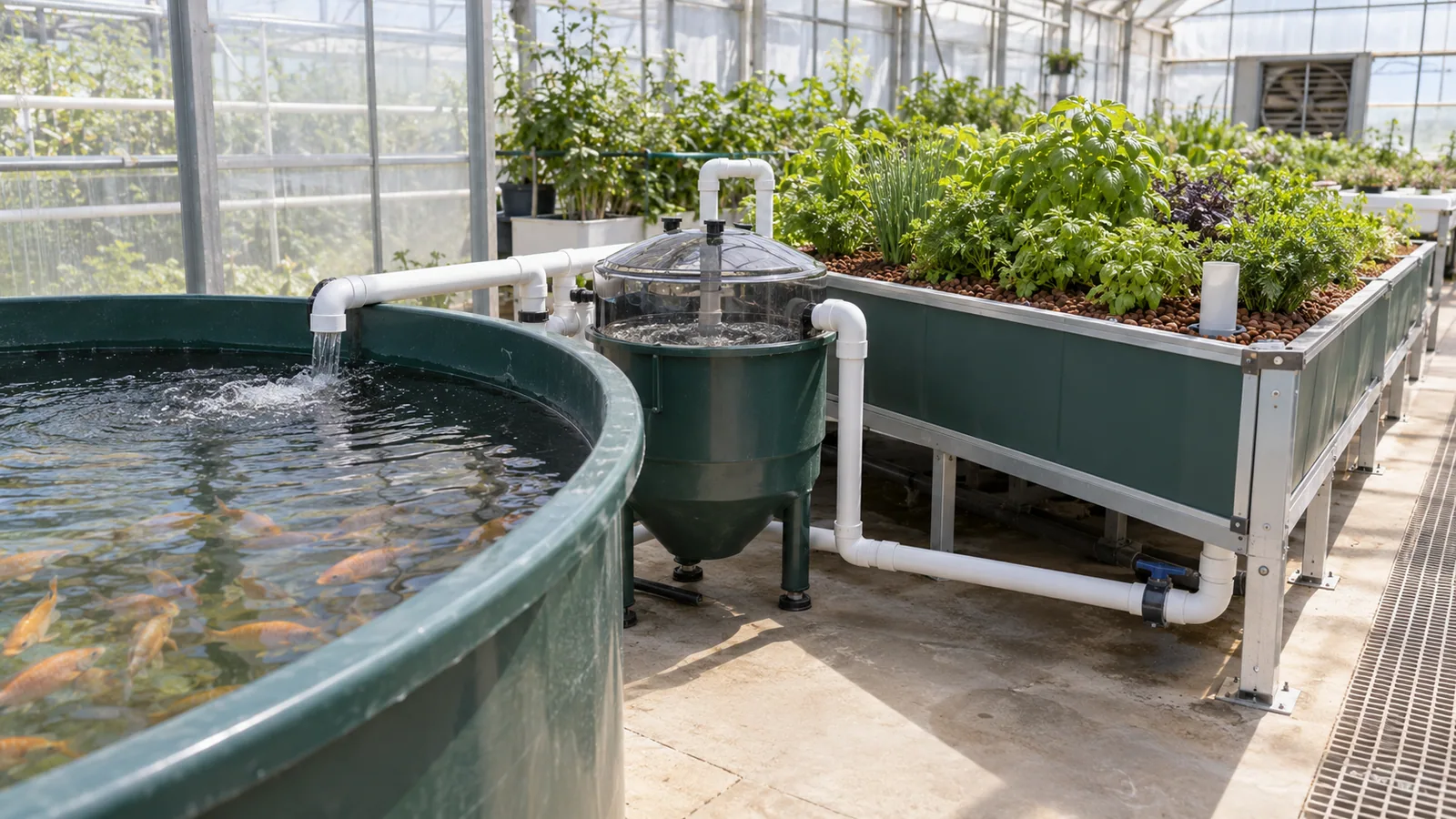
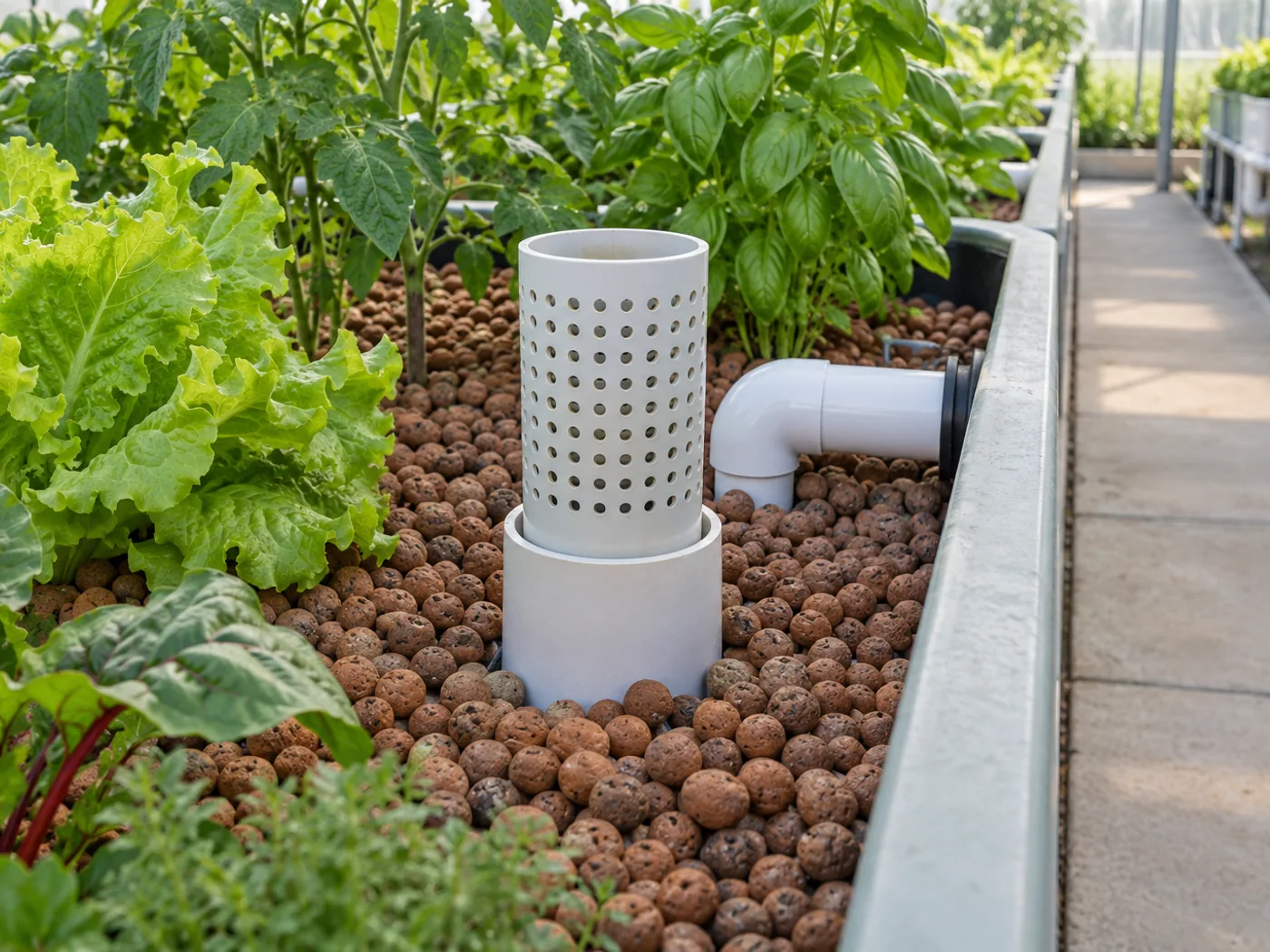
This is the most practical location. The media provides darkness, surfaces and protected pore spaces. Regular flooding supplies moisture, while the drain phase brings air into the bed. Worms can move away from temporary unfavorable zones and find fine organic particles distributed through the media.
The bed still needs correct hydraulic performance. A permanently flooded lower zone with heavy sludge accumulation can become oxygen-limited, while an upper zone that stays dry may not support worm activity. Media depth, flood height, cycle timing and solids loading all influence the usable habitat.
If you are deciding whether the system needs an aggregate bed at all, first read our guide to aquaponics gravel and alternative growing methods. Worms should follow the grow-method decision; they should not determine it.
Constant-flood media beds
Worms may survive in well-oxygenated constant-flood beds, especially in the moist upper region, but the operating margin is narrower. Water movement and dissolved oxygen must remain adequate throughout the bed, and solids should not form anaerobic pockets.
Do not assume that visible surface movement proves the entire bed is oxygenated. Inspect drain behavior, root condition and odor, and check whether water is bypassing compacted areas.
NFT channels
NFT channels are not worm habitats. They contain a shallow moving film and concentrated plant roots rather than a substantial media volume. A worm entering a channel can be carried toward a drain, become trapped by roots or contribute to a blockage.
Deep-water culture
DWC troughs keep roots continuously submerged and depend on clear, aerated water. Intentionally adding composting worms introduces organisms into a zone that lacks the media structure they need and complicates hygiene and solids management.
Fish tanks, sumps and filters
Do not add worms to the fish tank as food processors. Fish may eat or injure them, pumps can move them, and the worms do not replace removal of settled solids. Mechanical filters also require predictable cleaning; deliberately colonizing screens or settlers with worms makes inspection and discharge management less controlled.
Choose Composting Worms, Not Ordinary Garden Earthworms
The most commonly discussed species are Eisenia fetida and Eisenia andrei, often sold as red wigglers or composting worms. These species live in organic-rich surface material and tolerate the moist, food-rich conditions associated with vermicomposting better than deep-burrowing soil earthworms.
Do not collect unknown worms from garden soil and move them directly into a food-production water loop. Soil can introduce sediment, fertilizer residues, pesticides, plant pathogens, parasites or unwanted organisms. A reputable vermiculture supplier should identify the species and describe the culture material used for shipping.
Shipment inspection matters even for a small box of live worms. Check for excessive heat, foul odor, standing liquid, widespread mortality and unidentified insects. Keep the packaging away from fish water until the worms have been assessed.
Why There Is No Universal Worm-to-Gallon Ratio
Worm habitat is the media bed, not the total water volume
System water volume affects temperature and water-quality stability, but it does not describe the protected space available to worms. Count usable bed area and confirm media depth and wetting pattern.
Organic loading changes with feeding and filtration
Two beds of equal size may receive very different amounts of fine solids. If an effective settler and screen remove most particles upstream, the bed may provide relatively little food. If the bed is part of the solids-treatment strategy, organic loading may be greater—but so is the risk of clogging and oxygen depletion.
A worm population can reproduce
Under suitable conditions, composting worms reproduce and redistribute through the bed. The goal is to establish a functioning starter colony, not to purchase the final population in advance.
Crop roots change the habitat
Dense, mature roots can capture particles and change local flow. After harvest, decaying roots may temporarily increase organic material. A staggered crop schedule usually creates a more stable environment than clearing every planting position at once.
Conditions to Confirm Before Adding Worms
The system is biologically and hydraulically stable
Complete leak testing and cycling before using worms as an operating adjustment. Confirm that pumps, drains and flood levels behave consistently and that ammonia and nitrite are controlled for the selected fish plan.
The bed is moist but not anaerobic
Healthy media should smell earthy or neutral, not like rotten eggs or sewage. A sour or sulfurous odor indicates a solids and oxygen problem that must be corrected before worms are added.
The media is physically suitable
Sharp aggregate, compacted fines or very small pore spaces can limit movement. The media should be verified for aquaponics use, washed appropriately before installation and graded to maintain flow.
Temperature and pH are within the whole system’s operating range
Do not chase a worm-only target at the expense of fish, plants or nitrifying microorganisms. Avoid rapid changes. If the system experiences extreme seasonal temperatures, introduce worms only when conditions are stable enough for observation.
Chemical exposure is controlled
Review salt treatments, pesticides, disinfectants, pH adjustments and plant supplements before use. A material described as “natural” is not automatically safe for fish, worms, nitrifying microorganisms and edible crops.
A Practical Introduction Procedure
1. Verify the bed, not just the water test
Inspect the bed after a normal operating cycle. Confirm that water reaches the intended level, drains without delay and does not leave stagnant surface pools. Check for channeling, exposed roots, heavy sludge and odor.
2. Source the correct worms
Order a modest quantity of identified composting worms. Ask the supplier about species, packing medium and expected delivery time. Avoid purchasing a large bulk quantity before the bed has demonstrated that it can support a smaller colony.
3. Separate worms from unsuitable shipping material
Follow the supplier’s handling instructions. If the shipping substrate contains soil, manure, fertilizer or additives not approved for the aquaponics loop, gently separate the worms rather than adding the full package to the bed.
4. Add them in shaded zones
Turn off flow only if the system’s operating procedure allows it safely. Make several shallow pockets below the dry surface layer but above any permanently saturated sludge zone. Divide the starter colony among those pockets, cover lightly with clean media and restore normal operation.
Do not place the whole colony beside a standpipe, siphon inlet or high-velocity distribution point.
5. Observe without repeatedly excavating
Frequent digging damages roots and worms. Use several designated inspection points near the bed edge. After four to six weeks, look for live worms, normal root condition, open pore spaces and no new odor. Review filter-cleaning records and water-quality trends at the same time.
Mid-Article CTA — Send Your Requirements
Planning a media-bed aquaponics system and unsure whether worms belong in the design? **Send Your Requirements** with the bed dimensions, media type, fish load, filtration arrangement, crops and operating climate. A clear process description is more useful than a worm count copied from another system.
How to Tell Whether the Colony Is Working
Positive signs include worms present at multiple inspection points, no mass escape, no strong odor, stable drainage and gradual decomposition of soft root residues. The bed should remain serviceable and plant roots should look healthy.
Warning signs include worms collecting at the surface, leaving the bed, concentrating only beside an inlet, or disappearing after a chemical treatment. Black sludge, gas bubbles released when media is disturbed, slow drainage or sulfur odor are more urgent warnings. Do not solve those symptoms by adding more worms.
Record the date, estimated number introduced, source, bed zone, water temperature, pH, feed level, filter-cleaning interval and observations. Real operating records provide more value than pretending the starting number is exact.
What Worms Cannot Replace
Mechanical solids removal
Worms cannot make unlimited fish waste disappear. Large commercial or heavily stocked systems normally need deliberate capture and discharge or mineralization of solids.
Biofiltration
Worm activity does not replace nitrifying-bacteria capacity. Size the biological treatment for expected feed input and protect it with adequate oxygen and flow.
Bed maintenance
Roots, media fines and mineral deposits can still obstruct a bed. Keep access to standpipes, siphon guards, drains and distribution lines.
Water-quality monitoring
Ammonia, nitrite, pH, temperature and dissolved oxygen where relevant still require a monitoring plan. A visible worm population does not prove the fish environment is safe.
Food-safety and biosecurity practices
Worms and their packing material are biological inputs. Document the source, prevent contact between unverified material and edible leaves, and follow applicable local food-safety requirements.
Worms Versus Worm Tea
Adding identified composting worms to a compatible media bed is not the same as pouring worm-casting tea into circulating water. A liquid extract can carry an unknown nutrient load, fine particles and microorganisms directly through fish, biofilters and plant roots.
Our guide on compost tea in aquaponics explains why an amendment’s natural origin does not establish its safety for a recirculating food-production system. Do not assume that a healthy worm colony authorizes routine dosing of worm tea.
Questions to Ask During System Design or Procurement
- Is the plant section flood-and-drain, constant flood, NFT or DWC?
- What media size, depth and material are specified?
- Which equipment removes settleable and suspended solids?
- How much feed enters the system at peak biomass?
- Does the bed participate in solids treatment, or should it receive clarified water?
- How are flood level, drain time and overflow protected?
- Which maintenance points remain accessible after planting?
- What treatments or supplements may affect worms?
- How will the operator inspect the bed without damaging crops?
- What action is required if drainage slows or odor develops?
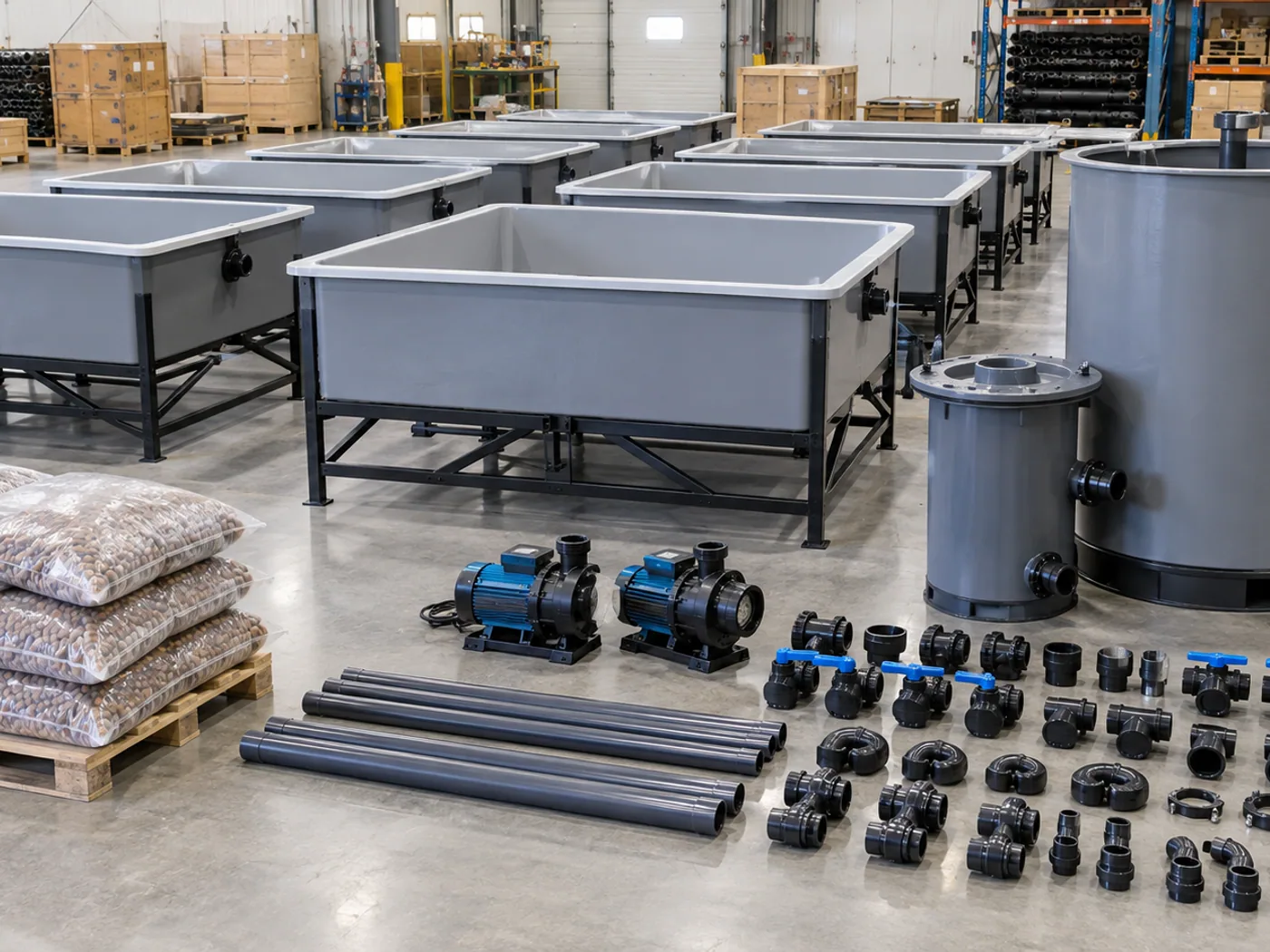
During factory testing, verify tank penetrations, valves, pump operation, distribution and drain behavior using clean water. Live worms, fish, water and plants should not be placed in export equipment for shipment. Biological commissioning belongs at the prepared installation site after shipment inspection confirms that tanks, media, plumbing and accessories match the packing list.
FAQ
Can I put worms directly in the fish tank?
No. A fish tank is not the intended habitat for composting worms, and worms do not replace solids removal. Use them only in a compatible media bed.
Will worms drown in aquaponics?
Composting worms tolerate very moist conditions, but permanently submerged, oxygen-poor zones are not the goal. Flood-and-drain beds provide alternating moisture and aeration and are generally more suitable.
Do I need worms for a new media bed?
No. Cycle and stabilize the aquaponics system first. Worms may be introduced later as a managed biological addition, but they are not required to establish nitrifying bacteria.
How quickly will worms reproduce?
Reproduction depends on species, temperature, oxygen, moisture, organic food and disturbances. Do not forecast a doubling time as if the bed were a controlled commercial worm bin.
Can I add too many worms?
Yes. A large colony placed into a clean or heavily filtered bed may not have enough suitable organic matter. Start with a modest population and observe.
Should I feed kitchen scraps to worms in the grow bed?
No. Kitchen scraps can overload the bed, attract pests, create anaerobic zones and introduce unsuitable contaminants. Fish feed and the system’s normal organic residues should remain controlled inputs.
Can worms fix a clogged media bed?
No. They may process some soft organic matter, but they cannot correct bad grading, excessive solids loading, root mats, poor drainage or undersized filtration.
Conclusion
The right number of worms for an aquaponics system is determined by suitable media-bed habitat, not fish-tank gallons. A cautious starting range of about 100–200 identified composting worms per square metre of usable flood-and-drain bed provides a manageable trial. Introduce them in zones, document the conditions and allow the population to respond to the actual food and oxygen available.
Use worms to support organic-matter breakdown in a stable bed—not to hide an overloaded system. Mechanical filtration, biofiltration, aeration, accessible plumbing and water-quality monitoring remain essential.
Final CTA — Ask for a Media-Bed System Review
Need a media-bed configuration with accessible filtration, drainage and maintenance points? Contact Us with your bed size, media, fish species, expected feed input, crop plan and destination.