
Introduction
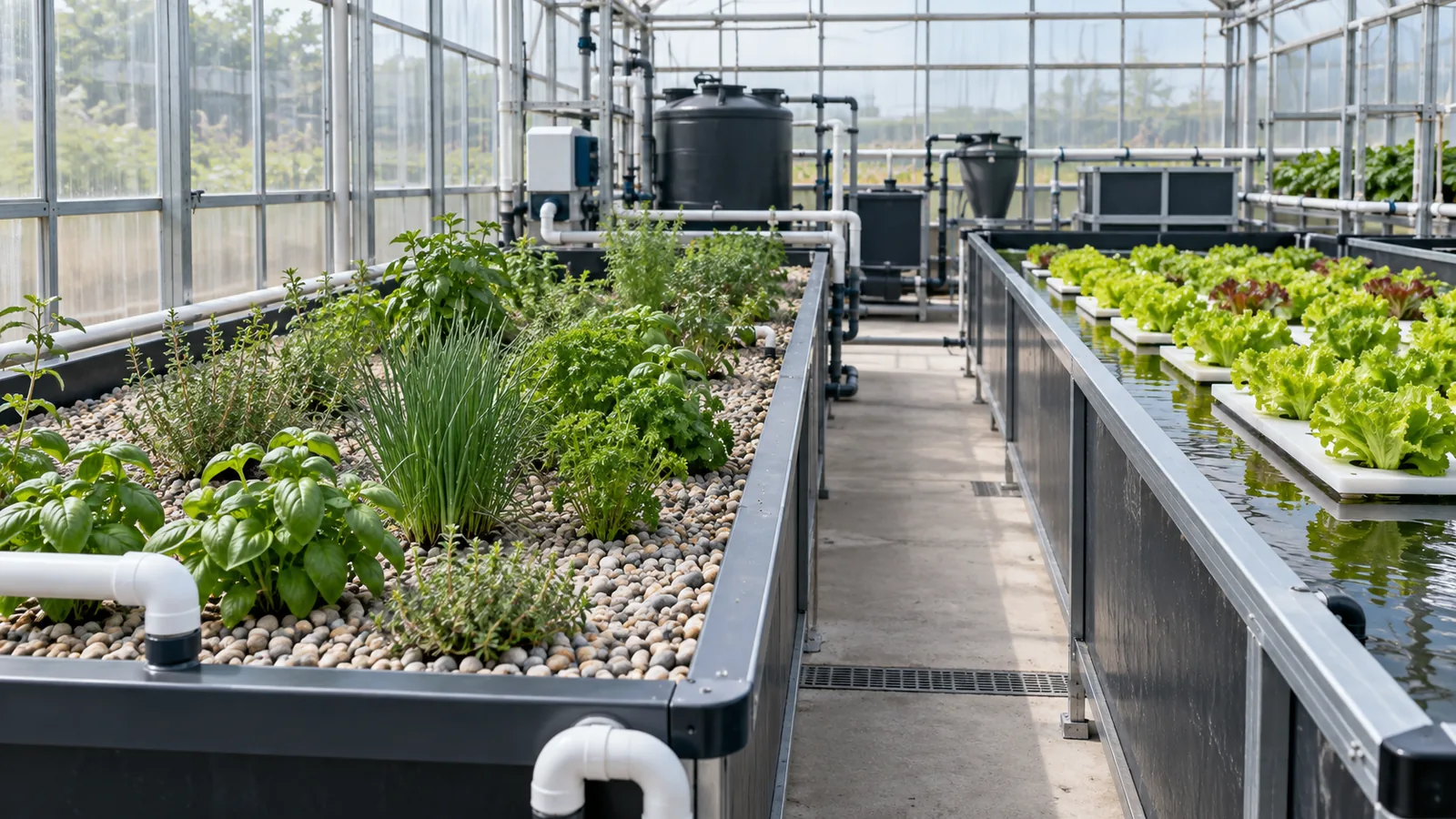
No, an aquaponics system does not automatically need gravel. Gravel or another inert grow medium is required when plants are grown in a media bed, but deep-water culture (DWC), nutrient film technique (NFT) and many tower systems support plants without filling the entire growing area with rock. The correct choice therefore starts with the plant-production method—not with a shopping list copied from another system.
Where a media bed is appropriate, verified inert gravel can be economical, durable and locally available. It can support plants, provide surface area for microorganisms and help distribute water through the root zone. The wrong rock can also be extremely heavy, damage hands or liners, trap excessive solids, restrict drainage or release carbonates that keep system pH and alkalinity higher than intended.
This guide explains when gravel is useful, when it is unnecessary and what should be verified before aggregate is loaded into a system. It is not an instruction to place gravel in fish tanks or every hydroponic component.
The Short Answer
Use gravel only when the system design calls for an aggregate-filled media bed and the material has been confirmed as suitable for recirculating water, fish, plants and food-production use. Do not add gravel merely to make an aquaponics system look natural. DWC rafts and NFT channels normally need only a small propagation plug or net-pot medium around each seedling, while tower and Dutch-bucket arrangements use their own specified root-support method.
For a media bed, the material should be chemically stable, appropriately sized, structurally supportable, comfortable enough to handle and free from harmful contamination. A local rock sold under a familiar name is not automatically inert. Geological composition can vary between quarries and even between batches.
Start With the Growing Method
The word “aquaponics” describes the integration of aquatic animal production and soilless plant production; it does not prescribe one grow-bed material. Our guide to the different types of aquaponics systems explains the wider choice. For this decision, the four most relevant formats are media beds, DWC rafts, NFT channels and vertical or container-based systems.
Media beds normally need a substantial grow medium
In a media-bed system, plant roots grow through a bed filled with expanded clay, verified gravel, expanded shale, lava rock or another specified inert material. The medium supports the plant and creates spaces through which water and air move. Its wetted surface also provides habitat for microorganisms involved in biological treatment.
Media beds may operate as flood-and-drain, constant-flood or timed-irrigation zones. The method changes the water-level pattern but not the need for root support.
DWC raft systems do not need a gravel-filled trough
In DWC, plants sit in floating or supported rafts while their roots hang in aerated water. Seedlings usually begin in small plugs, cubes or net pots, but the production trough is not filled with gravel. Adding rock across the bottom would increase structural load and make accumulated solids harder to inspect and remove. DWC instead depends on upstream solids treatment, water movement, root-zone oxygen and accessible cleaning.
NFT channels use a shallow moving water stream
NFT plants are held in net pots or planting holes while roots contact a shallow flowing film. Filling the channel with ordinary gravel would obstruct the intended hydraulic section and create cleaning problems. The design needs clean water, suitable channel slope, dependable flow and a propagation method compatible with the crop.
Towers and containers follow the equipment design
Some towers use small baskets, inserts or limited amounts of inert media. Others expose roots inside a hollow column. Dutch buckets and drip-fed containers may use specified media, but they should not be treated as conventional gravel beds without checking drainage, weight and solids sensitivity. Follow the approved system design rather than substituting local rock because it is inexpensive.
What Gravel Does in a Media Bed
Gravel is not plant fertilizer by default. A suitable inert aggregate is selected precisely because it should not dissolve rapidly or unpredictably change water chemistry. Its main functions are physical and biological.
Root and crop support
The medium anchors roots through a usable volume and suits herbs, mixed demonstration crops and plants needing more support than a thin raft provides. Tall or fruiting crops may still need trellising.
Air and water spaces
Particle size, shape and packing determine the spaces between stones. Those voids must allow water to enter and drain without leaving large dry zones or permanently stagnant pockets. Very fine material can compact, move into drains and reduce oxygen exchange. Very large, irregular rock may leave poor contact around young roots and can be uncomfortable to plant into.
Surface for microbial growth
Wetted aggregate provides colonization area for nitrifying and other microorganisms. That does not mean any gravel bed is automatically an adequate biofilter for any fish load. Useful biological capacity depends on available surface area, water distribution, dissolved oxygen, pH, temperature, feed load and how much surface is buried under retained solids.
Limited solids capture
A media bed can intercept some suspended material. This apparent simplicity comes with a maintenance obligation. Feed waste, feces, root debris and biofilm can accumulate, consume oxygen and form preferential channels. A bed that acts as both plant zone and treatment component must be designed around a realistic solids load and an inspection or cleaning method.
Is Ordinary Gravel Safe for Aquaponics?
“Gravel” describes particle size more than chemical identity. One supplier’s river gravel may be largely stable silica-based material; another batch may contain limestone, shells, metals, construction debris or fine clay. Ask for the geological or material specification and intended use. Avoid rock from an unknown industrial site, roadside, mine-waste pile or container that previously held chemicals.
Rutgers New Jersey Agricultural Experiment Station introduction to aquaponics systems distinguishes media-filled beds from raft and NFT production and notes that gravel, perlite or another soilless medium may support a planting bed. Use that system-level distinction as a starting point, then verify the actual product being supplied.
Carbonate and limestone risk
Calcareous rock can dissolve enough carbonate to increase alkalinity and hold pH above the desired operating compromise. A persistently high pH can reduce availability of some plant nutrients and lead operators to repeatedly add acid without removing the cause. If high pH is already a concern, follow a measured diagnostic process such as our guide on how to lower pH in aquaponics, rather than dosing around unsuitable media.
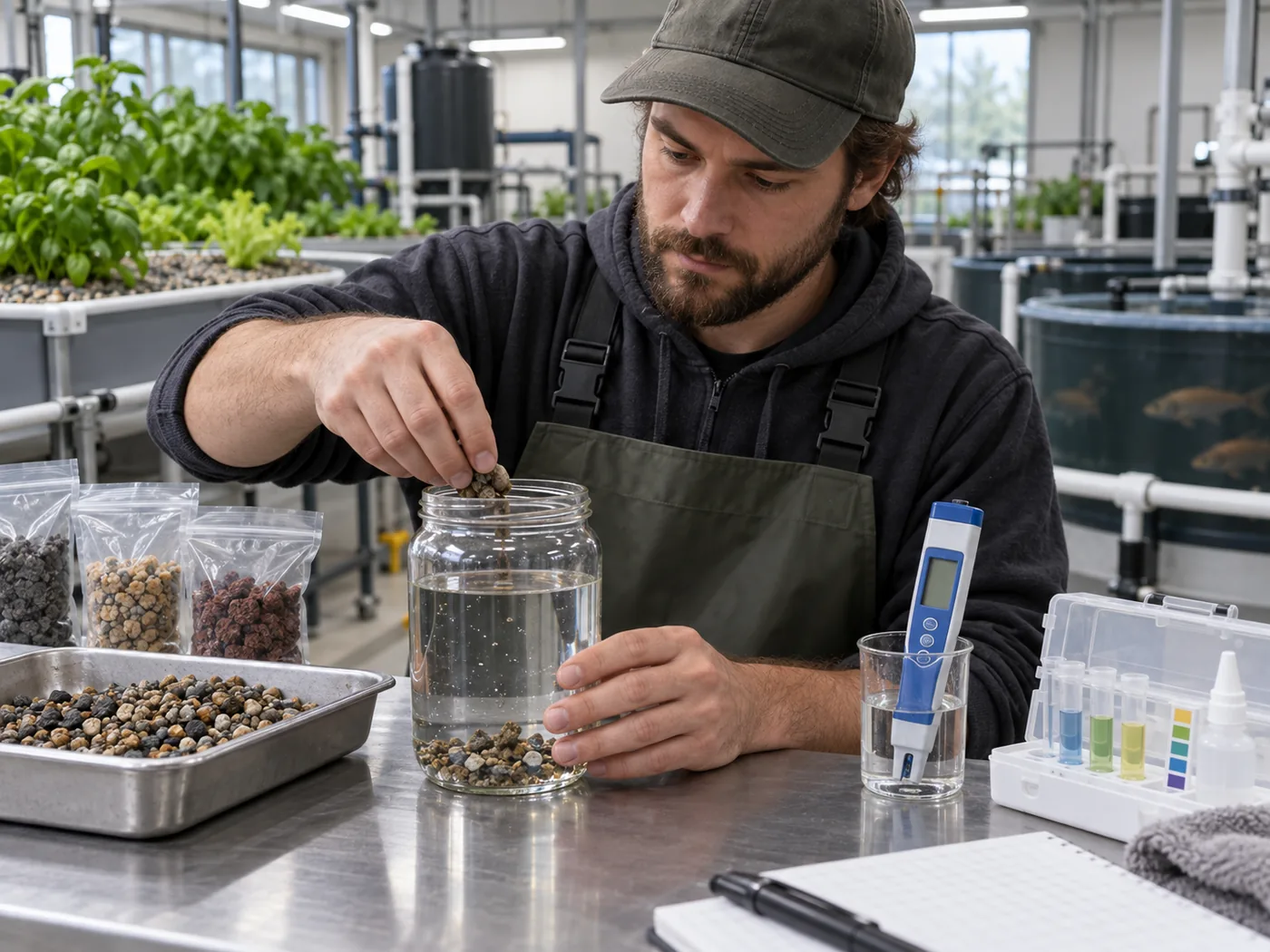
A simple acid-fizz test may reveal carbonate-rich material, but it is not a complete chemical analysis. A non-fizzing sample can still contain undesirable compounds. For a commercial project, request supplier information and consider laboratory or water-soak testing before approving a shipment.
Contaminants and previous use
Recycled aggregate can have an attractive sustainability story but an uncertain history. Painted stone, demolition material, metallurgical slag and reused containers may expose the water to compounds that are difficult to predict. “Washed” means dirt may have been removed; it does not prove fish safety or food-contact suitability.
Sharpness and handling
Crushed rock can have sharp edges that cut hands, damage plant stems or puncture a flexible liner during installation and maintenance. Rounded stone is easier to handle but may be heavier or less porous than manufactured media. Evaluate the whole task: delivery, washing, loading, planting, root removal and eventual bed clean-out.
How to Compare Gravel With Other Media
University of Florida IFAS guidance on common growing media explains that particle size, pore space, water-holding capacity, aeration, pH and cation-exchange behavior all influence performance. Although that publication also covers hydroponic media, these physical properties remain useful when comparing candidates for an aquaponics bed.
| Material | Main advantages | Main limitations | Appropriate buyer check |
|---|---|---|---|
| Verified inert gravel | Often local, durable and comparatively inexpensive | Very heavy; chemistry varies; low water retention; difficult to move | Quarry source, carbonate content, particle grading and structural load |
| Expanded clay | Lightweight, rounded and convenient to handle | Higher purchase price; may float initially; shipping volume | Size consistency, breakage, dust and supplier documentation |
| Expanded shale | Porous and lighter than many natural stones | Availability and quality vary | pH stability, grading, dust and delivery condition |
| Lava rock | Porous with useful surface area | Sharp, abrasive and variable; can damage liners or hands | Source, edge condition, fines and chemical stability |
| Plastic biomedia | Lightweight and consistent for biological treatment | May float and may not anchor larger plants | Polymer identity, UV resistance and food/aquaculture suitability |
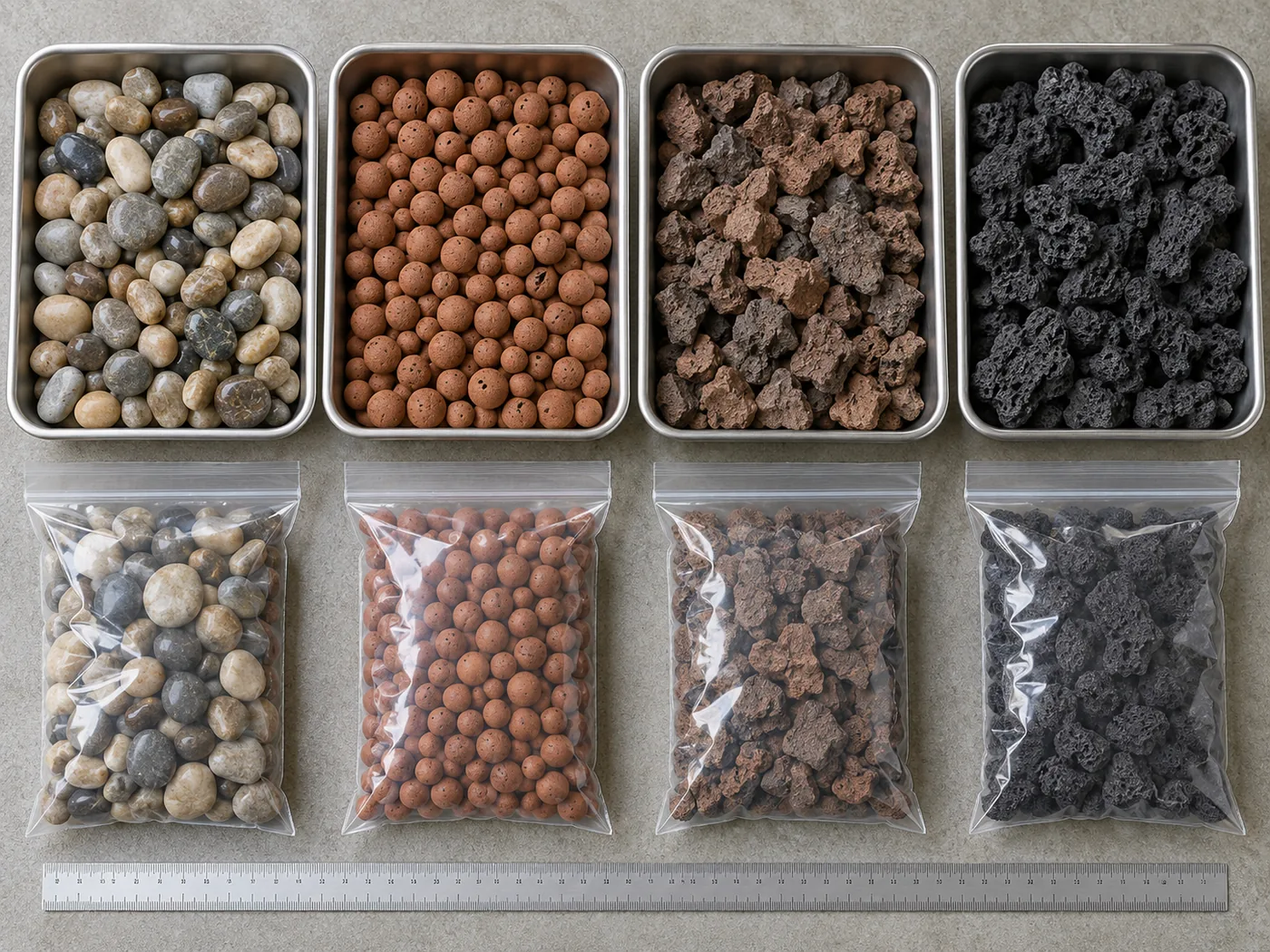
No row is universally best. Local freight can make gravel economical, while labor and structural reinforcement can remove that saving. A small school bed may value smooth, easy-to-handle expanded clay. A large greenhouse may justify a locally sourced aggregate only after chemistry, floor loading and cleaning access are confirmed.
Particle Size, Depth and Hydraulic Behavior
Do not select media using diameter alone. The specified grading should limit excessive fines while creating predictable void space. Mixed sizes can pack more tightly than a consistently graded material. The correct bed depth and water level depend on crop roots, bed structure and irrigation design; copying one number without checking the drainage path can create overflow or dry zones.
Keep the normal high-water level below the top surface so the exposed layer remains comparatively dry. This discourages algae and fungus-gnat habitat and keeps the plant crown from sitting in continuously wet conditions. The actual offset should be established during commissioning using the standpipe, siphon or control method fitted to that bed.
For flood-and-drain systems, the media displaces a large share of the apparent bed volume. The water needed to flood a bed is therefore not equal to its external length × width × depth. Measure a representative filled bed or use a verified media void fraction when sizing the sump and setting safe operating levels. Our separate guide comparing bell siphon and constant-flood operation explains why the irrigation method also changes commissioning and maintenance.
Weight Is a Design Input, Not a Minor Detail
Natural rock is heavy before water, plants and piping are added. Confirm that the bed frame and floor can carry the wet load. Shipping common stone internationally is rarely sensible when a verified local equivalent exists, but local sourcing still needs a written particle range, prohibited-material list, cleanliness standard and sample-approval process.
Mid-article CTA — Send Your Media Options for Review
Comparing local gravel with manufactured media? Send YAFAN your bed dimensions, candidate material data, system type and destination. We can help identify the equipment and installation questions that should be resolved before ordering.
A Practical Pre-Purchase and Acceptance Process
1. Define the function
State whether the media must support plants, contribute biological surface, capture a limited solids load or perform all three. Include crop type, bed dimensions, irrigation method, expected feed load and upstream filtration. Without these inputs, “best media” has no engineering meaning.
2. Approve a representative sample
Obtain a sample from the intended production batch. Record its source and check grading, fines, sharp pieces and foreign matter. Carry out a documented rinse and soak test using appropriate source water, measuring pH and alkalinity. Escalate uncertainty to a qualified laboratory or water specialist.
3. Confirm the support and liner
Check the wet load, frame, floor and lateral pressure. Add liner protection where sharp aggregate could abrade a flexible membrane. Ensure bed edges do not expose workers to unstable rock or awkward lifting. Final structural and electrical decisions belong with qualified local professionals.
4. Plan washing and drainage
Even acceptable material may arrive with dust and fines. Define where it will be washed, how wash water will be managed and how clean media will reach the bed without contaminating other equipment. Do not wash quarry sediment into a storm drain or directly into a stocked fish loop.
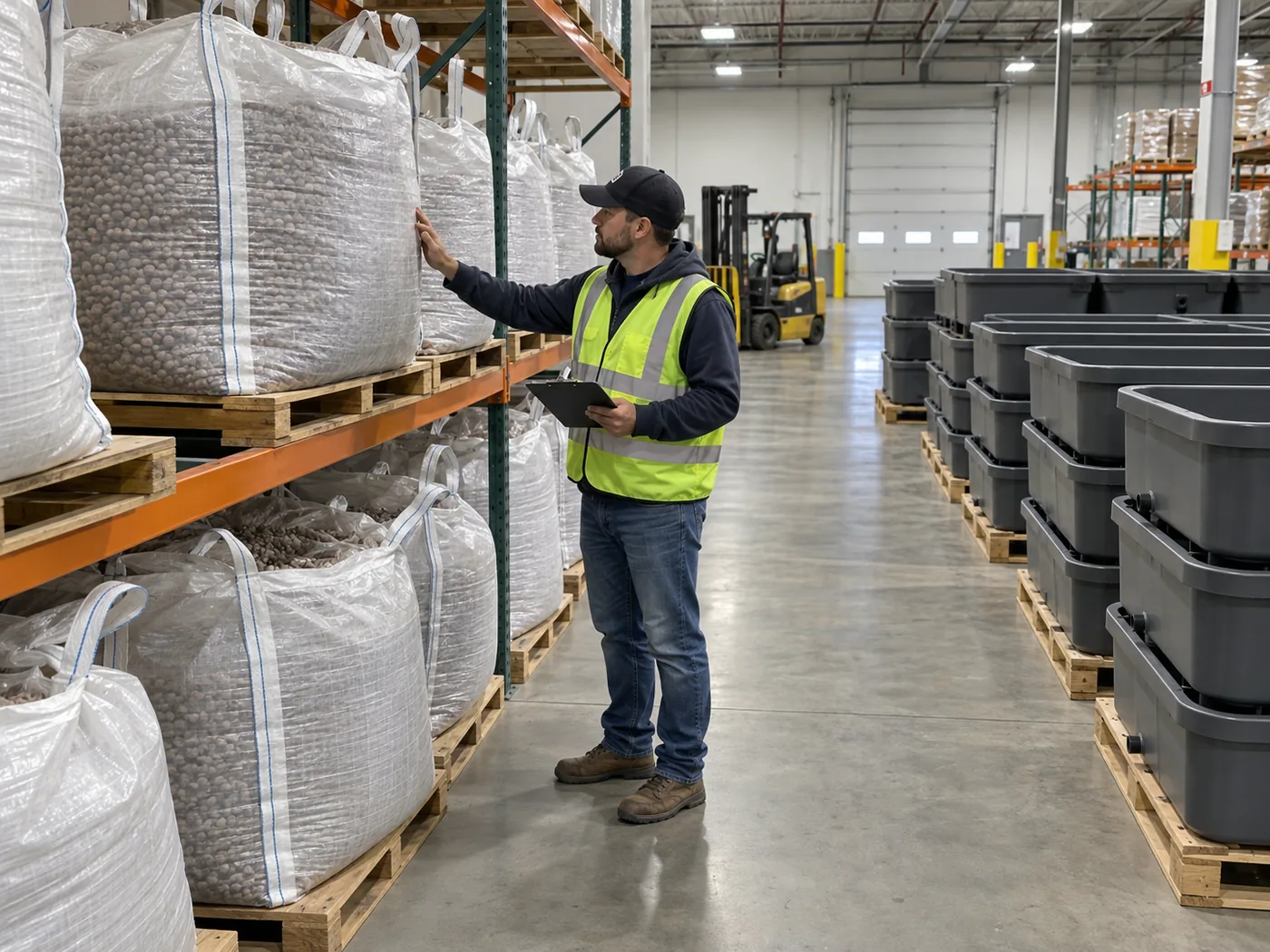
5. Inspect the shipment
At shipment inspection, compare the delivered material with the approved specification and sample. Check package or batch identity, visible contamination, excessive breakage, moisture and quantity. International equipment shipments should contain dry, empty tanks and grow beds; fish, water and living plants do not belong in a container-loading photograph.
6. Commission before full loading
After installation, circulate prepared water and confirm drainage, distribution, standpipe or siphon behavior, pump access and overflow. Record baseline pH and alkalinity, then establish biological function before increasing load.
Maintenance After the Bed Is Operating
Observe flood pattern, drain time, surface moisture and plant uniformity. Slow drainage or wet patches may indicate roots, fines, a restricted outlet or accumulated solids. Remove dead roots without aggressively sterilizing useful biological surfaces, and never use an unverified household cleaner. Record flow, filter cleaning, pH, alkalinity and material changes; our aquaponics maintenance guide provides a broader framework.
Common Mistakes
Putting gravel in the fish tank
Aquaponics fish tanks are normally designed for observation, circulation and solids removal. A decorative gravel bottom can trap waste and obstruct drains. Use it only if a species-specific, professionally reviewed design requires substrate and provides a cleaning method.
Buying by product name alone
“Pea gravel,” “river rock” and “crushed stone” do not prove mineral composition. Approve a specification and sample from the real source.
Ignoring accumulated solids
Media can capture waste without making that waste disappear. Unmanaged accumulation consumes oxygen and can create odor, clogging and root stress.
Choosing the cheapest delivered tonne
Include structural support, washing, labor, pump effects, cleaning and eventual replacement. Total installed and operating cost is more useful than material price alone.
FAQ
Can I use ordinary pea gravel in aquaponics?
Only after its source, chemistry, cleanliness, grading and suitability have been checked. The name “pea gravel” describes size and shape, not guaranteed mineral composition. Limestone-containing material can increase alkalinity and pH.
Is expanded clay better than gravel?
It is lighter and usually easier to handle, but it costs more and may create dust or initial floating particles. Gravel may be economical locally but adds structural and labor burdens. The better option depends on the verified material and project priorities.
Do DWC raft systems need any gravel?
They do not need a gravel-filled production trough. Seedlings may use a small propagation plug or net-pot medium, but the roots hang in treated, aerated water.
Can gravel replace a separate biofilter?
Media provides microbial surface area, but adequacy depends on feed load, available wetted surface, oxygen, flow and solids management. Do not remove specified treatment equipment without a design review.
How should new gravel be cleaned?
Follow the approved material and site procedure. Remove dust and loose fines with suitable source water, manage wash water responsibly and avoid unverified chemicals. Cleaning does not correct unsuitable mineral chemistry.
How often should gravel be replaced?
Stable inert gravel does not have an arbitrary annual replacement schedule. Replacement may be justified by contamination, unsuitable chemistry, severe compaction, physical damage or an approved redesign. Routine inspection and solids control are preferable to unnecessary replacement.
Conclusion
Aquaponics needs gravel only when the chosen plant-production method requires an aggregate medium. Verified inert gravel can be practical in a well-designed media bed, but it is not automatically safe because it is natural or locally available. Confirm chemistry, grading, cleanliness, structural load, hydraulic behavior and maintenance access before purchase. DWC, NFT and many vertical systems use different root-support methods and should not be filled with rock by default.
The reliable sequence is simple: choose the growing method, define what the medium must do, approve a representative material, verify the structure, wash and inspect it, then commission the bed before increasing biological load.
Final CTA — Ask for a System and Media Checklist
Contact YAFAN with your grow-bed dimensions, crop plan, fish plan, local media options and project country. We can help prepare a clearer equipment scope and installation checklist for supplier comparison.

