Introduction
“How much does an aquaponics system cost?” sounds like a request for one number. In a real purchase, it is a scoping question. A desktop teaching unit, a backyard food-growing system, and a climate-controlled commercial farm may all be called aquaponics, but they have very different equipment, installation, utility and operating requirements.
For buyers, the useful answer is not a catalogue price without context. It is a budget that states what production goal is included, what is excluded, and what assumptions have been made about site conditions. That approach prevents a low equipment figure from becoming an expensive project once freight, electrical work, water treatment, controls, commissioning and staff time are added.
This guide explains the cost categories that matter, how to compare supplier quotations, and how to create a budget suitable for management approval or an RFQ. It complements our commercial aquaponics system buyer’s guide, which focuses on selecting and specifying a complete solution.
Aquaponics system cost and pricing: what changes the quote
Aquaponics system pricing changes with tank volume, grow area, filtration duty, controls, lighting, climate equipment, delivery terms and the amount of installation support included. A low equipment price can become a high project cost when freight, local pipework, electrical work, commissioning or spares are omitted. Compare quotations against the same written scope rather than one headline number.
For YAFAN system inquiries, the minimum order quantity is one set and individual buyers can place an order. OEM and ODM configurations are available, DDP service can be provided, typical production is 25–30 days per set, and current manufacturing capacity is approximately 30 sets per month. The final quotation and delivery schedule are confirmed against the selected configuration and destination.
The short answer: cost follows scope, not tank volume alone
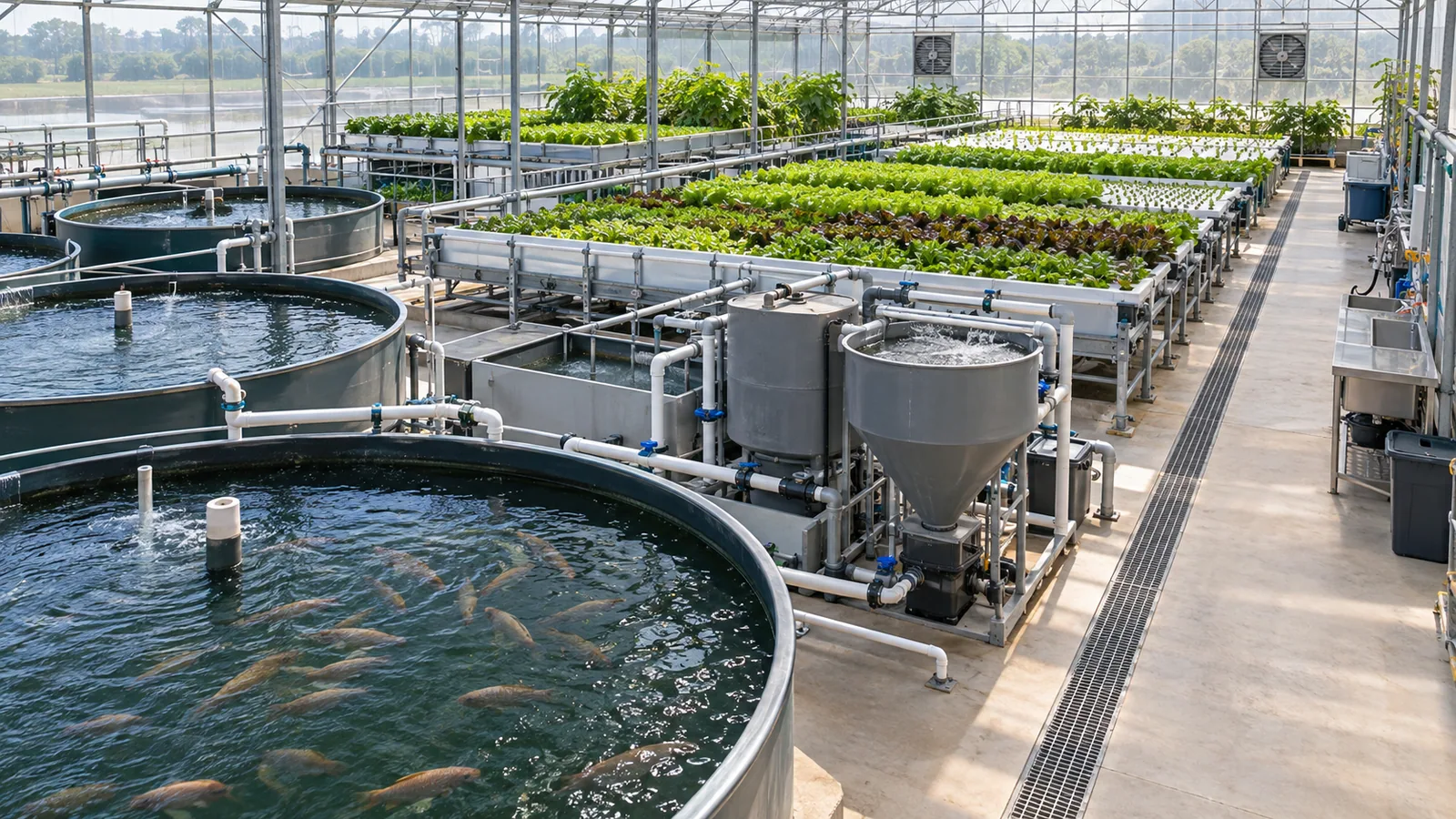
An aquaponics system normally includes fish culture, solids removal, biological filtration, plant production, water movement, aeration, plumbing and monitoring. A complete project may also include a greenhouse or building, climate control, crop benches or rafts, electrical distribution, backup power, water storage, packing areas and installation services.
That is why a price comparison based only on “fish tank size” is unreliable. Two systems with similar tank volumes can differ materially in food-grade materials, pump duty, filtration access, redundancy, automation, insulation, growing method and local construction scope.
Published economic work also illustrates the scale effect without creating a universal price promise. Purdue University’s economic analysis of aquaponics production in Indiana evaluates investment and operating assumptions for a specific production setting. A California Polytechnic State University system-design project likewise makes clear that design and cost are linked to a defined output and operating model. Treat these as planning references, not current supplier quotations.
Start with the project type
Learning, demonstration and prototype systems
Schools, training centers and first-time operators often need a compact system that makes water flow and nitrogen conversion visible. Cost is usually driven by safe tanks, dependable aeration, a modest pump, simple filtration, a grow bed or raft area, basic test equipment and a practical installation location.
For this category, buyers should decide whether the system is a teaching tool, a pilot for future expansion, or a food-production asset. A demonstration unit can be intentionally simple. A pilot should include enough measurement, access and maintainability to generate reliable operating data. Cutting the test kit, drain points or access covers to save a small amount at the outset often makes the learning phase harder.
Small farm, restaurant or community project
At this level, budget attention shifts from individual parts to repeatable operation. The project may need more durable plumbing, better solids handling, crop support equipment, water-quality instrumentation, storage, safe walkways and an agreed maintenance routine. A buyer also needs to account for delivery, unloading, assembly, electrical connection and training.
The important question is not whether every component is “commercial grade.” It is whether each component is sized for the expected duty and can be inspected, cleaned and replaced without interrupting the entire system. A quotation should show these choices clearly.
Commercial greenhouse or controlled-environment project
For a commercial project, the aquaponics equipment package may be only one portion of total project cost. Site preparation, greenhouse structure, heating or cooling, lighting, water source preparation, drainage, electrical service, controls, biosecurity measures, packaging, cold storage and contingency can be substantial.
Commercial budgets should be developed against a production plan: crop mix, plant area, harvest schedule, fish species, stock plan, target market, staffing model and seasonal climate strategy. The greenhouse planning checklist is a useful companion before asking suppliers for comparable quotations.
The cost categories buyers should separate
1. Process equipment
List the water-loop equipment separately: fish tanks, clarifier or mechanical filtration, biofilter media or chambers, sump, pumps, aeration, pipework, valves, plant channels/rafts/beds and supports. Confirm material type, wall thickness where relevant, connection sizes and the planned flow path. “Includes filter” is not enough to compare two bids.
Ask what happens during normal cleaning. Is there an isolation valve? Where does sludge go? Can a pump be removed? Is there a bypass or spare connection? These details affect both installed cost and long-term downtime risk.
2. Controls, sensing and electrical work
At minimum, operating teams need a practical way to observe water temperature and key water-quality conditions. Larger systems may require level alarms, pump failure alarms, dissolved-oxygen monitoring, data logging or remote notification. The correct choice depends on the consequence of a failure and who can respond.
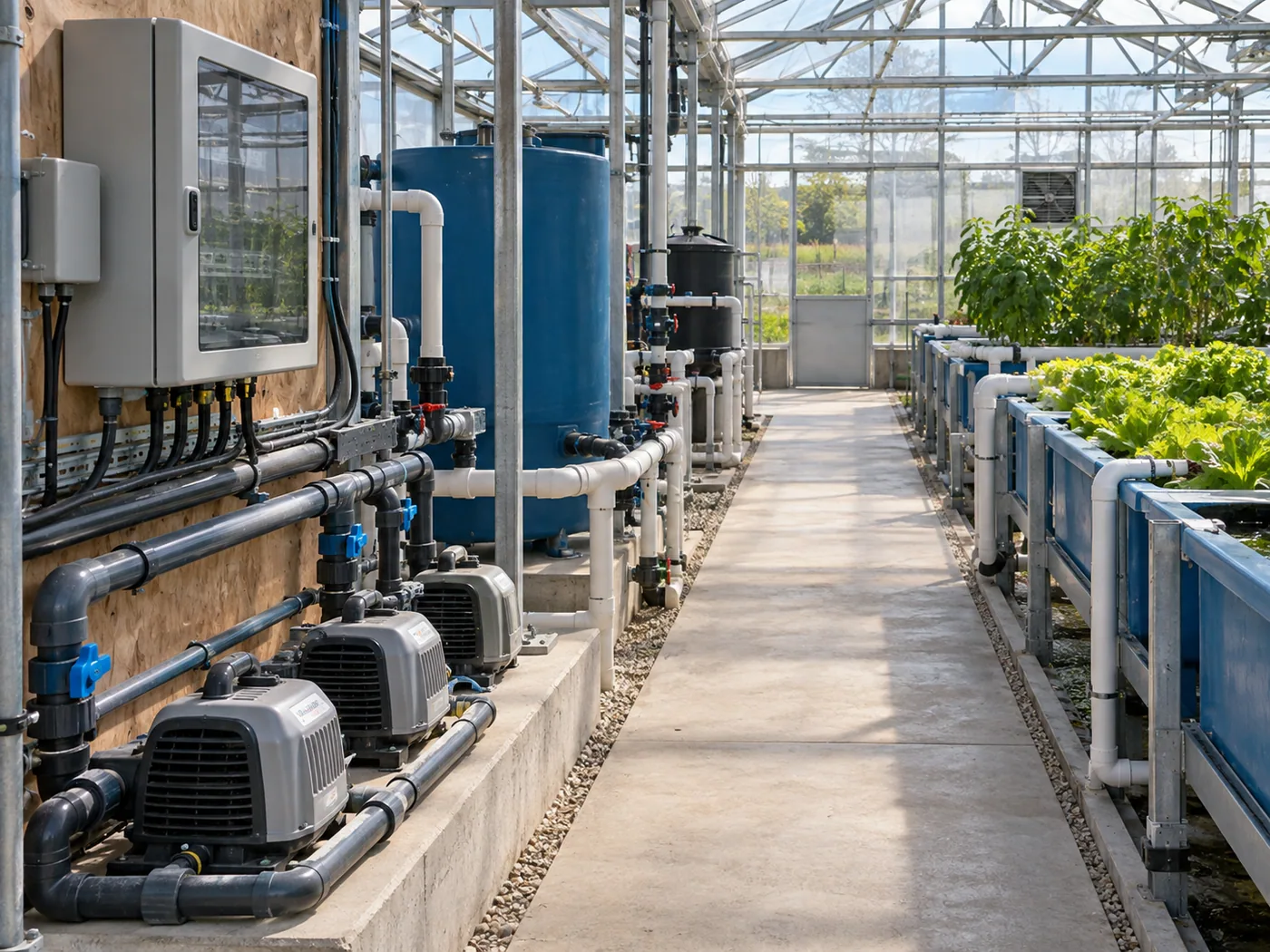
Include electrical distribution, protected outlets, cable routing, grounding, ventilation around equipment and backup-power planning in the budget. A low equipment price that excludes the electrical scope is not a complete project cost.
3. Civil, building and utility scope
The site can determine whether an otherwise sensible system is economical. Confirm floor loading, drainage, water supply, wastewater route, access for delivery, structural supports, temperature range and local permits. In a greenhouse, also evaluate shade, ventilation, heating, cooling and humidity management.
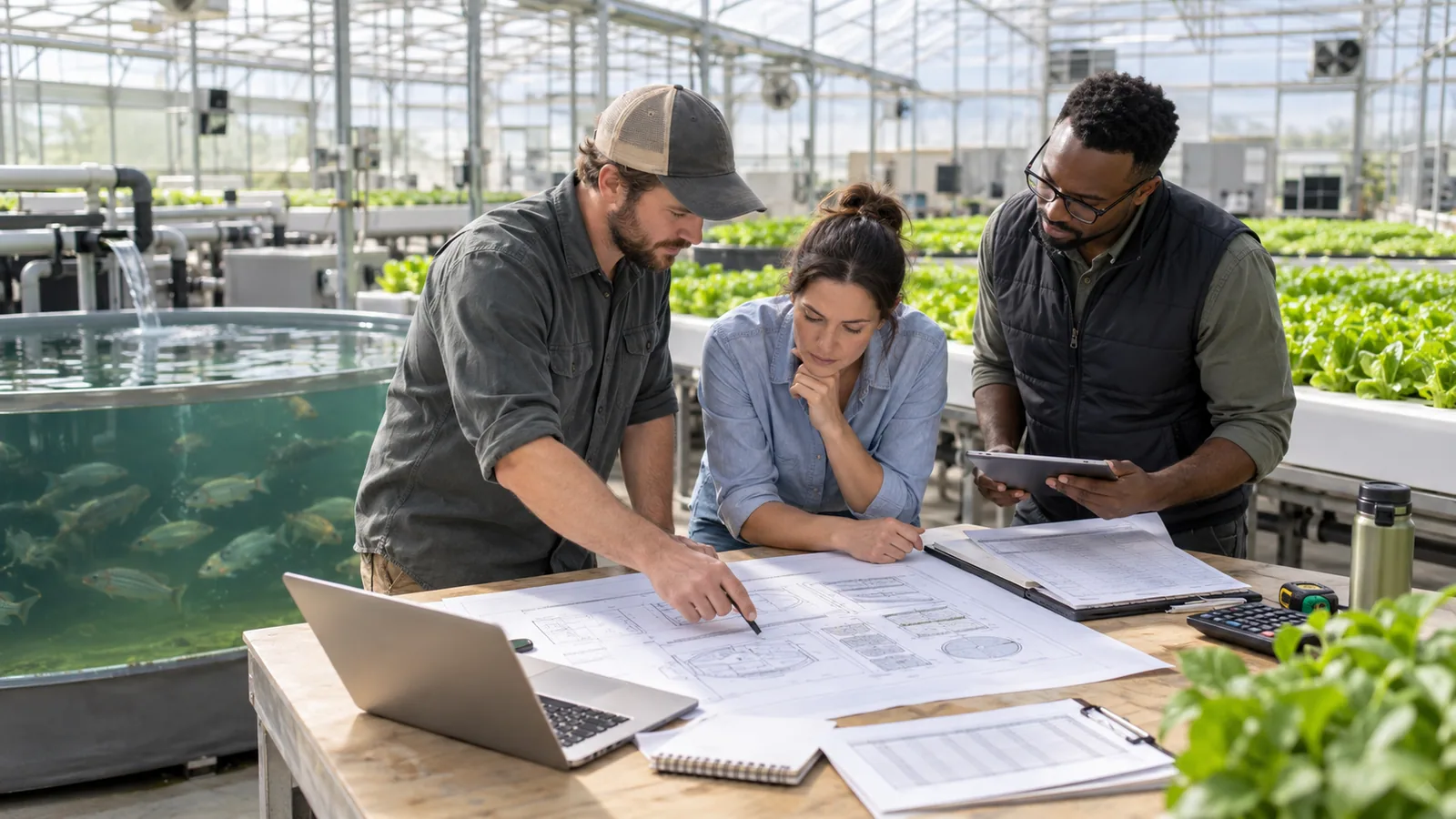
During installation preparation, a technical team should review the actual routes for pipes, electrical conduits, doors and maintenance access. It is less costly to revise a drawing before shipment than to modify panels, pipe runs or supports on site.
4. Freight, installation and commissioning
Freight should state Incoterms, packing method, delivery destination, unloading responsibility and the documents included. For international projects, check whether the quotation covers only ex-works equipment or also ocean/air freight, inland transport, customs charges and local installation.
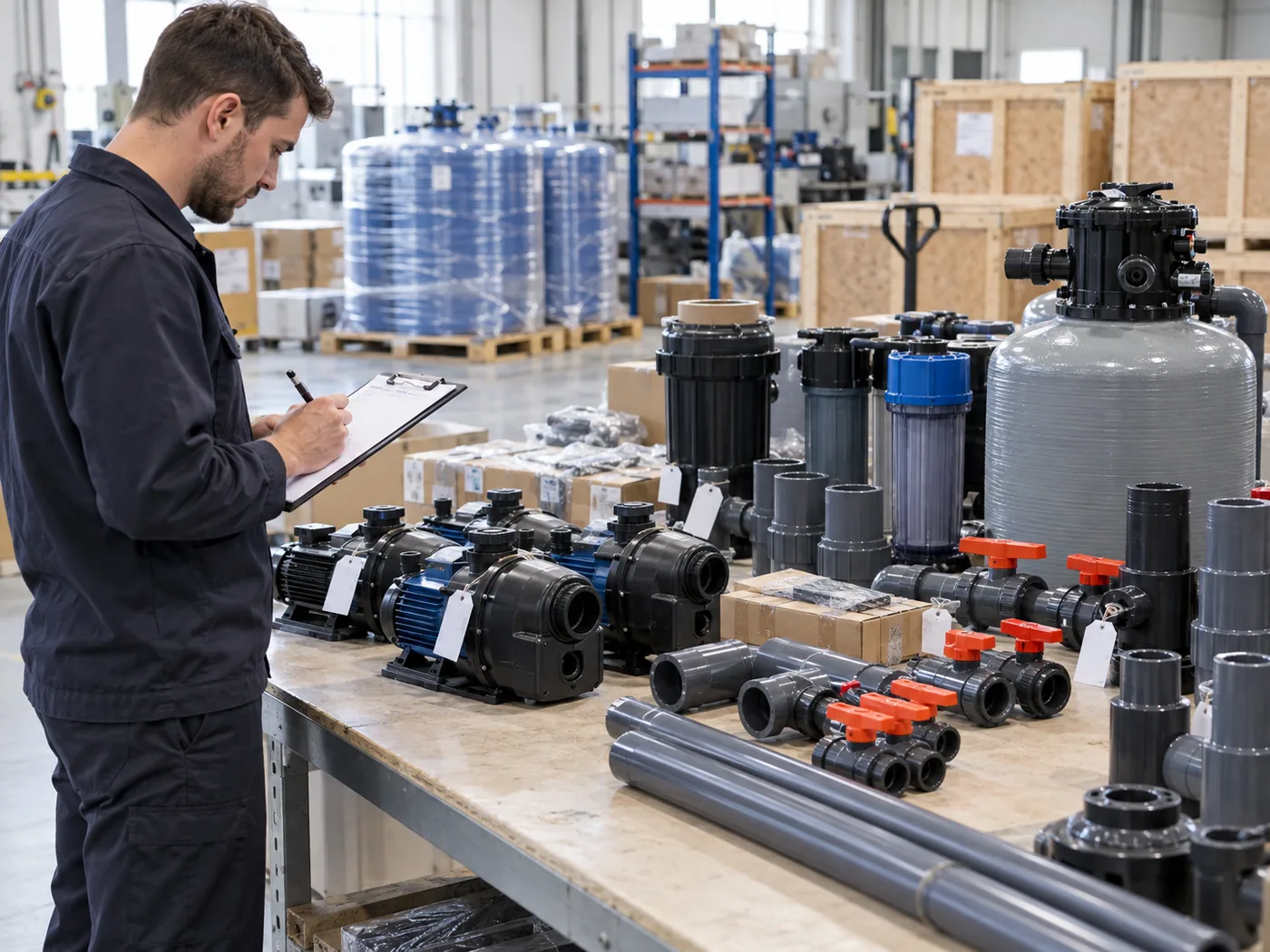
Installation may include assembly, leak testing, pump-direction checks, aeration checks, sensor setup, operator orientation and a commissioning checklist. In a professional shipment inspection, the team should verify labelled cartons, fittings, valves, accessories and manuals against the packing list before dispatch. That does not replace site acceptance, but it reduces avoidable missing-item delays.
5. First-year operating and working-capital needs
Do not stop at capital expenditure. Build a separate first-year estimate for feed, fingerlings or juveniles, seed or seedlings, electricity, water treatment, test supplies, replacement parts, labor, crop packaging, insurance, maintenance and contingency. The biggest recurring cost is not the same in every location. Climate, electricity tariffs, market distance and staffing availability can change the result.
For a business case, include a conservative ramp-up period. A biofilter needs time to establish, crops need production cycles, and a sales channel needs validation. Assume learning, routine maintenance and occasional loss rather than a perfect first season.
How to request a comparable supplier quotation
Send the same information to each supplier. This makes the answers comparable and gives engineers enough context to avoid vague assumptions.
Your minimum RFQ brief
- Location, indoor/outdoor setting and local climate range
- Available footprint, ceiling/greenhouse height, floor and drainage details
- Water source and any known water-test results
- Intended fish species, crop category and production purpose
- Target plant area or harvest objective, not just a tank size
- Electrical supply, backup-power expectation and monitoring needs
- Preferred growing method: media bed, raft, NFT or another defined approach
- Delivery terms, installation responsibility and desired commissioning support
- Required documents: layout, equipment list, utility schedule, manuals and spare-parts list
Ask each supplier to show exclusions and assumptions. Examples include greenhouse construction, electrical connection, local permits, civil work, water treatment, consumables, live fish, seed, labor and travel. A quotation with a transparent exclusion list is more valuable than an apparently cheaper lump sum.
A practical budgeting method
Build the budget in three layers. First, create a concept budget with broad categories and a written scope. Second, request quotations for the items with the greatest cost or risk. Third, freeze an installation-ready budget only after the site layout, utility responsibilities and handover plan are agreed.
Use a simple comparison table with rows for process equipment, greenhouse/building, utilities, freight, installation, controls, spares, training, contingency and first-year operating needs. Add one column for “included,” one for “buyer-supplied,” and one for “assumption to confirm.” This exposes gaps quickly.
For an overseas order, keep a project contingency separate from a supplier’s price. Contingency is for foreseeable uncertainty: local labour, delivery delay, site variation, fittings, utility upgrades or exchange-rate movement. It should not be used to hide an incomplete scope.
Compare lifecycle value, not just initial purchase price
When two proposals appear similar, ask what the operator must do in the next twelve months. Compare energy draw at the stated duty, expected service intervals, availability of consumables, access to local replacement parts and the time needed to clean each treatment stage. A system that takes one person far longer to maintain may be less economical even if its first purchase price is lower.
The same reasoning applies to automation. A small project may not need a complex remote-control platform, but a system that cannot alert anyone to a pump or air failure can expose fish and crops to unnecessary risk. Select monitoring to match the consequence of failure, local response time and the team’s ability to act on an alert. Specify whether commissioning includes training for the controls, not only installation of the hardware.
Plan purchases in phases when the operating model is unproven
Phasing can be a sensible cost-control strategy. A buyer may install the core water-treatment loop and a defined plant area first, then expand only after demonstrating stable water quality, crop handling and customer demand. However, a phased design should reserve space, drainage, electrical capacity and connection points for the future stage. Retrofitting these basic provisions after a greenhouse is full of operating equipment is usually more disruptive.
Document which costs belong to each phase. Do not present a phase-one equipment price as if it were the total cost of the final intended farm. A clear phase plan protects both the buyer and supplier from a mismatch in expectations.
Where cost-cutting creates avoidable risk
Some savings are sensible: use a simpler crop support system, phase automation, start with a pilot, or standardize fittings. Other savings transfer risk into operations.
Be cautious about undersized aeration, inaccessible filters, unlabelled plumbing, no drain route, no spare consumables, poor access around tanks, weak electrical protection or no response plan for a pump failure. Aquaponics is an operating system, not a static installation. The team must be able to observe, clean, adjust and recover it.
Also avoid designing from an optimistic sales forecast. Higher-value leafy greens, herbs, fish and educational services can each have a place, but demand needs local evidence. A staged system that matches proven sales and operating skill is often easier to finance and manage than an oversized first build.
What a credible supplier package should contain
Before placing an order, request a scope document that links equipment to operation. At a practical minimum, it should include a layout drawing, process flow description, equipment list, material and connection details, utility requirements, packing list, installation sequence, operating/maintenance guidance and warranty terms.
For a factory-built package, ask about factory testing: how pumps, fittings, panels or controls are checked; how parts are labelled; and which photos or records can be shared before shipment. At receiving, carry out a shipment inspection before installation, then complete a site leak test and functional test before live stock is introduced.
FAQ
Is a DIY aquaponics system always cheaper?
Not necessarily. Repurposed materials can lower initial purchase cost, but the buyer still needs safe food-contact materials, compatible fittings, suitable filtration, testing equipment and time to build and troubleshoot. DIY can be a good learning route when the scope is modest and maintenance time is available.
Can I estimate cost from fish-tank volume alone?
No. Tank volume does not define grow area, filtration, climate control, energy demand, automation, building works or installation. Define the production objective and site conditions first.
What should be included in an aquaponics system quotation?
It should state equipment, materials, quantities, drawings, delivery terms, installation/commissioning responsibility, technical documents, warranty, exclusions and assumptions. Ask for the operating requirements as well as the supply list.
How much contingency should I include?
There is no single correct percentage. The appropriate allowance depends on how early the design is, how well the site is known, logistics conditions and whether utilities or construction are included. Record the reasons for the allowance and reduce uncertainty through site checks and written scope.
Are freight and installation normally included in a supplier price?
They may be included, partly included or excluded. Ask for delivery terms, destination, unloading responsibility, installation tasks and local works in writing. A delivered equipment price is different from a fully commissioned project price.
What information lets a supplier estimate cost more accurately?
Share location, site photos or drawings, available area, intended fish and crops, water/electrical supply, climate conditions, delivery preference and production goal. The more clearly these customer requirements are defined, the fewer hidden assumptions a quotation needs.
Conclusion
An aquaponics system cost is credible only when it is connected to a defined purpose, site and operating plan. Separate the equipment package from building, utility, logistics, installation and first-year operating needs. Then compare quotations on scope and risk—not only headline price.
Request a project budget
Planning a learning system, farm pilot or commercial installation? Send your requirements with your location, available space, water/electrical details and production goal. Our team can help turn those customer requirements into a clear equipment scope and quotation checklist.