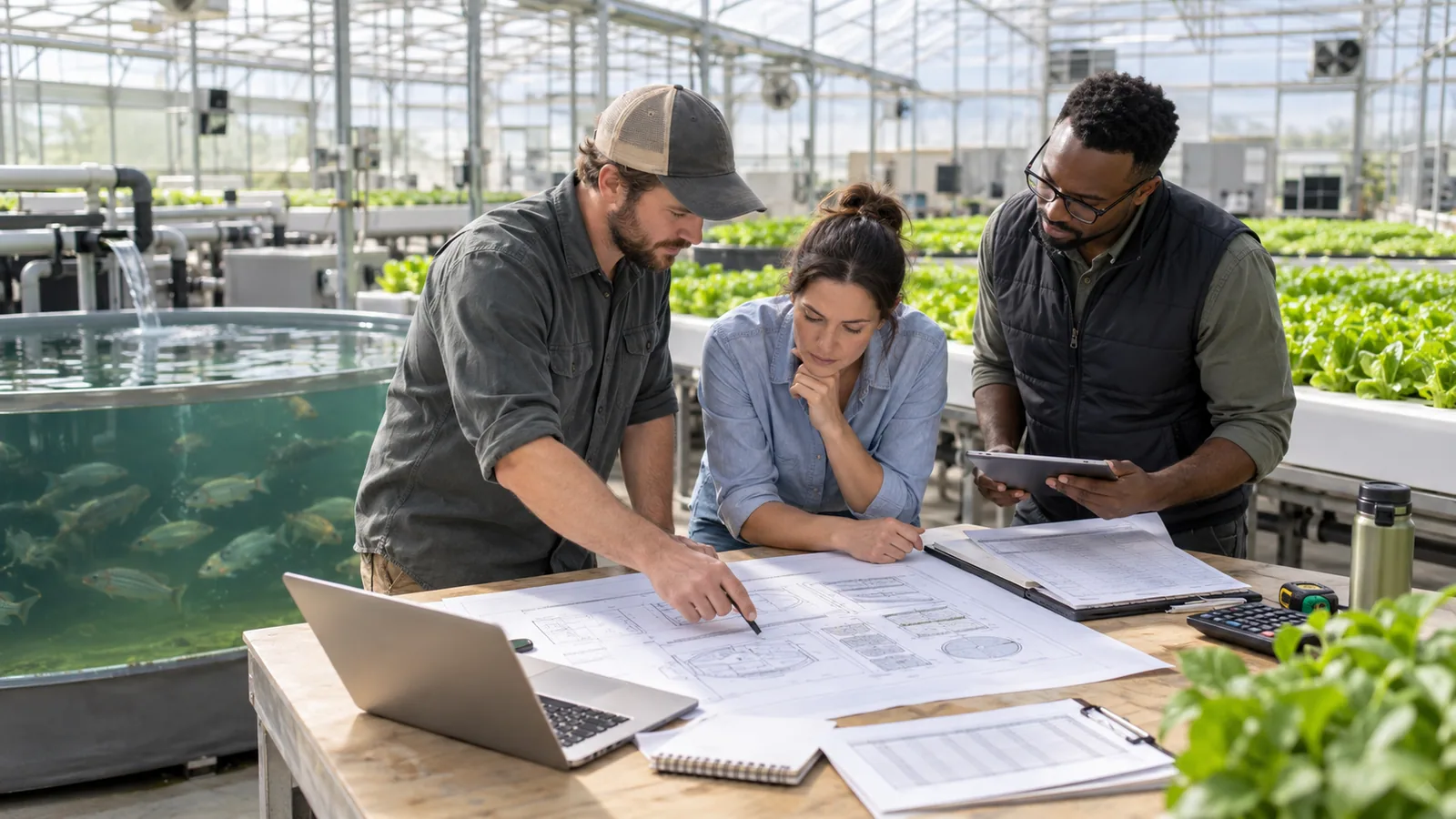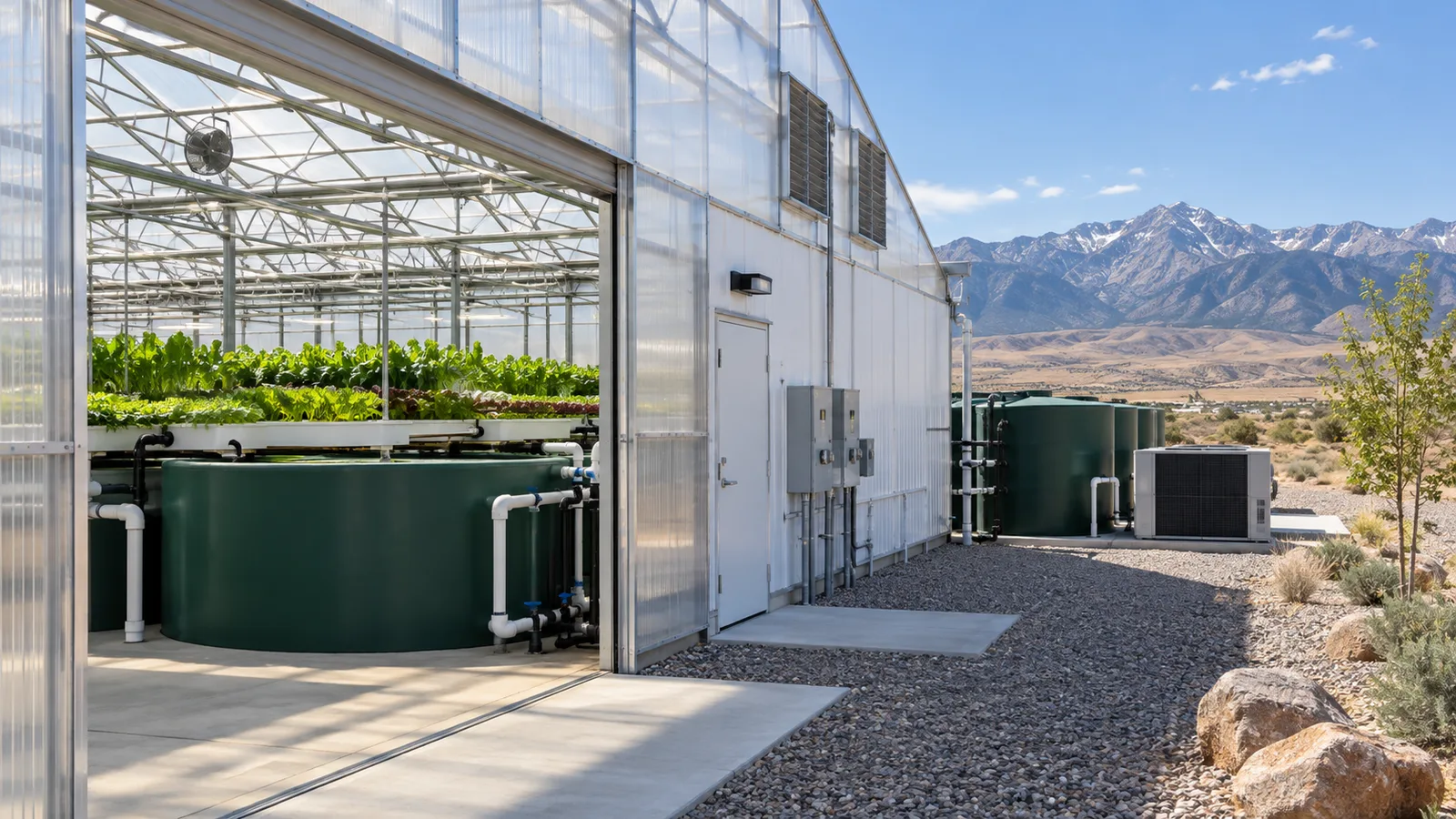
Installing an aquaponics system in Utah can range from several thousand dollars for a small indoor home system to hundreds of thousands of dollars for a greenhouse, school or small commercial facility. The system kit is only one part of the installed cost. Freight, site access, structural work, plumbing, electrical service, water treatment, climate control, permits, labor, commissioning and contingency can equal or exceed the equipment price.
For an early 2026–2027 planning exercise—not a contractor quote—reasonable broad project ranges are:
| Utah project type | Preliminary installed-cost range |
|---|---|
| Small indoor or garage home system | $4,000–$20,000 |
| Backyard system with a simple protective structure | $12,000–$60,000 |
| Modular greenhouse, community or school project | $40,000–$180,000 |
| Small commercial or institutional facility | $150,000–$750,000+ |
The low end assumes existing space, adequate utilities, simple access and substantial owner labor. The high end may include a new greenhouse or building, engineered foundations, utility upgrades, heating and cooling, professional installation, controls, backup power and regulatory work. Land, financing, operating losses during startup and major off-site utility extensions are normally separate.
The right question is not “What does aquaponics cost per gallon?” It is “What complete scope must be installed at this Utah site to meet the production, fish, crop, climate and compliance requirements?”
The Short Answer
Build the budget in seven layers:
1. Aquaponics equipment and controls
2. Freight, unloading and storage
3. Building, greenhouse and site work
4. Plumbing, electrical, water and drainage
5. Utah climate-control and resilience measures
6. Permits, design, professional labor and commissioning
7. Startup supplies and contingency
Use this relationship:
Installed project cost = delivered equipment + site/building work + utility work + installation labor + design/permits + commissioning/startup + contingency
Do not compare one supplier’s equipment-only price with another contractor’s installed proposal. Normalize scope line by line. The general aquaponics system cost guide explains global equipment and operating categories; this article focuses on Utah installation conditions and local planning.
Why Utah Changes the Installation Budget
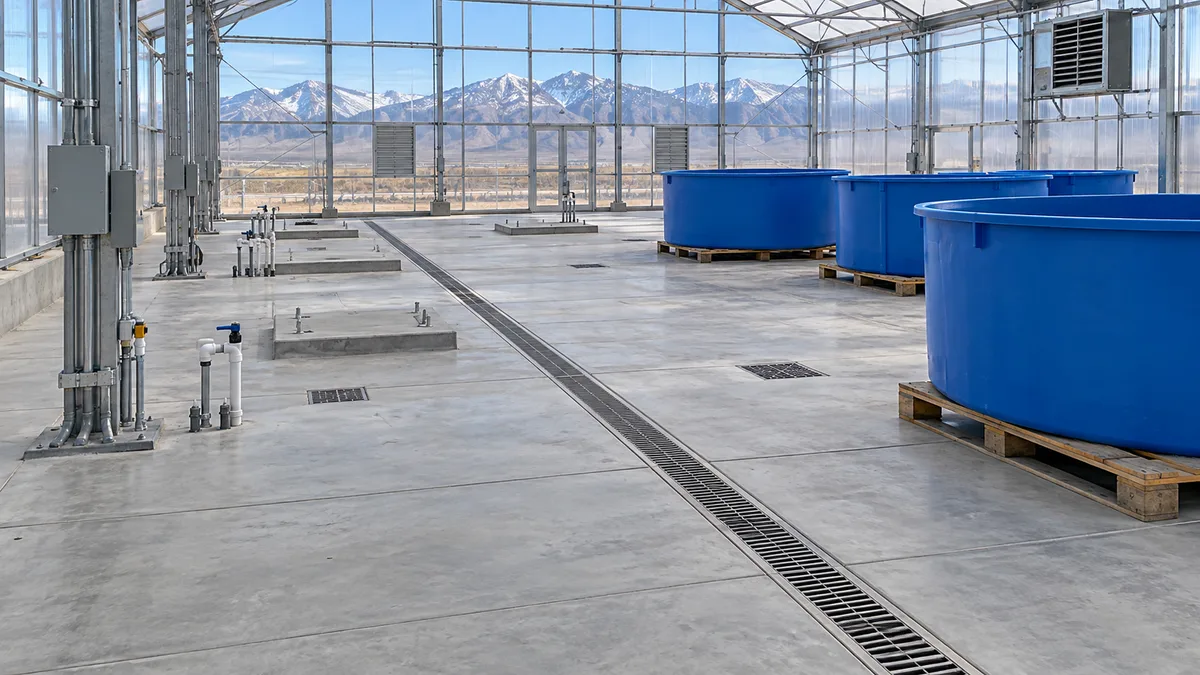
*Site conditions, utilities and climate-control requirements often change the installed budget more than the tank package alone.*
Utah contains several climate zones and elevations, so one statewide allowance is unreliable. Many locations have cold winters, hot dry summers, strong solar gain and large day-night temperature swings. Water quality, snow load, wind exposure, frost depth and local utility rates also vary.
These conditions affect more than greenhouse comfort. Fish water has high thermal mass, but an inadequately insulated system may require substantial winter heating. Summer solar gain can push water temperatures beyond the selected fish and crop range. Evaporative cooling may work well in dry air but increases top-up-water demand and may concentrate source-water minerals.
Before requesting a quote, record:
- Site elevation and design weather data
- Indoor, outdoor or greenhouse location
- Available floor area and clear height
- Existing electrical panel and service capacity
- Water source and laboratory analysis
- Sanitary sewer or septic connection
- Floor drainage and spill containment
- Vehicle and forklift access
- Fish species and crop plan
- Desired annual operating schedule
- Production and market objectives
A supplier can price tanks and filters without these facts, but the result is not a reliable installed Utah budget.
Utah Fish and Water Rules Belong in Early Planning
The Utah Division of Wildlife Resources’ current aquaponics administrative rule R657-59c defines qualifying noncommercial aquaponics facilities, addresses approved fish sources and species, and sets conditions related to containment and discharge. The rule also states that commercial aquaculture is governed separately under Utah agricultural law and rules.
This distinction matters to cost. A hobby system, school program, restaurant project and commercial fish operation may face different agency questions. Fish species, drainage location, live-fish movement and facility purpose should be settled before buying tanks.
Budget for the time and professional help needed to verify current requirements with the Utah Division of Wildlife Resources, Utah Department of Agriculture and Food, local building department, health authority, sewer or septic authority and other agencies relevant to the site. This article is not legal or permitting advice, and local rules can change.
Cost Layer 1: Aquaponics Equipment
The equipment package may include:
- Fish tanks and covers
- Mechanical solids separation
- Biological filtration
- Mineralization or sludge-handling equipment
- Sumps and pump stations
- Grow beds, DWC troughs or NFT channels
- Water and air pumps
- Pipe, valves and supports
- Sensors, controllers and alarms
- Backup aeration or power interface
- Water-treatment and dosing equipment
- Nets, sampling tools and test equipment
Equipment-only costs can range from a few thousand dollars for a compact home package to six figures for multi-tank commercial equipment. Tank volume alone is a poor comparison. One proposal may include filtration, aeration, controls and drawings while another lists only tanks and grow beds.
Request a responsibility matrix. It should state what arrives from the supplier, what the installer fabricates, what the electrician provides and what the owner purchases locally. Clarify whether pumps are selected for installed head, whether electrical components match local voltage and listing requirements, and whether spare parts are included.
Cost Layer 2: Freight, Unloading and Delivery Risk
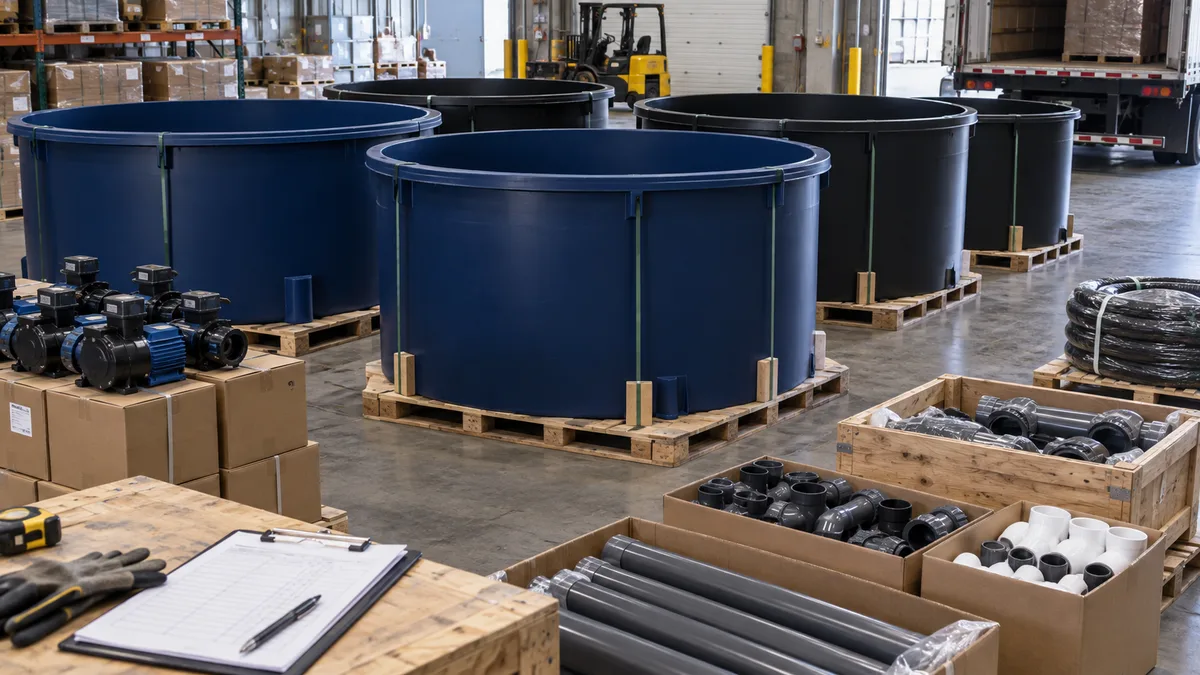
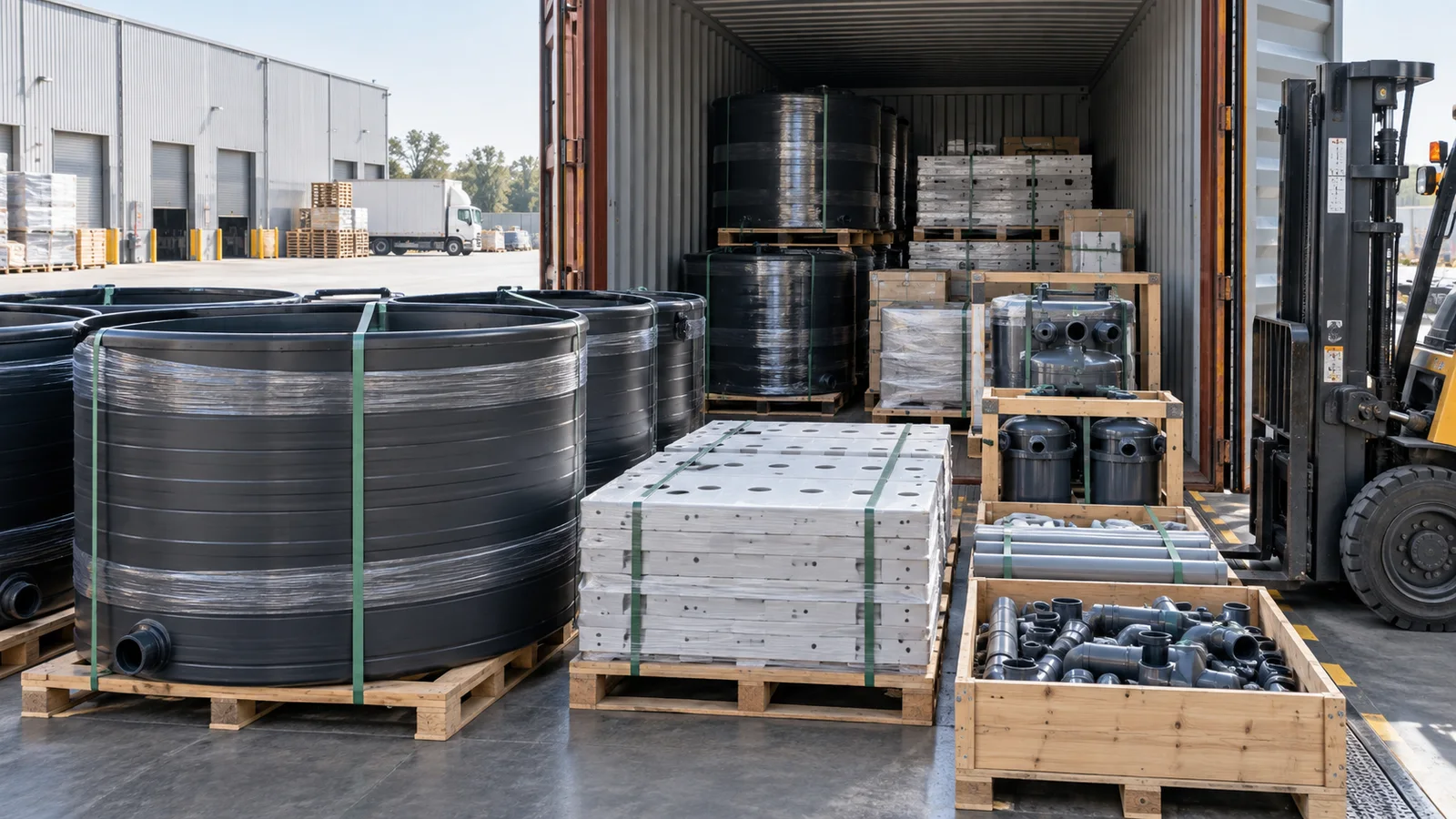
*Shipment inspection should verify dry tanks, pumps, fittings and quantities before installation begins.*
Utah buyers ordering from another state or country should budget for:
- Inland freight or ocean freight
- Customs, broker and port charges where applicable
- Cargo insurance
- Delivery appointment and liftgate or crane
- Forklift rental
- Temporary storage
- Packaging disposal
- Damage inspection and replacement lead time
Large tanks may be light relative to their size, so dimensional freight can be important. Confirm the largest crate, doorway and turning radius. A tank that cannot enter the building can trigger wall removal, crane work or outdoor assembly.
International equipment should arrive clean and dry. Fish tanks in shipping containers should not contain fish, water or growing crops. During shipment inspection, compare crate numbers and equipment models with the approved packing list, photograph damage before unpacking further and protect components from freezing or prolonged sun exposure.
The guide on buying a complete aquaponics system online provides a broader delivery and inspection checklist.
Cost Layer 3: Greenhouse, Building and Site Work
The aquaponics package usually excludes the structure that protects it. Site costs may include:
- Survey and geotechnical review
- Grading and drainage
- Excavation and frost-protected foundations
- Concrete slab, curbs and floor coating
- Greenhouse or insulated building
- Snow-load and wind design
- Insulation and vapor control
- Interior partitions and food-safe surfaces
- Service aisle and accessibility provisions
- Fencing, security and exterior lighting
Existing buildings are not automatically cheaper. A garage or warehouse may need floor strengthening, drains, ventilation, humidity control, corrosion-resistant finishes, electrical upgrades and a change-of-use review. Confirm the saturated weight of tanks and media beds with a structural professional.
In parts of the Salt Lake area, the Greater Salt Lake Municipal Services District explains that structures with added or modified plumbing, mechanical or electrical systems may require permits. This is a useful planning signal, not a statewide determination. Contact the authority having jurisdiction for the exact address before construction.
Cost Layer 4: Plumbing, Electrical, Water and Drainage
Plumbing
Installation labor rises when equipment is spread across several rooms, elevations or greenhouse bays. Price supply and return piping, valves, unions, supports, penetrations, insulation, backflow protection, floor drains and controlled overflow routes. Confirm which piping is shipped and which is field-fitted.
Electrical
Pumps, blowers, heaters, chillers, lights, controls and backup equipment may require panel capacity beyond a standard residential circuit. Budget for load calculations, dedicated circuits, disconnects, wet-location protection, conduit, controls and inspection. An imported control panel must still meet site and authority requirements.
Water treatment
Source-water testing may reveal chlorine or chloramine, high alkalinity, hardness, sodium or other factors that affect system management. Budget for storage, carbon filtration, reverse osmosis or blending only when supported by test results. Treatment systems create reject water, replacement-media and maintenance costs.
Drainage
Plan normal filter cleaning, emergency overflow and full-tank drainage. A hose routed outdoors is not a complete discharge design. Confirm sanitary sewer, septic and environmental requirements and include any pump, sump or containment needed.
Cost Layer 5: Heating, Cooling and Environmental Control
Climate-control scope can decide whether a Utah project is economical.
Winter heating
Heat loss occurs through greenhouse covering, building envelope, ventilation, exposed tanks and makeup water. Options may include space heating, insulated tanks, water heating, heat pumps, boilers or a combination. Equipment price is only part of the budget; power or gas service, controls, distribution and backup matter.
Do not size a heater from tank gallons alone. Use design outdoor temperature, target water and air temperatures, surface area, insulation, ventilation and heat gains. The fish species and crop plan should be selected with energy cost in mind.
Summer cooling
Shade, ventilation, evaporative cooling, nighttime flushing, insulated tanks or mechanical chilling may be considered. Evaporative systems use water and can alter humidity. Chillers can have high electrical demand. Provide alarms for high water temperature and loss of circulation.
Humidity and condensation
Indoor aquaponics adds moisture to the building. Budget for ventilation, dehumidification or heat recovery as the envelope and crop require. Uncontrolled condensation can damage structures and electrical equipment and support mold.
Backup and resilience
Fish depend on aeration and water movement. Include backup air, generator connection, battery-supported alarms, spare pumps and a response procedure. A low-cost installation without life-support redundancy may have a high biological risk.
Cost Layer 6: Labor, Design, Permits and Commissioning
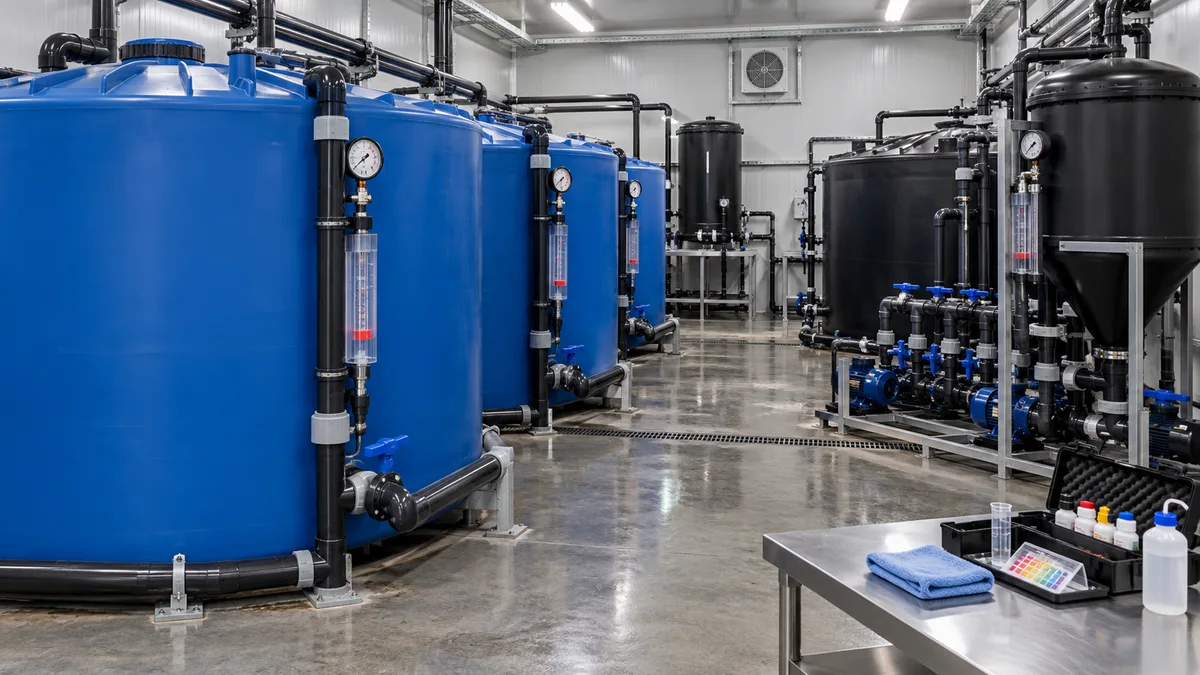
*Commissioning confirms flow, pressure, alarms and controls before fish or crops are introduced.*
Installation labor varies with site access, union requirements, travel, equipment complexity and how much fabrication occurs in the field. Separate:
- General contractor work
- Concrete and structural work
- Plumbing
- Electrical
- HVAC and refrigeration
- Greenhouse erection
- Controls integration
- Aquaponics assembly
- Engineering and permit documents
- Testing, training and commissioning
Owner labor can reduce cash cost, but it does not remove schedule, safety or quality risk. Assign a value and realistic hours to owner work when comparing alternatives.
Commissioning should be a priced deliverable. It includes water-only leak testing, flow balancing, pump and blower verification, sensor calibration, alarm testing, power-loss simulation, filter operation, operator training and biological startup planning. Fish should not be used to discover basic plumbing faults.
Factory testing confirms component fit and basic operation before shipment. It cannot reproduce Utah elevation, final pipe lengths, electrical service, water chemistry or climate. Site acceptance must verify the installed conditions.
Cost Layer 7: Startup Supplies and Contingency
Startup costs may include:
- Water testing and laboratory analysis
- Approved fish and transport
- Fish feed
- Seedlings and propagation supplies
- Grow media or raft boards
- Nutrient and alkalinity-management materials
- Cleaning and sanitation tools
- Nets, scales and harvest containers
- Initial spare parts
- Training and operating records
Add contingency based on design maturity. A concept-stage budget may carry 15–30 percent because quantities and site conditions remain uncertain. A coordinated construction package may use a lower contingency, but should still include escalation, freight variability and unknown conditions.
Contingency is not a substitute for missing scope. Keep explicit allowances for known but unquoted items and reserve contingency for uncertainty.
Three Utah Planning Scenarios
The following scenarios illustrate scope, not guaranteed market prices.
Scenario A: small indoor home system
Assumptions: existing heated garage or utility room, compact fish tank and grow area, usable electrical circuits, nearby water and drain, owner assembly.
| Budget item | Planning range |
|---|---|
| Equipment and testing tools | $2,000–$8,000 |
| Freight and unloading | $300–$2,000 |
| Plumbing/electrical/site preparation | $800–$5,000 |
| Ventilation, insulation or environmental work | $500–$4,000 |
| Startup and contingency | $400–$2,000 |
| Illustrative total | $4,000–$20,000 |
Scenario B: modular greenhouse, school or community project
Assumptions: dedicated greenhouse or protected structure, several tanks or plant modules, professional utility work, controls, training and public-facing safety needs.
| Budget item | Planning range |
|---|---|
| Aquaponics equipment | $15,000–$65,000 |
| Greenhouse/site/foundation | $12,000–$55,000 |
| Freight, plumbing, electrical and HVAC | $8,000–$40,000 |
| Design, permits, installation and commissioning | $4,000–$20,000 |
| Startup and contingency | $4,000–$20,000 |
| Illustrative total | $40,000–$180,000 |
Line-item ranges overlap and are rounded; the total should come from a coordinated estimate, not by selecting every minimum or maximum.
Scenario C: small commercial or institutional facility
Assumptions: year-round production, engineered greenhouse or building, larger filtration, automation, backup systems, food-handling areas and professional installation.
| Budget item | Planning range |
|---|---|
| Aquaponics process equipment and controls | $50,000–$250,000+ |
| Structure, site and utility infrastructure | $60,000–$300,000+ |
| Professional installation and integration | $25,000–$120,000+ |
| Design, permits, training and commissioning | $10,000–$50,000+ |
| Startup and contingency | $20,000–$100,000+ |
| Illustrative total | $150,000–$750,000+ |
Commercial feasibility requires more than capital cost. Model feed, seed, utilities, labor, maintenance, mortality, crop losses, packaging and sales. A technically functioning system is not automatically a profitable business.
Mid-Article CTA — Request an Installed-Scope Budget
Planning an aquaponics project in Utah? Send Your Requirements with the site city, available area, building or greenhouse status, crops, fish species, water source, utilities and target production so the equipment inquiry can distinguish supplied scope from local work.
Build a Quote-Comparison Matrix
Use identical rows for every proposal:
| Scope question | Supplier A | Supplier B | Local installer | Owner |
|---|---|---|---|---|
| Fish tanks and covers | ||||
| Mechanical and biological filtration | ||||
| Pumps, blowers and backup | ||||
| Grow modules and supports | ||||
| Freight and unloading | ||||
| Field plumbing and pipe supports | ||||
| Electrical panel and wiring | ||||
| Heating, cooling and ventilation | ||||
| Permits and engineering | ||||
| Water testing and treatment | ||||
| Installation supervision | ||||
| Commissioning and training | ||||
| Spare parts and warranty support |
Also compare exclusions, payment terms, lead time, warranty start date and response responsibility. A low proposal with vague exclusions may create expensive change orders later.
Reduce Cost Without Removing Essential Functions
Value engineering should simplify the project while preserving fish welfare, water treatment, service access and safety.
Useful options include:
- Match fish species and crops to a compatible temperature range
- Use modular expansion after a measured pilot phase
- Concentrate equipment near utilities to reduce pipe and cable runs
- Standardize pumps, valves and fittings
- Provide easy filter access to reduce operating labor
- Insulate tanks and pipes before buying larger heaters
- Use gravity where elevation and flood safety support it
- Separate essential life-support loads from nonessential loads
- Source bulky commodity items locally when specifications are clear
Avoid reducing backup aeration, overflow capacity, structural support, electrical protection or access for cleaning. The guide on designing an aquaponics system explains how production objectives should drive layout and equipment scope.
Information to Send With an RFQ
Provide:
1. Utah city and site elevation
2. Indoor, outdoor or greenhouse location
3. Dimensioned plan and photographs
4. Existing slab, structure and utility information
5. Water analysis
6. Drainage and discharge route
7. Fish species and harvest target
8. Crops and weekly production target
9. Seasonal or year-round operation
10. Automation and remote-monitoring expectations
11. Backup-power strategy
12. Preferred delivery and installation schedule
13. Scope expected from supplier versus local contractor
14. Applicable school, public-access or food-handling requirements
Better customer requirements produce more comparable quotes. If important information is unknown, ask suppliers to list assumptions rather than hiding uncertainty in a single number.
FAQ
Is a permit required for a home aquaponics system in Utah?
It depends on the address and scope. A portable indoor system may be treated differently from a greenhouse or installation that changes structural, plumbing, mechanical or electrical systems. Check the local authority before construction and separately verify fish and discharge requirements.
Does Utah require special permission for aquaponic fish?
The answer depends on facility purpose, location, species, source and compliance with current rules. Review Utah DWR rule R657-59c and contact the relevant agencies. Commercial aquaculture is governed separately from qualifying noncommercial aquaponics.
Is greenhouse heating included in an aquaponics-system price?
Often it is not. Request an explicit scope for greenhouse envelope, heaters, distribution, controls, fuel or electrical service, insulation and backup. Equipment-only proposals may exclude all building systems.
Can I install the system myself?
Owner assembly can reduce labor cost for a small package, but structural, electrical, plumbing, gas and permit work may require licensed professionals. Commissioning and operator training still need a defined plan.
How much contingency should be included?
A concept budget commonly needs a larger contingency—often 15–30 percent—because site quantities and design are incomplete. As engineering and quotes improve, contingency can be reassessed. Keep known missing scope as allowances, not contingency.
Are operating costs included in the installed price?
No. Prepare a separate operating model for power, heat, feed, seed, water, labor, tests, maintenance, insurance and replacement parts. Include startup months before full production.
How long does installation take?
A compact system in prepared space may take days or weeks. A permitted greenhouse or commercial facility can take months for design, approvals, fabrication, shipping, construction and biological startup. Ask for a milestone schedule rather than one delivery date.
Conclusion
An aquaponics installation in Utah should be budgeted as a complete site project, not a tank-and-grow-bed purchase. Small indoor systems may fall in the low thousands, while greenhouse, community, school and commercial installations can move into six figures once structures, utilities, climate control, professional labor and commissioning are included.
The most reliable budget separates delivered equipment from local construction and identifies every responsibility. Verify fish rules and local permits early, design for Utah’s seasonal temperatures, test source water, include backup life support and retain contingency appropriate to the project stage. These steps produce a quote that is more useful than a generic cost per gallon and reduce expensive changes after equipment arrives.
Final CTA — Get a Utah Project-Specific Equipment Quote
Ready to compare equipment scope with local installation work? Get a Quote and send your Utah location, site layout, greenhouse or building information, crops, fish plan, utilities, water report and required delivery schedule.