
Introduction
Buying a complete aquaponics system online can save sourcing time, but the word *complete* is often used too loosely. One listing may include a fish tank, grow beds, pump and basic pipework. Another may include mechanical filtration, biofiltration, aeration, control equipment, a steel frame, spare fittings and technical documents. A third may show all of those items in photography while the quotation covers only a tank and grow channels.
For a home, school, dealer or farm buyer, fast shipping is useful only when the delivered package can be inspected, installed and commissioned without preventable gaps. The practical question is not simply “Can this ship quickly?” It is “What is ready to ship, what route is being used, which parts are included, and what must the receiving site provide?”
This guide explains how to buy a complete aquaponics system online without confusing a fast order confirmation with a reliable delivery plan. It is a procurement checklist, not a promise that one system or freight method fits every country.
The short answer
Buy online after the supplier gives a model-specific scope list, dimensions and weights, realistic dispatch date, destination freight method, technical drawings, electrical requirements and a written inspection procedure. Compare delivered scope rather than catalogue photos. Before payment, confirm whether the fish tank, filtration, aeration, pump, grow modules, fittings, frame, controls, manuals, packing, freight, taxes, unloading and installation are included, excluded or optional.
For an imported system, agree on the Incoterm and named delivery point in writing. The International Chamber of Commerce explains that Incoterms allocate tasks, costs and risk between seller and buyer; they do not replace a clear technical scope or local import advice. Review the ICC’s Incoterms overview.
Define “complete” before comparing suppliers
The process equipment
Ask for a line-by-line equipment schedule, not a single sentence saying “full set.” At minimum, identify the fish tank or tanks, grow beds or channels, solids-removal stage, biofilter, water pump, air pump or blower, air distribution, valves, drains, return pipework, overflow path and mounting frame. Each item should list quantity, material, nominal size and model where applicable.
The schedule should also explain the water path. A system with a visible grow bed may still need a separate solids filter upstream. A pump might be supplied, but its expected duty point, voltage and plug type may not suit the site. A genuinely useful quotation makes these boundaries visible.
The items that are frequently outside the package
Site work is commonly excluded: a level base, floor drain, water source, electrical circuit, protected outlets, greenhouse, room ventilation, local permits, unloading equipment, pipe supports, insulation and local labour. That is not necessarily a problem. It becomes a problem only when the buyer discovers it after a shipment has arrived.
Ask the supplier to label every line as included, optional, buyer supplied or excluded. This makes two online offers comparable even when their headline prices differ.
Check whether “fast shipping” is credible
Fast shipping can mean stock is physically packed, a standard module can be assembled quickly, or a supplier can give a short estimate before manufacturing starts. These are different claims. Request the following dates separately:
1. order confirmation and drawing approval;
2. manufacturing or assembly completion;
3. factory testing and packing completion;
4. handover to the carrier;
5. main transport transit;
6. destination customs and final delivery.
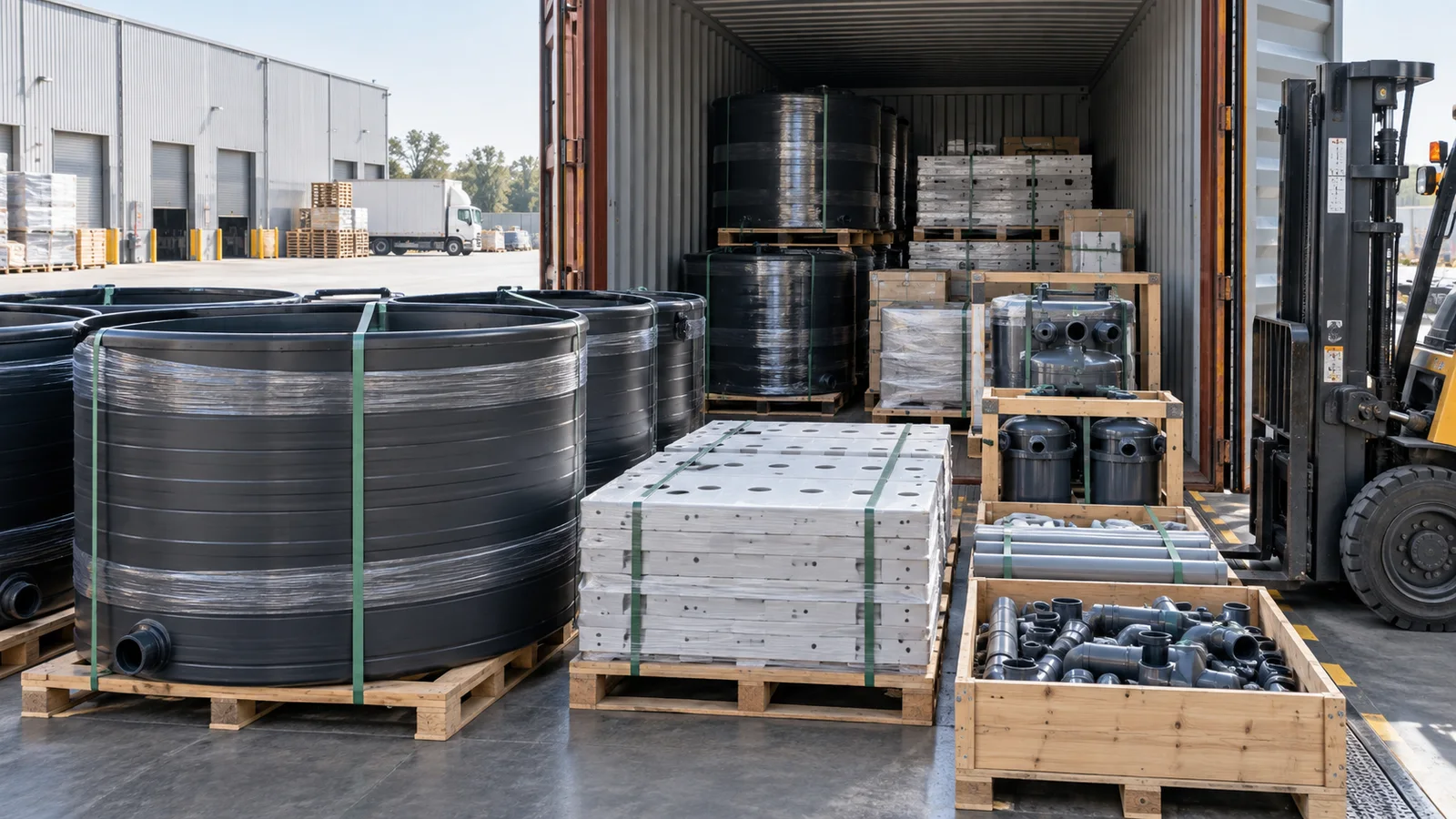
For a small parcel kit, the carrier and tracking method may be known early. For a palletized, crated or containerized system, dispatch can depend on consolidation, export documentation, vessel or flight availability, port handling and destination clearance. Do not call a project “fast shipping” until the supplier identifies the actual route and the point at which risk transfers.
If wood packaging is used internationally, ask whether it is treated and marked as required for the route. The IPPC ISPM 15 overview is a useful starting point for understanding international wood-packaging requirements; your freight forwarder or importer should confirm destination-specific rules.
Request evidence before release for shipment
Factory testing
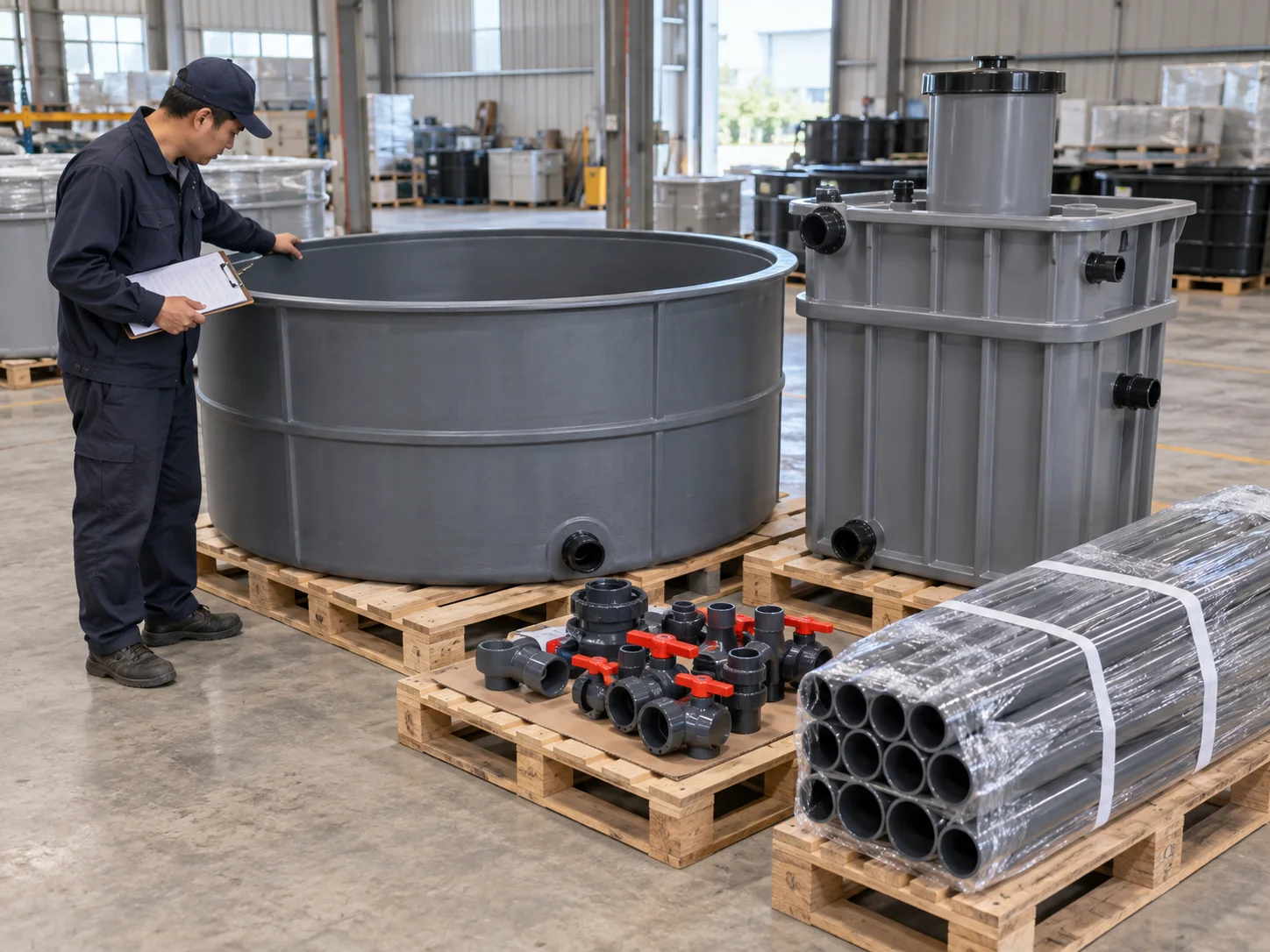
Factory testing should match the equipment scope. For a compact packaged system, useful evidence may include tank and bed model identification, visible bulkhead and valve fit, pump and air-pump operation, flow through the supplied water path, drain operation, electrical labels and a check against the packing list. It does not prove that a future site foundation, electrical supply or local plumbing installation is correct.
Ask for dated photographs or a short video, with the model number and principal components visible. For larger projects, agree in advance on a factory acceptance checklist: test points, permitted tolerances, witness arrangements, documentation and what happens if an item is missing. This creates a shared record without making claims about performance in an unknown site environment.
Shipment inspection and packing evidence
Before loading, request crate or pallet photographs, package count, gross and net weights, dimensions, packing list and close images of vulnerable items such as tank flanges, glazing, electrical enclosures and bulkhead fittings. The packing list should be usable at the receiving site, not merely a freight document with generic labels.
Prepare the site before the shipment arrives
Installation preparation is where an apparently complete purchase often stalls. Verify the final footprint and working clearances, including room to lift lids, remove a pump, clean a filter, harvest plants and respond to a leak. Water is heavy; confirm floor loading and local structural requirements with qualified local professionals where relevant.
Confirm water supply and drainage, safe electrical provision, local voltage and plug type, a protected circuit, lighting or greenhouse conditions, ventilation, and a route from the delivery point to the installation location. Check door widths, stairs, turns, pallet access and whether a forklift, pallet jack or lifting team is needed. A tank that reaches the property but cannot pass through the access route is not a successful delivery.
Use the site information to send a final pre-shipment confirmation: location photographs, utility positions, local contact, receiving hours, equipment needed for unloading and an escalation contact for freight damage. These customer requirements let the supplier identify issues before the crate is closed.
Compare online offers on the same delivered basis
The fastest way to make a poor buying decision is to compare a supplier’s factory equipment price with another supplier’s delivered, documented package. Build a simple comparison sheet with identical rows: system configuration, tanks, grow area, solids filtration, biofilter, pump duty, aeration, frame, controls, plumbing, electrical scope, spares, drawings, manuals, factory testing, packing, freight, insurance, customs responsibility, unloading, installation support and warranty route.
For each row, record included, optional, excluded or not confirmed. Keep unconfirmed items visible; do not quietly assume they are included. A seller may offer a lower price because a frame, air blower, control panel, local plug, freight or spare kit is outside its supply boundary. That can still be the right offer if the buyer has a reliable local route for the missing work, but it is not the same offer.
Also compare serviceability. Ask whether standard fittings can be sourced locally, which parts are proprietary, how a replacement pump or control component is identified, and what evidence is required if a transit or warranty issue arises. For modular packages, document thread standards, pipe material, electrical input and equipment labels before payment. This information is more valuable after shipment than a generic promise of “lifetime support.”
When a supplier uses a delivery term, have them state the named place, the point at which risk transfers, who books main carriage, who handles import clearance, and who pays destination charges. Incoterms describe commercial allocation, but the quotation must still identify the actual equipment and documents the buyer will receive.
Inspect on arrival before installation
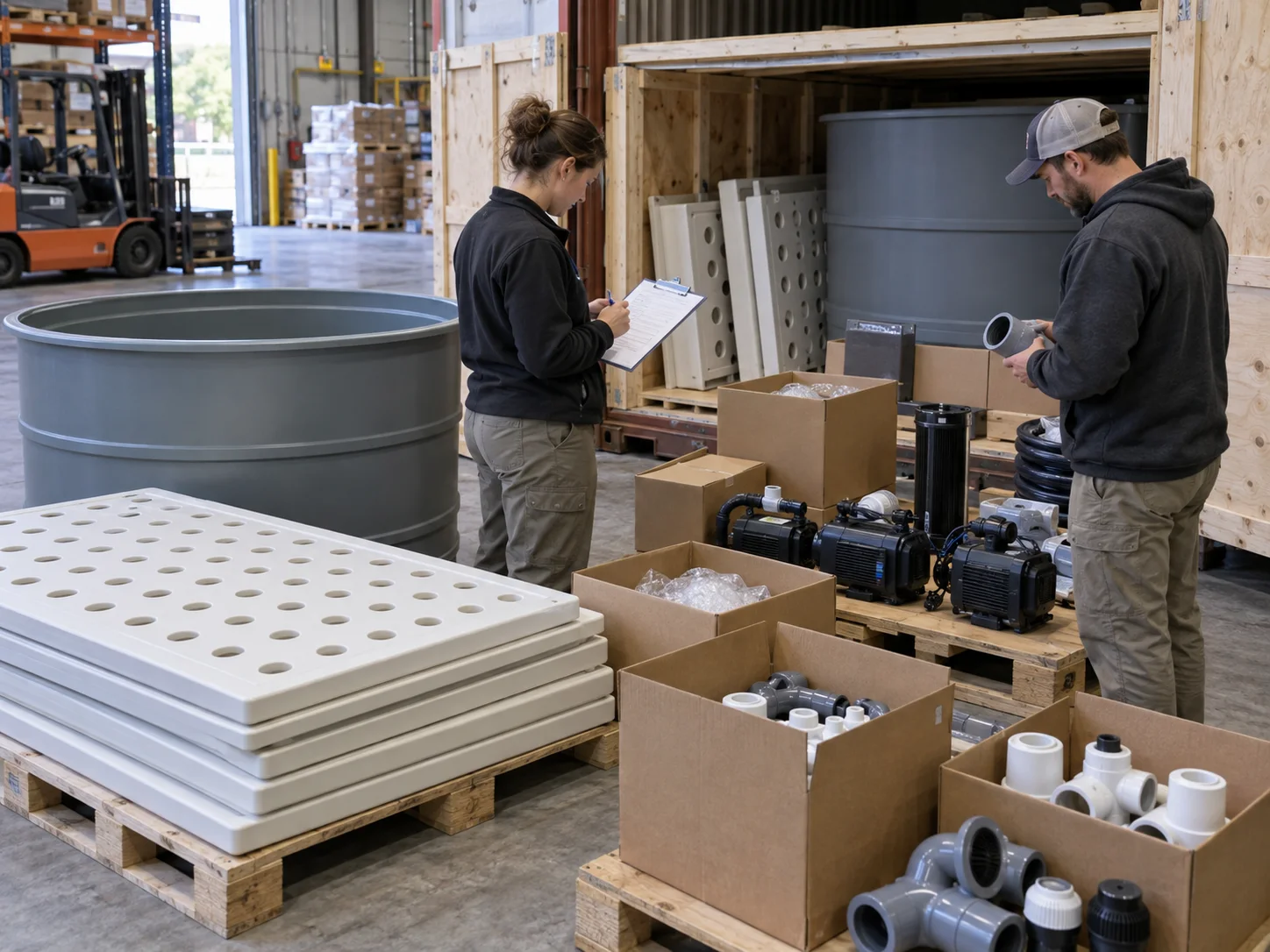
Inspect the outer packaging before signing an unqualified receipt when the carrier process allows. Photograph all sides of each crate or pallet, labels, impact indicators if fitted, crushed corners, wet areas and visible damage. Compare the package count and packing list with the purchase order. Open carefully and retain packaging until tank surfaces, frames, fittings and electrical items have been checked.
Then conduct a component-level shipment inspection: tank body and drains, grow-bed panels, filter housings, pump and air equipment, frame members, fasteners, pipes, valves, controls, manuals and spares. Record discrepancies immediately through the agreed freight and supplier process. Do not stock fish until installation is complete and the system has passed a water-only leak, circulation, drainage and aeration check.
Questions to send with an online inquiry
Use a concise request that gives a supplier enough information to respond accurately:
- Country, city and delivery point; indoor, outdoor or greenhouse application.
- Intended fish, crop type and target plant area, if known.
- Available footprint, access restrictions and preferred delivery window.
- Required electrical voltage, frequency and plug or local connection responsibility.
- Whether you need a complete package, modules only, spares or installation guidance.
- Whether freight, customs handling, unloading, commissioning support or training is needed.
For help selecting the underlying system scope, see our commercial aquaponics system buyer’s guide. If you are starting with a small household unit rather than a full package, compare the practical trade-offs in affordable small-scale systems for home use.
Mid-article CTA
Need a model-specific delivered-scope checklist? Send your country, available space, intended application and target delivery timing. We can help you prepare a request for quotation that separates equipment, freight and site responsibilities. Send Your Requirements.
FAQ
Does “complete aquaponics system” include fish and plants?
Usually, no. Live fish, seedling supply and local biological start-up are commonly separate because regulations, climate, transit risk and local availability differ. Confirm this explicitly rather than assuming a system is ready for stocking on delivery day.
Can a supplier guarantee a delivery date?
They can provide a documented dispatch plan and transit estimate, but manufacturing approvals, carrier capacity, weather, customs and local receiving conditions can affect final delivery. Ask for milestone dates and the party responsible at each stage.
Should I pay before factory testing?
Payment terms are commercial decisions. For larger orders, agree on documents, inspection evidence and milestones before the order is accepted. Use a written contract and obtain independent commercial or legal advice where needed.
What should be tested first after delivery?
Start with a water-only check: tank and plumbing leaks, valve positions, drain route, pump flow, aeration, overflow behavior and safe electrical isolation. Cycle the biofilter before adding fish according to the system’s operating plan.
Conclusion
Buying a complete aquaponics system online is reliable when “complete” is defined as an inspectable scope, not a marketing label. Treat shipping as a sequence of manufacturing, testing, packing, transit, receipt and installation preparation. A supplier who can document those steps gives the buyer a clearer basis for comparing offers and receiving the system safely.
Final CTA
Get a Complete System Shipping Checklist. Contact Us with your project location, application, available footprint and requested delivery timing to receive a scope-and-shipping inquiry template.

