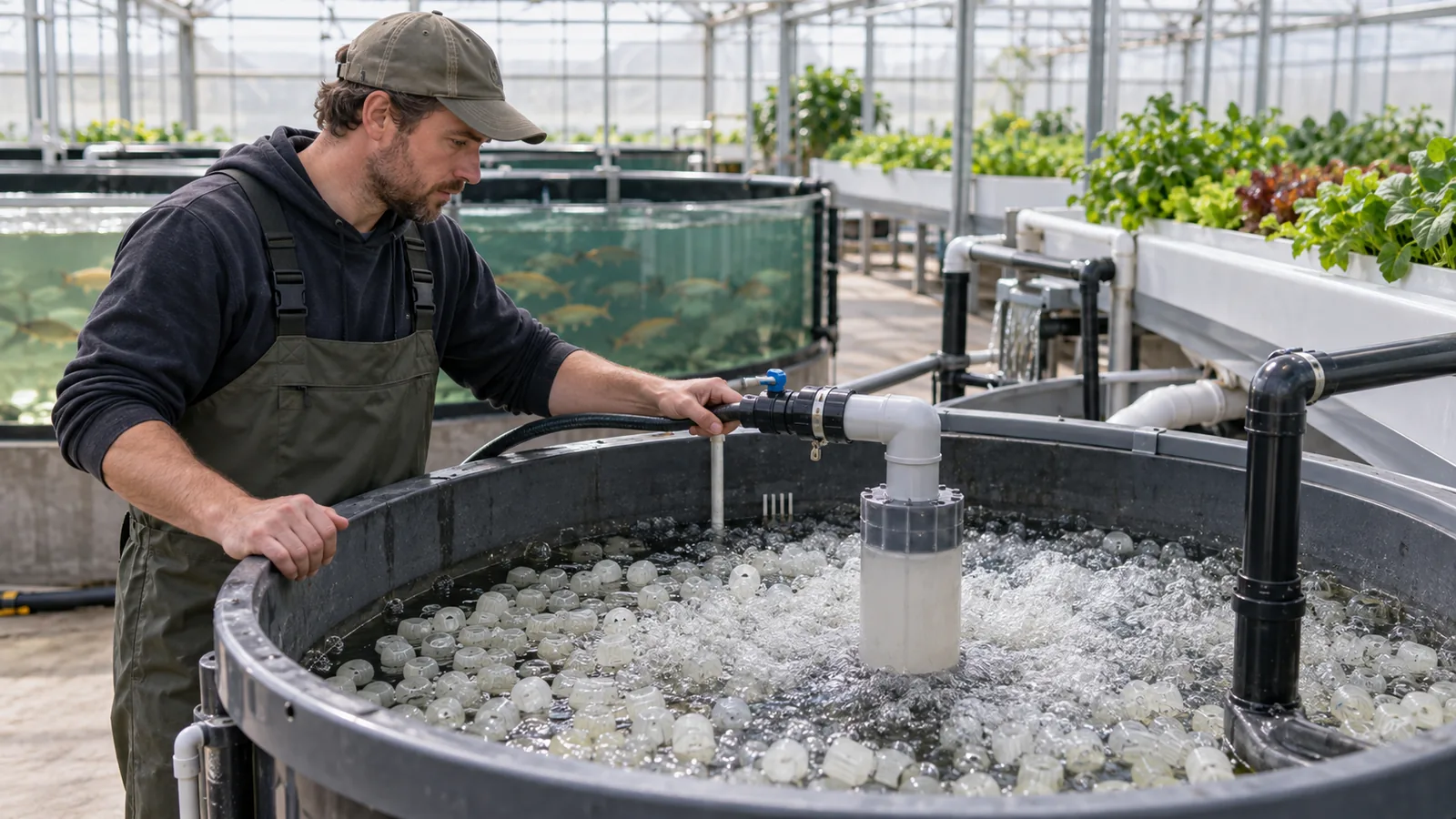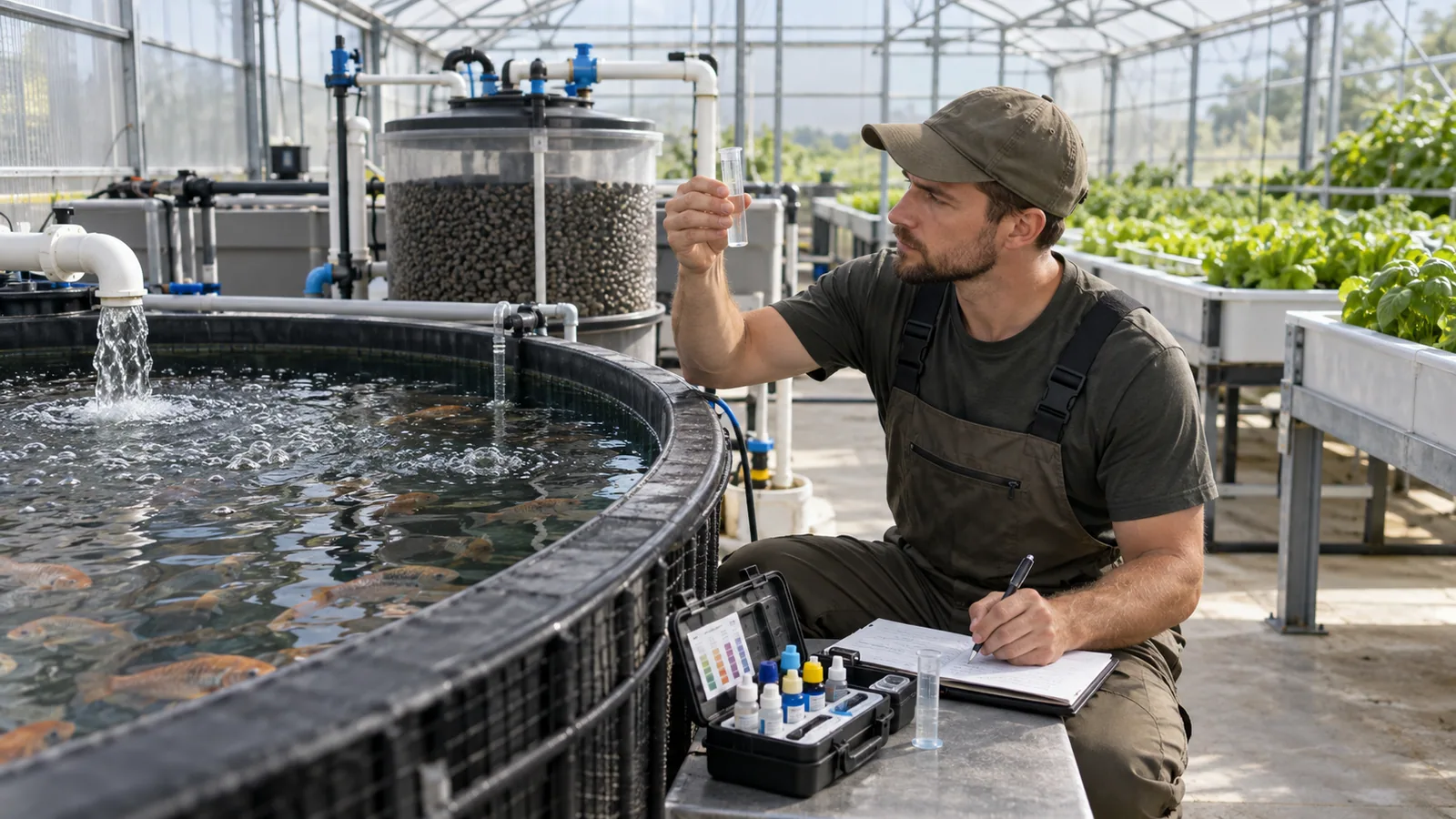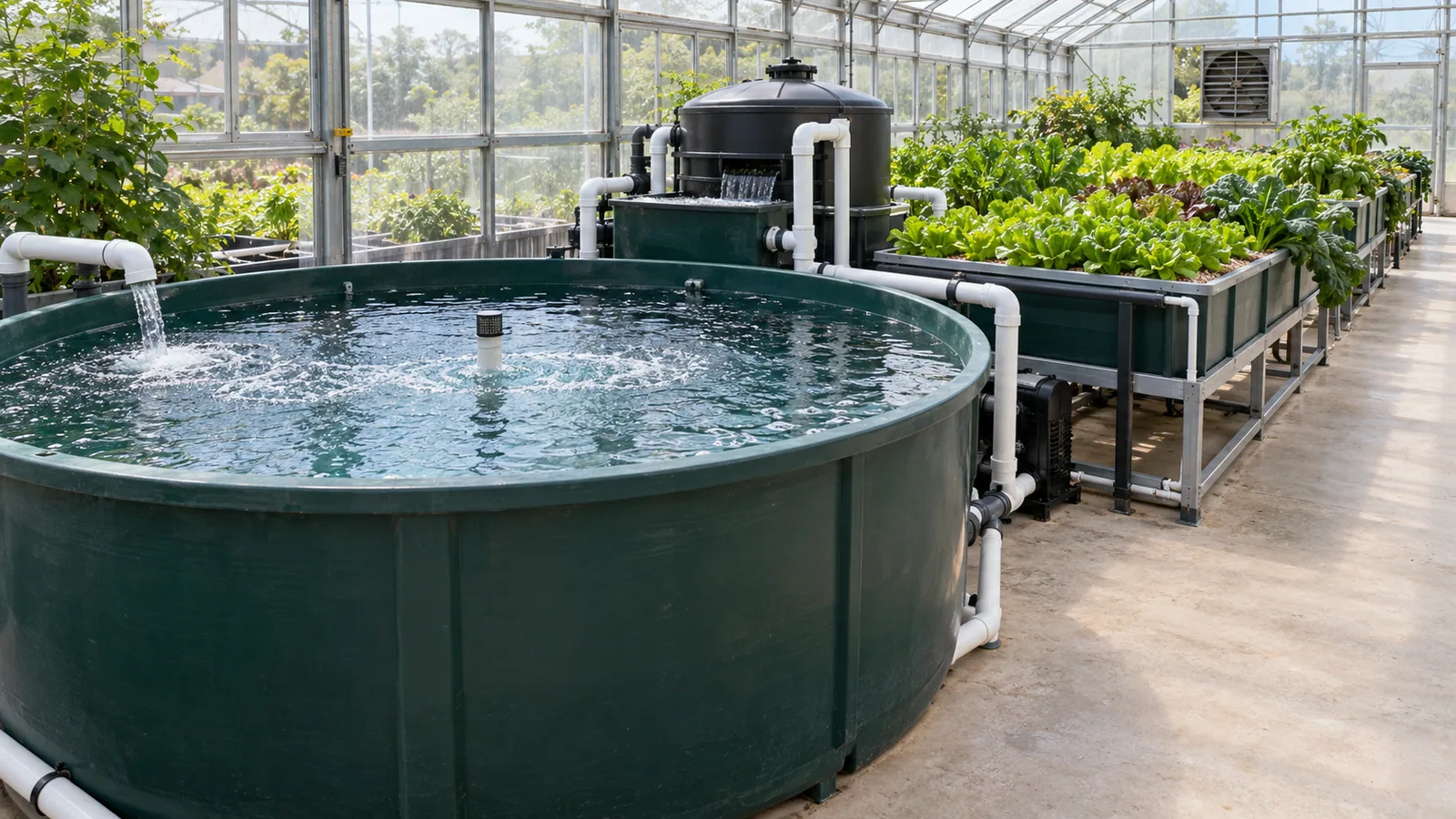
An established aquaponics system can remain physically operational without fish for weeks or longer, but it stops functioning as a normally balanced aquaponic production system once fish feed and fish waste are removed.
The pumps, filters and water can continue circulating. Beneficial bacteria may survive for a period, especially when the media remains wet and oxygenated. Plants can continue growing while stored nitrate and other nutrients remain available. However, nutrient levels decline, the bacterial population adjusts to the lower ammonia supply, and plant deficiencies eventually appear.
There is therefore no universal number of days. The practical answer depends on whether the goal is to keep the bacteria alive, keep the plants productive, preserve the water, or prepare the system for future fish restocking.
The Short Answer
A system without fish generally behaves in stages:
- First several days: Little visible change may occur if nutrient reserves are adequate.
- One to several weeks: Plants continue consuming nitrate, while ammonia input falls sharply.
- Longer periods: Plant nutrient deficiencies become more likely and the nitrifying population contracts.
- Extended fishless storage: The system can be maintained, but it requires deliberate circulation, aeration, nutrient planning and recommissioning.
The system does not necessarily “die” as soon as the fish are removed. It transitions away from its normal fish-feed-driven nutrient cycle.
What Fish Contribute to Aquaponics
Fish contribute more than visible solid waste.
Feed consumed by the fish becomes the main nutrient input. Through metabolism and decomposition, the system receives ammonia or ammonium, nitrogen-containing organic material, phosphorus, potassium, calcium, magnesium and trace elements.
Beneficial bacteria convert ammonia into nitrite and nitrate. Plants use nitrate and other available nutrients.
When fish are removed, the flow of feed-derived nutrients falls sharply. The system may still contain residual solids, dissolved nitrate and nutrients stored in the water, biofilm and growing media, but these reserves are finite.
For more background, see our explanation of the role of bacteria in aquaponics.
Four Different Meanings of “Last”
The question becomes easier to answer when “last” is defined.
1. How long will the equipment continue operating?
As long as pumps, air equipment, plumbing and controls remain functional and the water level is maintained.
The absence of fish does not automatically damage a pump. However, evaporation, clogged filters and poor water conditions can still create equipment problems.
2. How long will beneficial bacteria survive?
The bacterial community can persist when surfaces remain wet, oxygenated and within a reasonable temperature and pH range.
Without a continuing ammonia source, the population gradually reduces. It does not necessarily disappear at one exact time, but its capacity to process a future fish load may decline.
3. How long will plants remain productive?
This depends on crop type, plant mass, stored nutrients, water volume, light, temperature and whether fish-compatible nutrients are added.
Plants may look normal at first and then develop nitrogen, iron, potassium or other deficiencies.
4. How long can the system remain ready for new fish?
Readiness depends on whether the biofilter can still process the ammonia expected from the new fish.
A system that has circulated without fish for several weeks should not automatically be assumed to retain its previous full treatment capacity. Water tests and a controlled ammonia-processing check are safer than relying on elapsed time.
What Happens During the First Few Days?
Immediately after fish removal, the water still contains nutrients.
Residual feed and solids may continue releasing ammonia. Nitrifying bacteria continue processing available nitrogen. Plants continue absorbing nitrate.
If the fish were removed because of disease or unexplained mortality, the system requires a different response. Do not assume the water, filters and plants are safe simply because the fish are gone. Identify the cause and consider biosecurity before moving equipment or restocking.
If the removal was planned—for harvesting, relocation or tank repair—continue normal water circulation and aeration while monitoring water level and temperature.
What Happens After One or Two Weeks?
As readily available organic matter is consumed, ammonia production declines.
The plants continue drawing down nitrate and other minerals. Fast-growing leafy greens may show nutrient changes sooner than small or dormant plants. Large fruiting crops may exhaust specific nutrients even when nitrate remains detectable.
The biofilter does not instantly collapse, but the bacterial population begins adapting to the lower food supply.
This is an important distinction: keeping bacteria alive is not the same as keeping the biofilter capable of handling the previous maximum fish load.
What Happens During a Long Fishless Period?
During a longer fishless interval, several changes may occur:
- Nitrate concentrations decline
- Plant growth slows
- Leaves show nutrient deficiencies
- Biofilm composition changes
- Nitrification capacity falls
- Algae use available nutrients
- Sediment continues decomposing
- pH and alkalinity behavior changes
- Evaporation concentrates some dissolved minerals
- Uncirculated zones become stagnant
A well-maintained system can be kept fishless for an extended period, but it is being actively preserved rather than operating normally.
Will the Beneficial Bacteria Die?
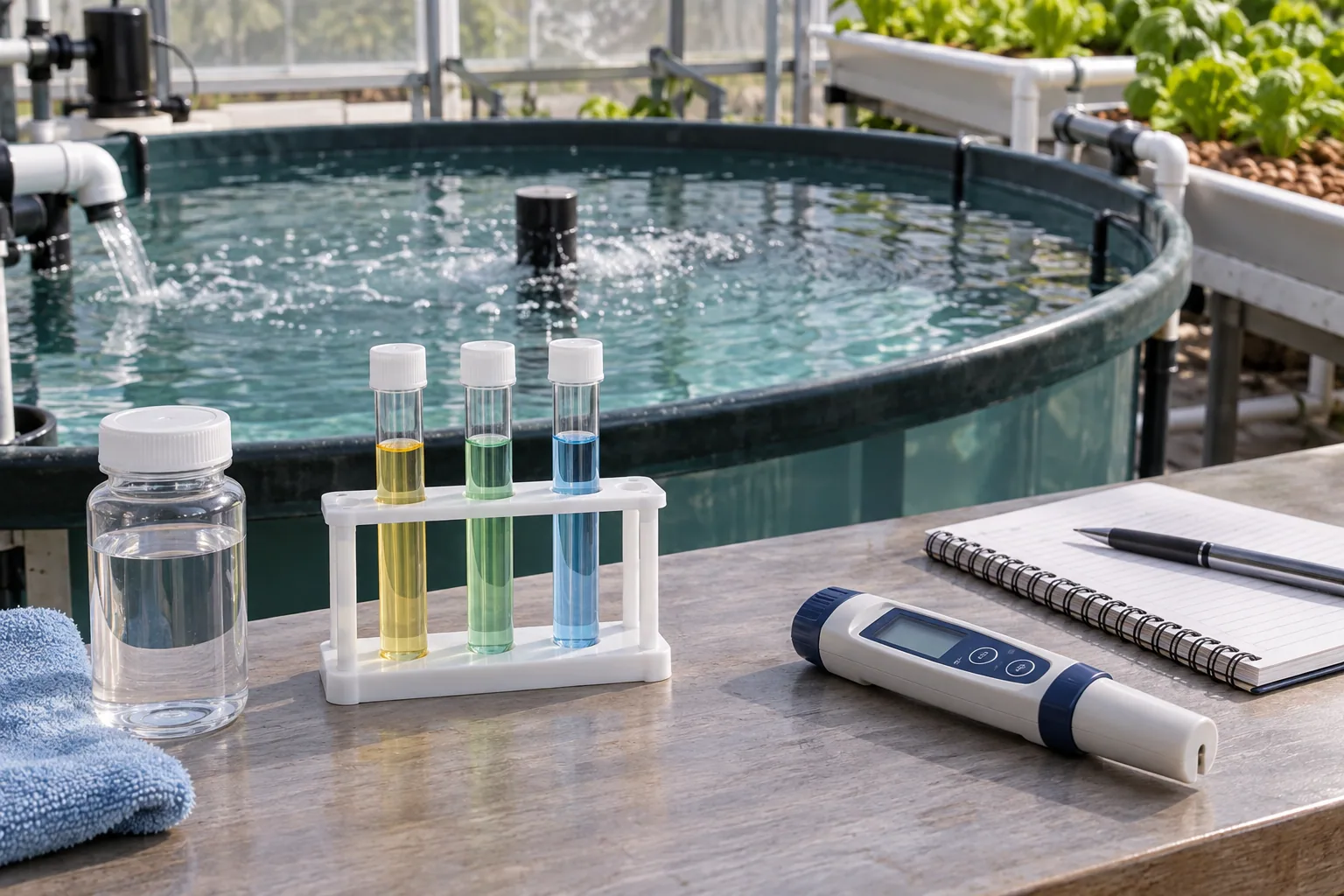
Nitrifying bacteria need moist surfaces, oxygen, a suitable temperature, appropriate pH, alkalinity and a source of ammonia or ammonium.
Keeping water moving and filter media wet protects the colony from drying and oxygen depletion. Providing a carefully controlled ammonia source can help maintain nitrification capacity.
Oklahoma State University explains that nitrifying organisms require oxygen, moisture and ammonia, and that lower fish stocking produces lower ammonia and therefore supports a smaller bacterial population. See its aquaponics and biofilter guidance.
Do not assume more ammonia is better. Excessive ammonia can inhibit the colony and create difficult recommissioning conditions. Any maintenance dosing should be measured with a reliable test kit and matched to the intended preservation goal.
Can Plants Survive Without Fish?
Yes, temporarily, if the water still contains sufficient nutrients.
The duration varies with:
- Remaining nitrate
- Number and size of plants
- Crop type
- Growth stage
- Water volume
- Light intensity
- Temperature
- Previous feed rate
- Mineral supplementation
- Water replacement
A recently stocked system with a high nitrate reserve may support plants longer than a lightly stocked system with nitrate already near zero.
Plants also need more than nitrogen. Fish removal may reveal deficiencies of iron, potassium, calcium or phosphorus. Products added during a fishless period should still be selected carefully if fish will return later.
Should You Continue Feeding an Empty System?
Fish feed can be used as an indirect ammonia source, but it decomposes unpredictably and adds organic solids.
Potential disadvantages include cloudy water, increased biological oxygen demand, odor, biofilm buildup, mold, anaerobic deposits and slow ammonia release.
For a short fishless interval, residual nutrients may be sufficient. For deliberate biofilter preservation, a measured and suitable ammonia source is easier to monitor than uncontrolled decomposition.
New Mexico State University explains fishless cycling with an ammonia source and emphasizes monitoring ammonia, nitrite and nitrate before fish are introduced. Its aquaponics water-quality guide provides useful background, although maintenance dosing should still be adapted to the system.
Can You Turn Off the Pumps?
Usually, no—not if the goal is to preserve the biological system.
Stopping circulation can produce dry biofilter media, oxygen depletion, stagnant water, anaerobic conditions, root damage, uneven temperatures and sulfur-like odors.
A media bed may retain moisture longer than an NFT channel, but that does not make an indefinite shutdown safe.
If long-term decommissioning is the goal, drain, clean and store the equipment deliberately. Do not leave partially filled tanks and filters stagnant for an unknown period.
Our aquaponics maintenance guide explains routine pump, filter and water-quality checks.
Three Fishless Operating Scenarios
Scenario 1: Short planned gap between fish batches
This may last several days to a few weeks.
Recommended actions:
- Keep pumps and aeration operating
- Continue plant inspection
- Monitor ammonia, nitrite, nitrate and pH
- Remove excessive accumulated solids
- Maintain water level
- Avoid unnecessary chemical treatment
- Confirm water quality before restocking
This is the easiest fishless condition to manage.
Scenario 2: Plants remain but fish will be absent for months
The system temporarily behaves more like a recirculating plant-production system.
Plan for controlled nutrient management, biofilter preservation, regular testing, crop reduction if nutrients become insufficient, prevention of salt accumulation, continued circulation and a defined transition back to fish production.
Do not add a complete hydroponic nutrient formula unless every ingredient is compatible with future fish, biological filtration and system materials.
Scenario 3: Complete shutdown
If both fish and plants are removed, decide whether the system should remain biologically active or be decommissioned.
For decommissioning:
1. Remove remaining organic matter.
2. Drain tanks and low points.
3. Clean filters according to manufacturer instructions.
4. Rinse components without damaging surfaces.
5. Dry equipment intended for dry storage.
6. Protect pumps and seals as specified.
7. Label disassembled pipes and cables.
8. Store sensitive equipment away from heat, moisture and UV exposure.
Do not create a stagnant half-full system.
How to Preserve the Biofilter
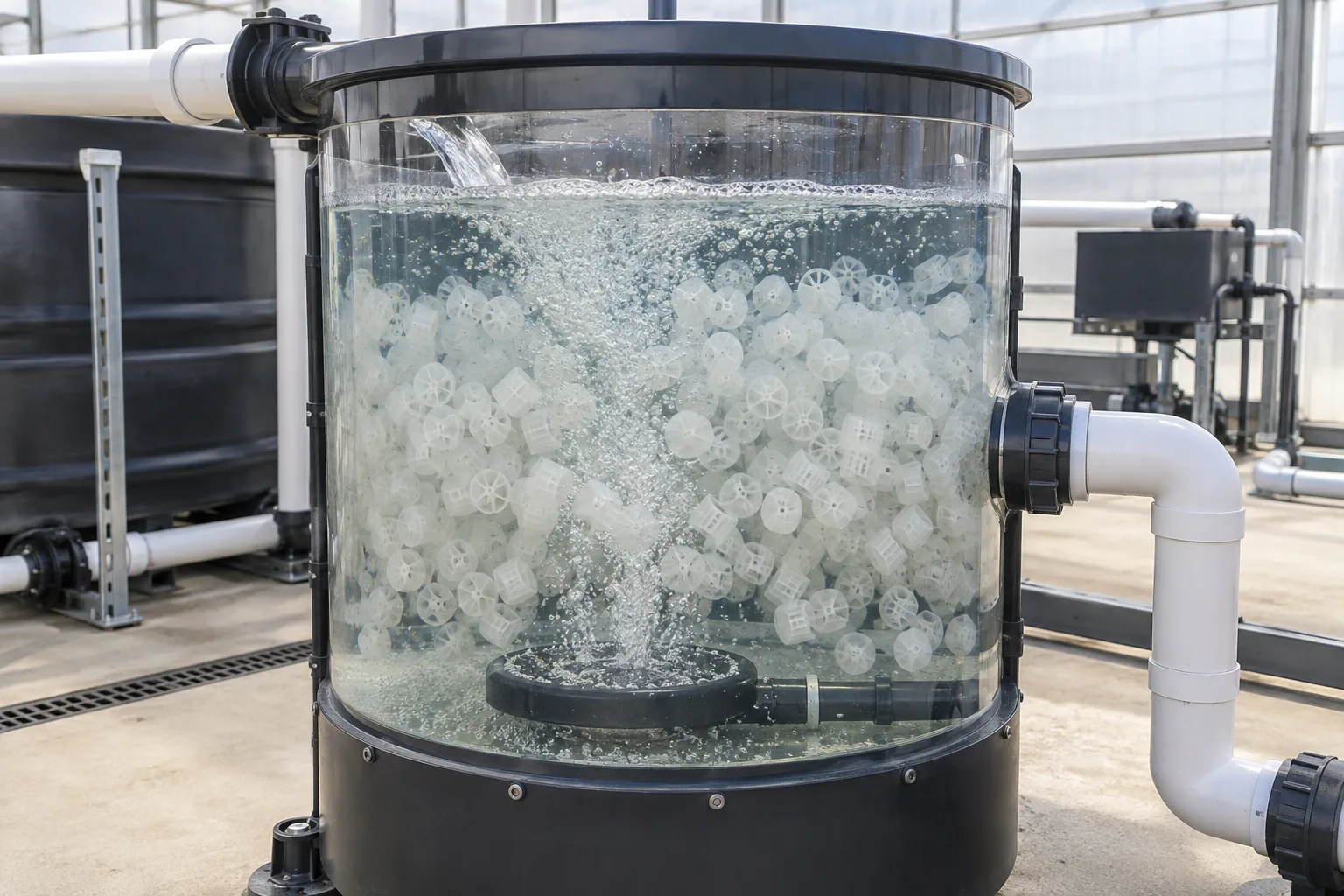
Keep the media wet
Drying can severely damage the biological community. Ensure the pump chamber does not run empty.
Maintain oxygen
Continue biofilter aeration or water movement. Low oxygen reduces nitrification and favors undesirable conditions.
Maintain reasonable pH and alkalinity
Nitrification consumes alkalinity and tends to lower pH over time. Adjustments should be gradual and based on measurement.
Provide controlled nitrogen when necessary
If the system must remain ready for restocking, a carefully managed ammonia input may help maintain capacity. Test ammonia, nitrite and nitrate and avoid uncontrolled accumulation.
Avoid disinfectants
Chlorine, chloramine and broad disinfectants can damage the biofilter. Use dechlorinated makeup water.
Control temperature
Extreme changes slow biological activity and affect oxygen availability. Protect outdoor tanks and filters from unnecessary heating or freezing.
How to Know Whether the System Is Ready for Fish Again
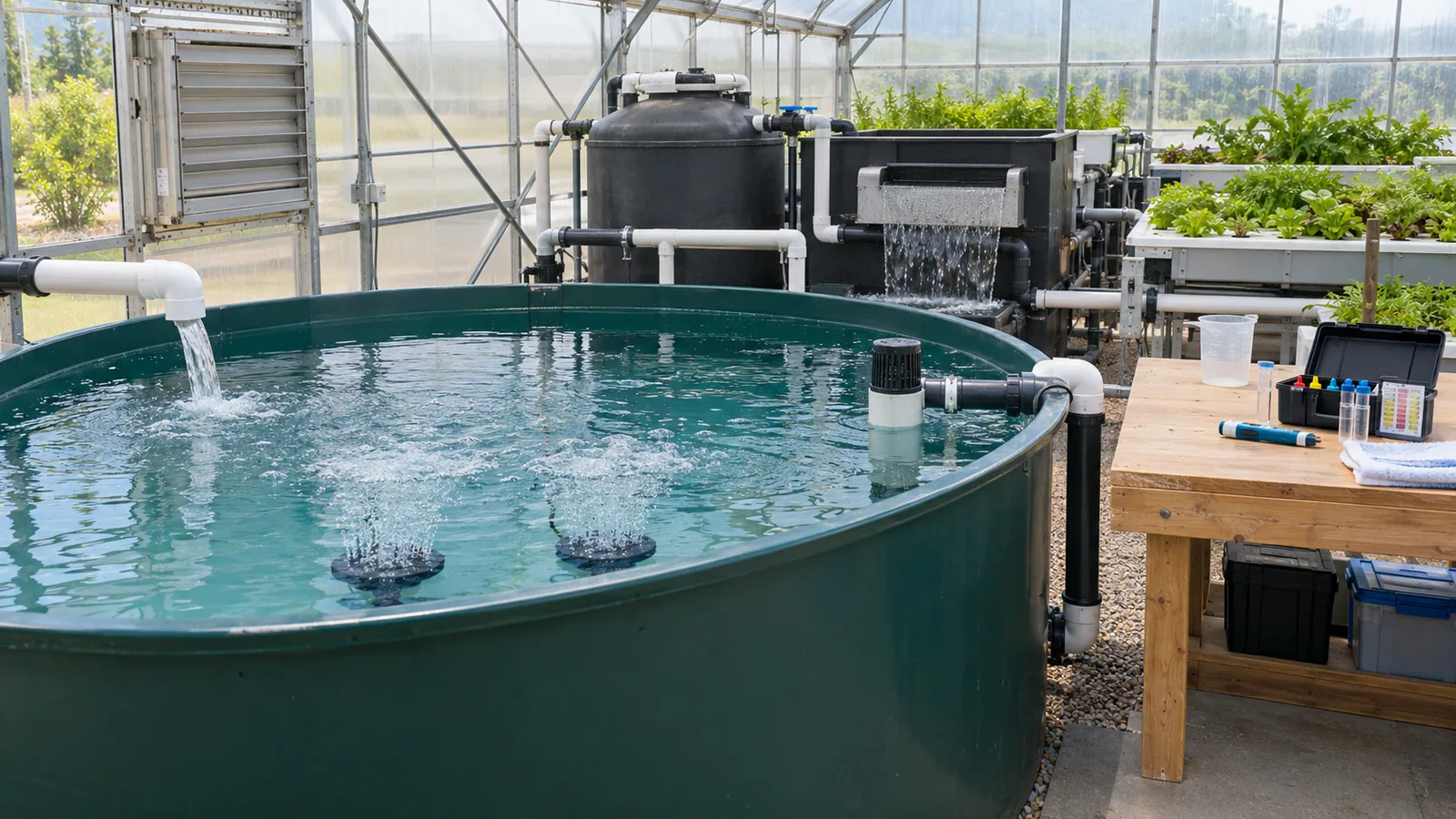
Do not restock solely because the pump has been running.
Check temperature, pH, dissolved oxygen, ammonia, nitrite, nitrate, alkalinity where relevant, water level, pump flow, aeration, filter condition and signs of anaerobic deposits.
If the biofilter has been without a meaningful ammonia source for an extended period, verify its processing capacity before adding a full load.
Treat restocking as a controlled recommissioning process:
1. Inspect and clean only where necessary.
2. Restore normal flow and aeration.
3. Confirm dechlorination.
4. Test ammonia-processing performance.
5. Add a limited first group of fish.
6. Feed conservatively.
7. Monitor ammonia and nitrite frequently.
8. Increase biomass gradually.
This follows the same risk-management principle described in our guide to cycling an aquaponics system, without unnecessarily restarting a healthy mature system.
Special Case: Fish Were Removed Because of Disease
When disease is involved, preserving the old biofilter is not always the only priority.
Record fish symptoms, mortality pattern, water-quality readings, recent additions, feed changes, temperature changes and treatments used.
Some treatments may affect bacteria, plants or future fish. Some pathogens can remain in water, sediment or equipment.
Consult an aquatic animal health professional before choosing disinfection or restocking procedures. Avoid making treatment decisions based only on photographs or general online advice.
Installation and Equipment Considerations
A system designed for production breaks should include isolation valves, filter bypasses, accessible drains, sampling points, flow indicators, spare pumps, separate aeration, clearly labeled plumbing, a safe method for controlled dosing and written recommissioning steps.
During factory testing, verify the hydraulic path and valve functions. During shipment inspection, check pumps, diffusers, filter media, seals and test equipment before restarting the project.
Mid-article CTA — Plan for Production Gaps
Planning a system that must tolerate seasonal fish production or gaps between batches? **Ask for a Product Catalog** and send the expected fishless duration, system volume, plant area and restocking plan.
FAQ
Will aquaponics plants die immediately without fish?
No. Plants can continue using nutrients already present in the water. Their survival and productivity depend on nutrient reserves, crop demand and management.
How long do beneficial bacteria live without fish?
There is no exact universal period. The population gradually adjusts to available ammonia, oxygen, temperature and pH. Maintaining moisture and aeration helps preserve it.
Can I add fertilizer while there are no fish?
Only use products compatible with the future aquaponic system. Conventional hydroponic fertilizers may contain concentrations or ingredients unsuitable for fish.
Should I remove the plants?
Not necessarily. Plants help use residual nitrate and can remain during a short fishless interval. For a prolonged period, reduce crop load if nutrients cannot be safely maintained.
Can I leave the water circulating indefinitely?
It can circulate for a long period with proper monitoring, but water level, pH, deposits and biological conditions still require maintenance.
Do I need to cycle the system again?
Not always. A short, well-managed fishless interval may leave adequate biological capacity. After a long interval, verify ammonia-processing performance and restock gradually.
Conclusion
An aquaponics system can remain physically intact and hydraulically operational without fish for weeks or much longer. What changes is its biological and nutritional balance.
Plants continue consuming stored nutrients, while the biofilter adapts to reduced ammonia. If circulation, moisture and oxygen are maintained, beneficial bacteria may persist, but the colony may no longer support the previous fish load.
The safest strategy is to define the purpose of the fishless period. A short production gap, a long plant-only period and a complete shutdown require different procedures.
Before fish return, inspect the equipment, test the water and confirm biological capacity. Gradual restocking is safer than assuming an empty but circulating system remains fully prepared.
Final CTA — Discuss Your Operating Schedule
Need an aquaponics system designed for seasonal production, easy maintenance and safe recommissioning? **Contact Us** with your project scale, planned fish species, growing area and operating schedule.