
Introduction
Cycling is the commissioning period in which an aquaponics system develops a working biological filter before it carries a meaningful fish load. It is not simply “waiting for the water to clear.” The purpose is to establish microorganisms that convert nitrogen compounds produced by fish and feed into forms that can be managed by plants and the system’s filtration.
This guide concentrates on that specific start-up task. If you still need the full beginner sequence—from location and equipment through fish and plants—start with how to start aquaponics. Here, the focus is on preparation, monitoring, cautious loading and decisions made during the first weeks of biofilter operation.
What cycling does in an aquaponics system
Fish release ammonia into the water, and uneaten feed and organic solids add to the nitrogen load. In a functioning biofilter, nitrifying microorganisms convert ammonia first to nitrite and then to nitrate. Plants can use nitrate as a nutrient source, but plants do not remove the need for a stable biological filter, solids management and routine water testing.
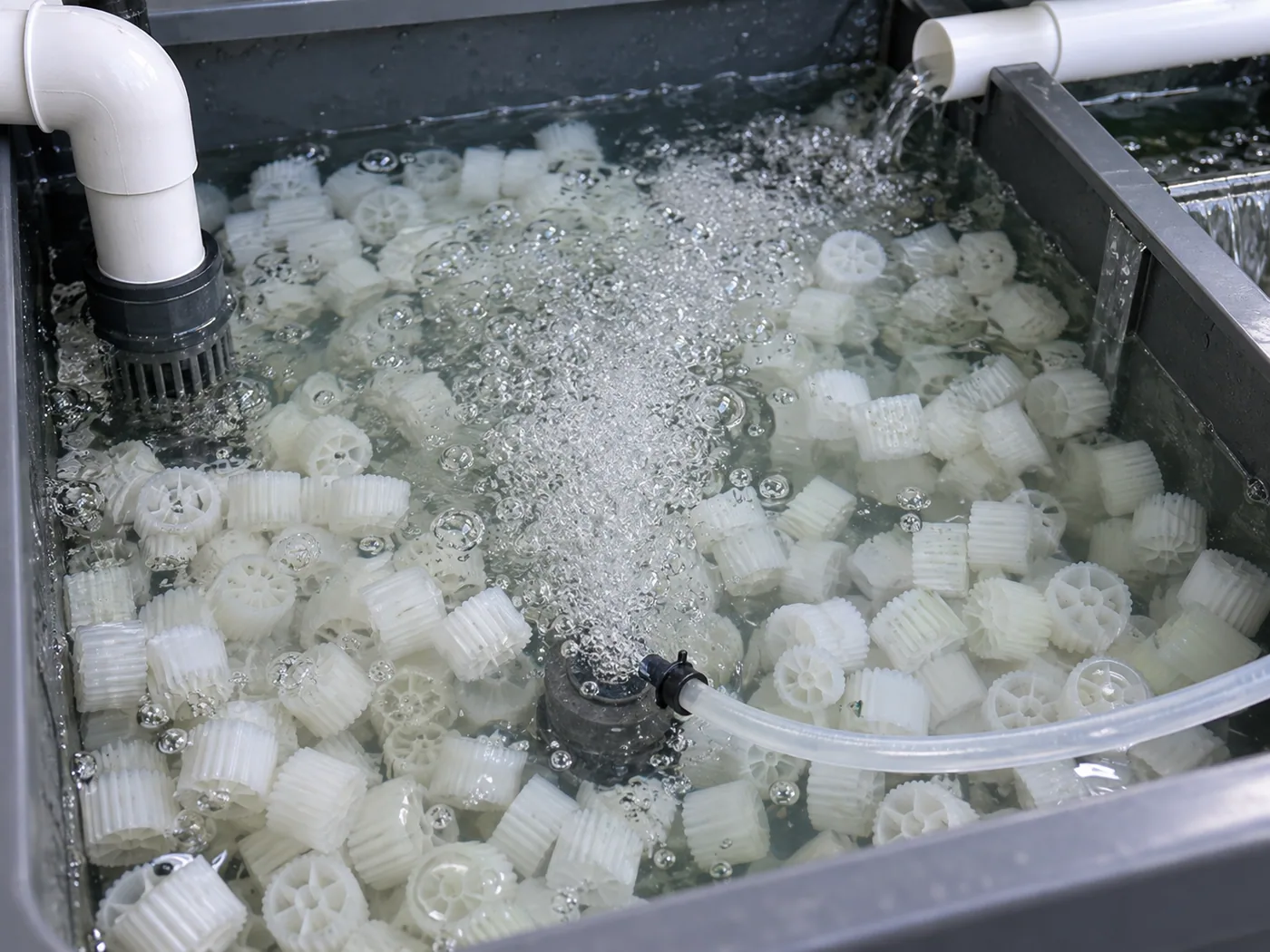
In a new system, the needed microbial population is small or absent. It takes time to establish on moist, oxygenated surfaces in the filter media, grow bed or dedicated biofilter. The rate depends on temperature, dissolved oxygen, alkalinity, pH, available surface area, water flow and the nitrogen load being introduced.
University of Florida guidance on recirculating aquaculture system troubleshooting notes that a new biofilter typically needs weeks rather than days to become established, and that conditions such as temperature, pH, oxygen and feeding influence the process. The Southern Regional Aquaculture Center’s How to Start a Biofilter is another useful technical reference for the underlying start-up principles.
Before cycling: make the system ready to operate
Confirm water is safe for the selected stock
Begin with a water-source check. Municipal water may need dechlorination or treatment for chloramine before live fish are introduced. Well or borehole water may have pH, hardness, iron, salinity or other characteristics that need consideration. Use a reliable local laboratory or suitable test method when the source is uncertain.
Fill, circulate and aerate the system before treating cycling as started. Verify that every tank can drain safely, valves move as intended, return lines do not overflow and pump intakes are protected. Keep a simple record of source water, volume added and any treatment used. That record makes later troubleshooting more precise.
Perform a dry and wet commissioning check
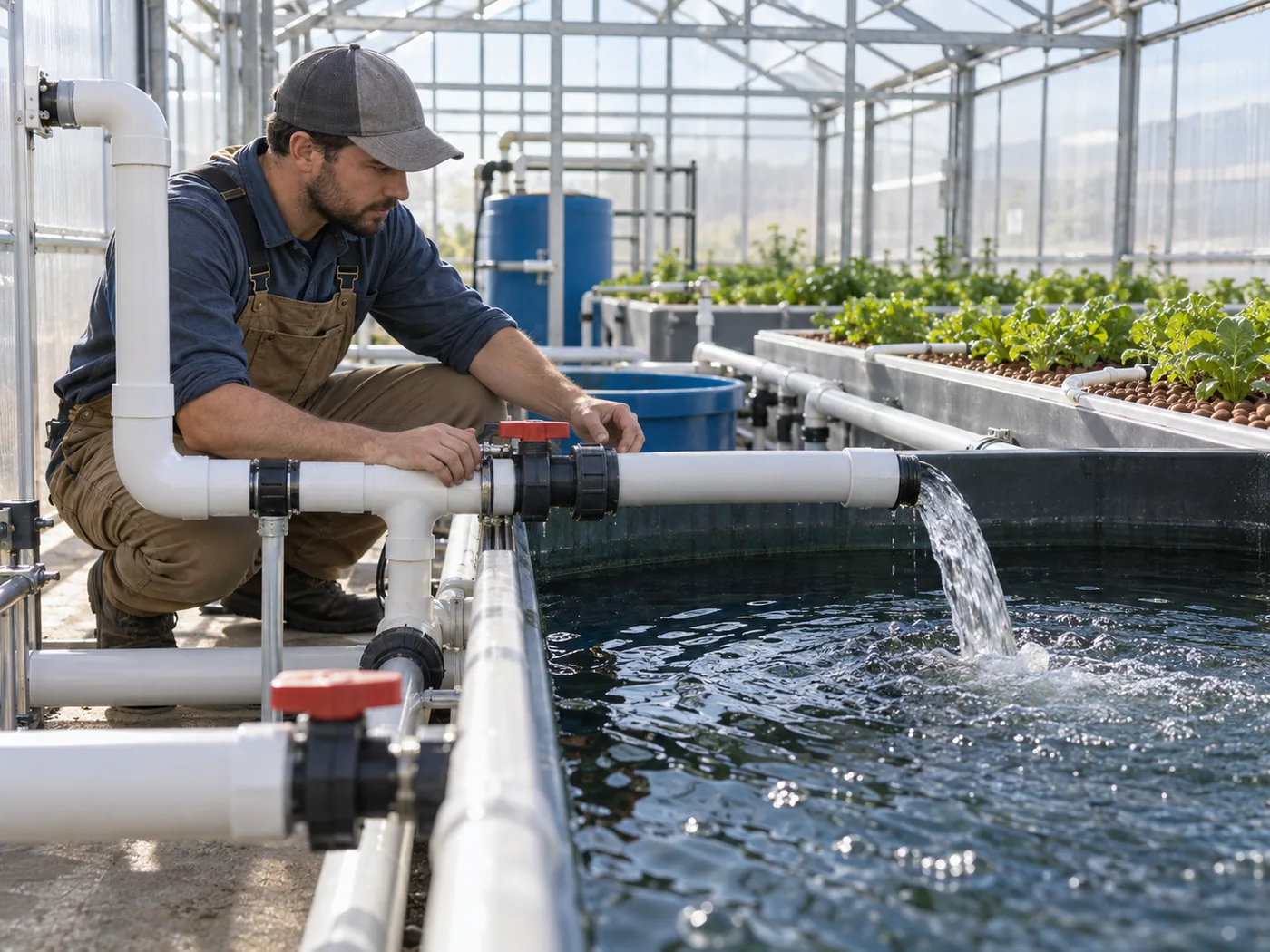
Before fish arrive, inspect the pump, aeration, plumbing supports, electrical protection and drain route. Then operate the system with water long enough to see normal and abnormal conditions: a blocked return, a low water level, a power restart, a leaking connection or a noisy air line.
For a supplied project package, this is where installation preparation and factory testing meet site reality. A factory test can confirm that supplied components are present and functional; a wet site test confirms that the assembled flow path, local utilities and maintenance access work together. Do not add live animals until leaks, overflow risks and electrical concerns have been resolved.
Prepare measurement tools and a log
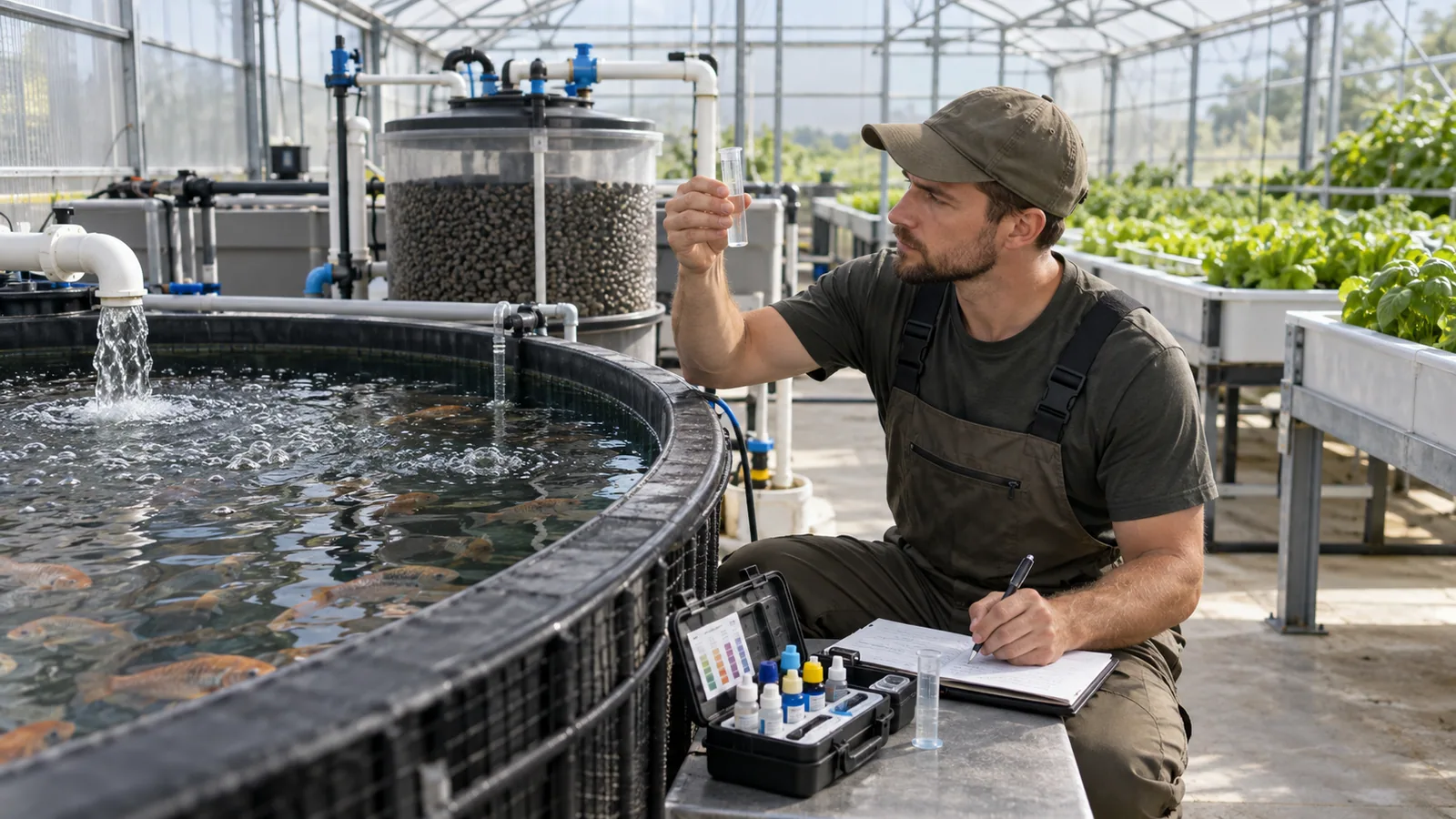
At a minimum, have a repeatable method for checking ammonia, nitrite, pH and temperature. Dissolved oxygen is particularly important where fish density, warm water or low aeration could create risk. Also record date, water temperature, pH, ammonia, nitrite, nitrate if measured, fish count, feed offered, feed eaten, unusual observations and corrective action.
A log is not paperwork for its own sake. It shows whether the system is changing gradually or whether a sharp event followed a change in feed, water source, weather, pump operation or cleaning. For a school or farm team, define who takes the measurements and who has authority to reduce feed or call for support.
Two ways people begin a cycle
Fishless cycling
Fishless cycling introduces an ammonia source without exposing fish to the unstable first stage. Operators must use an appropriate, controllable input and must avoid products with unnecessary additives. The biological filter is then monitored while ammonia appears, nitrite follows and nitrate becomes detectable.
The advantage is control: there are no live fish at risk while the system is proving its capacity. The trade-off is that the operator still needs accurate testing, a documented input method and patience. Do not guess additions or use an unverified household product. If a system is intended for food production, follow the supplier’s and local specialist’s guidance on suitable inputs and sanitation.
Gradual fish-in cycling
Fish-in cycling starts with a light, carefully managed fish load. It is common in practical projects, but it requires more discipline because ammonia and nitrite can rise faster than the immature biofilter can process them. Stock conservatively, feed lightly and increase only when measurements and fish behavior indicate stable operation.
The correct choice depends on the project, species, operating team and local technical support. In either method, the goal is not to reach a date on a calendar. It is to demonstrate that the system can process the introduced nitrogen load while water quality remains appropriate for the species.
A practical cycling sequence
Step 1: Stabilize circulation and aeration
Run pumps and air continuously according to the design. Check that water moves through solids removal, biofiltration and plant components as intended. Air stones, diffusers or other aeration equipment need even output and easy cleaning access. Keep filter media wet and oxygenated; stagnant zones reduce useful biological activity and can create odor or water-quality problems.
Step 2: Establish a modest nitrogen input
For fishless cycling, follow a controlled plan from a knowledgeable source or supplier. For fish-in cycling, start with only the conservative initial stock and a restrained feeding routine. Do not respond to an apparently clear tank by immediately adding more fish or feed. Clear water can still contain ammonia or nitrite.
Customer requirements matter here. A school system that will be unattended over a holiday, for example, should not be loaded just before the break. A commercial project should align the first stocking and planting schedule with staff availability, spare-parts readiness and the ability to test daily.
Step 3: Test, record and look for the sequence
During early cycling, ammonia may appear first. As biological activity develops, nitrite may become measurable. Later, nitrate can become detectable. The exact timing and levels vary; do not use another operator’s graph as a guarantee. What matters is the trend, the health of stock, water temperature and whether the system can safely handle the current input.
Test more frequently whenever you add fish, change feeding, clean filters aggressively, experience a power interruption or notice abnormal fish behavior. Observe fish as well as meters: rapid gill movement, gasping at the surface, unusual clustering, reduced feeding or lethargy should trigger an immediate water-quality check and a review of aeration and circulation.
Step 4: Control inputs instead of chasing readings
If ammonia or nitrite rises, the first response is usually to reduce the source load: pause or reduce feed, avoid additional stocking, and verify oxygen and flow. Depending on the situation, a partial water exchange and professional advice may be appropriate. Do not make multiple chemical changes at once; that makes it difficult to know what helped and may destabilize pH or alkalinity.
Manage solids too. A clogged mechanical filter can reduce flow and create anaerobic material that burdens the system. Clean it according to the operating plan, but avoid unnecessarily stripping all biological surfaces at the same time. If media must be rinsed, use a method that protects the established biology as far as practical.
Step 5: Increase load gradually after stability is demonstrated
Do not add the full planned fish population on the first day that a test appears better. Keep a consistent routine for a period, then make only a measured increase. Watch the result before changing again. The safe stocking discussion is separate from cycling; use our practical fish-stocking guide to understand why fish size, feed rate, filtration and plant area must be matched.
In a professional handover, the commissioning record should state initial stock, expected feeding, test schedule, action thresholds, responsible person and emergency contacts. This converts a biological process into an operable routine rather than an undocumented experiment.
Conditions that make cycling easier or harder
Temperature and oxygen
Nitrifying organisms and fish both respond to water temperature, and biological activity generally slows in cold conditions. Warm water also holds less dissolved oxygen, increasing the importance of aeration. Use the needs of your selected species and local climate; there is no universal temperature setting that fits every system.
pH and alkalinity
Nitrification consumes alkalinity and can influence pH over time. Fish, plants and nitrifying organisms do not necessarily share one perfect pH preference. Make changes cautiously, measure before and after adjustment, and seek qualified guidance for your species and source water. Abrupt correction is often more disruptive than a measured, documented adjustment.
Surface area, flow and solids removal
Biofilter performance depends on appropriate surface area, oxygenated flow and manageable solids. Media beds can contribute biological surface; dedicated filters give another controllable area. Whichever design is used, protect it from clogging and ensure water reaches it consistently. A pump rating on its own does not prove the delivered flow at the installed head and pipe run.
Feed and staffing routine
Feed becomes a system input, not just a fish-care task. Feed quality, amount, frequency and uneaten feed affect water quality. During start-up, a disciplined small input is safer than aggressive feeding intended to accelerate fish growth. Make sure the routine can be followed on weekends, during absences and when responsibility changes hands.
Create an action plan before a reading becomes a problem
The most useful start-up log does more than collect numbers. It tells the operator what to do next. Before stocking, agree on which readings or observations require a recheck, a feed reduction, a water-quality review, a call to the technical lead or urgent species-specific support. Keep the plan beside the test kit rather than in an unread manual.
For example, a normal daily entry may record feed offered, fish behavior, temperature and water tests. A response entry should record the time, the observed issue, the equipment checked, any change in feed or aeration, water added or removed, and who was informed. This separates evidence from memory when several people work on the system.
Avoid publishing universal “safe” action numbers in an operating sign without considering fish species, water temperature and local source water. Use validated species guidance and the project’s own technical instructions. The design supplier should be able to explain which readings are important for the supplied process and how the team should use the equipment they receive.
Planting during biological commissioning
Plant scheduling deserves attention during cycling. Young seedlings can be a practical way to prepare the plant section, but their nutrient demand will be modest at first and should not be assumed to balance a rapidly increasing fish load. Mature plant area, crop stage, light and temperature all influence how plants respond.
Choose a manageable first crop and avoid making the commissioning period a high-stakes harvest promise. Leafy greens and herbs are often selected for short, repeatable cycles, but crop selection must still fit the local market, grow method and water conditions. Monitor roots, flow and channels or raft spaces for early obstruction. A plant system that is difficult to inspect can hide a water-flow issue until it affects fish-side operation.
For a commercial installation, align planting with the cycle plan rather than treating it as a separate department. The same startup meeting should cover seedling arrival, fish delivery, testing responsibilities, feed storage, spare aeration equipment and the first planned maintenance day.
Common cycling mistakes and better responses
Adding all fish at once
This can overwhelm the immature filter. Instead, define a conservative first load and a staged stock plan tied to testing and observation.
Treating plant growth as proof that water is safe
Plants can look acceptable while fish water quality is poor. Test the parameters relevant to fish and biofilter health; do not rely only on leaf appearance or water clarity.
Over-cleaning biological media
Cleaning is necessary, but removing or disinfecting all colonized surfaces at once can set back biological capacity. Separate mechanical-solids maintenance from biological-media care and follow the equipment guidance.
Ignoring a power or aeration interruption
Loss of circulation or air can affect fish and biofilter function quickly. After an outage, restore aeration and flow, check stock behavior and test water before returning to normal feeding or adding load.
No written handover
When several people care for the system, verbal instructions are easily lost. Keep an accessible start-up sheet showing daily checks, test recording, feeding limits, emergency actions and technical contacts.
FAQ
How long does it take to cycle an aquaponics system?
It commonly takes weeks, not days, but timing depends on temperature, oxygen, pH, alkalinity, biofilter surface, source of ammonia and loading method. Judge readiness by stable measurements and safe response to the current load, not by a fixed number of days.
Can I add plants while cycling?
Plants can be introduced when the system design and water conditions allow, but they are not a substitute for completing the biofilter start-up. Choose a sensible planting schedule and continue monitoring water quality.
Should I add bacteria products?
Some operators use inoculants, but they do not remove the need for testing, aeration, flow and gradual loading. Check product suitability, storage instructions and the system supplier’s guidance before use.
What should I do if fish gasp at the surface?
Treat it as urgent. Check aeration and circulation immediately, reduce or stop feeding, test water and obtain species-appropriate professional support. Do not wait for the next scheduled test.
Does clear water mean that cycling is complete?
No. Water clarity does not reveal ammonia, nitrite, dissolved oxygen or the biological capacity of the filter. Only appropriate testing, observation and a stable response to the current load can show whether the system is ready to progress.
Can a power interruption affect the cycle?
Yes. Lost pumping or aeration can reduce oxygen and interrupt water movement through the biological filter. After power returns, inspect equipment, observe fish and verify water quality before resuming normal feeding or increasing stock.
Conclusion
Cycling is the controlled start of the system’s biological work. Prepare water and hardware, establish a measured nitrogen input, test consistently, protect oxygen and flow, and add fish only as the system demonstrates capacity. Good records and gradual decisions are more valuable than a rushed start date.
Need a commissioning checklist?
Contact us with your system type, location and intended fish/crop plan. We can help you prepare an installation and start-up checklist for an aquaponics equipment project.

