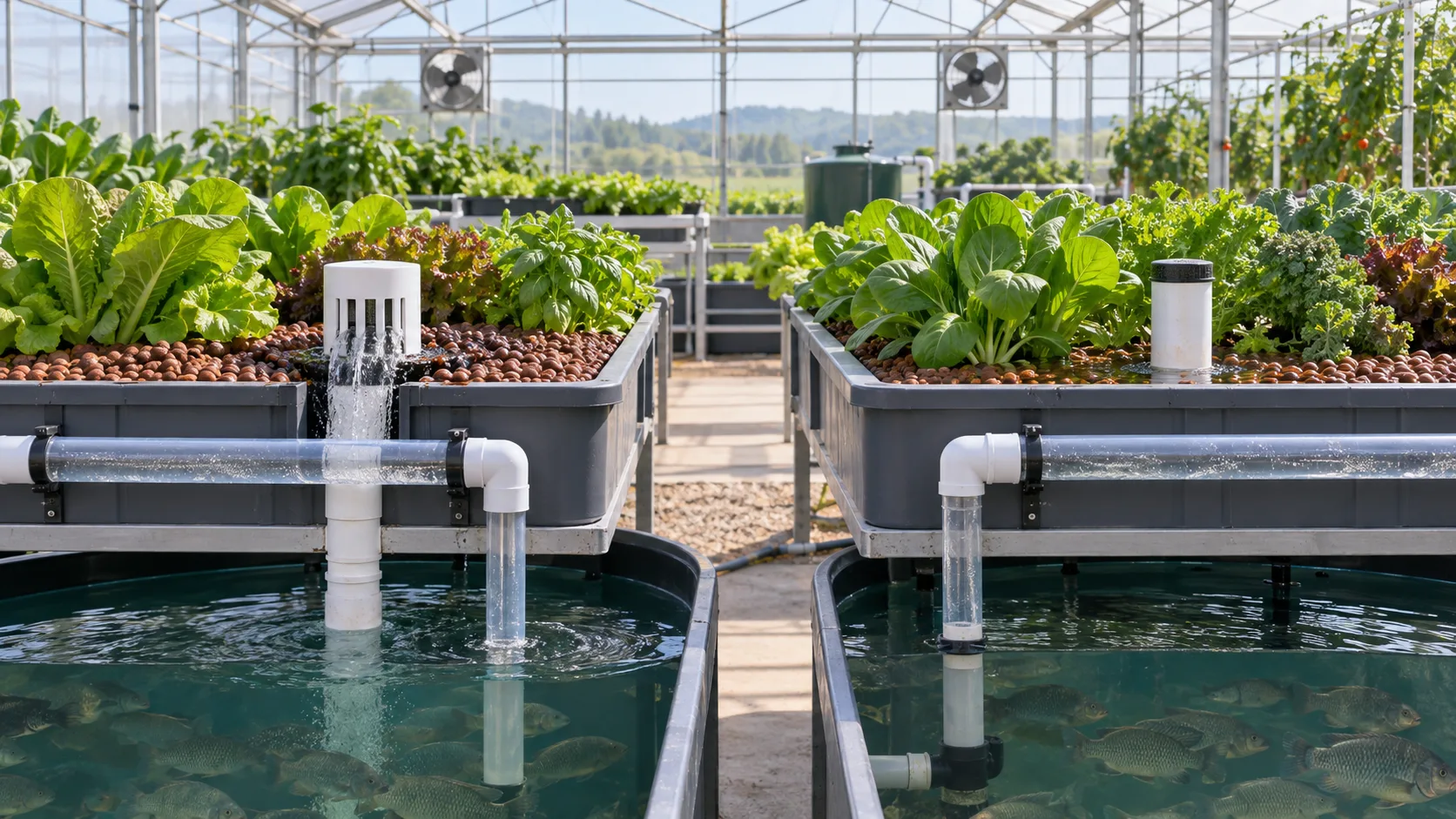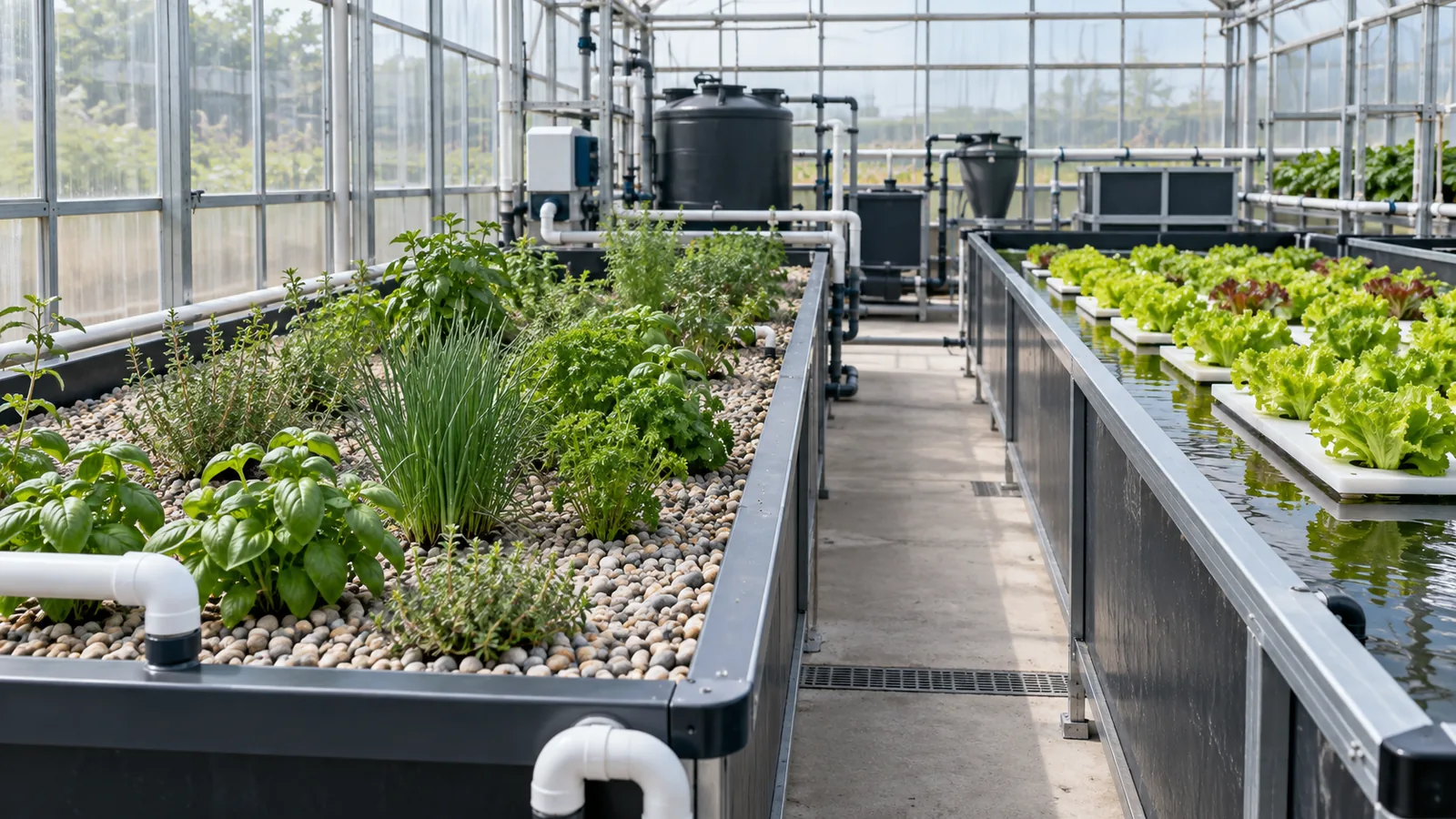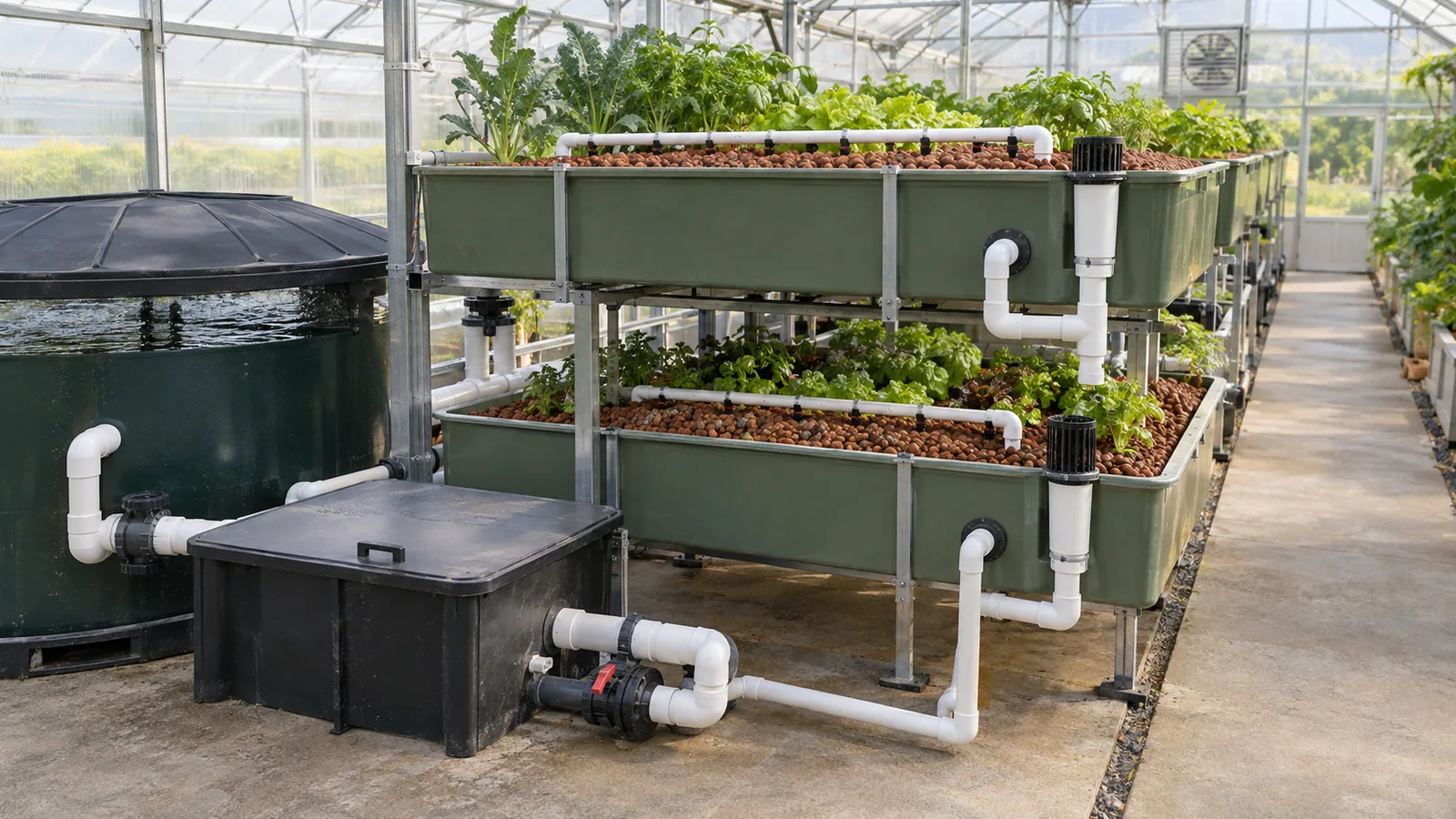
An aquaponics ebb-and-flow bed is commonly flooded and drained about once or twice per hour, but that is a commissioning starting point—not a universal setting. Some timer-controlled beds begin with approximately 15 minutes of pumping followed by enough off-time for complete gravity drainage. A bell-siphon bed may cycle automatically whenever the incoming flow raises the water to the siphon start level. In both cases, the correct frequency is the one that wets the active root zone evenly, drains before roots remain waterlogged, preserves system water levels, and maintains safe circulation for fish and biofiltration.
Cycle frequency depends on bed dimensions, water volume held by the media, media moisture retention, crop size, temperature, pump duty, drain capacity and the architecture of the full water loop. A copied timer schedule may work in one greenhouse and fail in another. Set the cycle with water first, verify it again after media and plants are installed, and keep a record of normal fill time, high-water level, drain time and low-water level.
The Short Answer
Use one complete flood-and-drain cycle every 30–60 minutes as a preliminary testing range for many conventional media beds. Then adjust from measured performance.
A practical sequence is:
1. Fill to roughly 25–50 mm, or 1–2 inches, below the media surface.
2. Confirm that the entire planted zone becomes evenly moist.
3. Drain the bed fully enough to draw air back into media pores.
4. Start the next flood before the active root zone dries excessively.
5. Confirm that fish-tank and sump levels remain within safe operating limits throughout the cycle.
6. Recheck during the hottest expected conditions and after roots have matured.
The Iowa State example described in the North Central Regional Aquaculture Center technical bulletin used a 15-minute flood and 45-minute drain schedule during daylight hours, while also noting that timing varies with substrate moisture retention and crop tolerance. Review the original hydroponic components used in aquaponics bulletin. Treat the schedule as a documented example, not a rule for every installation.
What “How Much Ebb and Flow” Actually Means
This question can refer to four different settings:
- Frequency: how many cycles occur per hour or day.
- Flood duration: how long water takes to reach the intended high level.
- Drain duration: how long the bed takes to return to its low level.
- Flood depth: how high water rises within the grow media.
These settings interact. A bed that floods every hour but needs 50 minutes to drain behaves differently from a bed that fills and drains in 20 minutes. A bed filled to the media surface has a different algae and stem-rot risk from one whose water stops below the dry upper layer. Record all four variables instead of reporting only “15 minutes on.”
Why Ebb-and-Flow Beds Cycle
During the flood phase, recirculated aquaponic water enters the media, wetting roots and delivering dissolved nutrients. During drainage, water leaves the pore spaces and air is drawn back into the root zone. The repeated change can provide useful moisture and air exchange while the media supports plants and provides surface area for microorganisms.
The bed is still part of a larger life-support system. Flood-and-drain action does not remove the need for fish-tank aeration, dependable circulation, biological filtration and solids management. If the main pump is switched off for a timed drain phase, the designer must verify what happens elsewhere during that off-time. Fish and nitrifying bacteria do not become less oxygen-dependent because plant roots are draining.
If you are still deciding between cycling and a steady water level, first read the comparison of bell siphon versus constant flood. That article addresses method selection; this guide assumes an ebb-and-flow method has already been selected and needs to be commissioned.
Three Common Ways to Create the Cycle
Timer-controlled pump
A timer starts the pump for a defined period. Water rises in the bed, and when the pump stops, water returns through a drain or through the supply line if the plumbing is designed for it. This method makes the operating schedule easy to read, but it repeatedly starts the pump and may interrupt other circulation functions if one pump serves several zones.
Use a timer rated for the electrical load and operating environment. Confirm what the pump manufacturer permits regarding start frequency. A schedule that works on paper may shorten equipment life if it starts an unsuitable pump too often.
Continuously running pump with a bell siphon
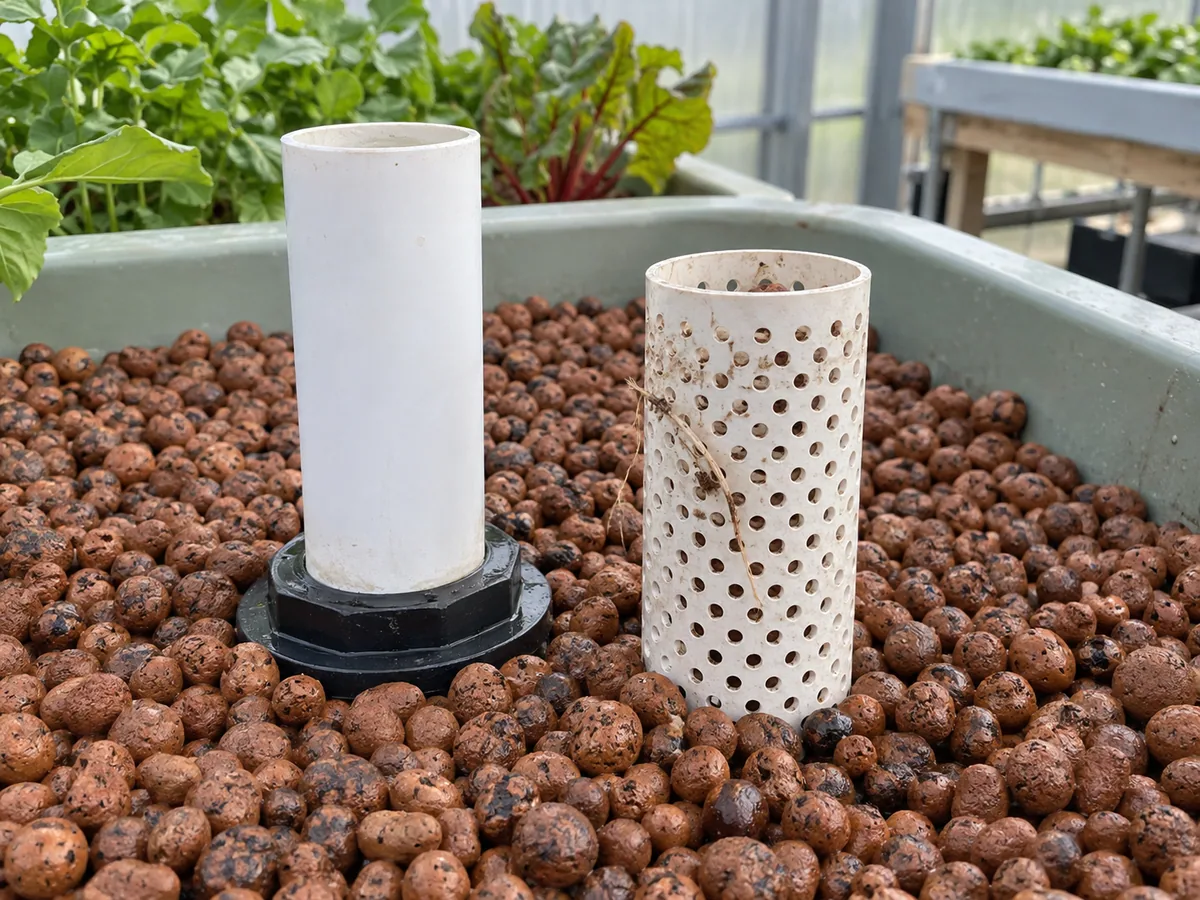
A steady inlet fills the bed until the siphon starts, drains the bed rapidly and then breaks when air enters. Cycle time is determined by the relationship among inlet flow, standpipe height, bell geometry, drain pipe and bed water volume. A valve adjustment or partially blocked media guard can change the frequency.
This arrangement avoids switching the circulation pump on and off for every plant-bed cycle, but it requires commissioning. Several beds connected to one manifold may not cycle identically even when their fittings appear identical.
Indexing or sequenced irrigation
Larger layouts may deliver water to bed groups in sequence. Sequencing can limit the amount of water displaced at one time and reduce the required active sump volume, but it adds valves and controls. The failure position must be known: if an indexing valve stops, which beds receive water and which do not?
Calculate the Water Volume Before Selecting the Timing
The external dimensions of a media bed do not equal the water moved per cycle because media occupies much of the volume.
Use this planning relationship:
Water moved per cycle = bed length × bed width × active flood depth × media void fraction
Suppose a bed is 2.0 m long, 1.0 m wide and has an active flood depth of 0.25 m. If a measured media test shows that water occupies approximately 40 percent of that bulk volume:
2.0 × 1.0 × 0.25 × 0.40 = 0.20 m³, or about 200 litres
If the target fill time is 15 minutes, the theoretical net inflow needed is:
200 L ÷ 15 min = 13.3 L/min
That is not yet a pump specification. The selected pump must deliver the required flow at the installed total dynamic head, after accounting for pipe friction, fittings, valves and distribution to other beds. Measure actual flow at the bed rather than relying only on a pump’s maximum-flow label.
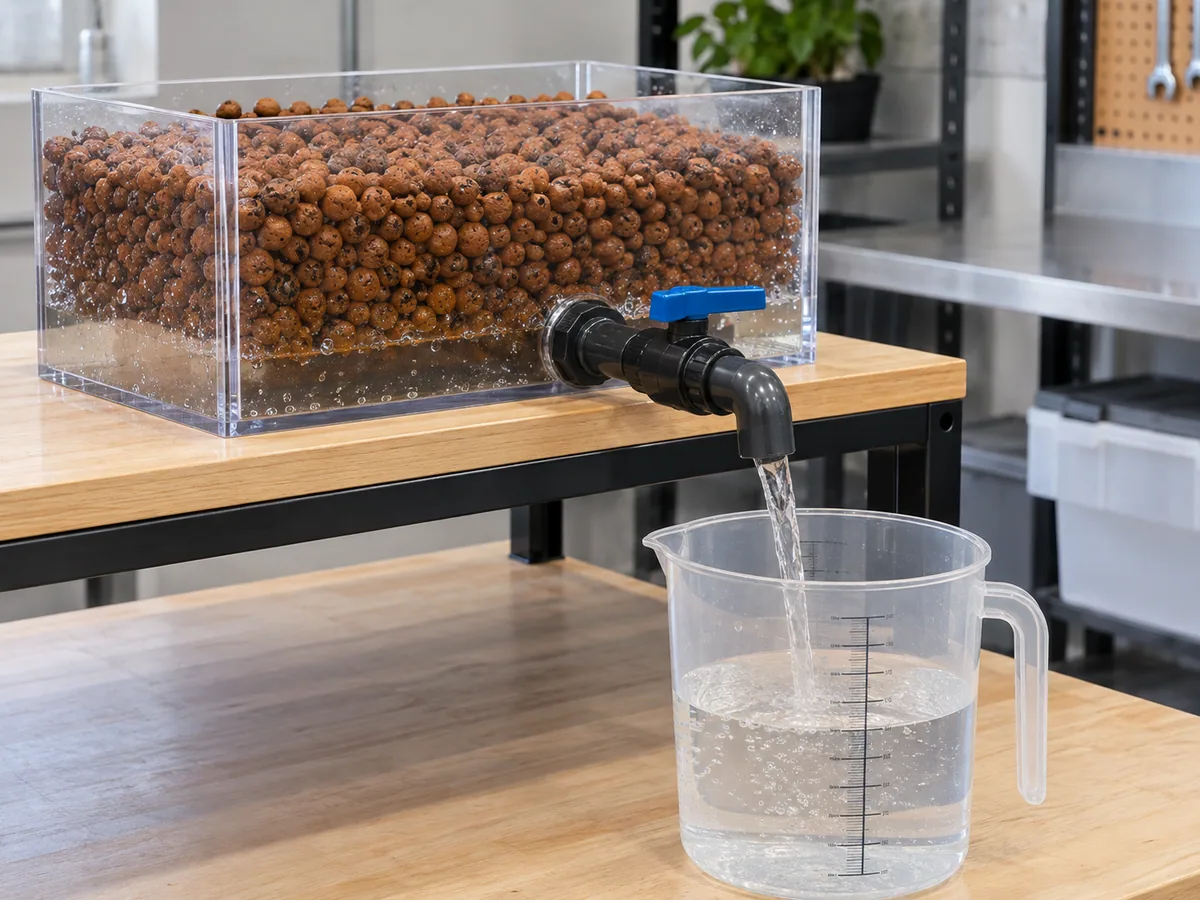
Determine the media void fraction with a small controlled test using the actual clean media. Rock size, shape and packing differ. Do not assume every expanded-clay or gravel product holds the same water volume. The guide on choosing gravel and other aquaponics media explains the chemical, structural and drainage checks required before a bed is filled.
Set Flood Depth Correctly
The high-water level should normally remain below the top surface of the media. A dry upper layer helps limit algae, fungus gnats, continuously wet plant crowns and visible standing water. The exact distance depends on media size, capillary action and transplant method, but a preliminary target of roughly 25–50 mm below the surface is common for commissioning.
Too shallow a flood may leave young roots dry or create poorly wetted zones. Too high a flood can wet stems, float lightweight media and expose nutrient-rich water to light. Mark the intended high level and verify it across all corners. If the bed is not level, one side may overflow while the other remains inadequately wetted.
Adjust Frequency for Media and Root Conditions
Coarse, freely draining media
Coarse media usually drains quickly and holds less water between cycles. In warm, dry air, a long off-period may allow fine roots near the upper active zone to dry. Shorten the interval only after confirming drainage and avoiding excessive system water-level movement.
More moisture-retentive media
A medium that remains moist longer may tolerate a longer interval. However, fine material can restrict drainage, trap solids and reduce air space. Do not solve a poorly draining bed by simply reducing flood frequency; identify compaction, sediment or unsuitable media first.
New transplants
Young roots may not yet reach the deeper wet zone. Use appropriate propagation plugs and transplant depth rather than raising water to the media surface indefinitely. Observe a sample plant and confirm that the plug becomes moist but not continuously submerged.
Mature root systems
As roots fill pore spaces, they can alter flow and drain time. A bed that cycled cleanly at commissioning may slow later. Record cycle performance at several crop stages, not only when the bed is empty.
Oregon State University’s ebb-and-flow guidance recommends draining after the media is soaked and flooding again before the medium dries enough to contract or plants begin to wilt. Its ebb-and-flow timing guide is hydroponic rather than fish-loop specific, so apply the root-zone observations while retaining aquaponics safeguards for fish, biofilters and shared water levels.
Temperature, Humidity and Light Change the Requirement
Plants transpire faster under high light, warm air, low relative humidity and strong airflow. A schedule established during a cool, cloudy commissioning week may be insufficient in summer. Conversely, frequent flooding during cool, humid conditions may leave roots wetter for longer.
Do not adjust by calendar alone. Observe root condition, plant turgor, media moisture, water temperature and drain performance. If a greenhouse has large seasonal changes, document approved warm-season and cool-season starting settings, then verify them after each change.
Water temperature also affects dissolved oxygen and fish risk. A decision to run one shared pump intermittently must consider the warmest water and highest planned fish biomass. Independent aeration and an outage plan may be more important than the precise plant-bed timer.
Protect the Fish Tank and Sump During Every Cycle
When several beds fill simultaneously, hundreds of litres may leave the sump or fish tank. The pump must remain submerged, and the fish tank must not drop below its safe operating level. When beds drain together, the receiving vessel must have enough freeboard to avoid overflow.
Calculate simultaneous displacement for the worst normal combination of beds. Then test it. Mark minimum and maximum operating levels on the sump, verify automatic top-up behavior if installed, and simulate a power interruption. Water returning after power loss must have a contained destination.
Staggering beds can reduce peak displacement, but only if the control sequence is dependable. Do not compensate for an undersized sump with an undocumented pattern that only one operator understands.
Commission the System Before Adding Fish
Dry inspection
Confirm the bed is level and properly supported. Check bulkheads, pipe supports, media guards, overflows and accessible isolation points. Verify that the bed and structure can carry saturated media weight. Keep electrical connections away from splash zones and arrange final electrical work according to local requirements.
Water-only testing
Run the full system with clean conditioned water. Record:
- Actual inlet flow to each bed
- Fill time from normal low level to high level
- Maximum water level below the media surface
- Siphon start and break behavior, where applicable
- Drain time
- Residual low-water level
- Sump minimum during filling
- Sump maximum after drainage
- Fish-tank level variation
- Emergency overflow behavior
Repeat the test after several cycles. A siphon that works once is not commissioned. For timer control, verify recovery after a brief power interruption and confirm that the timer retains or safely resets its schedule.

Media and planted testing
Add washed, accepted media and repeat the measurements. Then repeat after representative planting because propagation plugs and roots change water movement. Do not stock heavily until the hydraulic behavior, biofilter and operating procedures are stable.
For packaged equipment, factory testing can confirm component fit, valve operation and leak-free assemblies. It cannot reproduce the customer’s final elevation, pipe length, voltage, water source or crop root mass. Shipment inspection should verify pump model, timer, siphon parts, bulkheads, valves, media guards and labelled drawings against the approved packing list. Final acceptance occurs at the installed site.
Mid-Article CTA — Review the Water Path Before Ordering
Planning several media beds or an international equipment shipment? Send Your Requirements with the bed dimensions, media type, fish-tank volume, sump volume, available elevation and local power details. We can help organize the hydraulic and installation questions that belong in a supplier discussion.
Diagnose a Cycle That Is Too Fast
Warning signs include incomplete wetting, a siphon that restarts almost immediately, excessive water-level surging, noisy repeated drain events or a pump operating far from its intended duty.
Check actual water volume and flow first. A small active flood depth or excessive inlet flow can shorten the cycle. Confirm that the standpipe is not too low, the siphon is not oversized and the drain does not draw down below the intended root zone. Do not restrict a drain blindly; drain capacity also protects against overflow.
A fast cycle is not automatically harmful, but more cycles do not mean more plant growth. The system needs adequate wetting, drainage, oxygen and stable life support—not the greatest possible number of siphon events.
Diagnose a Cycle That Is Too Slow
A slow cycle may result from low inlet flow, excessive head, a fouled pump, unbalanced manifold, blocked media guard, root intrusion, sediment or a partially obstructed drain. Compare current readings with commissioning records.
If plants wilt before the next flood, verify that water reaches the active root zone and that media has not become hydrophobic or channelled. If the bed remains saturated for most of the cycle, verify drainage and inspect for solids accumulation. Changing the timer cannot remove a physical blockage.
When one bed in a group behaves differently, isolate the problem to that bed before changing the shared pump setting. Otherwise, correcting one branch may destabilize the others.
Build a Routine Operating Record
Add the following to the aquaponics maintenance schedule:
- Normal cycle range rather than one perfect number
- High and low bed levels
- Normal inlet-valve position
- Fill and drain time under representative crop load
- Pump and timer settings
- Sump minimum and maximum marks
- Date of guard, drain and pump inspection
- Approved seasonal settings
- Action to take if a bed fails to fill or drain
Trend data matter. A gradual increase in fill time can indicate pump or pipe fouling. A longer drain time can reveal root or solids restriction. The record turns a vague impression into an actionable maintenance signal.
FAQ
Is 15 minutes on and 45 minutes off always correct?
No. It is a widely cited example, not a universal rule. Verify bed water volume, actual pump flow, media moisture, crop stage, drainage, sump capacity and fish-side life support before adopting it.
Should an ebb-and-flow bed run at night?
The answer depends on crop, media, temperature, humidity and the role of the shared pump. Do not stop essential fish circulation or biofilter flow merely because plant lights are off. If plant-bed irrigation is reduced at night, validate root moisture and life-support continuity first.
How many times per hour should a bell siphon cycle?
One or two complete cycles per hour is a useful preliminary observation range for many conventional beds, but siphon frequency must be validated from actual wetting, drainage and system water levels. Stability matters more than reaching a particular count.
Should the media bed drain completely dry?
It should drain enough to restore air space and avoid a continuously saturated root zone, but media and roots normally remain moist. The plumbing may also leave a deliberate residual water level. “Drain” does not mean allowing roots to desiccate.
Can more frequent cycling replace an air pump?
No. Flood-and-drain action can aerate the root zone, but fish, biofilters and other water zones need oxygen according to their actual load and temperature. Provide independent aeration where the risk assessment requires it.
Why did the cycle change after several months?
Roots, captured solids, biofilm, pump fouling, shifted valves and changing sump levels can alter flow. Compare current fill and drain measurements with the commissioning baseline and inspect one variable at a time.
Conclusion
Most aquaponics ebb-and-flow beds can begin commissioning around one or two cycles per hour, but the final schedule must come from the installed system. Calculate the water moved per cycle, keep the flood level below the media surface, verify full drainage, protect fish and sump levels, and retest under mature crops and demanding weather.
The best setting is not the fastest cycle or the most familiar timer pattern. It is a repeatable operating range that keeps roots evenly supplied, lets the media re-aerate, preserves dependable life support and remains easy for the operator to inspect.
Final CTA — Request a Cycle and Plumbing Review
Need an ebb-and-flow layout matched to your bed count and installation conditions? Get a Quote and send the grow-bed dimensions, planned media, fish-tank and sump volumes, pump location, elevation drawing and destination country.