
Introduction
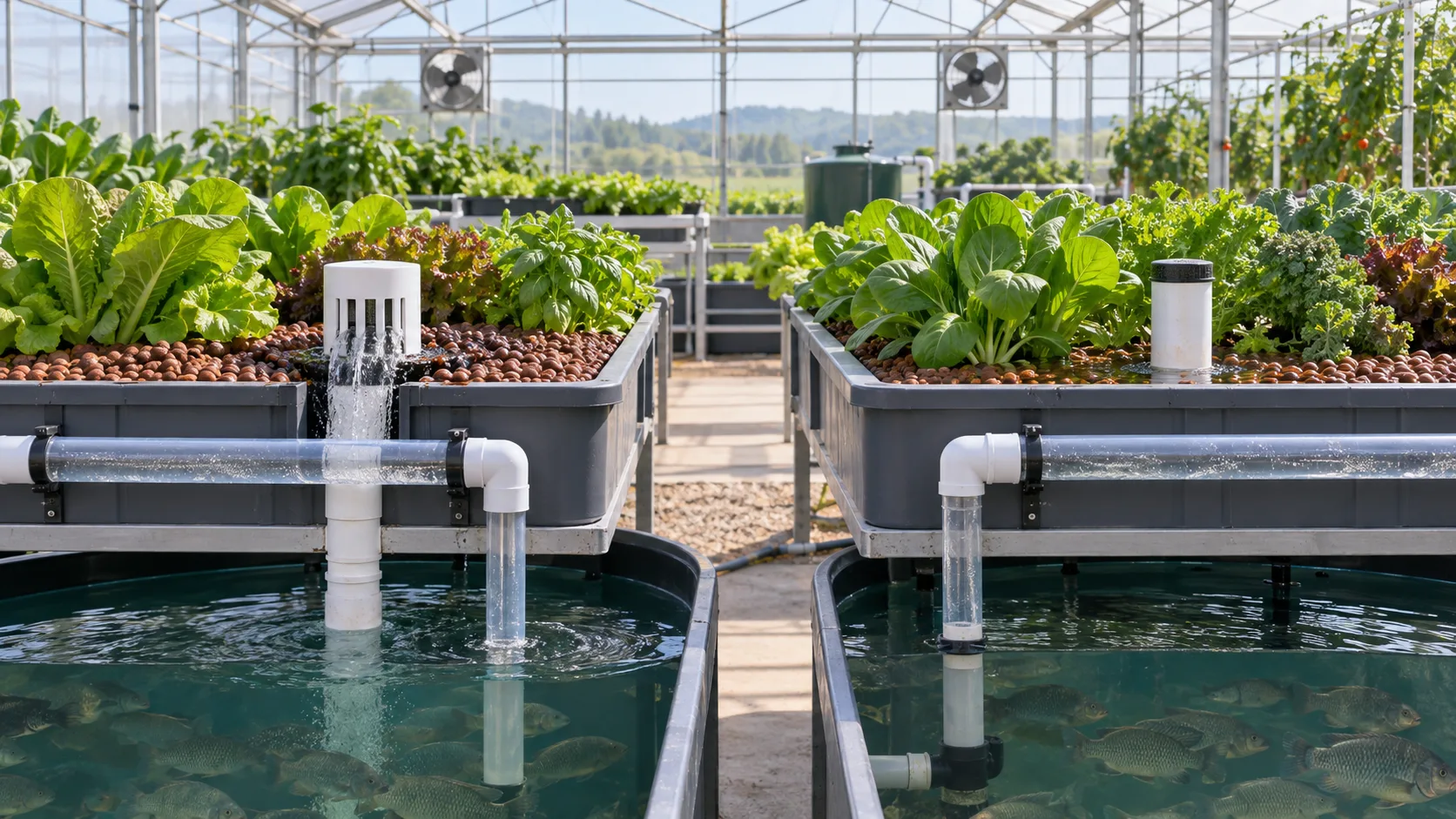
Bell siphons and constant-flood beds are two ways to manage water in a media-based aquaponics grow bed. Neither is automatically the “best” choice. A bell siphon repeatedly fills the bed and then drains it quickly once the siphon starts. A constant-flood bed keeps water at a chosen level, generally below the media surface, while fresh system water moves through the bed continuously. Both approaches can support plants and beneficial bacteria when the water path, aeration, solids control and maintenance routine are properly matched.
The difference matters because it changes the daily operating experience. A bell siphon adds an automatic hydraulic event that can aerate the root zone as the bed drains, but it must be sized and tuned to the available inflow and drain. Constant flood removes that cycling mechanism and can be mechanically simpler, but it needs thoughtful water level, media selection, inlet distribution and solids management. Buyers should choose based on their crop, available service skill, desired system complexity and tolerance for adjustment—not by copying a video build.
The short answer
Choose a bell siphon when the project wants automatic flood-and-drain cycles without relying on a timed pump and can test the siphon carefully before fish are loaded heavily. Choose constant flood when simple, steady hydraulics and lower dependence on siphon tuning are priorities, provided the bed has suitable media, adequate dissolved oxygen in the loop and a designed route for solids. In either case, the critical safeguards are reliable circulation, accessible cleaning, overflow control, correct drain capacity and a documented response if water level changes unexpectedly.
How each method moves water
Bell siphon flood and drain
In a typical bell-siphon bed, a pump delivers water to the media bed at a steady rate. Water rises until it reaches the standpipe. As flow through the standpipe develops, the bell creates a siphon effect and rapidly drains the bed. When air enters the system at the intended low-water point, the siphon breaks and filling begins again. The plant roots experience alternating wet and drained phases while the media remains moist.
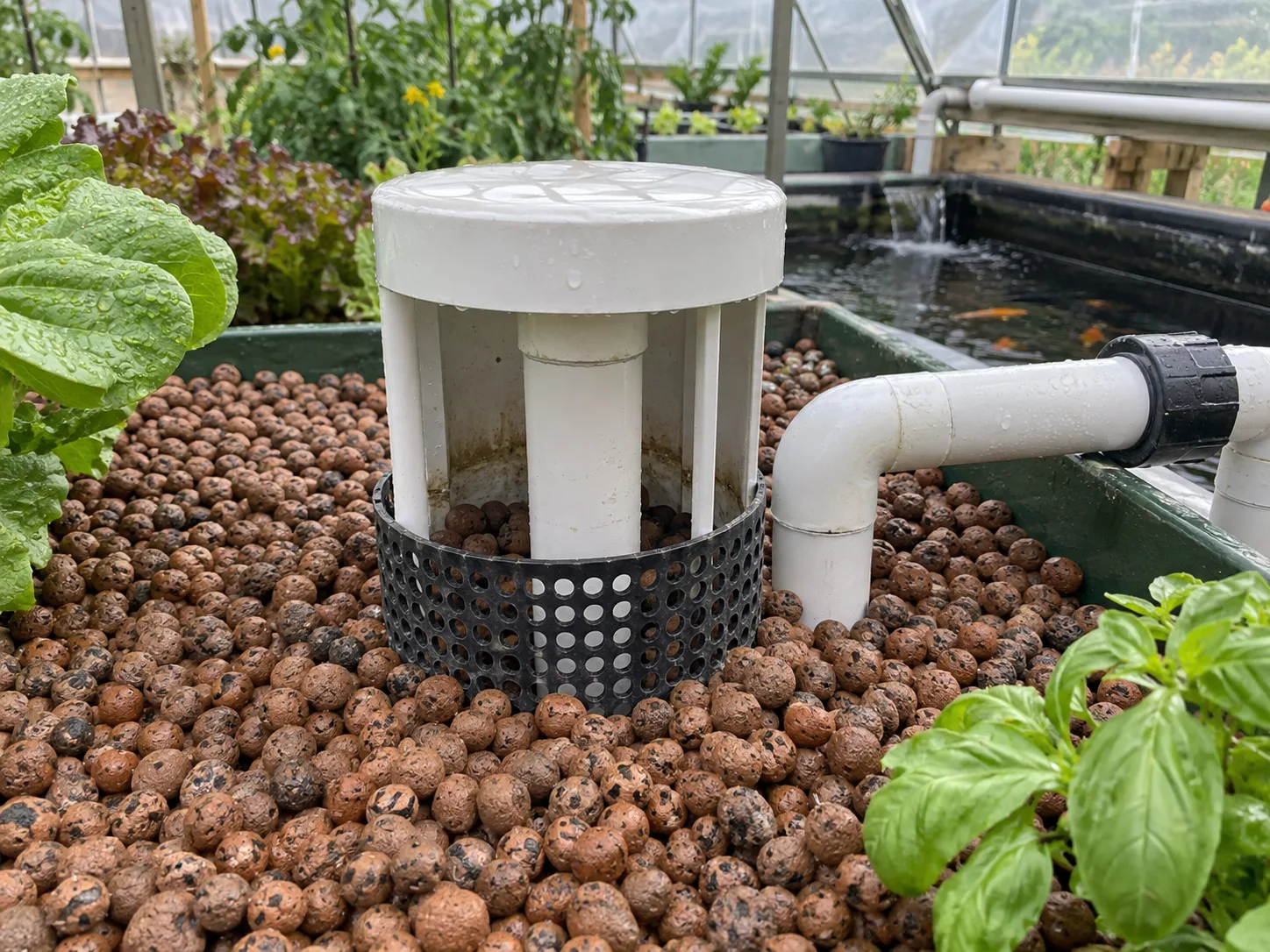
The University of Hawai‘i’s Extension publication on constructing automatic bell siphons describes the standpipe, bell and snorkel relationship and emphasizes that sizing is linked to bed volume and water flow. It is useful technical background, but every installation must still be tested with its actual pump, pipe runs, elevation and media.
Constant flood
In a constant-flood bed, water enters continuously and exits through a standpipe or level-control drain at a fixed height. The water level is deliberately held below the top of the media, leaving a dry upper layer for plant stems and reducing surface algae. Roots extend into the moist zone, and water movement carries nutrients through the bed. The system does not depend on the start-and-stop behavior of a siphon.
“Constant” does not mean stagnant. Water must move through the bed at the intended rate, and the return route needs to be protected from blockage. A constant water level is a hydraulic choice, not permission to ignore oxygen, accumulated solids or access for cleaning.
Oklahoma State University Extension similarly describes an autosiphon as an always-on way to control flood-and-drain media beds and notes that it still needs regular checks. Its aquaponics system overview is a useful comparison source for operators deciding whether they want a timed or automatic drain approach.
Benefits of a bell siphon
Automatic root-zone re-aeration
The visible benefit of flood and drain is the air exchange that occurs as water leaves the media pores. A drained bed is not a substitute for system aeration, yet the cycle can create a root environment that many media-bed growers value. The approach can be especially appealing where crops need physical support from media and the project wants a regular wet-and-drained rhythm without a timer.
A single continuously running pump can serve the cycle
Where a gravity return path is available, a bell siphon can work with a continuously operating water pump. This avoids cycling the main circulation pump on and off merely to irrigate the bed. That may simplify the electrical control approach, although it adds mechanical sensitivity in the drain assembly.
Clear visual feedback during commissioning
An operator can watch a correctly tuned bed fill, start draining, reach its intended low point and restart. That makes commissioning conversations concrete. During factory testing of a packaged media-bed assembly, a supplier can demonstrate the physical fit of standpipe, bell, media guard and drain fittings. During on-site installation preparation, the actual water level and cycle must be rechecked because pipe length, head and flow may differ from the factory setup.
Potentially useful media-bed function
Media beds can support plants, capture some solids and provide biological surface area. Flood-and-drain does not remove the need for dedicated solids management in every system, particularly at commercial feed rates, but it can be a practical part of a smaller integrated design. The key is accessible cleaning rather than treating the media as an invisible permanent filter.
Benefits of constant flood
Fewer moving hydraulic events
Constant flood eliminates the need for a siphon to start and break repeatedly. For operators who do not want to tune a bell, troubleshoot an intermittent cycle or protect an air tube from media and root interference, this can be a real advantage. The level-setting standpipe still deserves inspection, but the normal operation is easier to explain: water enters, flows through the media zone and returns at a controlled level.
Stable water level in the grow bed
A steady level can simplify observation. A grower can set the water line well below the surface, keep crowns dry and maintain a predictable moist zone. It can also reduce the visible surge and drain noise that some indoor or education settings find distracting.
Easier replication across simple modules
For a modular project with several identical beds, a correctly designed constant-flood arrangement may be easier to replicate than several individually tuned bell siphons. The installer still has to balance inlet distribution and confirm the shared return can carry the flow, but there are fewer siphon-specific variables at each bed.
A useful option for cautious first installations
New operators often have many tasks at start-up: cycling the biofilter, observing fish, learning water tests, checking leaks and establishing crop routines. A constant-flood configuration can reduce one category of adjustment. It is not universally easier, but it may better match a project where the first priority is a simple, observable water path.
Compare the real trade-offs
Reliability is designed, not selected from a menu
A bell siphon may fail to start, fail to break, cycle irregularly or become sensitive after a pump change, root growth or a blocked media guard. Constant flood may suffer from a blocked standpipe, uneven inlet flow, a hidden solids deposit or low oxygen near roots if the overall system is poorly aerated. Neither configuration is maintenance-free.
The more useful question is: what failure mode can this operator see and correct quickly? A clear standpipe, an accessible media guard, a safe emergency overflow, isolation valves and a flow check are valuable for both methods. Record the normal water level and return behavior during commissioning so a new operator can identify a change.
Root conditions and crop mix
Flood-and-drain beds are often chosen for crops that benefit from media support and a periodically drained zone. Constant-flood beds can also grow many media-bed crops when the upper layer stays dry enough and water conditions remain stable. Crop success also depends on light, temperature, plant density, pest management, nutrient balance and harvest routine. Do not attribute every root problem to the flood method before checking solids, pH, temperature and oxygen.
Solids and biofiltration
Media creates surface area, but it can also conceal waste. In a light-load small system, a media bed may perform several functions. In a higher-load system, make the solids strategy explicit: what is captured upstream, what passes through, what settles in the bed, and how will it be removed? A screen, radial-flow separator, mineralization plan or separate biofilter may still be appropriate. The goal is not maximum equipment; it is a water path that can be observed and cleaned.
Pump energy and operating continuity
Both configurations can use continuous pumping. The energy difference depends more on actual pump duty, static head, friction loss, pump curve and operating schedule than on the word “siphon.” Do not select a bell siphon solely because it appears to save energy; measure the planned head and choose equipment that operates efficiently at the required flow.
Noise, access and indoor use
A bell siphon can create audible draining and water-level changes. That may be acceptable or even educational in a greenhouse, but less welcome in a quiet indoor display. Constant flood can be quieter, although falling return water still needs splash and noise control. In either layout, leave enough access to lift a media guard, inspect roots, remove a standpipe and clean the drain without dismantling a planted bed.
A commissioning sequence that protects fish and plants
Start with clean, correctly sized media and a level bed. Confirm that bulkheads are tight without being overstressed, pipes are supported independently of the bed, and every drain has a safe destination. Run the system with water before fish stocking. Verify the maximum water level, normal low point, return capacity, overflow route and that a stopped pump does not back-siphon the fish tank below a safe level.
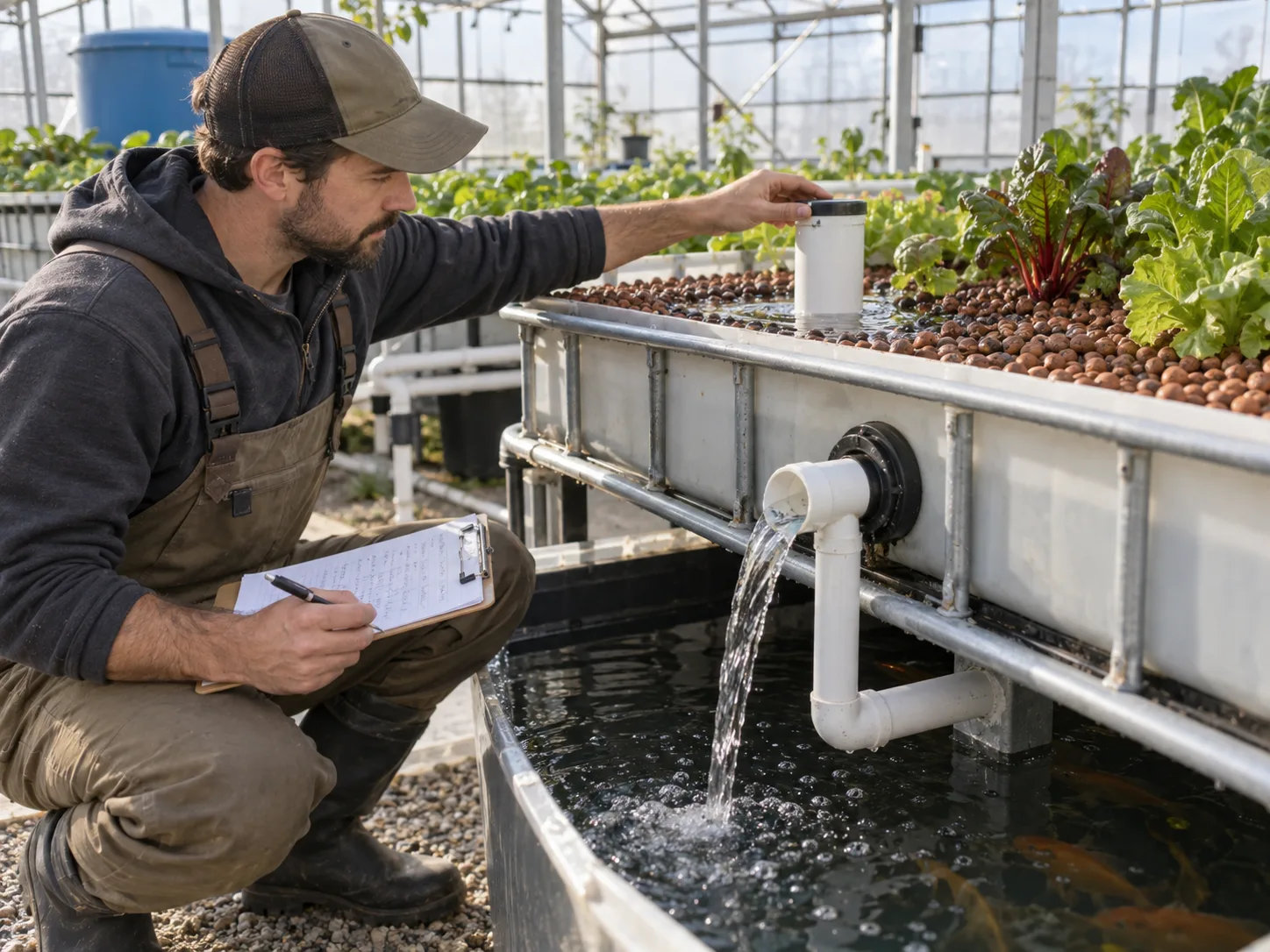
For a bell siphon, record inlet flow, fill time, start point, drain time and break point. Change only one variable at a time: inlet flow, standpipe, snorkel position or drain configuration. Do not repeatedly cut pipe or alter fittings while fish are under stress. For constant flood, confirm the fixed level stays below the media surface, water is distributed across the bed, the standpipe is protected from media entry and return flow remains clear after the bed is planted.
At shipment inspection, count the supplied standpipes, bells, media guards, bulkheads, valves and fittings against the packing list. Photograph labelled parts and retain the layout drawing. At final installation, repeat leak and flow testing with the actual local power supply and pipe runs. These modest records are more useful than a generic claim that either method is “self-running.”
How to select the configuration for a project
Choose bell siphon flood-and-drain when all of the following are true: the beds are media based; the team accepts a commissioning period; stable inflow and gravity drain are available; a person can inspect the siphons routinely; and the physical water movement suits the site. Choose constant flood when the project values a predictable level, easier explanation, quieter operation or repeated modular beds, and can maintain continuous movement, oxygenation and cleaning access.
When comparing system architectures, first decide whether a media-bed loop is appropriate at all. Our overview of different types of aquaponics systems helps distinguish media beds from raft and nutrient-film approaches. If a media bed is selected, use the aquaponics design guide to map water levels, drains, valves, power and service access before choosing the drain method.
Troubleshooting without destabilizing the whole system
When a bell siphon changes behaviour, resist the urge to make several changes in one afternoon. First confirm that the pump and inlet flow have not changed, that the bed is level, and that the media guard, standpipe and air-break path are clear. Then compare the current water level and timing with the commissioning record. A gradual slowdown may point to roots or solids; a sudden change after maintenance may point to a shifted fitting or altered valve position. Temporarily moving a valve from its recorded setting without noting it can make later diagnosis much harder.
If a siphon will not break, protect against the grow bed remaining drained or the sump being drawn too low. If it will not start, protect against an unintended high-water level and verify the emergency overflow. The correct response depends on the plumbing design, so operators should not blindly block a drain or add a restriction based on a different system’s online tutorial. Maintain safe fish circulation first, then make a controlled test when the system is stable.
For constant flood, an unexpectedly rising water level usually deserves an immediate check of the standpipe, media guard and shared return. An unexpectedly low level can indicate a leak, changed return path or inlet interruption. Roots or fine solids may collect at an inlet or drain over time, particularly with heavily planted beds. Cleaning should be planned around crop access and water containment; removing a standpipe without an isolation plan can drain a bed faster than the operator expects.
Use a normal-condition checklist
Post a short, system-specific checklist near the grow area: normal inlet valve position, expected high and low water levels, typical bell-siphon cycle range if used, pump and aeration status, drain inspection point, emergency overflow location, and the person to call for a fault. This is more valuable than a generic instruction sheet because it reflects the installed equipment. Review it after each layout change, pump replacement or expansion.
Procurement details that influence the choice
When buying a media-bed package, request drawings that show the grow-bed depth, intended media, bulkhead size, standpipe, bell, media guard, inlet and drain route. Ask whether the bell-siphon components are supplied loose or factory fitted, what spare fittings are included, and whether the supplied pump duty was tested with the intended number of beds. For constant flood, request the fixed water-level dimension, inlet distribution arrangement, drain protection and any maximum-flow limitation.
Check materials as well as geometry. A thin, poorly supported bed can flex around a bulkhead. A drain fitting that cannot be accessed after media is installed invites deferred maintenance. A return pipe without a secure support can place force on a bed wall. These are not exotic engineering issues; they are ordinary installation details that often determine whether a chosen method remains easy to operate after plants grow in.
FAQ
Is a bell siphon always better for plant roots?
No. Flood and drain can provide useful air exchange, but successful roots also require suitable media, circulation, oxygen, temperature, solids control and crop management. Constant flood can work well when it is designed and maintained correctly.
Does constant flood need an air pump?
The whole aquaponics system still needs aeration appropriate to fish biomass, water temperature and risk. Do not rely on the grow-bed method alone to meet oxygen needs.
Can one pump serve several bell siphons?
It can, but distribution, bed elevations, inlet flow and shared drain capacity need design and testing. One bed changing behavior can affect the others. Use isolation and balancing provisions rather than assuming identical fittings guarantee identical cycles.
What usually causes a bell siphon to stop working?
Common causes include incorrect inflow, unsuitable drain geometry, blocked media guards, altered pipework, root interference or a snorkel/air-break problem. Recheck the original configuration and make one controlled adjustment at a time.
Conclusion
Bell siphon and constant flood are both practical media-bed strategies when selected for the site and operated with discipline. The bell siphon offers automatic flood-and-drain action and visible root-zone cycling; constant flood offers stable hydraulics and fewer siphon-specific adjustments. The correct decision comes from a tested water path, accessible maintenance and an operator who understands the normal condition of the system.
CTA — Need help selecting a media-bed water path? Contact Us with your grow-bed count, available footprint, fish plan, pump location and destination. We can help define an equipment scope and installation-preparation checklist.

