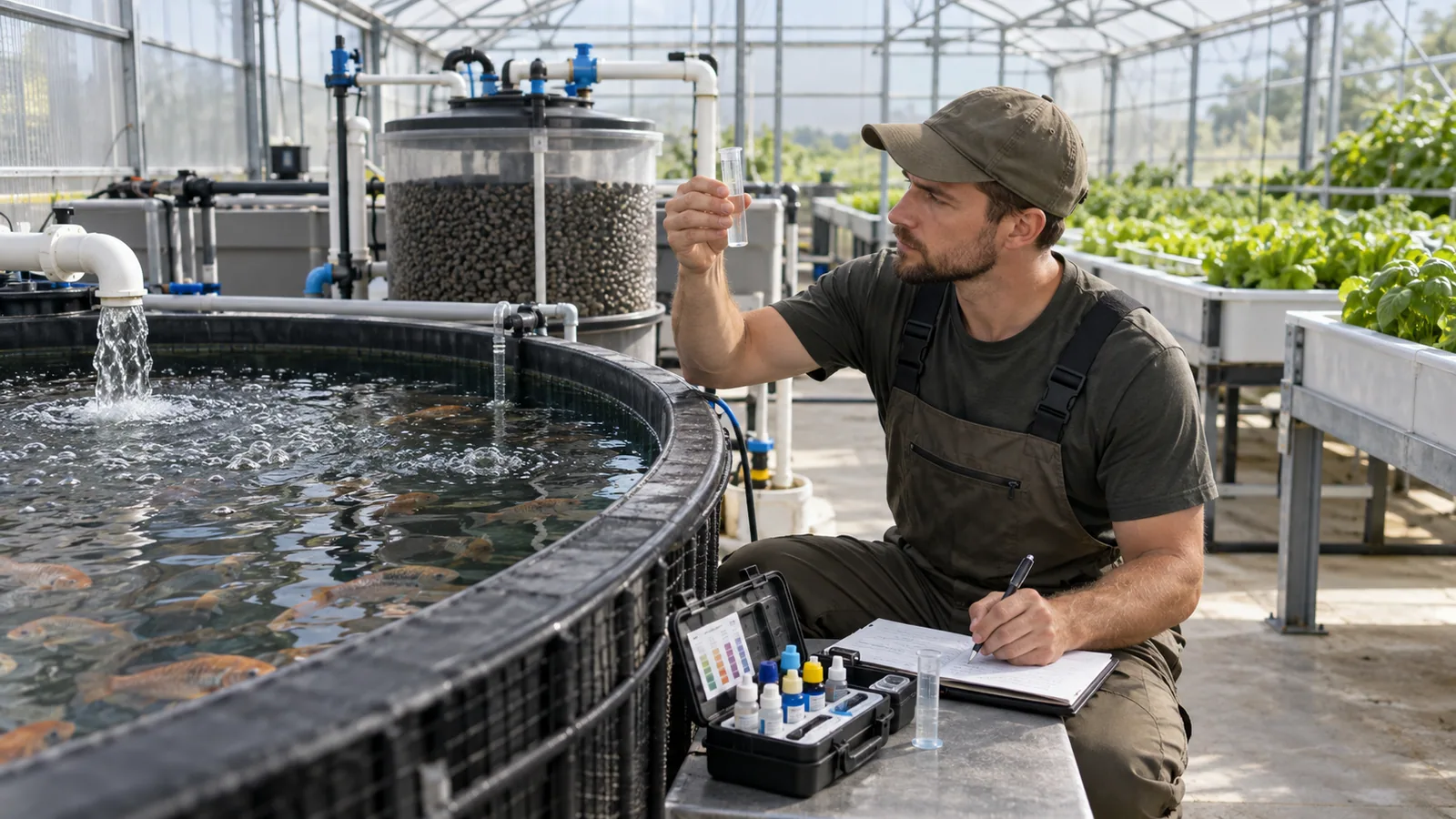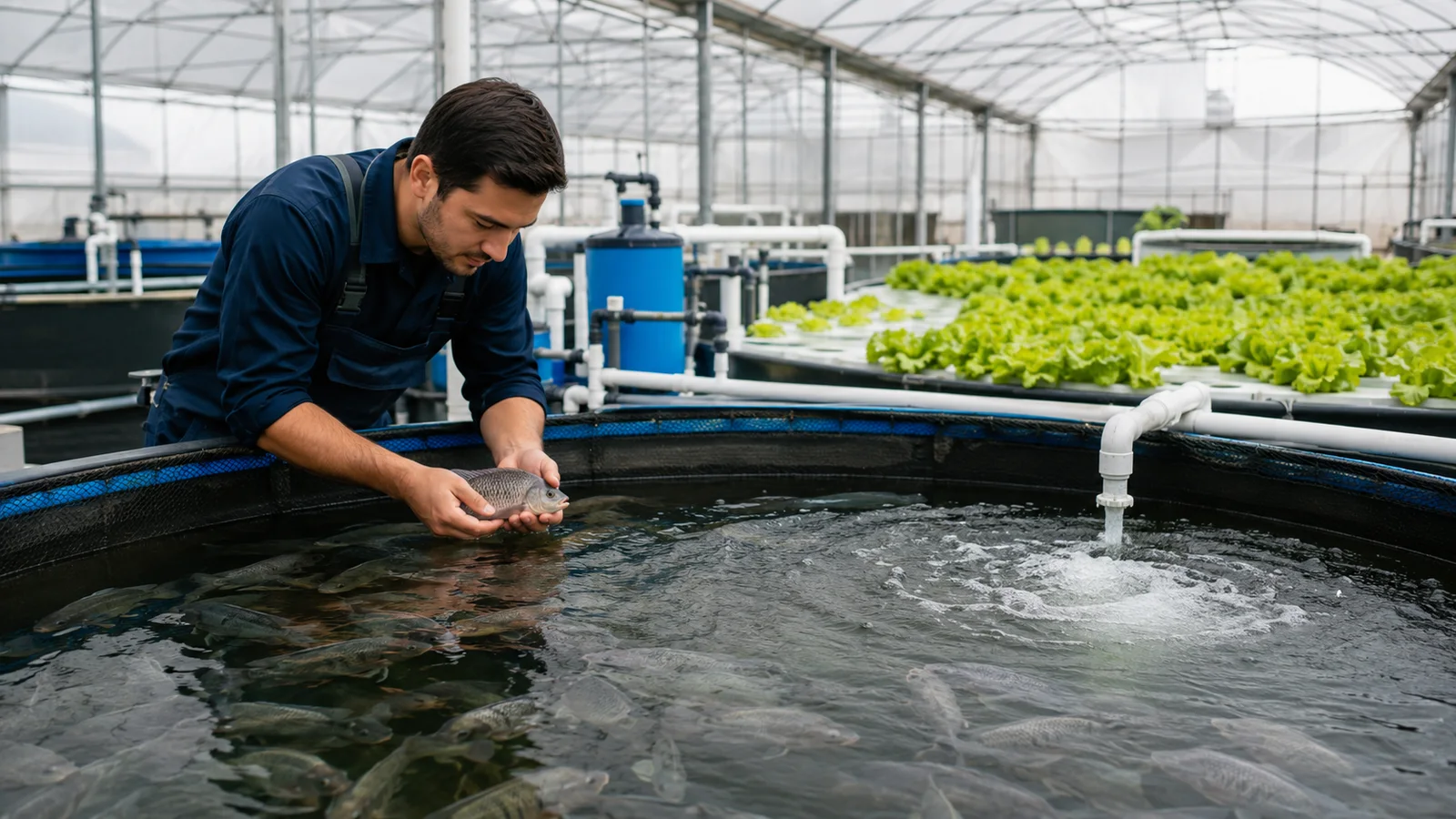
Adding fish to aquaponics is not a matter of opening a transport bag and pouring everything into the production tank. The system must already be hydraulically tested, biologically prepared and operating within the acceptable range for the selected species. The delivery must be inspected, and differences between transport water and receiving water must be managed without prolonging stress or introducing unnecessary contamination.
The correct procedure depends on species, fish size, transport method, travel duration, transport-water chemistry and the advice of the supplier or aquatic-animal professional. A sealed oxygenated bag, an open aerated container and a commercial hauling tank do not follow exactly the same unloading sequence.
A safe plan prepares the receiving system before the vehicle arrives, verifies fish condition and documents delivery, compares temperature and relevant water-quality parameters, acclimates according to the actual difference and transport condition, transfers fish with minimal handling, and monitors the population closely for at least the first several days.
The Short Answer
Before adding fish:
1. Complete leak, flow, drain, aeration and power-loss tests.
2. Verify that biological cycling has produced stable ammonia and nitrite conversion.
3. Confirm species, legal status, number, size, health documentation and transport method.
4. Prepare an opaque food-grade plastic receiving or quarantine tank where practical.
5. Test both receiving water and transport water without unnecessarily opening sealed bags early.
6. Equalize temperature and adjust fish gradually to meaningful chemistry differences under supplier guidance.
7. Transfer fish with minimal exposure and avoid adding dirty transport water to the main loop when a biosecure transfer method is available.
8. Begin with a conservative fish load, delay or reduce feeding as appropriate, and record water quality and behavior.
Do not add fish to an uncycled system because a calendar says it is ready. Do not add the full planned biomass merely because the first group appears healthy at arrival.
Confirm the System Is Ready Before Delivery
Fish should arrive only after the installed system has demonstrated reliable operation.
Hydraulic commissioning
Run the system with water only. Check:
- Fish-tank and sump operating levels
- Pump flow at installed head
- Gravity-return and overflow capacity
- Mechanical-filter operation
- Biofilter flow distribution
- Aeration in every fish-holding zone
- Drain accessibility and screens
- Power-off drain-down and restart
- Alarm and backup-air function
- Electrical protection in wet areas
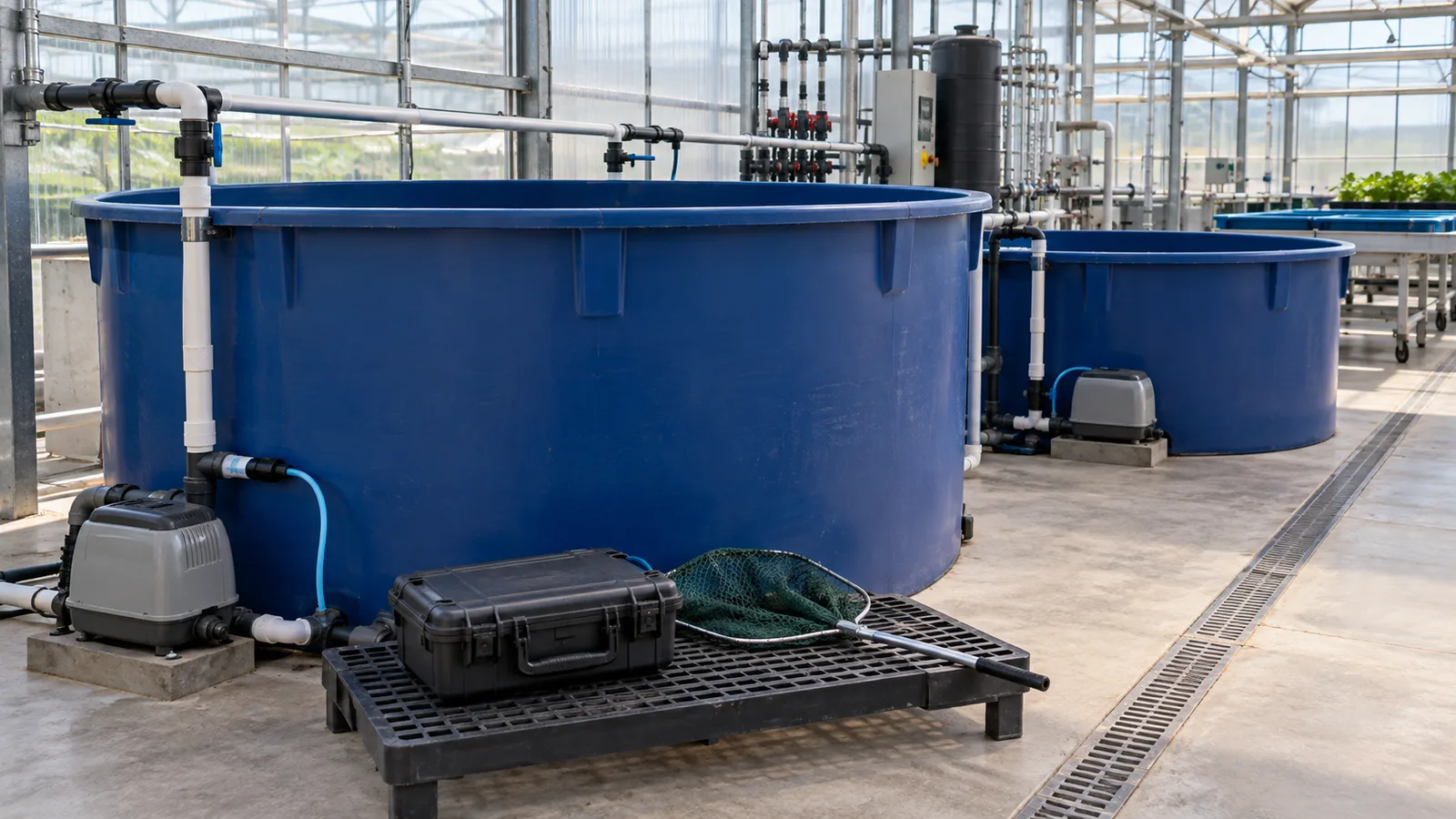
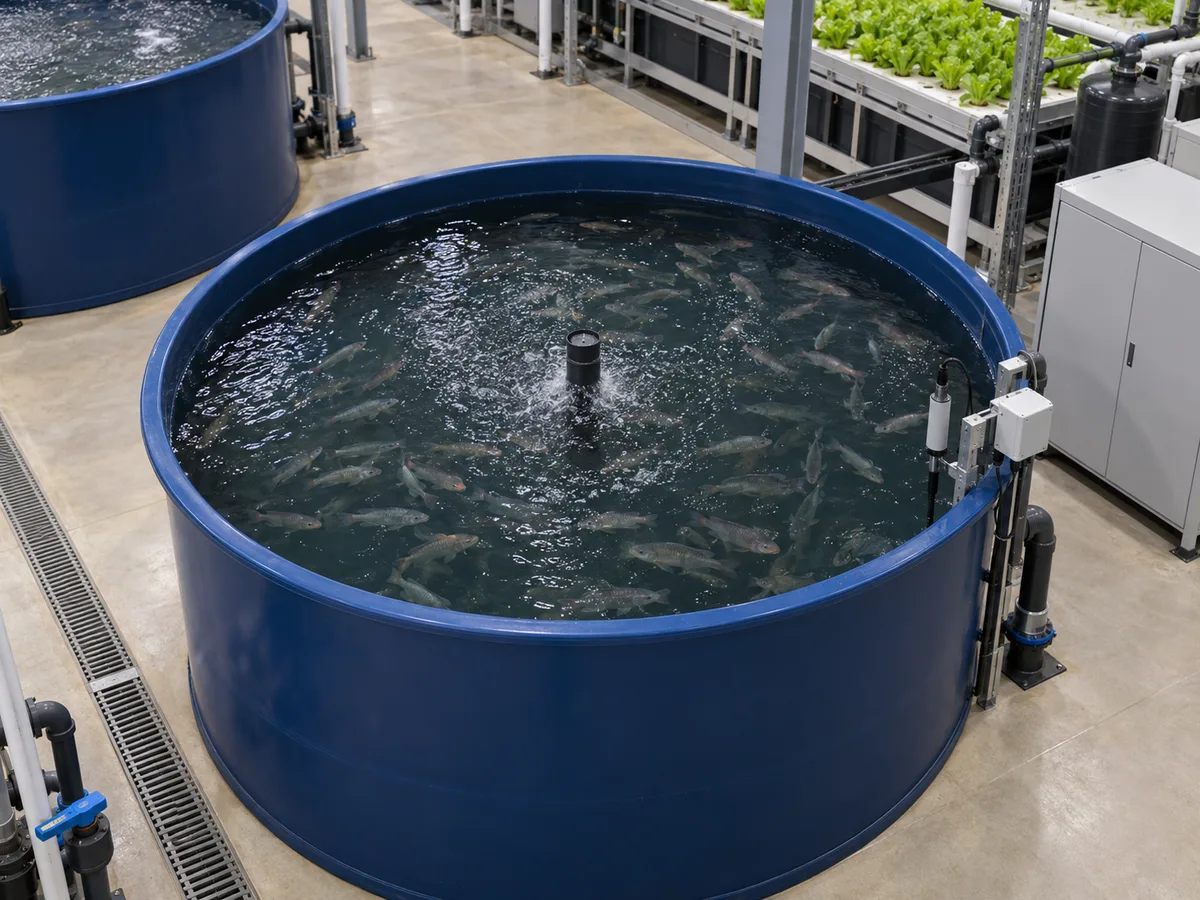
Permanent fish tanks should be opaque, food-grade plastic units suitable for aquaculture. Opaque walls limit unwanted light in the tank and provide a realistic, durable commercial installation; fish are observed from the open top or designated inspection access, not through transparent sidewalls.
Biological readiness
The system should demonstrate that its biofilter can process an introduced nitrogen load. Track ammonia, nitrite, nitrate, pH, alkalinity, temperature and dissolved oxygen through the chosen cycling procedure. The existing guide on how to cycle an aquaponics system explains the biological preparation stage.
Cycling does not justify immediate full stocking. Biofilter performance depends on feed input, temperature, oxygen, pH and biomass. Add fish in planned stages and increase feed only when measurements confirm that the system is handling the load.
Buy Fish From a Traceable Supplier
Request information before ordering:
- Scientific and common species name
- Average size and expected size range
- Quantity and total estimated biomass
- Hatchery or farm source
- Health observations and available certificates
- Vaccination or treatment history where relevant
- Transport duration and packing method
- Water temperature and salinity at dispatch
- Recommended receiving-water conditions
- Mortality and claim procedure
- Local permits or movement requirements
The University of Florida IFAS guide on purchasing, transporting and stocking fingerlings recommends confirming fish size and condition, clarifying responsibility for delivery and preparing the required transport and stocking method in advance.
Choose species that fit the climate, market, water temperature and operator capability. The article on fish suited to aquaponics provides the selection context; the receiving procedure in this guide begins after that decision has been made.
Prepare a Receiving and Quarantine Area
A separate quarantine or receiving tank can reduce the chance of introducing disease and allows fish to be observed without exposing the main plant-and-fish loop. The exact quarantine period and protocol should be set with a qualified aquatic-animal professional and the supplier because disease risks differ by species and region.
The receiving area should include:
- Fully opaque food-grade plastic tank with a fitted cover or jump barrier
- Independent aeration sized for the fish load
- Temperature and dissolved-oxygen instruments
- Ammonia, nitrite and pH testing capability
- Dedicated nets, buckets, hoses and cleaning tools
- Safe drain or water-disposal route
- Backup air or oxygen plan
- Low-disturbance lighting
- Delivery and observation records
Do not share wet equipment between quarantine and production without an approved cleaning and disinfection process. Label equipment by zone. Prepare all water in advance, including dechlorination where required, and verify temperature, pH, hardness, alkalinity and salinity against species and supplier requirements.
Plan the Delivery Window
Schedule delivery when trained staff are present and the receiving system is stable. Avoid combining fish arrival with plumbing changes, filter cleaning, pesticide application, harvest congestion or a known power interruption.
Confirm:
- Vehicle arrival time and unloading access
- Shade or weather protection
- Distance from vehicle to receiving tank
- Lifting and handling equipment for large containers
- Number of staff and assigned responsibilities
- Availability of test instruments and calibrated meters
- Emergency contact for supplier or aquatic-health support
- Maximum acceptable delay before corrective escalation
Shipment inspection begins before the container is opened. Photograph the intact shipment, record arrival time, identify leaks or collapsed bags, and note fish behavior through the bag or access hatch. For large hauling tanks, confirm aeration or oxygen remained operational during transport.
Inspect Fish at Arrival
Healthy behavior differs by species, but warning signs may include:
- Gasping or rapid gill movement
- Loss of balance or uncontrolled rolling
- Weak swimming or failure to respond
- Crowding at one area of the container
- Visible injuries, ulcers or fin damage
- Unusual mucus or discoloration
- Significant dead-on-arrival count
- Strong odor, excessive foam or very turbid transport water
Do not release visibly compromised fish into the production loop simply to empty the delivery container. Isolate the shipment and contact the supplier or qualified professional. Preserve the documentation needed for a claim and for disease investigation.
Record actual count or a defensible count estimate, average weight where planned, and mortality. The article on calculating how many fish an aquaponics system can support should be used before purchase; receiving records confirm what was actually delivered.
Compare Transport and Receiving Water
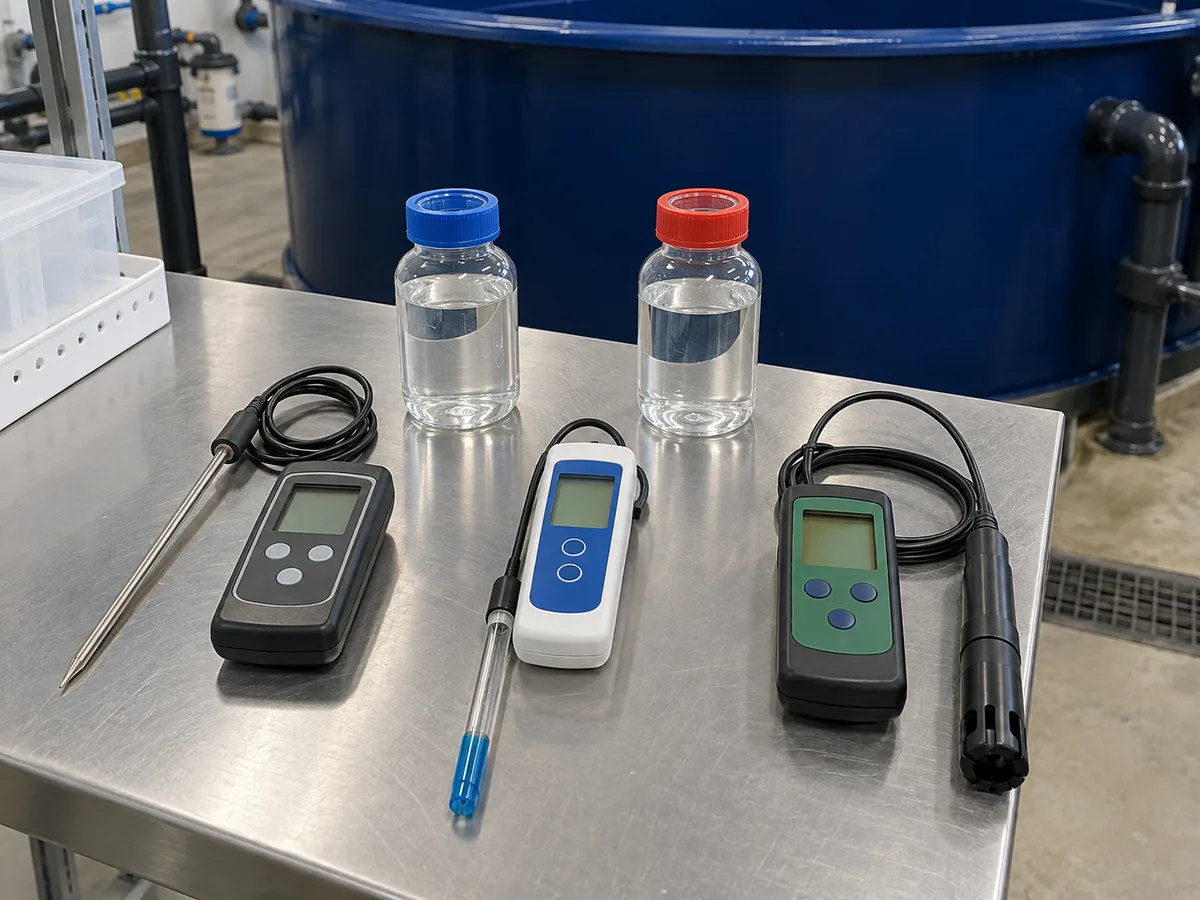
Temperature is essential, but it is not the only transition. Depending on species and transport method, compare:
- Temperature
- pH
- Salinity or conductivity
- Dissolved oxygen
- Total ammonia nitrogen
- Nitrite
- Alkalinity and hardness when materially different
The Southern Regional Aquaculture Center publication Transportation of Warmwater Fish: Procedures and Loading Rates explains how temperature, oxygen, carbon dioxide, ammonia, pH, hardness and alkalinity interact during transport. It also stresses that adverse effects are cumulative and that rapid changes can harm fish.
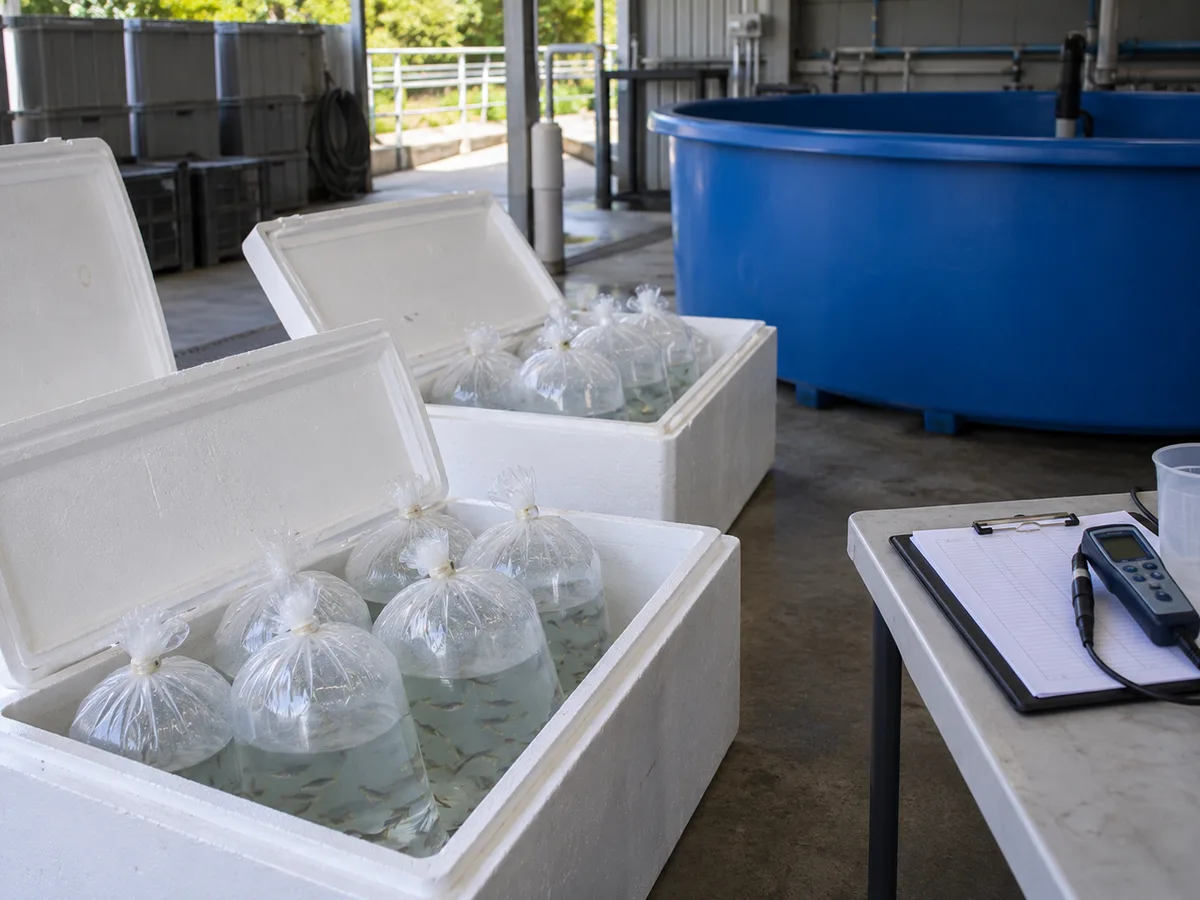
Transport water can change after a sealed bag is opened. Carbon dioxide may escape, pH may rise and the toxic un-ionized fraction of accumulated ammonia can increase. Therefore, do not open an oxygenated shipping bag early and leave fish in it for an extended discussion or slow procedure. Prepare the receiving process first, then follow the supplier’s unloading method promptly.
Acclimate Fish According to the Transport Method
There is no single ritual for every delivery. The method must balance temperature and chemistry adjustment against time in deteriorating transport water.
Sealed oxygenated bags
Keep the bag sealed while equalizing temperature according to supplier instructions. A common procedure is to float or otherwise place the sealed bag in thermal contact with receiving water while protecting it from direct sun and physical damage. Do not assume the bag can float safely in every production tank; use a clean receiving vessel when practical.
Once the bag is opened, oxygen can escape and water chemistry can change. Complete the planned transfer without unnecessary delay. If chemistry differences require gradual mixing, the supplier or aquatic professional should define a method appropriate for the transport duration, ammonia condition and species.
Open aerated containers
Maintain adequate aeration and measure both waters. Receiving water may be introduced gradually to reduce abrupt changes, but the rate should reflect fish condition and the measured difference. Prevent overflow into the production system.
Commercial hauling tanks
Keep life-support equipment operating during positioning and unloading. Compare tank and receiving water, then temper or mix under the hauler’s written procedure. Use hoses, transfer pipes or water-supported handling where appropriate for the species and size.
Salinity changes
Freshwater does not mean identical salinity. Hatcheries may use salt during holding or transport. Measure rather than assume. Some species and life stages require especially controlled salinity transitions.
Transfer Fish With Minimal Handling
Prepare the route before the container is opened. Keep handling time short and equipment wet where appropriate.
Practical controls include:
- Use smooth, species-appropriate nets or water-supported transfer equipment.
- Avoid overcrowding nets and buckets.
- Keep fish from contacting dry floors or abrasive surfaces.
- Do not lift heavy fish by fins, gills or tail.
- Cover receiving tanks to prevent jumping.
- Keep direct sunlight and strong lighting off stressed fish.
- Count without repeatedly chasing the population.
- Avoid mixing transport water into the production loop when biosecurity procedures call for separation.
Discard or treat transport water through the approved local route. It may contain elevated ammonia, salt, treatments or pathogens. Do not discharge it into a natural waterway or storm drain without confirming legal and environmental requirements.
Introduce Fish in Stages
Staged stocking reduces the biological and operational jump. The first group allows the team to verify:
- Fish behavior under the system’s real flow and aeration
- Biofilter response to feed and waste
- Mechanical-filter loading
- Daily oxygen pattern
- Temperature control
- Feed access and competition
- Alarm and backup readiness
The number in each stage should come from system design, species needs, supplier advice and measured biofilter performance. Do not use a universal fish-per-gallon rule.
For commercial projects, define an acceptance gate before each increase. Example: stable temperature and dissolved oxygen, no abnormal mortality, ammonia and nitrite within the approved operating limits, consistent feeding response, and no unresolved health signs over the stated observation period.
Manage the First 24 Hours
Reduce disturbance after release. Allow fish to settle under species-appropriate lighting and cover conditions. Feeding immediately may be unsuitable after a long transport or during adaptation; follow the supplier’s plan and observe appetite before increasing feed.
Record at defined intervals:
- Time of release
- Temperature and dissolved oxygen
- pH
- Ammonia and nitrite
- Fish distribution and swimming
- Respiration and surface behavior
- Mortalities and removals
- Feed offered and consumed
- Pump, aeration and filter status
Check more frequently if the water is warm, biomass is high, transport was prolonged or fish show stress. Confirm backup air is available before staff leave the site.
Monitor the First Week
Transport and handling effects may appear after release rather than at the unloading moment. Continue structured observations for at least the period defined by the health and operating plan.
Watch for:
- Delayed mortality
- Reduced appetite
- Isolation from the group
- Flashing or rubbing
- Fin damage, ulcers or abnormal mucus
- Rapid breathing or surface gasping
- Sudden ammonia or nitrite rise
- Clogged screens or unexpected solids load
- Temperature excursions
Remove dead fish promptly with dedicated equipment and record them. A mortality trend is more informative than an isolated number. If signs increase, pause stocking and feed escalation, preserve water-quality records and seek qualified help. Do not add several medications or salt treatments without diagnosis; products entering a coupled loop can affect crops and biofiltration.
Mid-Article CTA — Plan Fish Receiving Before Shipment
Need an aquaponics proposal with quarantine, backup aeration and accessible monitoring points? Send Your Requirements with the fish species, delivery size, planned biomass, transport distance, site conditions and destination.
Factory Testing and Shipment Inspection for the Equipment
Before equipment leaves the factory, water-test the opaque plastic fish tanks, inspect drains and overflows, verify aeration distribution and confirm covers fit securely. Pumps and blowers should be tested at the specified electrical conditions where possible. Pack spare diffusers, valves, seals and critical fittings according to the contract.
At equipment shipment inspection, tanks must be empty, dry and clean—without fish, water or plants. Protect fittings from impact and keep loose components from damaging tank walls during container transport.
During installation preparation, repeat leak and flow tests after reassembly. Clean construction debris, verify safe materials and establish a fish-free commissioning record before scheduling livestock delivery.
Common Mistakes
Adding fish before cycling is verified
An apparently clear system can still lack biological capacity. Test conversion performance before stocking.
Opening oxygenated bags too early
Once opened, oxygen and carbon-dioxide conditions change. Prepare the transfer before breaking the seal.
Matching temperature but ignoring chemistry
A similar temperature does not guarantee similar pH, salinity, hardness or ammonia conditions.
Pouring transport water into the main loop
Transport water may carry wastes, treatments or pathogens. Use the project’s biosecurity transfer method.
Stocking the full design biomass at once
The biofilter and operators need evidence that the first stage is stable before the next stage arrives.
Feeding heavily after release
Stressed fish may not eat, and uneaten feed adds oxygen demand and ammonia. Follow a controlled feeding restart.
Using shared nets and hoses
Wet equipment can move pathogens between receiving, quarantine and production zones.
FAQ
Can fish be added immediately after assembling an aquaponics system?
No. Complete hydraulic commissioning, prepare the water and verify biofilter performance through the chosen cycling method before stocking.
How long should a fish bag float?
Use the supplier’s species- and shipment-specific guidance and measure the actual temperature difference. Do not rely on one universal time, and do not leave an opened bag sitting for an extended period.
Should transport water be poured into the fish tank?
Normally, avoid introducing it when a safe biosecure transfer can separate fish from transport water. Transport water may contain concentrated waste, salt, treatments or pathogens. Minimize extra handling stress while following the approved procedure.
Should new fish be quarantined?
Quarantine is a valuable biosecurity control where facilities and competent management are available. The duration and tests should be defined for the species, supplier and local disease risks.
When should new fish be fed?
Follow the supplier or aquatic-health plan. After transport, many fish benefit from a settling period and cautious feeding based on behavior and water quality rather than an automatic full ration.
What if fish gasp after release?
Immediately check dissolved oxygen, temperature, aeration, flow and water quality. Activate the emergency response plan and seek qualified help. Do not assume acclimation stress is the only cause.
How many fish should be added in the first batch?
The answer depends on species, size, biofilter capacity, oxygen, filtration and operating experience. Use the design biomass plan and add fish in stages rather than applying a universal number.
Conclusion
Fish should be added only after the aquaponics system has passed hydraulic and biological readiness checks. Prepare a dedicated receiving area, buy from a traceable supplier, inspect the shipment, compare water conditions and acclimate according to the real transport method. Transfer fish gently, keep questionable transport water out of the main loop and introduce biomass in controlled stages.
The first hours and days are part of the stocking procedure. Consistent records of water quality, behavior, feed and mortality help distinguish normal settling from a developing health or biofilter problem.
Final CTA — Request a Project-Specific Aquaponics Quote
Planning fish tanks, filtration, quarantine and grow beds for a new installation? Get a Quote and send the site, target fish and crops, system size, utilities, delivery plan and customer requirements.