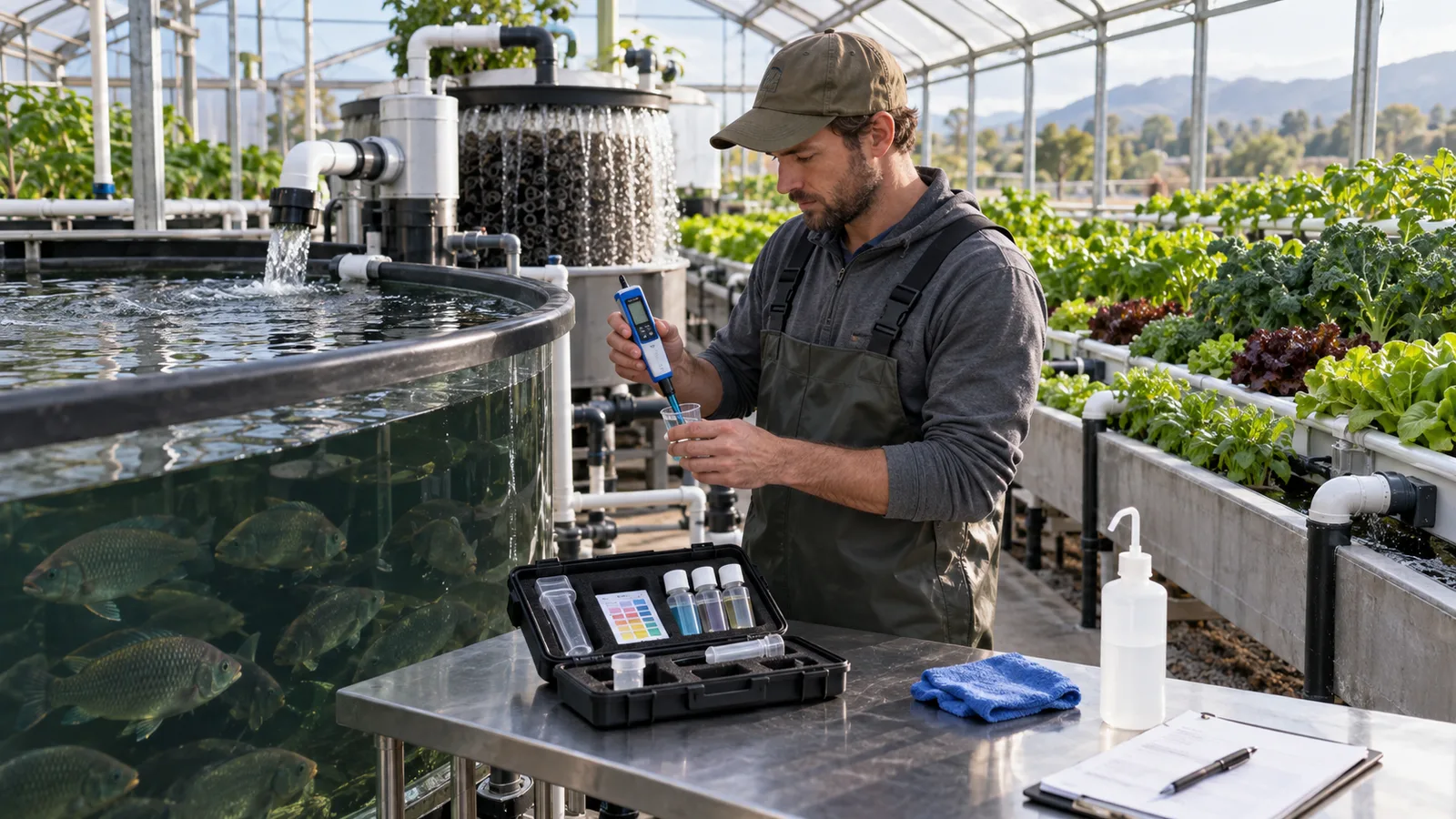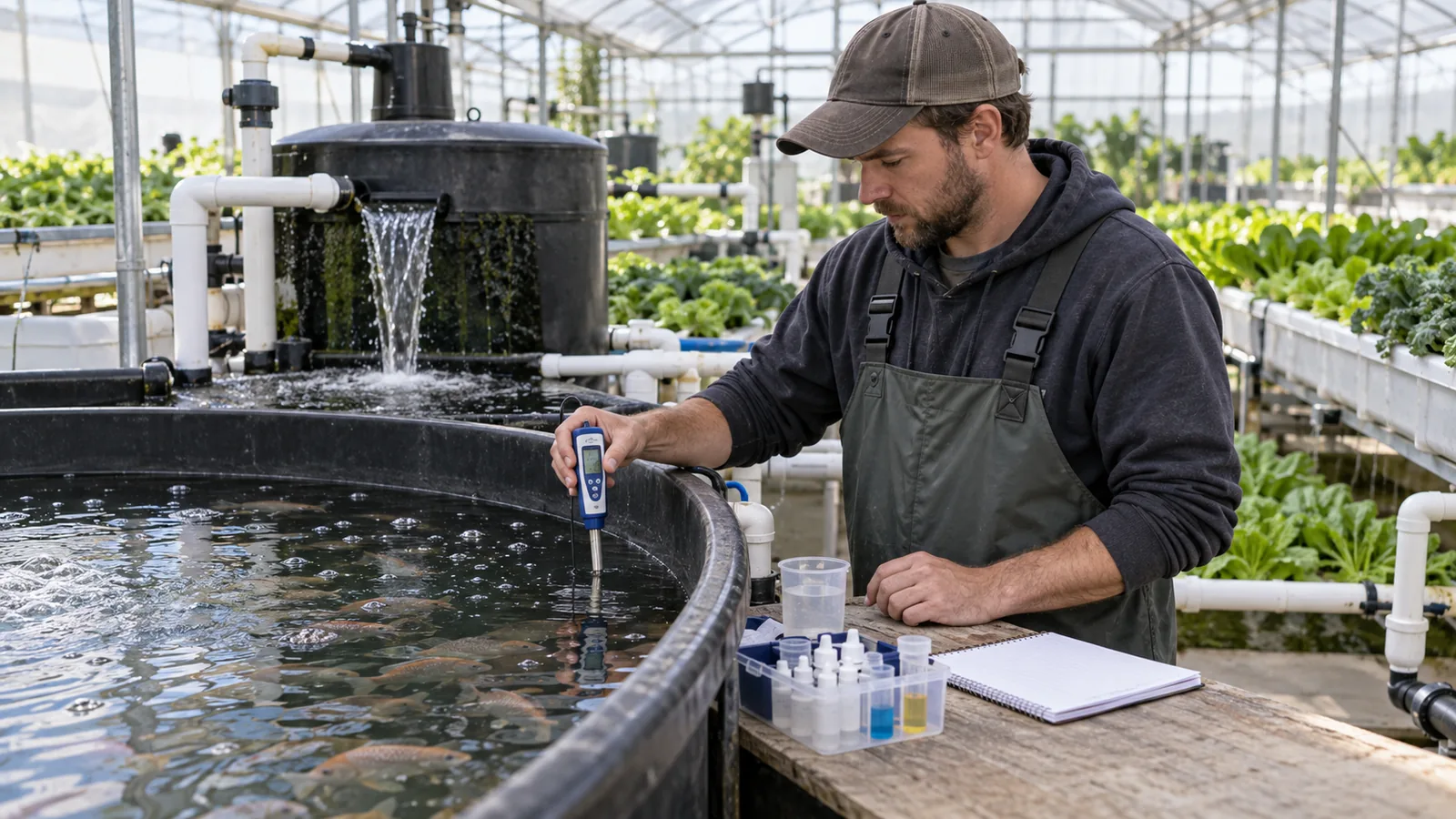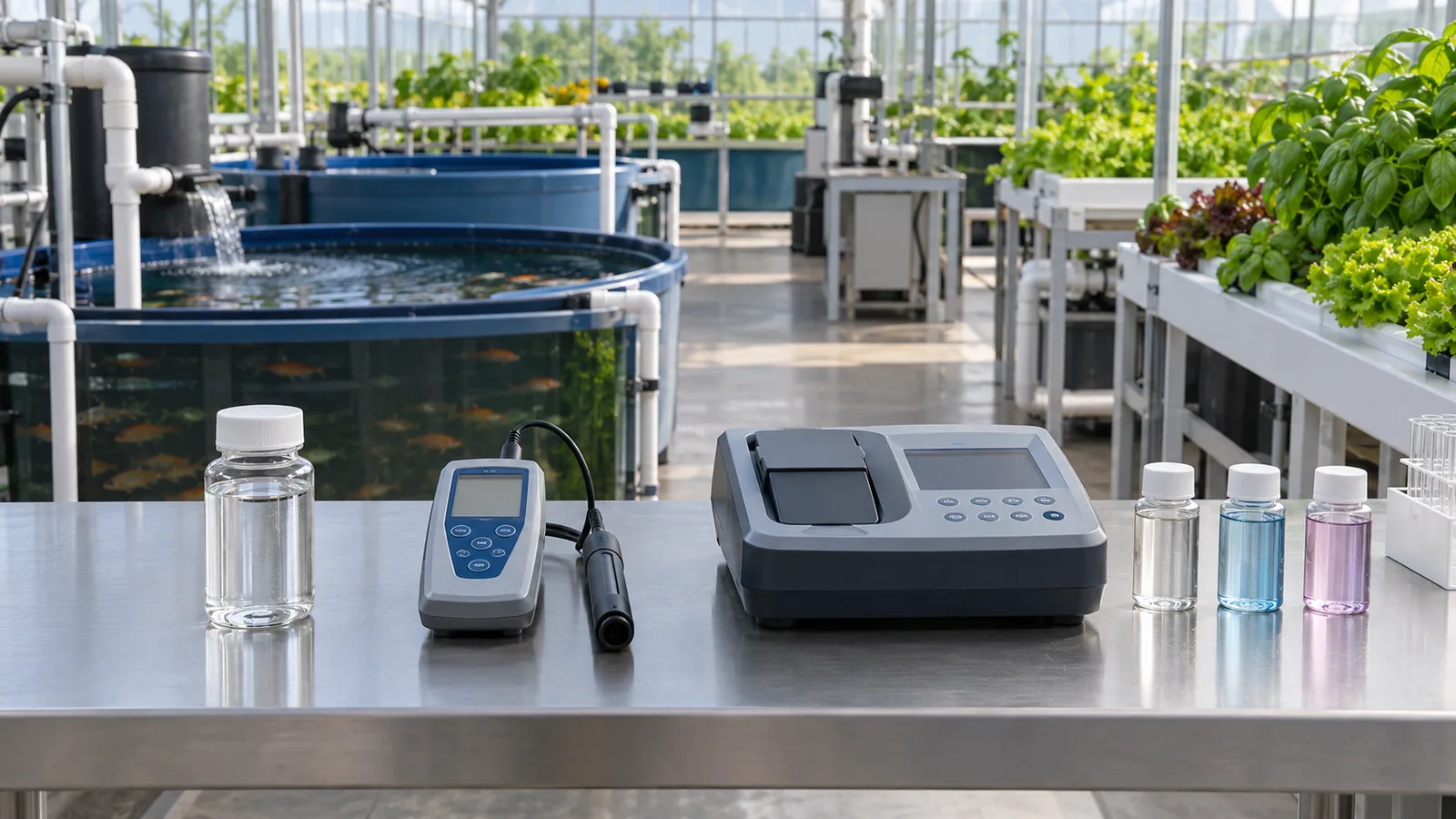
Potassium in aquaponic water cannot be measured accurately with a pH meter, an electrical-conductivity meter or a standard ammonia test. Those tools answer different questions. To estimate potassium specifically, an operator needs an analytical method that responds to potassium ions, such as laboratory elemental analysis, a validated photometric or turbidimetric method, or a properly calibrated potassium ion-selective electrode. The choice depends on the concentration range, required accuracy, sample matrix, budget and the decision the result will support.
Measurement is only part of the diagnosis. A potassium concentration in water does not by itself prove that plants are deficient or adequately supplied. Crop species, growth stage, pH, root health, temperature, calcium, magnesium, sodium, ammonium and other conditions influence uptake and interpretation. Plant tissue analysis may be needed when the question is what the crop actually absorbed rather than what was present in the water.
This guide explains the main testing options, how to collect representative samples, what can interfere, and how to turn a result into a cautious operating decision.
The short answer
For the most defensible potassium result, send a representative water sample to a qualified laboratory and request dissolved potassium or the specific potassium determination that matches the project question. Laboratories commonly use instrumental techniques such as inductively coupled plasma optical emission spectrometry (ICP-OES/ICP-AES), ICP-MS or atomic absorption, depending on their method and scope.
For routine on-site trending, a validated potassium photometric test or potassium ion-selective electrode may be useful if its range covers the expected sample, it is calibrated correctly, and the operator follows the manufacturer’s instructions for temperature, ionic strength, dilution and interference. Verify a new field method against a laboratory result before relying on it for dosing.
Do not infer potassium from EC. Do not diagnose deficiency from one leaf photograph. Do not add potassium immediately after one unexpected reading. Confirm the sample, method, crop symptoms and recent additions first.
New Mexico State University notes that fish feed supplies many plant nutrients in aquaponics, while potassium—along with calcium and iron—may require supplementation depending on system conditions. That makes potassium important, but it does not create one universal target or dosing schedule. Review the NMSU aquaponics water-quality guide.
Why measure potassium?
Potassium supports plant functions related to water regulation, enzyme activity, transport, stomatal behavior and crop quality. Aquaponic crops can remove potassium from circulating water, while feed, source water, pH-control products, mineralization and supplements add it at variable rates. Heavy fruiting crops may create a different demand pattern from leafy greens.
Testing may be justified when:
- symptoms persist after light, roots, pests, temperature and pH have been reviewed;
- the system changes feed, source water or supplement products;
- a fruiting crop enters a high-demand growth stage;
- a commercial farm wants a nutrient baseline and trend;
- repeated pH correction adds potassium-containing compounds;
- a mineralization or decoupled crop loop is being evaluated;
- a supplier or consultant proposes a potassium dose that needs verification; or
- plant tissue results suggest a potassium issue that should be compared with water conditions.
Testing should answer a management question. If no action threshold, comparison or investigation is defined, collecting numbers can create false confidence rather than control.
What pH, EC and TDS do—and do not—tell you
pH
pH measures hydrogen-ion activity and influences nutrient solubility and root uptake. It does not measure potassium concentration. A pH change after adding potassium hydroxide reflects the product’s strong alkalinity, not a direct potassium reading.
Electrical conductivity
EC estimates the combined ability of dissolved ions to conduct electricity. Potassium contributes to EC, but so do sodium, calcium, magnesium, nitrate, chloride, bicarbonate and many other ions. Two water samples can have similar EC and very different potassium concentrations.
TDS meters
Most handheld TDS meters convert EC into an estimated total dissolved solids value using a factor. They do not identify individual elements. The displayed number is not a potassium test.
Visual symptoms
Leaf-edge scorching, chlorosis, weak growth or poor fruit development may be consistent with potassium stress, but similar symptoms can result from salinity, root disease, water stress, excessive light, temperature, calcium imbalance or other nutrient problems. Visual inspection helps form a hypothesis; it does not quantify potassium.
Start by defining the sample
“Potassium in the system” is not a complete analytical request. Decide which fraction and location matter.
Dissolved potassium
A filtered sample represents potassium passing through the specified filter size at collection. This is often closer to the immediately dissolved fraction, but the laboratory must define filtration, preservation and method.
Total or total recoverable potassium
An unfiltered and appropriately prepared sample may include potassium associated with suspended material. It can be useful for an input/output study but may not represent what plant roots can immediately access.
Plant tissue potassium
Tissue analysis asks what accumulated in sampled leaves or other organs. Interpretation depends on crop, tissue, age and laboratory reference. Water and tissue results should be compared in context, not substituted for one another.
Source-water potassium
Testing the make-up water separately helps identify how much enters with every top-up. This is important where groundwater, blended water or seasonal supplies change.
Mineralization-stream potassium
A sample from a solids-processing vessel may contain more particles and a different matrix than clear recirculating water. Use a method and preparation suitable for that sample rather than applying the main-loop field procedure without validation.
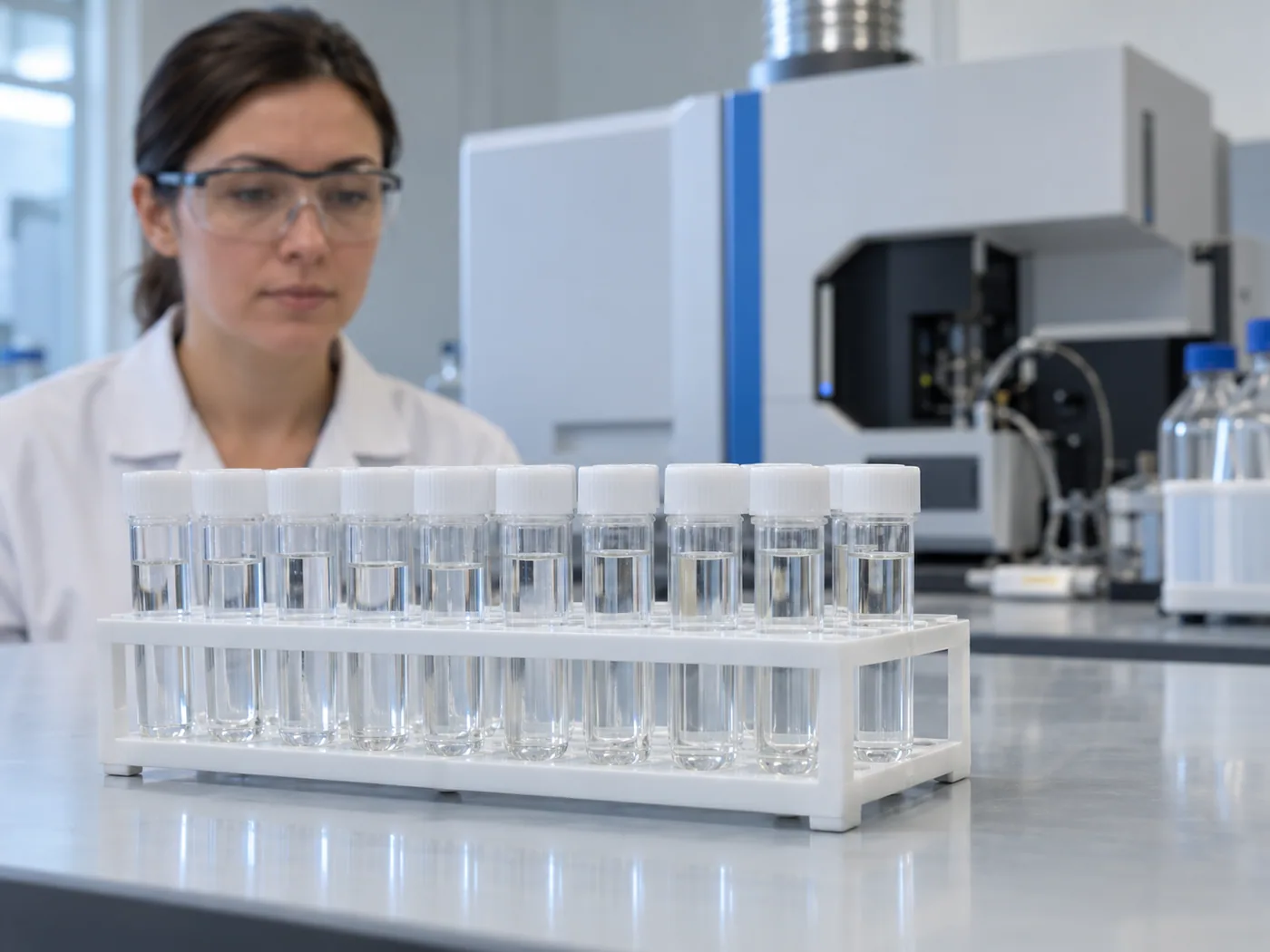
Method 1: laboratory elemental analysis
ICP-OES or ICP-AES
ICP-OES measures characteristic light emitted by excited atoms and ions. It can analyze potassium along with several other elements in one laboratory panel. For aquaponics, a multi-element result can be more useful than potassium alone because calcium, magnesium, sodium, phosphorus, iron and other elements affect interpretation.
The U.S. Environmental Protection Agency’s Method 200.7 includes potassium among the elements that can be determined in aqueous samples using ICP atomic-emission spectrometry, with defined preparation and quality-control requirements. An aquaponics sample is not automatically a regulatory sample under that method, but the document shows why professional elemental analysis requires controlled collection, preservation, calibration, blanks and interference checks. Review EPA Method 200.7.
ICP-MS and atomic absorption
Some laboratories use ICP-MS or flame atomic absorption depending on analytes, concentration and laboratory capability. The operator does not need to prescribe an instrument without reason. Instead, tell the laboratory the sample type, expected range, required reporting units and intended decision, then ask which accredited or validated method it offers.
Advantages
- strong laboratory quality-control framework;
- multi-element analysis from one sample;
- traceable reporting and detection limits;
- useful baseline for checking field methods; and
- less dependence on operator color judgment.
Limitations
- higher cost and slower turnaround than on-site tests;
- sampling and preservation errors can still invalidate results;
- the reported fraction may not match the operator’s question;
- a precise number can still be misinterpreted without crop context; and
- laboratory access and shipping rules vary by country.
For project commissioning, laboratory analysis is often the best starting point because it establishes a defensible baseline before routine field trending begins.
Method 2: potassium ion-selective electrode
A potassium ion-selective electrode produces an electrical response related to potassium-ion activity. Compact meters can provide rapid field readings, but they are not “dip and trust” devices. Performance depends on calibration standards, temperature, sample ionic strength, electrode condition, concentration range and interfering ions.
Calibration
Use fresh standards that bracket the expected sample range, following the manufacturer’s instructions. A one-point check may not be adequate for a broad range. Record standard values, lot, date, temperature, slope or calibration status and the operator. Rinse and blot the sensor as instructed; rubbing can damage a sensitive membrane.
Matrix and activity
Ion-selective electrodes respond to ion activity, which is related to—but not identical with—concentration. Aquaponic water contains a mixture of ions that changes with feed, buffering, top-up water and evaporation. Some methods use an ionic-strength adjustment solution to make standards and samples more comparable. Never improvise the adjustment chemistry.
Interference
Ammonium can interfere with some potassium-selective membranes, and sodium or other ions may matter depending on electrode design and concentration. This is especially relevant during cycling or an ammonia event. Review the electrode’s selectivity information and expected sample conditions. If interference may be significant, confirm by another method.
Maintenance
Electrodes age. Storage, conditioning, cleaning and replacement requirements must be followed. A stable digital display is not proof of accuracy. Use quality-control standards and periodic laboratory comparisons to detect drift.
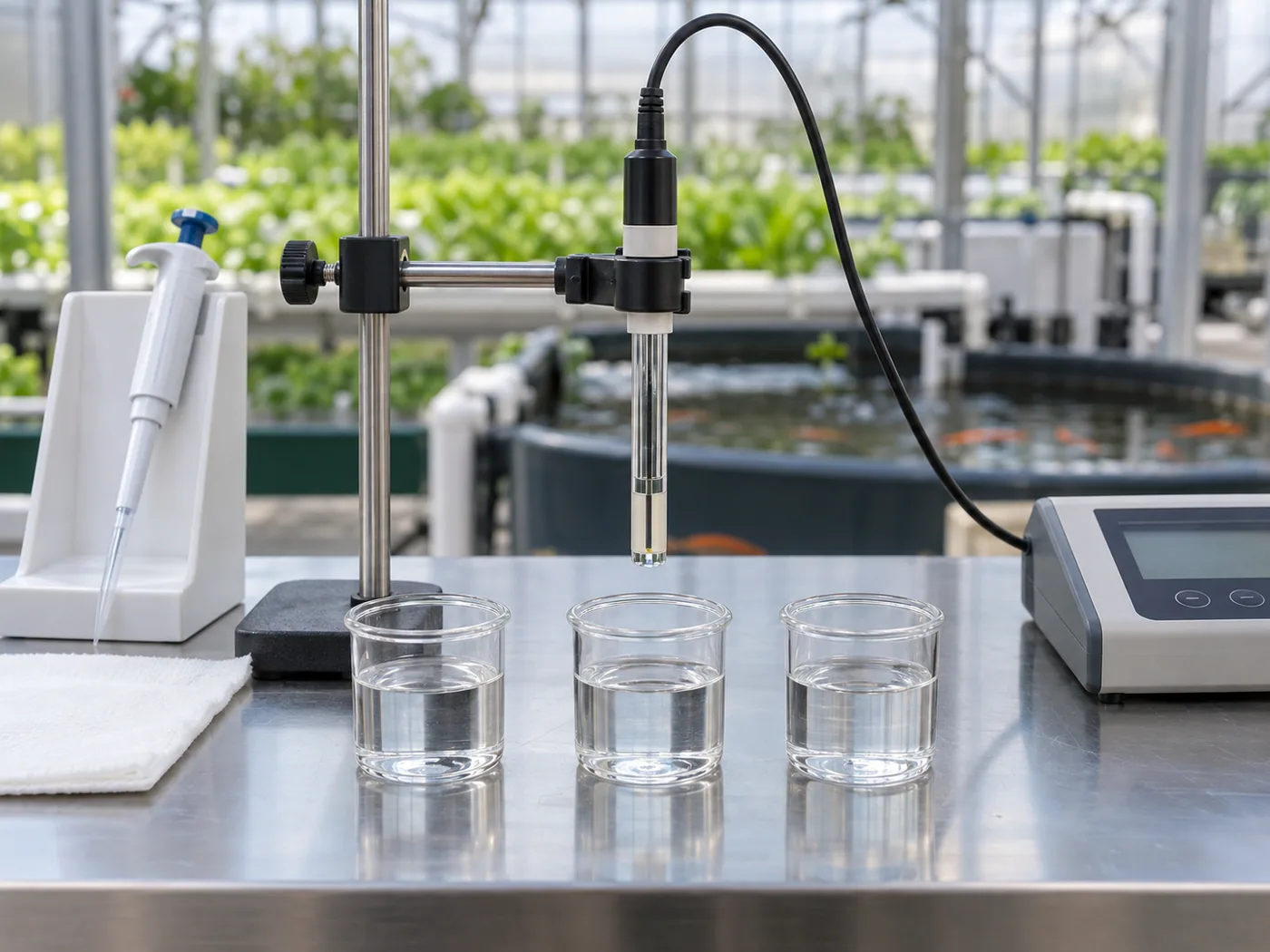
Method 3: photometric or turbidimetric potassium tests
Some water-analysis methods react potassium with a reagent to produce color or turbidity that is read by a photometer or spectrophotometer. One established approach forms a potassium tetraphenylborate suspension and measures the resulting turbidity. Commercial methods use reagent systems to control interferences and define specific ranges.
These tests can be practical for farms that already maintain photometric equipment and trained operators. However, the exact method, reagent lot, sample volume, timing, blank, dilution and instrument program matter. A generic aquarium color card should not be assumed valid for the expected aquaponic range.
Potential issues include:
- sample color or turbidity creating background error;
- calcium, magnesium, ammonium or other matrix effects depending on the method;
- contamination from glassware or previous reagents;
- readings above the calibrated range;
- incorrect dilution calculations; and
- expired or poorly stored reagents.
Run a reagent blank and a known control when the method requires them. If the sample is already cloudy, consult the method rather than filtering or subtracting values by guesswork.
Method 4: plant tissue analysis
When leaves show persistent symptoms, tissue analysis can reveal whether the crop accumulated insufficient, adequate or excessive potassium relative to a crop- and tissue-specific reference. It is particularly helpful when water potassium appears reasonable but uptake may be limited by root health, pH or ion competition.
Follow the laboratory’s instructions on which leaves to collect, how many, at what growth stage, how to avoid contamination and how to ship. Do not mix old damaged leaves with young healthy leaves unless the sampling protocol asks for that comparison. Record crop variety, transplant date, growth stage, recent foliar products and symptom location.
Tissue analysis should be paired with water chemistry and root inspection. A low tissue value does not automatically specify how much product to add to fish water.
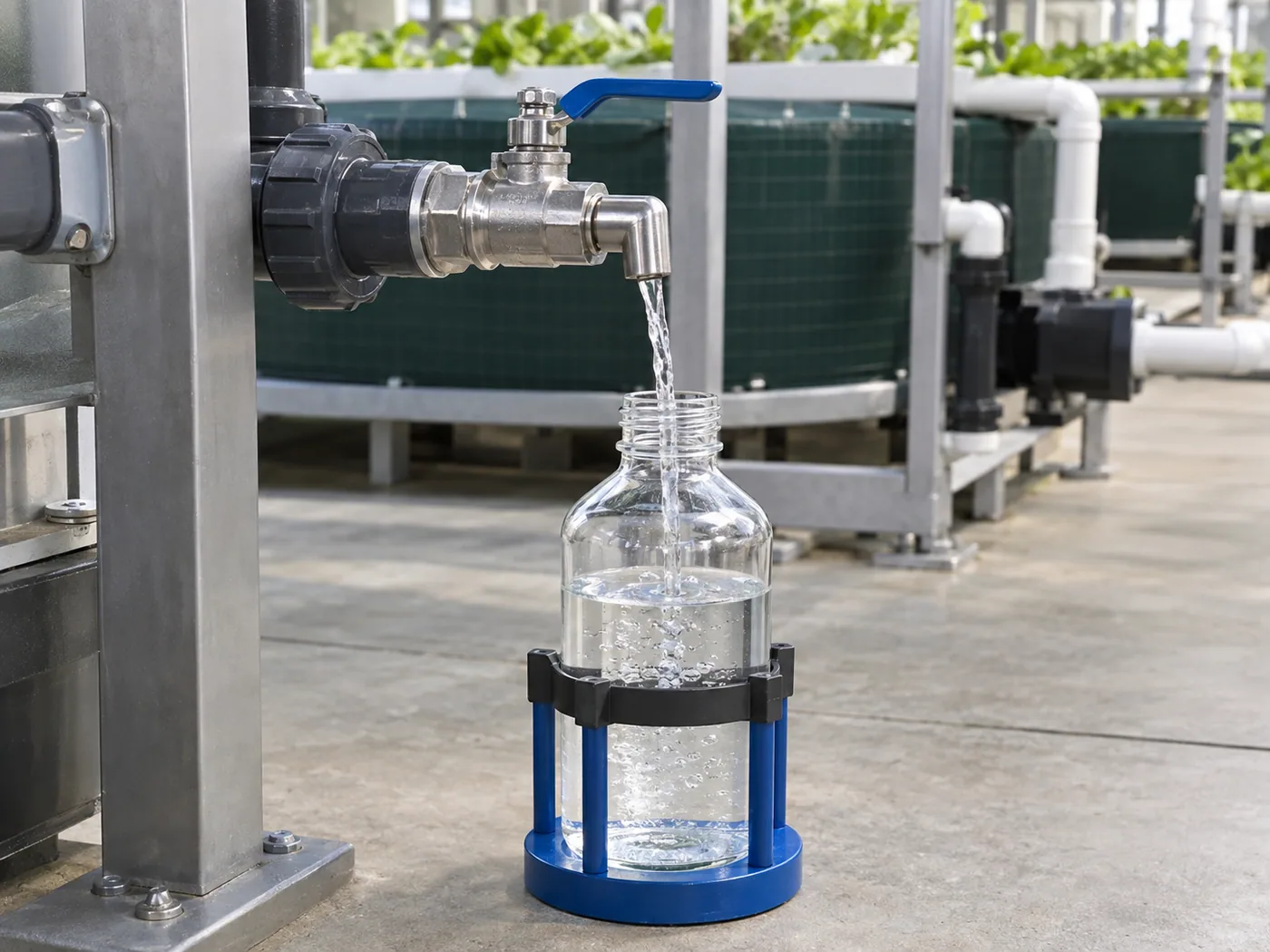
A reliable sampling procedure
1. Define the decision. State whether the test is baseline monitoring, deficiency diagnosis, source-water evaluation or verification after a controlled addition.
2. Select fixed locations. Common points may include source water, well-mixed main loop, crop inlet and crop outlet. Avoid stagnant corners unless the corner itself is under investigation.
3. Sample at a repeatable time. Record time relative to feeding, top-up, pH correction, supplement dosing, filter cleaning and photoperiod.
4. Use the correct container. Follow the laboratory or method requirement. A container previously used for fertilizer can contaminate the result.
5. Flush the sampling valve where appropriate. Remove standing water without wasting or creating unsafe discharge.
6. Filter only when the method calls for it. Record filter size and timing.
7. Preserve and store correctly. Follow the analytical method, not a generic internet instruction.
8. Label immediately. Include location, date, time, sampler and requested fraction.
9. Record system conditions. Note pH, EC, temperature, feed, crop stage, fish biomass estimate and recent additions.
10. Use duplicates and controls when warranted. A second sample can distinguish laboratory variation from a sampling mistake.
Quality control for on-site testing
Field testing becomes useful when the operator can detect a bad result. Build a simple quality-control routine:
- check the instrument with a known standard before or after a sample run;
- use calibration standards that bracket expected concentrations;
- document reagent and standard expiry dates;
- run duplicate samples periodically;
- investigate results outside the method range rather than reporting them directly;
- confirm dilution calculations independently;
- compare the field method with a laboratory sample at commissioning and on a planned schedule; and
- remove a method from service when controls fail.
Keep the raw reading, units, dilution factor and final result. A spreadsheet that stores only the final number can hide transcription or conversion errors.
Interpreting a potassium result
There is no single potassium target that suits every aquaponics system. Published hydroponic nutrient recipes cannot be copied directly into a coupled fish system without reviewing fish safety, crop type, pH, other ions and the form of any proposed supplement.
Interpret the result alongside:
- crop species and growth stage;
- visible symptoms and their location on old or new leaves;
- plant tissue analysis where available;
- pH, alkalinity and EC trends;
- calcium, magnesium, sodium and ammonium;
- source-water potassium;
- recent potassium-based pH additions;
- feed rate and formulation;
- root color, oxygen and temperature; and
- harvest and top-up history.
A trend is often more useful than one isolated result. If potassium declines as a fruiting crop load increases, the pattern can guide further investigation. If one reading suddenly triples, first check sample identity, recent additions, dilution and instrument control.
What to do after a low result
Confirm the result with a duplicate, control or laboratory method appropriate to the risk. Inspect roots and review pH before assuming the crop can use an added dose. Check whether the source water, feed, mineralization and pH-adjustment program changed. Compare affected and unaffected crop zones.
If supplementation is justified, identify the exact compound and all ions it adds. Potassium hydroxide, potassium bicarbonate, potassium sulfate and other products are not interchangeable. They affect pH, alkalinity, sulfur or other conditions differently. Follow a qualified, site-specific plan; add through a well-mixed controlled point; observe fish; and retest after sufficient mixing.
Our guides to raising pH safely and lowering aquaponics pH explain why nutrient and acid-base decisions should not be combined casually.
What to do after a high result
Do not attempt to “neutralize” potassium with another unverified chemical. Stop unnecessary potassium inputs, verify the result and review source water, pH-control products, supplements and water-loss concentration. Assess EC and other ions. Depending on fish, crops and local requirements, a qualified adviser may recommend changes to inputs, crop load or water management.
A high water result with poor plants may indicate that potassium is not the main limitation. Investigate roots, oxygen, pH, salinity, disease and competing ions. More fertilizer is not the answer to every weak crop.
Monitoring frequency
The appropriate frequency depends on system stability and consequence. A home leafy-green system may use occasional laboratory checks triggered by symptoms or changes. A commercial fruiting-crop project may establish a regular multi-element schedule and use field tests between laboratory samples. Test more frequently during commissioning, after a feed or source-water change, when introducing potassium-containing pH products, or while verifying a corrective plan.
Use our aquaponics troubleshooting support guide to organize the system facts that should accompany a technical question.
Selecting equipment and laboratory services
For a field meter or photometer, ask:
- What potassium range and resolution are supported?
- Is the method validated for water with similar EC, ammonium and hardness?
- Which ions interfere, and at what relative levels?
- What standards, reagents and ionic-strength adjusters are required?
- What are the storage and replacement requirements?
- Can results be exported with calibration records?
- Is local service or replacement available?
For a laboratory, ask:
- Does the report specify dissolved, total or total recoverable potassium?
- Which method is used?
- What are the reporting limit, uncertainty or quality-control practices?
- Which bottle, filtration, preservation and holding time are required?
- Can the same panel include calcium, magnesium, sodium, phosphorus, sulfur and iron?
- Does the laboratory provide agronomic interpretation, or only analytical results?
Factory testing, shipment inspection and installation preparation
A supplier can verify that sampling valves are accessible, meters power on, probes match the ordered model and control panels provide the specified inputs. Factory testing with clean water cannot establish the potassium concentration that will occur after local feed, fish, water and crops are introduced.
During shipment inspection, keep probes, standards, reagents and sample containers in their original protective packaging and within required storage conditions. Check expiry dates and dangerous-goods or customs requirements. Do not place wet probes or chemical bottles loose inside dry fish tanks prepared for container shipment.
Installation preparation should identify the local laboratory, sampling points, responsible operator, test schedule, units, record format and response process. Customer requirements should state whether nutrient testing equipment is included, which consumables must be purchased locally and who provides interpretation.
Mid-article CTA — Review Your Testing Scope
Send Your Requirements with your system volume, crops, fish, source water, current meters and proposed sampling plan. We can help organize equipment and commissioning questions for a more precise inquiry.
Common mistakes
- Calling an EC or TDS reading a potassium result.
- Selecting an electrode without checking range and ammonium interference.
- Sampling beside a recent dosing point.
- Mixing filtered and unfiltered results in one trend line.
- Using expired standards or reagents.
- Reporting an over-range result without validated dilution.
- Treating leaf symptoms as quantitative analysis.
- Copying a hydroponic potassium target into fish water without review.
- Adding a potassium compound without accounting for its effect on pH or alkalinity.
- Trusting a field method that has never been compared with a laboratory result.
FAQ
Can an EC meter measure potassium in aquaponics?
No. EC responds to all dissolved ions together. It cannot separate potassium from nitrate, sodium, calcium, chloride or other contributors.
Are aquarium potassium test kits accurate enough?
That depends on the specific method, range, matrix, calibration and quality control. Check whether the manufacturer validates it for the expected water conditions and compare it with a laboratory result before using it for dosing decisions.
Can a potassium ion-selective electrode be used directly in the tank?
Some meters support direct measurement, but a controlled sample is often easier to calibrate, mix and repeat. Follow the meter instructions and consider ammonium, ionic strength, temperature and fouling. Do not leave a sensor submerged unless it is designed for continuous use.
What units should potassium be reported in?
Water results are commonly reported as mg/L of potassium, but methods and products may use other expressions. Confirm whether a fertilizer label reports elemental K or potassium oxide equivalent, and do not convert without documenting the calculation.
Should potassium be measured in water or leaves?
They answer different questions. Water analysis estimates potassium in the sampled water fraction; tissue analysis shows what accumulated in sampled plant material. Persistent problems may justify both.
How often should potassium be tested?
Use a risk-based schedule. Establish a baseline, test after material changes and increase frequency during a controlled investigation. Commercial systems may use routine panels; stable small systems may test when symptoms or input changes justify it.
Conclusion
Measuring potassium in aquaponics requires a potassium-specific method. Laboratory elemental analysis provides the strongest baseline, while validated photometric tests or ion-selective electrodes can support faster on-site trending when calibration, range and interference are controlled. pH, EC and leaf appearance remain useful context, but none is a potassium measurement.
Define the sample and decision before testing. Collect from repeatable locations, record recent inputs, use quality controls and compare field tools with laboratory results. Interpret potassium alongside crop stage, roots, pH and other ions, then make only controlled changes that protect fish, plants and biological filtration.
Final CTA — Ask for a Water-Testing Equipment Checklist
Contact YAFAN with your crop plan, system layout, source-water report and monitoring requirements. We can help structure an inquiry for sampling points, meter accessories and commissioning documentation.