
Introduction
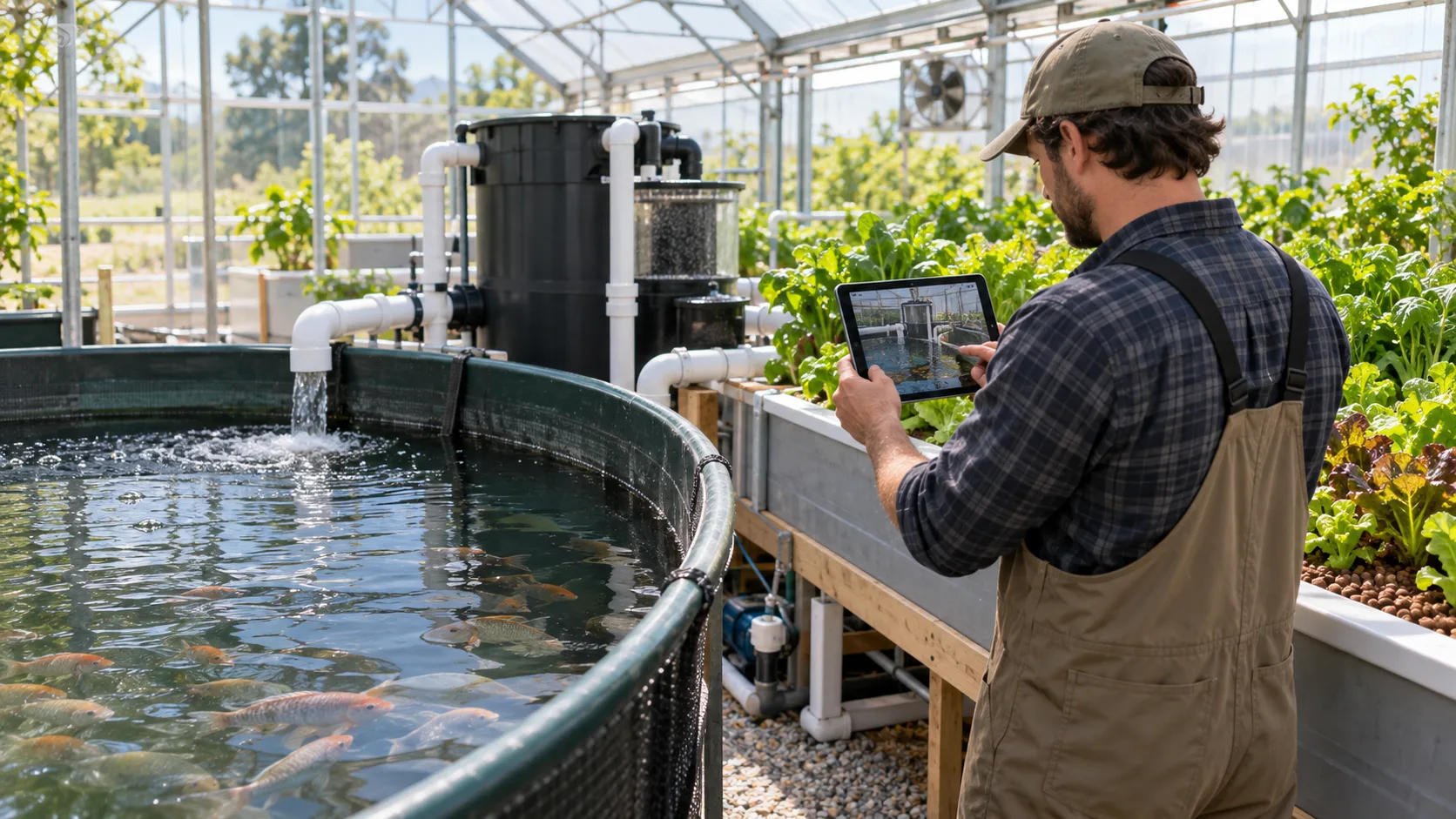
Online aquaponics communities can be useful when a system has a blocked drain, unexplained plant symptoms, cycling delay, fish-behaviour change or a pump problem. Their value is not that strangers can diagnose a shared water loop from one photograph. Their value is that experienced growers can recognize patterns, ask the right questions and point an operator toward safer checks.
Use online advice as one input, not a substitute for water testing, equipment manuals, local rules or qualified fish-health support. A coupled system contains fish, plants, bacteria, water chemistry and mechanical equipment. The fastest-looking answer can be unsafe when it ignores the actual fish species, temperature, test readings, filter design or recent changes.
The short answer
Look for moderated communities, university Extension material, supplier manuals and local aquaculture or horticulture support. Before asking for help, prepare photographs, system layout, fish species, water-test trend, temperature, feed rate, plant symptoms, recent changes and the exact equipment model. Verify any advice against the product manual and the risks to fish and bacteria; never add a chemical, change stocking or bypass a safety device merely because a comment recommends it.
Four useful types of online support
Grower communities and forums
Peer communities are useful for practical observations: recognizing a bell siphon that will not break, locating likely pipe restrictions, comparing media-bed maintenance routines or learning which photographs make a diagnosis easier. Reddit’s r/aquaponics community is one widely used public discussion space. Treat posts as experience reports, not authoritative operating instructions; activity, quality and local relevance vary by thread.
University and Extension resources
Extension publications are often stronger for basic system principles, water quality, crop management and construction logic. They may not answer a specific emergency immediately, but they create a stable reference for deciding whether a forum suggestion is plausible. Oklahoma State University’s aquaponics overview is a useful example: it explains common system components and bell-siphon operation without promising that one setup fits every project.
Supplier documentation and support
For a purchased pump, filter, controller, grow light or tank, the supplier is the first source for model-specific limits, wiring, warranty and replacement parts. Send serial numbers, photographs and the order reference. A reputable supplier can clarify what was supplied and what needs a local installer or electrician. Do not expect a manufacturer to diagnose water chemistry from a distance, but do ask it to confirm equipment specifications before modifying a component.
Local professional support
Some issues are not appropriate for a forum. Fish mortality, persistent disease signs, electrical faults, structural leaks, food-safety concerns, chemical exposure and regulatory questions may require a veterinarian, electrician, extension specialist, licensed adviser or local authority. Online discussion can help organize observations, but it should not delay urgent local action.
Prepare a troubleshooting case before posting
A useful question is specific and factual. Start with the system type: media bed, DWC, NFT, tower, coupled or decoupled. State total water volume, fish species and approximate biomass, crop, location, water temperature, filtration stages, pump and aeration arrangement. Include what changed before the problem appeared: new fish, increased feeding, power interruption, plant transplant, cleaning, plumbing work or seasonal temperature shift.
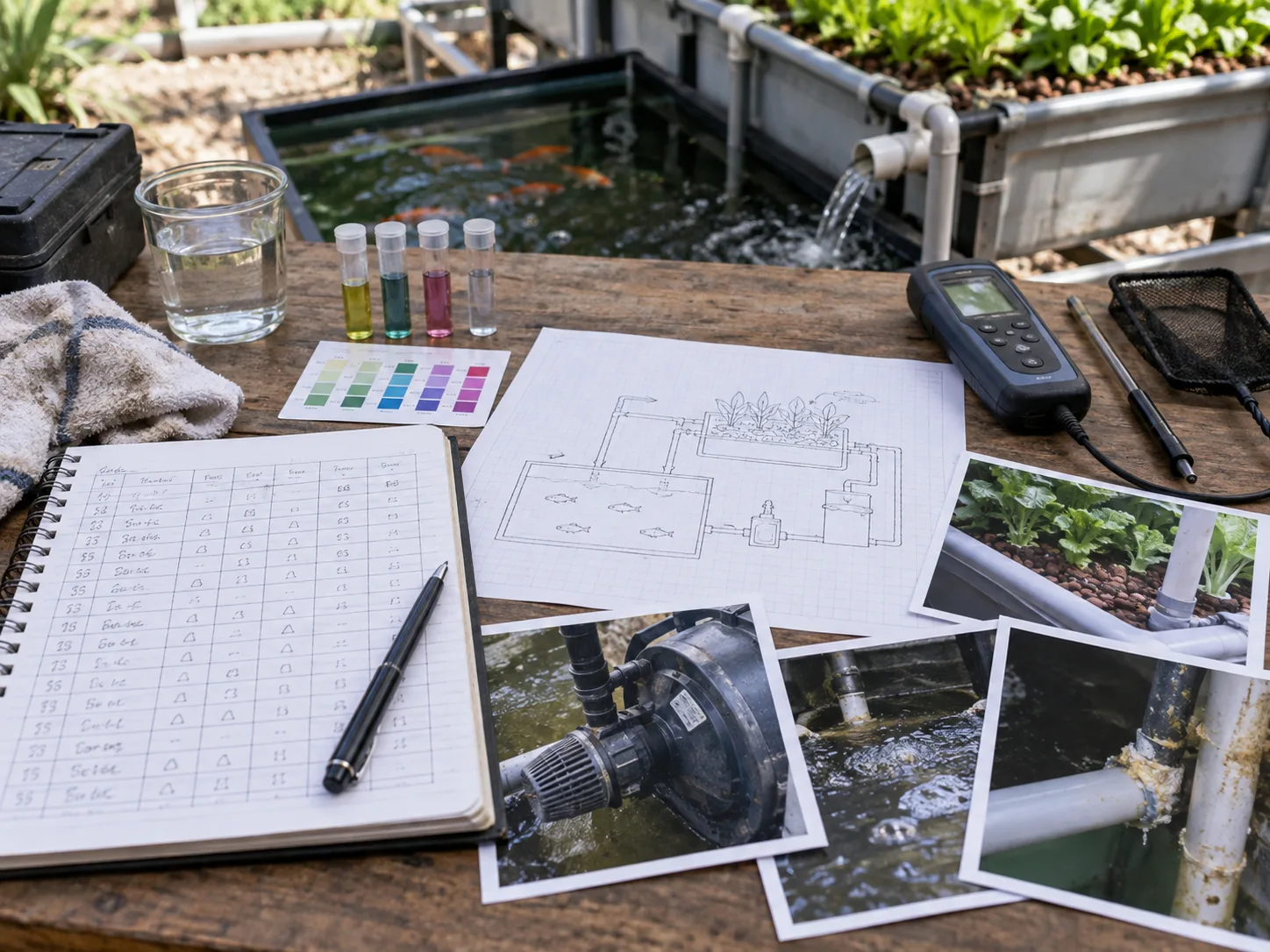
Record water readings with date and test method rather than writing “water is fine.” Include pH, ammonia, nitrite, nitrate, temperature and any dissolved-oxygen observation where available. Share photographs of the whole water path as well as close images of the symptom. A leaf photograph alone cannot show whether a blocked solids filter or low flow is contributing to a plant problem.
A safe troubleshooting template
Use this structure:
1. Goal and system: what the system is designed to grow and which water path it uses.
2. Urgency: fish gasping, leak, electrical exposure, loss of flow or ordinary observation.
3. Timeline: when normal operation ended and what changed beforehand.
4. Measurements: dated readings and equipment status.
5. Evidence: wide and close photographs, model labels and short video of abnormal flow if relevant.
6. Actions already taken: cleaning, isolation, water change, feed reduction or reset.
7. Question: one decision you need help evaluating.
This format makes online replies safer and more useful. It also becomes an operating record for future maintenance.
Validate advice before acting
Advice that is safe in a lightly stocked backyard system may be harmful in a high-biomass greenhouse loop. Ask whether the reply accounts for fish species, water temperature, biofilter maturity, plant type and local regulations. Prefer an explanation of cause and trade-off over a one-line dosage or universal stocking rule.
Do not add acids, bases, supplements, pesticides or disinfectants because an online comment says they are “natural.” Do not stop aeration to save energy, block an overflow to force a siphon cycle, or move fish without a receiving-water plan. If suggested action could immediately affect fish, bacteria, electrical safety or food crops, pause and confirm through a competent local source.
Our aquaponics maintenance guide gives a daily, weekly and monthly record structure that prevents many questions from becoming emergencies. For flow-related issues, the bell siphon versus constant flood guide helps operators identify the normal conditions of a media-bed drain before changing fittings.
Use community support without exposing a project
Commercial buyers may need help while protecting customer information. Remove customer names, invoices, exact addresses, passwords and proprietary drawings. Share only the relevant layout section and label photos by function rather than client identity. If a supplier is involved in a warranty case, preserve original photographs and serial-number records rather than editing them for a public post.
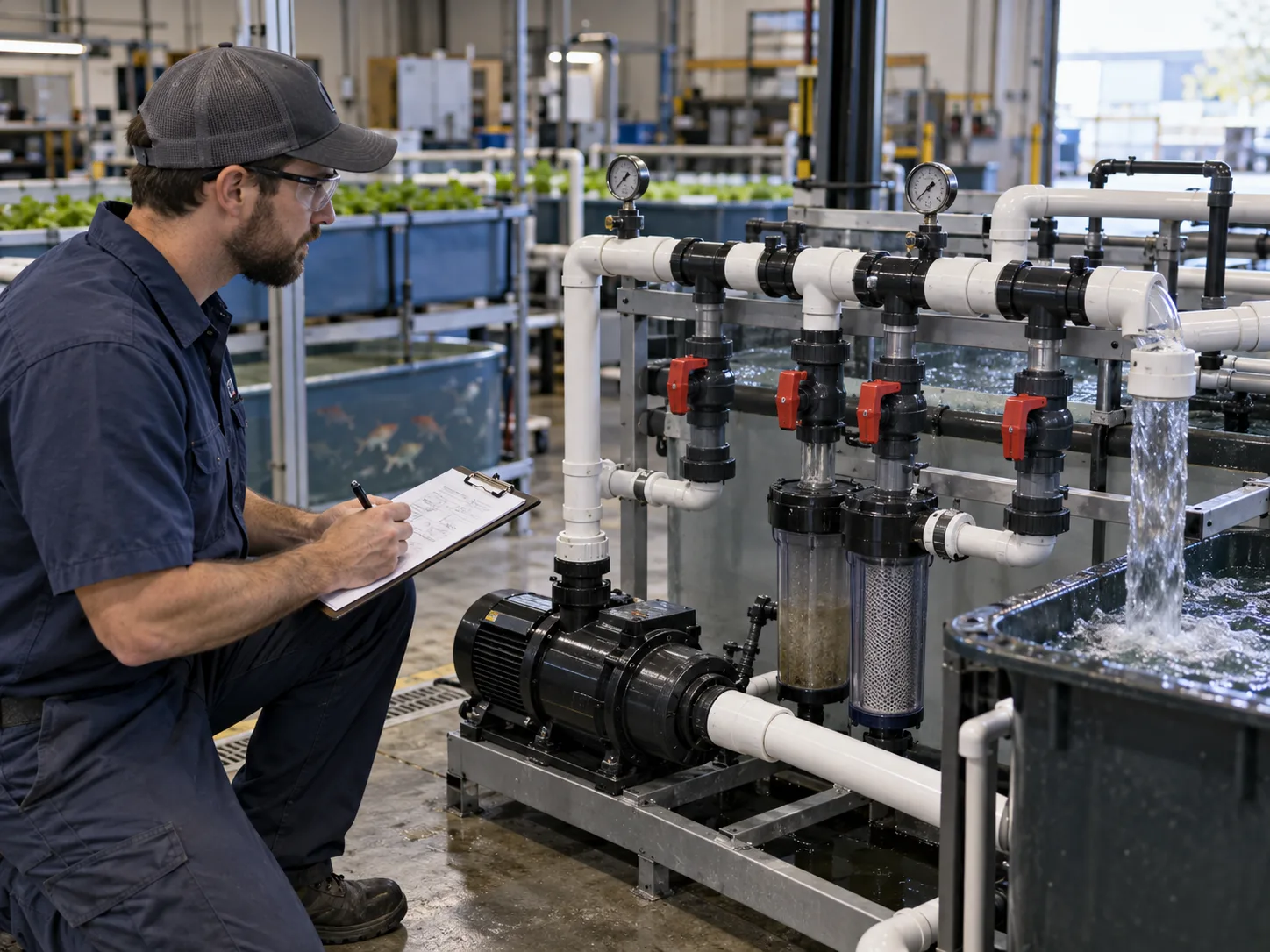
During factory testing, capture a short record of pump direction, drain operation, valves, controller labels and supplied accessories. During shipment inspection, retain packing lists and photographs. At installation, photograph the final pipe route and electrical isolation points. These records make later remote support much faster because the responder can distinguish a missing component from a site-installed change.
Match the question to the right source
Not every troubleshooting question belongs in the same place. Use a supplier or manual for a model-specific alarm, controller setting, pump curve, plug type or warranty issue. Use an Extension source for a basic biological principle, such as cycling, water-quality interpretation or crop suitability. Use a peer community for practical observations and for checking whether others have encountered the same physical symptom. Use a local professional when the consequence is high or the evidence points to fish health, electrical risk, food safety, chemical exposure or structural failure.
This routing prevents a common online mistake: asking a community for a quick answer, receiving ten plausible suggestions, and applying them all at once. If a grower changes feed rate, adds a supplement, cleans a filter, changes pump flow and adjusts pH on the same day, the next water reading does not reveal which action helped or caused harm. Change one controllable condition at a time when the system is stable, then document the result.
Distinguish symptom from cause
Yellow leaves can result from nutrient availability, root damage, poor light, temperature stress, pests, transplant shock or a water-quality issue. A low return flow can result from a dirty screen, a closed valve, air lock, failing pump, pipe restriction or design limitation. State what was directly observed and what is only suspected. This language invites better replies and protects a project from premature diagnosis.
For commercial teams, designate one person to own the incident record. The record should state time, operator, observation, readings, temporary protection action, advice received, decision made and follow-up result. It is useful for staff handover, supplier support and improvement of the maintenance routine. It also makes a future online question much more precise.
Build a reliable support network before a failure
Collect contact details for the equipment supplier, installer, electrician, fish-health adviser, local Extension service, water-testing provider and emergency power support before commissioning. Keep manuals, serial numbers, wiring diagrams, packing lists and the final as-built layout in one accessible folder. Test whether an operator can locate isolation valves, spare air equipment and critical tool kits without searching through a warehouse. Community advice is most effective when the project already has its own records and escalation path.
FAQ
Are aquaponics forums reliable?
They can provide useful experience, but advice quality varies. Compare multiple replies, request reasoning and validate changes against manufacturer instructions, current water readings and local professional guidance.
What information should I never post?
Do not post passwords, payment details, customer data, exact private addresses or unredacted commercial documents. Use original records privately for suppliers and warranty claims.
What should I do first if fish are gasping?
Treat it as urgent: confirm aeration and circulation, check for a power or equipment failure, protect fish from immediate risk and seek qualified local assistance where needed. Do not wait for forum replies.
Conclusion
Online communities are most valuable when they improve observation, not when they replace disciplined operation. Build a factual case, seek answers from the right source, validate advice before changing the loop and keep records of what was observed and done.
CTA — Need model-specific equipment support for a project? Contact Us with your layout, equipment list and documented operating observations.

