
Introduction
When pH stays high in an aquaponics system, the tempting response is to add a “pH down” product and look for a faster number on the meter. That can be risky. Aquaponics water supports fish, plants and nitrifying microorganisms at the same time, so a rapid correction can stress livestock, change the toxic fraction of ammonia and interrupt the biological filter.
The safer objective is not to force a universal target in one afternoon. It is to confirm the measurement, identify why pH is staying high, understand the water’s alkalinity or buffering capacity, and make measured changes that the operating team can observe. This article addresses persistently high pH; it is different from a general explanation of how an aquaponics system works or a biofilter start-up routine.
The short answer
Lower pH only after confirming the meter or test kit, testing source water and reviewing alkalinity. Start by removing the cause where possible—such as highly alkaline make-up water or limestone-containing media—rather than repeatedly dosing the main fish tank. If a qualified operator determines an acid-based adjustment is appropriate, prepare and adjust make-up water gradually, measure between changes and protect fish, plants and biofiltration from sudden movement.
The University of Florida’s water-chemistry guide for aquaponics explains why pH is a compromise among plant nutrient availability, fish and biofilter activity. Ohio State University’s aquaponics water-quality material reinforces the value of regular pH measurement and a stable operating approach. These references are technical context, not a substitute for local water analysis or fish-health advice.
Why high pH matters
Nutrients can become less available to plants
Plants do not respond to pH in isolation, but high pH can affect how available some nutrients are in water. A grower may see weak new growth or interveinal yellowing and assume the system needs more fertilizer. That conclusion is premature. Check pH, source water, crop stage, root health, light, temperature and the full nutrient context first. Adding products without diagnosing the cause can make the water chemistry harder to manage.
Ammonia risk changes with pH and temperature
The relationship between total ammonia, pH and temperature is important for fish welfare. A change in pH can change how much ammonia is present in its more toxic un-ionized form. That is why a pH correction must include ammonia testing, fish observation, aeration and feeding review. Do not treat a number on one test strip as a reason to make a large chemical adjustment.
Bacteria have their own operating needs
Nitrifying microorganisms support conversion of ammonia to nitrite and then nitrate. Their performance is influenced by pH, temperature, dissolved oxygen, alkalinity, available surface area and water flow. A stable, somewhat imperfect compromise is generally safer than repeated swings between correction and rebound.
Confirm the reading before correcting it
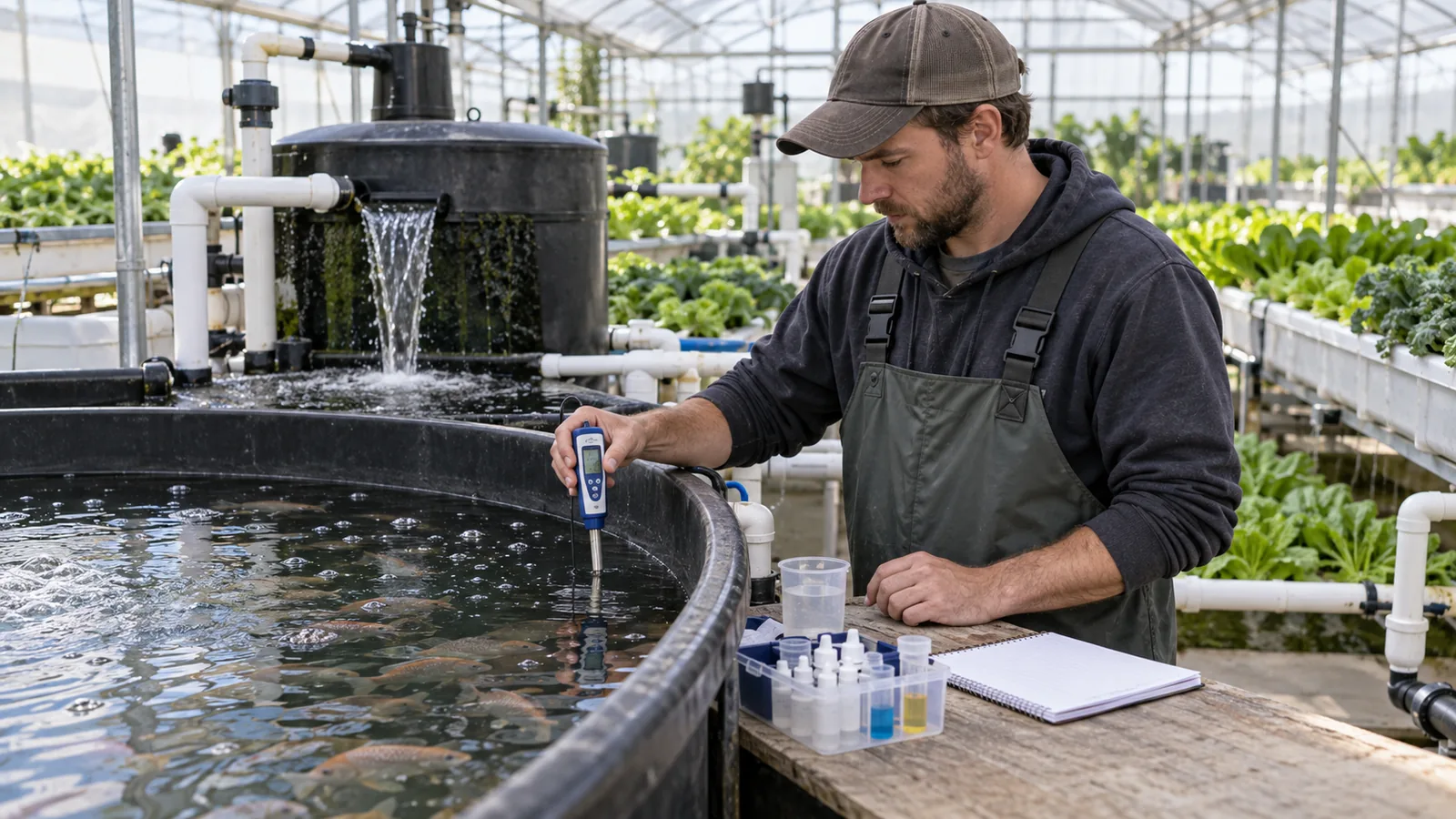
Calibrate or cross-check the test method
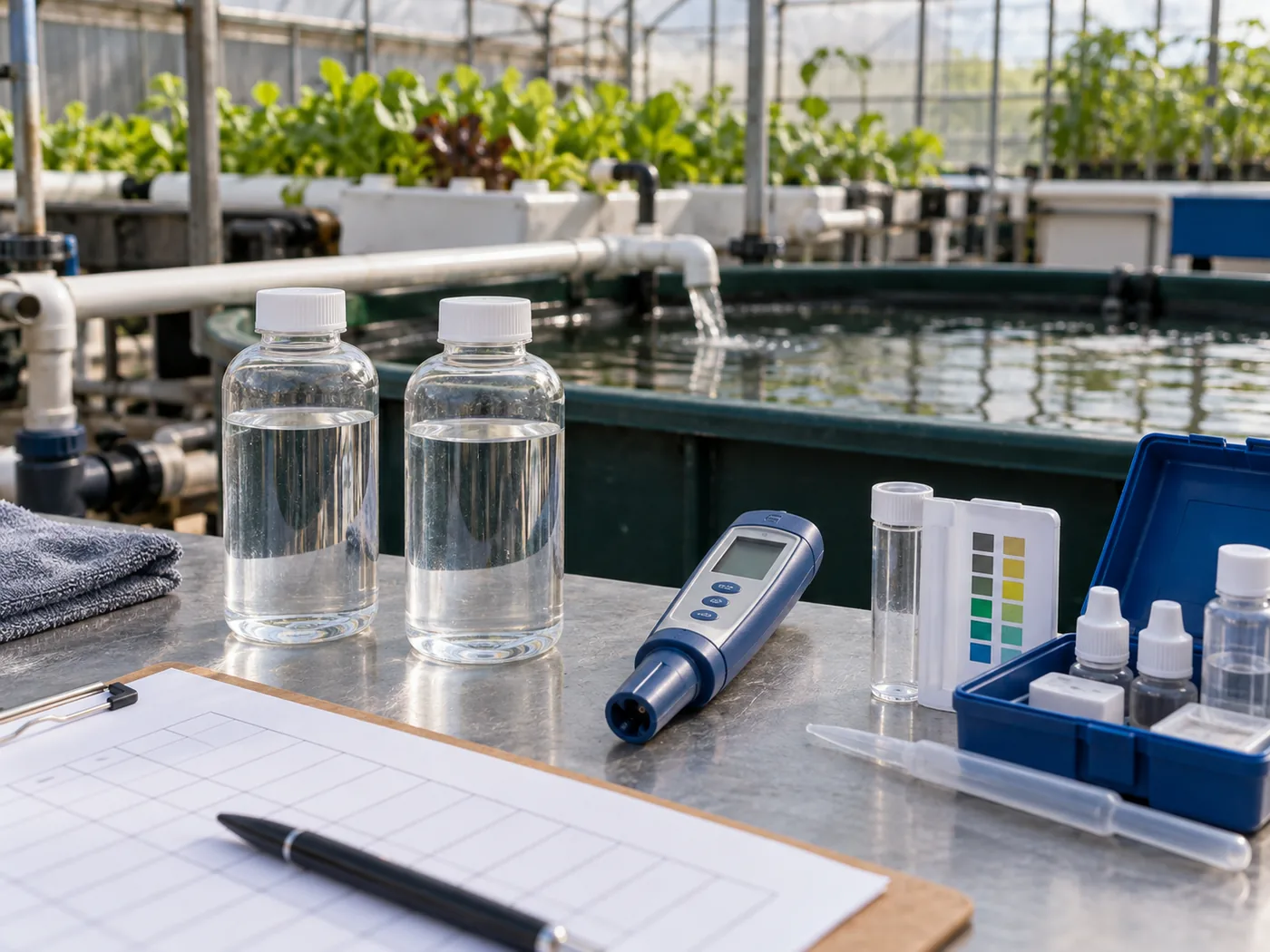
Electronic meters need suitable calibration and clean storage. Liquid test kits need to be in date and used with correct sample volume and timing. If a high reading is surprising, test again with a fresh sample and, where possible, compare it with another method or a local laboratory.
Record the result with date, time, water temperature and the testing method. A pH value without context is less useful than a trend. An operator who can see that the reading rises only after top-up water is added has a more useful lead than one who only knows the tank is “too high.”
Test the source water, not only the system water
Take a sample of water before it enters the system and another after it has stood according to your water-treatment routine. Municipal, well and rainwater sources can behave differently. A source with substantial buffering may pull the system back toward a higher pH after every top-up, even if a short-term adjustment seems to work.
Ask a local lab or qualified water specialist about pH, alkalinity, hardness and any relevant local water characteristics. pH tells you where the water is now; alkalinity helps explain how strongly it resists change. This distinction is essential before attempting repeated correction.
Inspect materials and additions
Review anything that contacts the water: media, decorative rock, shell or mineral buffers, concrete, mortar dust, make-up-water treatment and recent additions. Some materials can contribute minerals or buffering. Do not remove a material impulsively if it is structural or part of a filtration design; document it and discuss safe alternatives with the supplier or a qualified local professional.
Diagnose the likely cause
Hard or alkaline make-up water
This is a common reason that pH stays high. The answer may be a source-water strategy rather than a tank-dose strategy. Depending on local water quality and project scale, a team may consider pre-treatment, blending, reverse-osmosis water, rainwater collection where lawful and hygienic, or another approved source. Each option has cost, mineral and biosecurity consequences.
New system biology is still developing
A new or lightly loaded system may not yet show the long-term pH trend of an established biofilter. Avoid using additional fish or feed solely to push pH down; that can create ammonia or nitrite risk. Continue the controlled cycling approach in our biofilter start-up guide and let measurements, not impatience, determine the next step.
Carbonate-rich media or construction materials
Some rocks or construction materials can increase alkalinity. If the system uses locally sourced media, verify it is appropriate before installation. For an existing system, investigate carefully and plan any replacement so filtration, root support and fish safety are not disrupted.
Anaerobic zones and neglected solids
Persistent pH behavior can also be associated with poor solids management or low-oxygen zones. Inspect filters, media beds, root zones, dead-end plumbing and settled deposits. Confirm that aeration and circulation are working, then clean only according to the operating plan. Stripping all biological surfaces at once can create a new water-quality problem.
A safe process for lowering high pH
Step 1: Stabilize the operating situation
Before changing water chemistry, check fish behavior, temperature, aeration, pump operation, ammonia, nitrite and feed response. Do not make a pH adjustment during a pump failure, oxygen emergency, disease event or unverified test result. Restore normal circulation and establish a reliable baseline first.
Step 2: Set a realistic operating range
The best range depends on fish species, plant mix, water source, system maturity and professional guidance. Do not chase a hydroponic-only pH target in a coupled fish-and-plant system. A stable range that protects fish and biofiltration may be preferable to a lower target that creates repeated stress.
Write the agreed range and response plan in the operating log. Include who is allowed to approve adjustments, what will be measured before and after, and when technical support must be contacted.
Step 3: Correct the cause first
If make-up water is the main driver, treat or blend it before it enters the system when that is practical and approved. If media or a buffer is contributing, prepare a safe replacement plan. If organic solids are accumulating, restore the documented cleaning and flow routine. Cause control is more durable than repeatedly correcting the display value.
Step 4: Use chemical adjustment only with a controlled method
An acid-based adjustment may be used by trained operators in suitable circumstances, but it is not a casual remedy. Select only an appropriate product under qualified guidance, use correct personal protective equipment, follow the manufacturer’s safety information, and never add a concentrated chemical directly near fish or biological media.
Prepare a measured dilution or condition the make-up water in a separate, labelled container. Add acid to water—not water to acid—and introduce treated water gradually through the agreed system point. Wait, circulate, retest and observe. The exact dose is not universal because water volume and alkalinity differ. A generic internet dose can be dangerous.
Step 5: Verify after every change
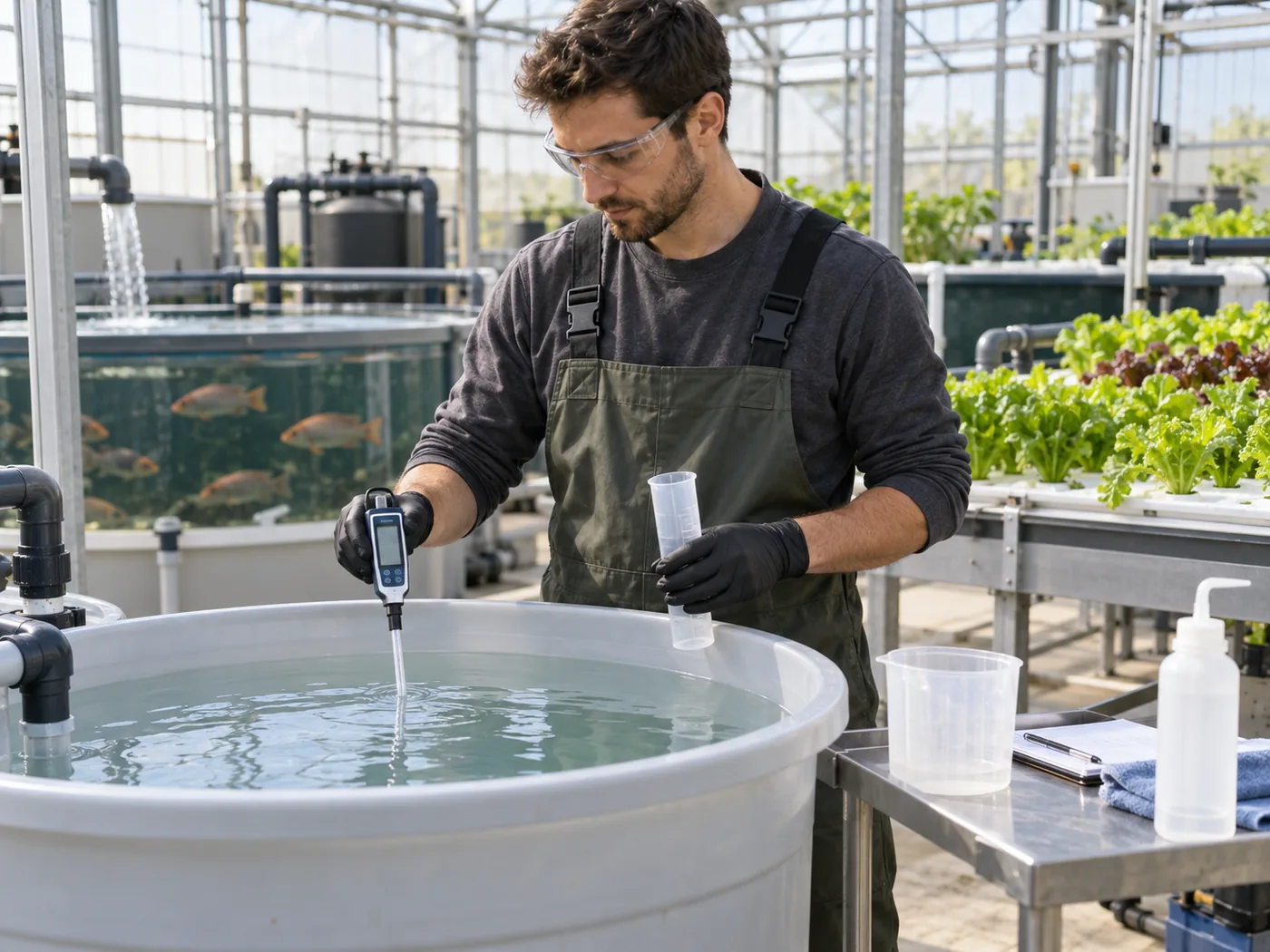
Record pH, temperature, ammonia, nitrite, fish behavior, amount of treated water added and any feed change. Recheck after circulation has mixed the system and again according to the project’s monitoring plan. If pH rebounds, investigate alkalinity and source water rather than escalating chemical additions.
What not to do
Do not make a large one-time correction
Sudden pH movement can stress fish and alter ammonia risk. A system does not become safer merely because a reading reaches a preferred number quickly.
Do not use household acids or unverified products
Products may include ingredients or concentrations unsuitable for fish, plants, food production or the materials in the system. Use only a documented, appropriate method with trained oversight.
Do not confuse pH with alkalinity
pH measures acidity or basicity at the moment of testing. Alkalinity describes the water’s resistance to pH change. Treating one without understanding the other can lead to a cycle of dose, rebound and instability.
Do not ignore the whole water-quality picture
High pH may coexist with high temperature, low oxygen, ammonia, plant symptoms or poor solids removal. The right solution may involve water source, aeration, filtration and operating routine—not just one bottle of product.
A practical monitoring record
For each check, record source-water pH, system pH, temperature, alkalinity where tested, ammonia, nitrite, nitrate if relevant, water added, treatment used, feed offered, fish observation and corrective action. Add a note when filters were cleaned, media was changed or a power interruption occurred.
This record is valuable during factory-supported commissioning and later site operation. It lets a supplier or local specialist see the sequence of events without guessing. In a multi-person project, it also makes handover clearer when the person testing water is not the person feeding fish.
A practical decision path for different project stages
The same pH reading can require different actions in a classroom unit, a newly installed farm system, and an established production site. The following decision path keeps the response proportionate.
New installation or recent re-start
First confirm that the system has completed plumbing checks, aeration checks and a planned biological start-up. A new system may have water chemistry influenced by construction materials, unused media, source-water characteristics and an immature biofilter. Do not interpret one early pH result as proof that the system needs a major correction. Establish a baseline over several checks and keep the fish and feed load conservative while the treatment process develops.
Established system after a top-up or water change
Compare the timing of the change with the water-addition record. If system pH rises after top-ups, sample the make-up source and review any treatment used before water enters the system. This is often more useful than testing the same fish tank repeatedly. A controlled make-up-water approach can be evaluated away from livestock, with clear records of its effects.
Established system with plant symptoms
Plant symptoms should trigger an inspection, not an automatic acid dose. Check whether symptoms are limited to one crop, one bed, new leaves or old leaves; examine roots and growing conditions; and compare the pH trend with temperature, nutrient additions and source-water changes. A local crop adviser can help distinguish a pH-related availability issue from a disease, pest, light, root-zone or nutrient-balance issue.
Sudden pH change with fish stress
Treat this as a water-quality event. Maintain aeration, verify flow, reduce additional stress where appropriate under the operating plan, and test ammonia and nitrite alongside pH and temperature. Preserve a sample and record the timing of chemicals, cleaning, source-water additions and equipment events. Prompt local fish-health or water-quality support is appropriate when fish are distressed or the cause is uncertain.
Procurement questions that prevent avoidable pH problems
For a new equipment purchase, water chemistry should appear in the project conversation before the final layout is approved. Ask whether the quotation identifies the intended source water, media specification, materials in contact with water, recommended test points and the scope of any commissioning support. Request a clear list of which tests are expected at factory inspection and which must be performed after installation.
Also ask where make-up water will enter, whether there is a safe point to condition it separately, and how overflow or discharge is managed. These details help a team avoid retrofitting a pH-management workflow after fish and plants are already in operation. The goal is not to promise that every site will have the same pH; it is to build a system that can be tested, adjusted carefully and operated consistently.
FAQ
Is high pH always an emergency?
Not always. The urgency depends on the value, rate of change, fish species, temperature, ammonia condition and fish behavior. Confirm the measurement and assess the whole system before reacting.
Can plants lower pH by themselves?
Plants and system biology influence water chemistry, but they are not a reliable emergency correction tool. Treat persistent high pH as a source-water, buffering or management question.
Should I lower the main tank or the make-up water?
Where source-water treatment is practical, managing make-up water can be more controlled than dosing the main fish tank. The correct method depends on the system, water analysis and qualified guidance.
When should I call a professional?
Seek prompt specialist support if fish show distress, ammonia or nitrite is elevated, pH changes sharply, a chemical exposure is suspected, or the water source is not understood.
Conclusion
Safe pH management starts with measurement and diagnosis, not a quick dose. Confirm the test, evaluate source water and alkalinity, inspect materials and solids management, then make only controlled changes that the team can measure and reverse if needed. Stable operation protects fish, plants and the bacteria that connect them.
Need a water-quality review?
Send your requirements with your source-water information, system type, fish species, crops and recent test results. YAFAN can help you prepare the technical information needed for a clearer aquaponics equipment or commissioning discussion.

