
Introduction
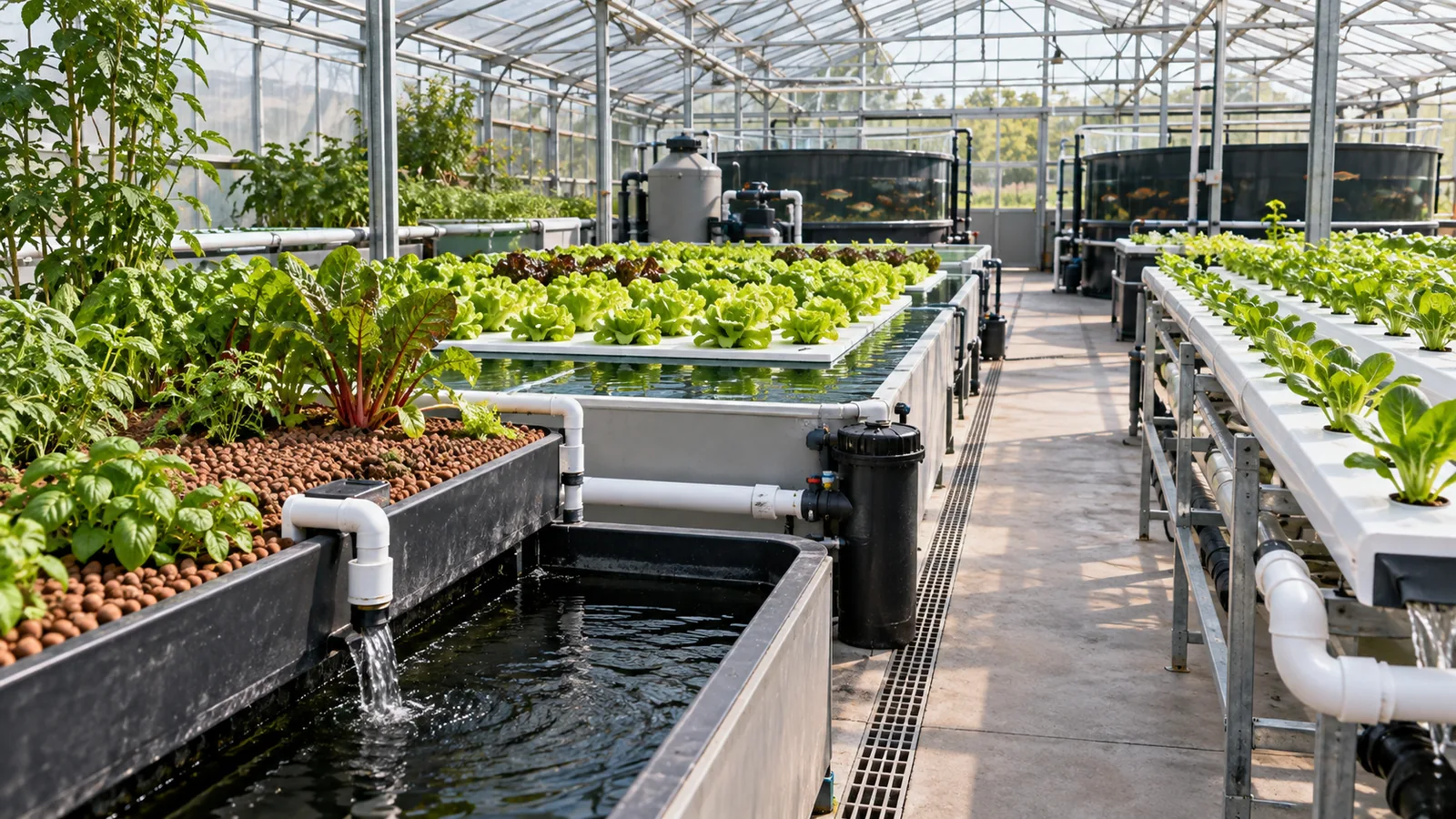
The phrase “types of aquaponics systems” can describe two different choices. One is the way plants are grown: media beds, deep-water culture (DWC or raft), nutrient film technique (NFT), or combinations of these. The other is the way fish and plant water are managed: coupled, decoupled or hybrid loops. Buyers should separate these choices because a system can use, for example, raft beds in either a coupled or more independent water-management arrangement.
This article is a practical type-identification guide. It does not repeat the procurement decision in Coupled vs Decoupled Aquaponics. Instead, it helps a new grower, school, farm team or project buyer understand the main plant-production formats and the questions to ask before selecting one.
New Mexico State University identifies raft/DWC, media-based and NFT as the three primary plant-growing systems in its aquaponics guide. The University of Arkansas at Pine Bluff compares the operating strengths and limitations of raft, NFT and flood-and-drain approaches in its aquaponics overview. Treat both as decision support; local climate, fish species, crop plan, water source and operator skill determine the right implementation.
The short answer: three core growing formats
Most aquaponics projects begin with one of these plant-production approaches:
- Media bed or flood-and-drain: plants grow in inert media that is periodically flooded or continuously irrigated.
- Deep-water culture (DWC) or raft: plants sit in holes in floating rafts while roots grow in a well-aerated water trough.
- Nutrient film technique (NFT): plant roots sit in channels carrying a shallow moving film of treated water.
Hybrid systems combine two or more formats. A project may use media beds to support larger crops or provide biological surface area while using rafts or channels for a dedicated leafy-green crop. The best type is not the one with the most equipment; it is the one that matches the production purpose and can be maintained consistently.
Type 1: Media-bed aquaponics systems
How a media bed works
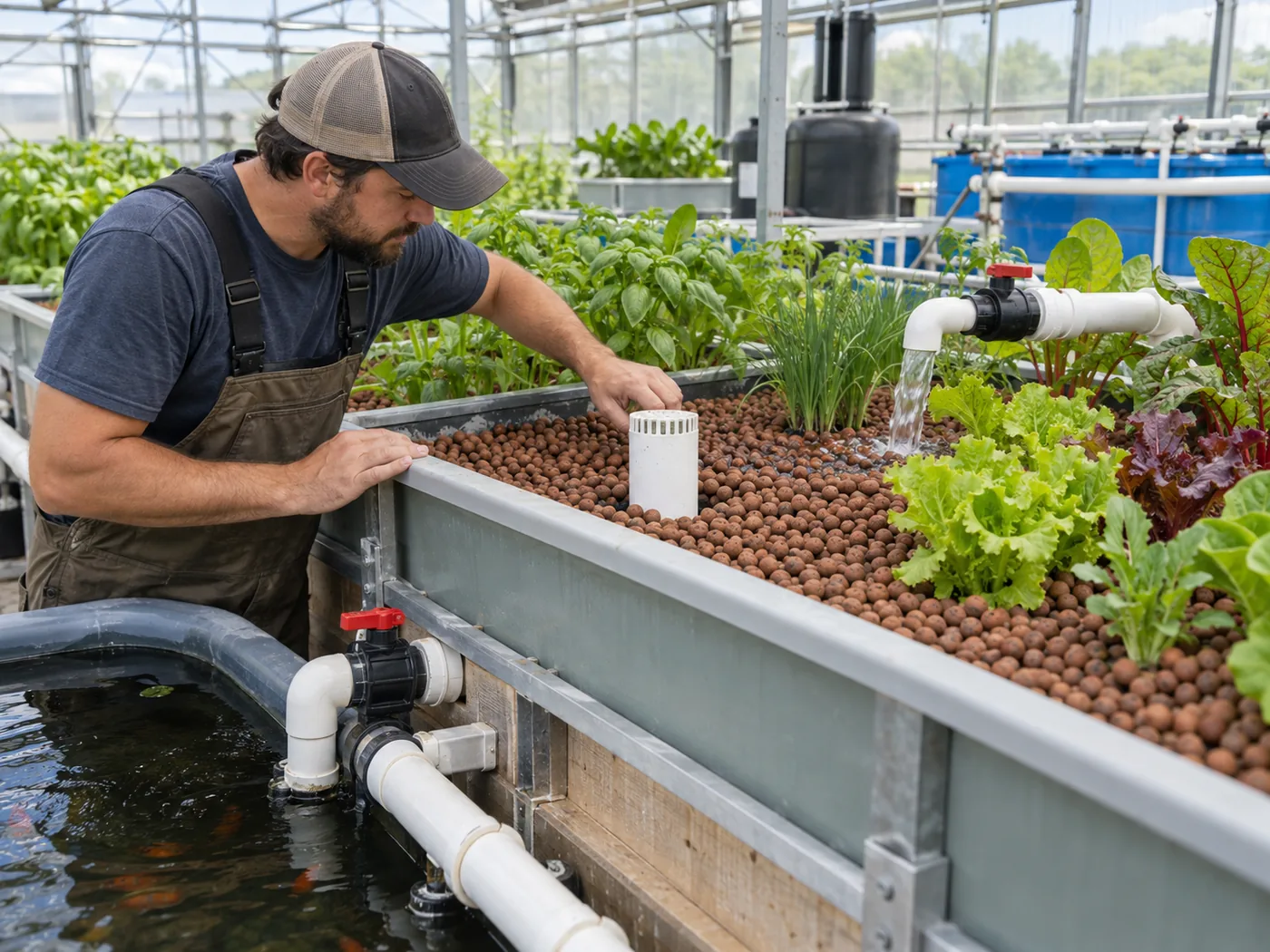
Plants are supported in an inert medium such as appropriate expanded clay or verified inert aggregate. Water from the fish side enters the bed, contacts roots and media, then drains or returns to the system. Many small systems use flood-and-drain cycles, often controlled by a timer or siphon arrangement.
The medium provides root support and can offer surface area for microorganisms. In simple layouts, it can also capture some solids. This makes media beds visually understandable for schools and starter projects, but it does not remove the need for a cleaning plan. Excess solids, compacted media or poor flow can create clogging and low-oxygen zones.
Best fit
Media beds can suit demonstrations, learning systems, small mixed-crop projects and plants that benefit from physical support. They can be practical where the operator can inspect the bed, clean it and manage changing water levels. Their weight, media cost and maintenance access should be considered before installing a large area.
Questions to ask
- Is the medium food-appropriate and free from limestone or contaminants?
- How will solids be removed or managed before they accumulate?
- Is the floor or support structure designed for wet media weight?
- Can the operator reach every bed for planting, cleaning and harvesting?
- What happens if a siphon, timer or pump stops?
Type 2: Deep-water culture or raft systems
How DWC works
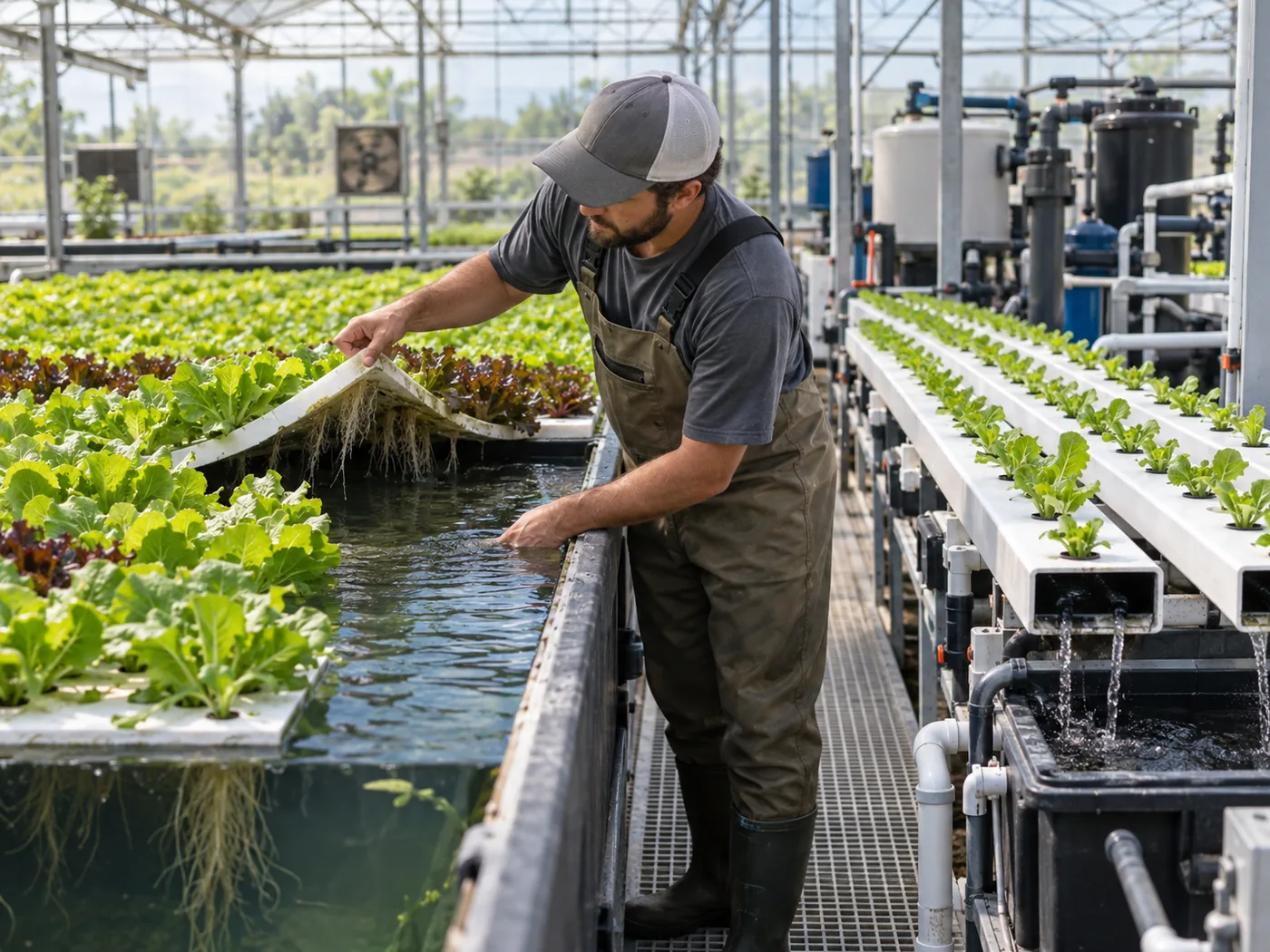
In DWC, plants are placed in net pots or holes in rafts floating on deeper moving water. Roots remain in the water while aeration and circulation support the root zone. For many systems, water is treated for solids before it reaches the raft area because roots and troughs are not a convenient place to accumulate fish waste.
Rafts can support repeatable spacing, seeding and harvesting for suitable leafy crops. However, water volume, trough construction, root-zone oxygen, raft cleaning and humidity need careful management. DWC is not automatically low maintenance simply because plants are arranged in rows.
Best fit
This format is often considered for planned production of lettuce, herbs and other suitable leafy crops where a team values a regular plant and harvest rhythm. It can also be valuable for education or display systems when the water path is visible and safe. The site must have sufficient access around troughs, reliable aeration and a solids-control plan.
Questions to ask
- What filtration is upstream of the raft zone?
- How will roots, rafts and troughs be cleaned without harming system biology?
- Is aeration sized for fish, biofilter and root-zone needs?
- How will rafts be moved during planting and harvest?
- Can the structure carry the water weight and allow safe access?
Type 3: Nutrient film technique systems
How NFT works
NFT uses channels or troughs with a shallow moving water film. Seedlings are supported in net pots or similar holders while their roots contact the circulating water. The format can be compact and orderly, but the channels provide little tolerance for fine solids, long roots, pump interruption or an uneven slope.
Because channels have limited biological surface area, an NFT aquaponics system usually needs effective mechanical filtration and dedicated biofiltration upstream. Clean flow is a design requirement, not an optional upgrade.
Best fit
NFT may suit selected small plants and leafy crops when space is constrained and the project can maintain strong water treatment, level channel installation and pump contingency. It can be useful in controlled environments, but it is less forgiving of skipped cleaning or a short pump outage than a larger water-volume system.
Questions to ask
- How are solids removed before water enters the channels?
- What is the plan for root congestion and channel cleaning?
- How is channel slope checked during installation?
- What backup or alarm response protects plants during a pump interruption?
- Are crop type and planting density compatible with channel size?
Type 4: Hybrid aquaponics systems
What “hybrid” means
A hybrid system uses more than one growing format or combines components to solve a defined production need. For example, a project may use media beds for biological surface and crop support, then send well-treated water to raft beds for leafy-green production. Another project may combine an educational media-bed area with a separate commercial-style raft section.
Hybrid does not mean “add every available component.” Each extra tank, pipe, pump, valve and control point adds a maintenance responsibility. The design should state the purpose of each section, the intended water path and what staff must inspect daily.
Best fit
Hybrid layouts can be useful when a project has genuinely different crop needs, a phased expansion plan or education plus production goals. They demand a clear process-flow drawing and operators who understand where solids are removed, where bacteria are supported and how each growing zone is isolated for maintenance.
Growing type is not the same as loop architecture
Media, raft and NFT describe the plant-growing format. Coupled and decoupled describe the relationship between fish and plant water. A coupled loop returns water from plant production to fish after treatment; a decoupled arrangement can give fish and crop sides more independent operating conditions.
That distinction matters because pH, nutrients and crop goals can drive a different water-management choice even when the plant format is the same. If a project is comparing shared versus separate loops, use the coupled-versus-decoupled guide rather than assuming that a raft or NFT system automatically has one architecture.
How to choose the right type
Start with the crop and harvest routine
List what the project plans to grow, desired plant size, root structure, crop support needs, planting frequency and harvest method. Leafy greens and herbs may fit rafts or channels; larger or fruiting plants may need different support and nutrient management. Crop choice should also reflect local demand, not only what looks attractive in a project photo.
Match filtration to the most sensitive zone
NFT channels and raft roots require clean, well-managed water. Media beds can retain more solids, but retained solids still need management. Select solids removal, biological filtration, flow and aeration as one process rather than buying a growing bed first and adding treatment later.
Draw daily work into the layout
Show where fish are fed, filters are cleaned, seedlings arrive, rafts move, roots are inspected, harvest is packed and water tests are taken. A type that looks efficient on a diagram may create excessive labor if there is no access around it.
Plan for failure and maintenance
Every type needs a response to pump failure, low water, blocked lines, power loss and excess solids. Define alarms, backup aeration, spare parts, isolation valves and responsible people before stocking fish. This is particularly important for channels and compact systems with little water volume.
Factory and installation questions by system type
For a supplied system, request a drawing that shows tanks, filters, grow zones, drains, overflows, aeration and electrical requirements. During factory testing or shipment inspection, confirm the labelled equipment list, fittings, grow-bed or channel count, pumps and included accessories. At site installation, verify level, drainage, pipe support, electrical safety, access and water flow before biological start-up.
The system type should be visible in these documents. A quotation that merely says “NFT system” or “raft system” is incomplete unless it explains filtration sequence, materials, flow duty, cleaning access and exclusions.
Compare system types by operational reality
Before asking for a quotation, compare options using the work they create rather than only the growing area they display. The following themes help project teams make a more grounded first selection.
Space and structural load
Media beds can be heavy because wet media and water remain in the growing zone. Raft troughs create a continuous water load over a large footprint. NFT uses less standing water in the channels, but it still needs tank, filter and service space elsewhere. A layout needs walkway clearance, drainage, roof or greenhouse constraints, and a structural review appropriate to the installation location.
Labor and service access
Every system needs seeding, transplanting, harvest, water testing, fish feeding, filter cleaning and occasional repair. Media beds require access to their whole surface. Raft systems need space to move rafts and work along troughs. NFT installations need safe access to channels, return lines and supports. The best drawing includes those human movements rather than treating them as an afterthought.
Crop flexibility and production consistency
Media beds can offer flexible physical support for a varied demonstration or mixed-crop plan. Raft systems can support organized succession planting for suitable leafy crops. NFT can be efficient for selected small plants when hydraulic conditions remain clean and consistent. These are tendencies, not guarantees. The crop plan should be confirmed with local agronomy, market demand and the operator's capacity to maintain plant health.
Risk tolerance and redundancy
All recirculating systems rely on timely responses to flow and aeration problems. Channels with shallow water can show the effect of a blockage or pump outage quickly; large raft volumes may provide different buffering but require robust aeration and structural management; media beds can hide accumulated solids if routine inspection is skipped. Ask which components are critical, what spares are supplied, and how the system can be isolated for maintenance without stopping the entire water loop.
A simple selection sequence for buyers
1. Define the project purpose: education, household production, a farm trial, contract supply, or a mixed demonstration.
2. List crops, expected planting rhythm, harvest method and local sales or use plan.
3. Confirm the site: water source, power, drainage, climate, structure, service access and available staff time.
4. Compare media bed, DWC, NFT and hybrid layouts against solids treatment, biological filtration, backup needs and cleaning access.
5. Ask suppliers for an equipment scope and process-flow drawing that shows assumptions rather than a generic system name.
6. Plan on-site commissioning, cycling and operator training before fish are stocked at the intended production level.
This sequence avoids a common procurement error: selecting a growing format from a photograph, then discovering too late that the site cannot support its water treatment or daily maintenance routine. A suitable first system is one that the team can observe, test and service reliably.
FAQ
Which type is easiest for beginners?
Many small projects begin with a well-designed media bed because it is observable and flexible, but “easy” still requires testing, cleaning and fish care. The best beginner type is the one sized modestly and supported by a realistic daily routine.
Are raft systems only for commercial farms?
No. Rafts can be used at different scales, but larger troughs require careful structural, solids-management and aeration planning. A small raft system is not automatically a commercial system.
Can NFT work in aquaponics?
Yes, but it needs particularly clean water, reliable flow and adequate dedicated biofiltration. Root blockage and pump failure deserve a documented response plan.
Should I choose a hybrid system from the beginning?
Only when each section has a defined purpose and the operating team can maintain the added complexity. A simple system with clear service access is often a stronger starting point than an oversized hybrid layout.
Conclusion
The three core aquaponics growing types are media beds, DWC rafts and NFT channels; hybrid systems combine them when there is a clear operating reason. Choose from crop needs, solids management, filtration, access, labor, climate and failure response—not from a single product image or a generic “best system” claim.
Discuss your system type
Contact us with your crops, available space, fish plan and project location. YAFAN can help you prepare the questions needed to compare media-bed, raft, NFT or hybrid equipment scopes.

