
Introduction
An aquaponics filtration warranty is not a single promise that covers every part of a water-treatment loop for the same period. A mechanical screen, molded tank, valve, pump, electrical controller, biological media and consumable seal can have different coverage, exclusions and claim procedures. That is normal. The buyer’s task is to make those boundaries visible before an order is placed.
For a home unit, a missing replacement seal can be inconvenient. For a greenhouse or commercial project, an unclear warranty can mean crop disruption, fish-health risk, airfreight for a small part, and disagreement about whether the problem is a manufacturing defect, installation error or operating condition. This guide explains the terms buyers commonly encounter and the records that make a warranty discussion more practical. It is general procurement guidance, not a promise of any supplier’s policy. The signed quotation, warranty document, contract and applicable local law control a specific purchase.
The short answer
Most written warranties on filtration equipment cover a defined defect in materials or workmanship for a defined period, often only for the original purchaser and only when the unit is installed, used and maintained within the published limits. They commonly exclude wear items, consumables, incorrect installation, freezing, chemical damage, dry running, inappropriate water conditions, unauthorized modification, labour and freight. A useful warranty is therefore a documented process: identify the exact model and component, preserve delivery and installation records, report promptly, and agree in writing who supplies the remedy and who pays for removal, shipping and recommissioning.
Start by separating a filtration unit into warrantable parts
“Filter warranty” is too broad for a purchase order. Split the equipment schedule into components that can fail in different ways.
Structural and hydraulic components
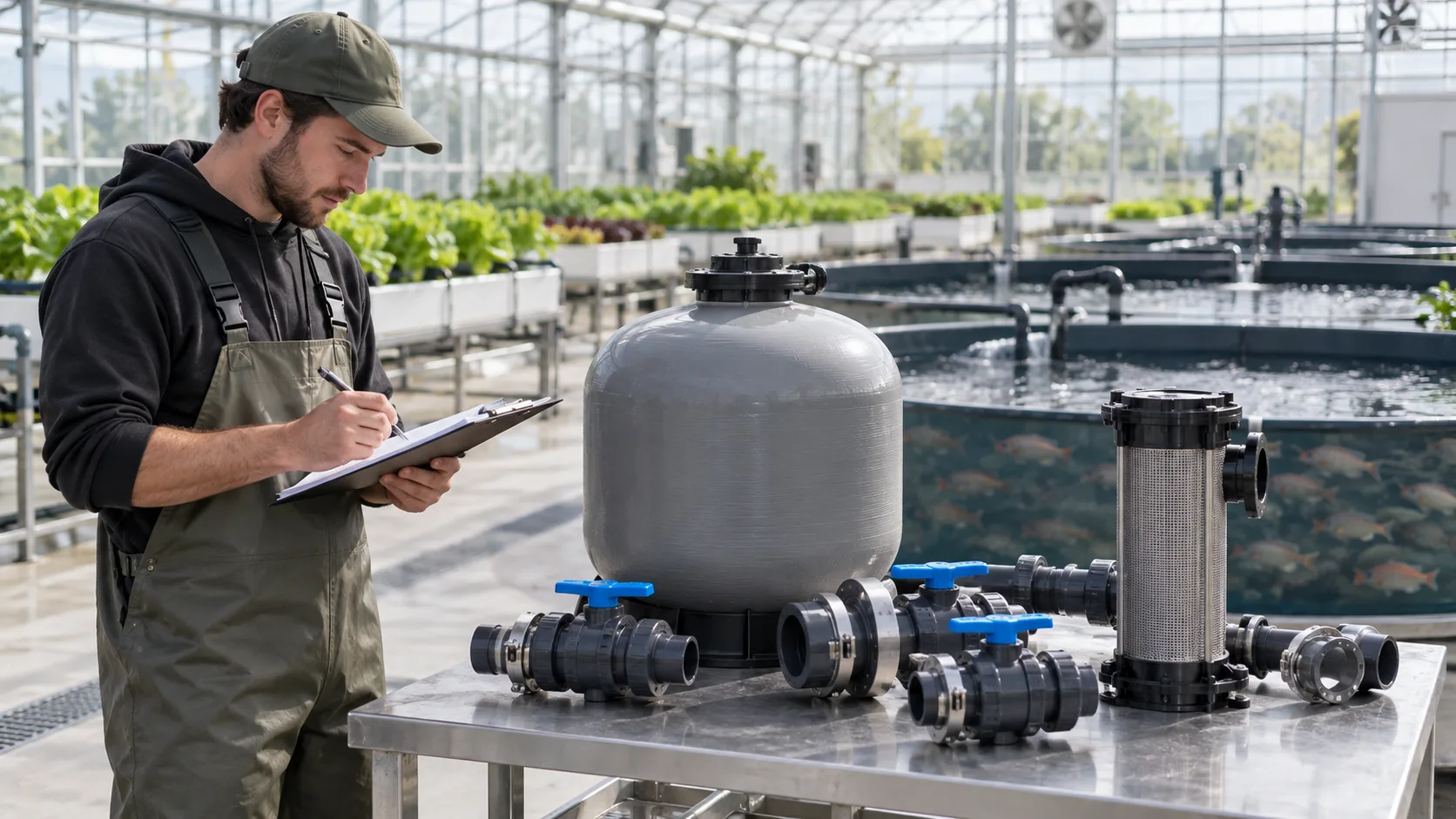
This group can include a rotationally molded vessel, fiberglass body, screen housing, radial-flow body, filter lid, bulkhead, standpipe, pipe manifold, valve and frame. A supplier may offer longer coverage for a vessel or housing than for a moving component, but the wording should state whether cracking, deformation, leakage at factory-made joints and UV exposure are covered. It should also state the permitted pressure, installation orientation, water temperature and supported pipework load. A tank or housing warranty does not automatically cover a leak caused by a site pipe being forced out of alignment.
Motors, pumps and powered accessories
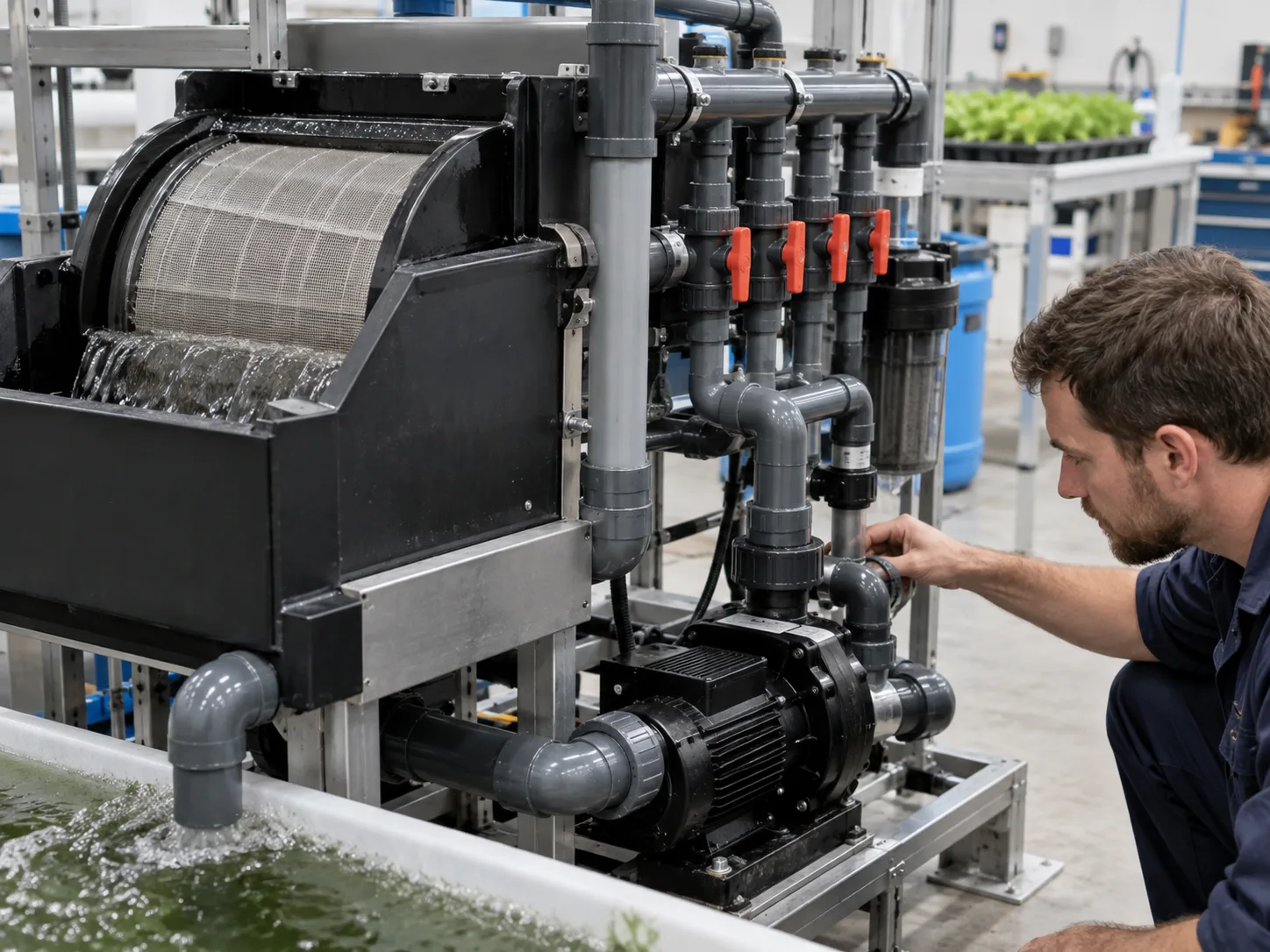
If a filter package includes a pump, drum drive, controller, UV unit, sensor or automatic rinse valve, ask whether each is warranted by the package supplier or by its original manufacturer. Powered parts often have their own serial-number process and may have different terms from a non-powered vessel. Do not assume a “complete filtration system” warranty means every electrical accessory is included for the same period.
Media, screens, seals and other consumables
Filter media, screen mesh, cartridges, O-rings, gaskets, brushes, lamps, probes and sacrificial parts are usually treated differently from a molded housing. Their life depends heavily on solids load, cleaning method, UV exposure, water chemistry and daily operation. A short defect-on-arrival period can be reasonable; it is not the same as a performance guarantee for a consumable in service.
Before placing an order, compare the filter layout with our guide to replacement parts for modular aquaponics systems. It helps turn a vague spare-parts request into part numbers, fitting standards and quantities that can be checked at handover.
What a limited warranty normally means
Most equipment warranties are limited warranties. “Limited” does not necessarily mean poor quality; it means the supplier has defined the covered defect, time period, remedy and exclusions. The buyer should read every one of those elements rather than compare the headline number alone.
Coverage trigger
Ask what must be true for a claim to qualify. Typical wording is “defects in materials or workmanship under normal use.” This means the buyer may need to show that the component was installed as instructed and used inside the stated operating envelope. For a filtration unit, the relevant facts can include water temperature, suspended-solids load, pressure, pump duty, cleaning frequency, chemical exposure and whether the unit was allowed to run dry.
Start and end date
The start date may be shipment, invoice, delivery, commissioning or registration. These dates matter in export projects because shipping, customs clearance and installation can consume months. A buyer should ask the supplier to state the start date in the quotation and, if the system will be stored before installation, agree whether a storage limit applies.
Remedy, not just duration
Coverage may permit repair, replacement, a replacement part or credit at the supplier’s option. That is materially different from a promise to replace an entire filter package. Confirm whether a replacement component restarts the warranty period or only carries the balance of the original term. Also ask whether the supplier needs the defective part returned before a replacement ships.
Party entitled to claim
Some policies apply only to the original purchaser. This matters when a trading company buys for an end user, a distributor sells to an installer, or a developer changes project ownership. Make the purchaser, delivery site and end-user relationship clear in the order documents.
Typical exclusions buyers should expect to see
An exclusion is not automatically unreasonable. The question is whether it is clear and can be controlled through design, installation and maintenance.
Installation and site conditions
Filters can fail because pipework is unsupported, foundations settle, a housing is exposed to direct impact, a valve is overtightened, electrical work is unsuitable, or the equipment is installed outside its pressure and temperature limits. Confirm who is responsible for the foundation, pipe supports, electrical connection, drainage, weather protection and commissioning. A factory can test that a supplied valve opens and a panel is labelled; it cannot validate a destination site’s plumbing or utility quality.
Misuse, modification and incompatible parts
Policies often exclude unauthorized changes, third-party parts or use outside the instructions. This is especially relevant when installers substitute a different thread type, add a higher-head pump, use aggressive cleaners, or connect a pressurized loop to equipment intended for gravity flow. If equivalent local parts must be used, obtain written approval before installation rather than discover the issue during a claim.
Operating damage and routine wear
Clogging caused by neglected solids removal, abrasion from media, chemical attack, ultraviolet degradation outside the specified location, dry running, freezing or physical damage are common exclusion categories. Treat them as design-review questions: is the filter accessible, is there frost protection, are isolation valves installed, and can the operator inspect the screen without dismantling the water loop?
Pentair’s published water-treatment terms illustrate why buyers should read component-level language: coverage periods, listed exclusions and remedies vary by product category, while installation, water-condition and third-party-part limitations are expressly addressed in its product warranty information. That example is not an aquaponics warranty benchmark; it is a reminder to compare the written terms for the exact equipment offered.
Build a warranty schedule before approving the quotation
Create one table for every supplied filtration item. It should include model, quantity, serial-number location, stated coverage period, start date, covered failure type, exclusions, claim contact, required evidence, remedy, return requirement, replacement-part lead time and responsibility for labour, freight, duty and disposal. Attach the schedule to the purchase order or technical annex, not only to an email thread.
Questions that expose hidden gaps
Ask these questions in writing:
1. Which components are covered separately: vessel, screen, media, seals, valves, pump, controller and sensors?
2. Does the term begin at shipment, delivery, commissioning or registration?
3. Is failure due to a manufacturing defect covered after normal factory testing and shipment inspection?
4. Who authorizes a claim, and what response time should the buyer expect?
5. Is the remedy a part, repair, replacement unit or credit?
6. Who pays for diagnostic labour, removal, international freight, customs duty and reinstallation?
7. Are spare screens, seals, valves and sensors available after the headline warranty ends?
8. Which local installation records, photos and water-condition logs must be retained?
These questions are more useful than asking “How many years is the warranty?” A three-year vessel warranty with an accessible local spare-parts plan can be more valuable than a longer headline term that excludes the component most likely to stop the system.
Make factory testing and shipment inspection part of the evidence trail
Warranty is easier to administer when the delivered scope is identifiable. Before shipment, request a packing list that names filter bodies, lids, screens, valves, pumps, controls, media and spare kits separately. During factory testing, record the agreed checks: assembly fit, valve operation, pump rotation where applicable, drain path, control labels and visible leaks. Testing should be proportionate to the equipment; it does not prove the system will perform under every future site condition.
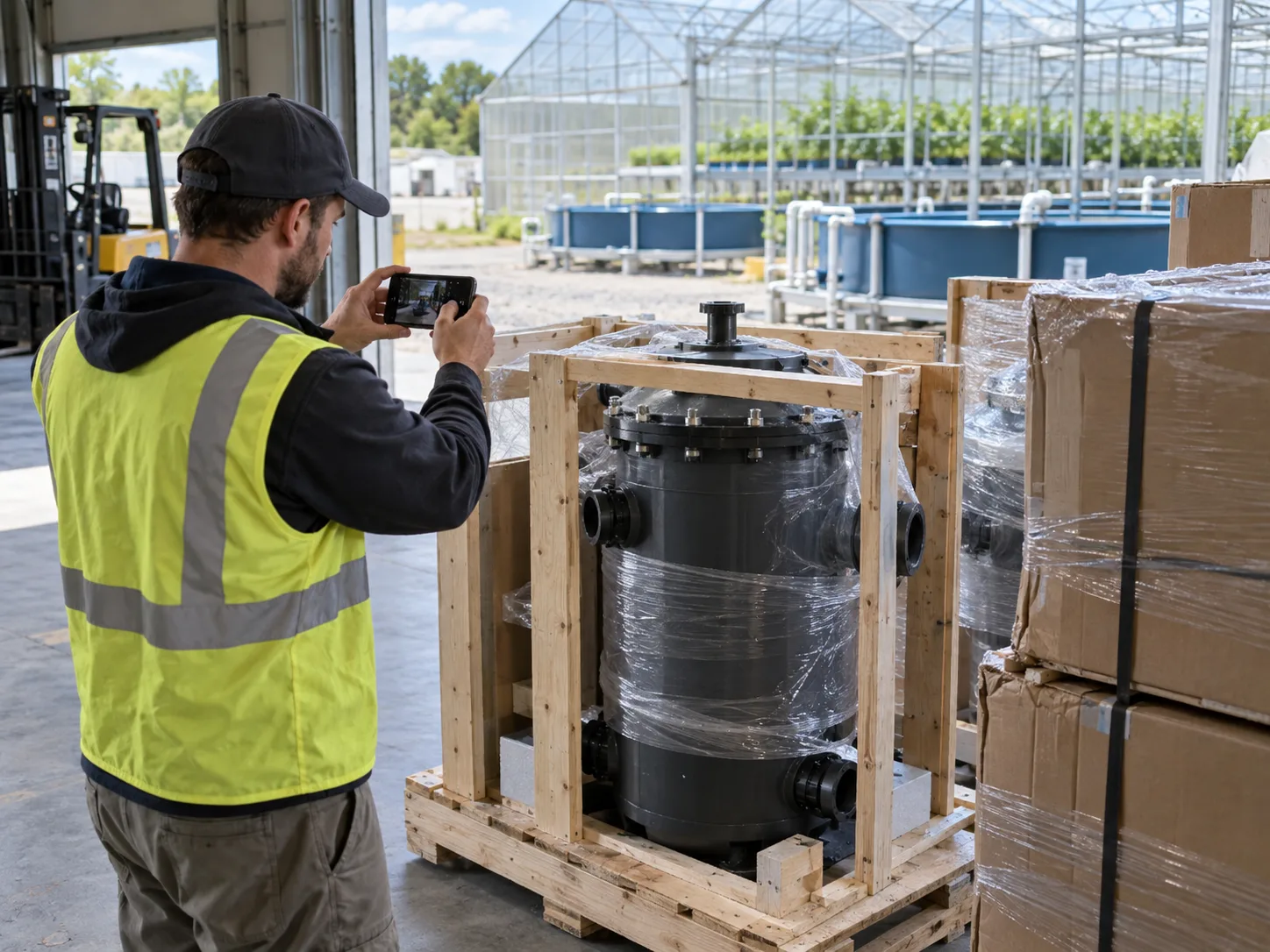
At shipment inspection, photograph serial plates, carton labels, fragile areas, supplied accessories and the condition of tanks or housings before container sealing. On delivery, photograph external impact, crushed cartons and missing items before moving equipment into the installation area. Record exceptions on the delivery note according to the freight terms. These simple steps help distinguish a transit issue, missing item, commissioning issue and a later defect.
Installation records matter just as much
Keep an installation-preparation file with the approved layout, base details, pipe support points, electrical specification, commissioning checklist, first-run photographs and operator handover record. Log the first cleaning, pressure or flow observations, water temperatures, abnormal alarms and corrective actions. The point is not to burden an operator with paperwork. It is to preserve facts if a filter body, screen drive or control component needs support months later.
For a larger project, the same discipline belongs in the wider commercial aquaponics buyer’s guide: list supplier scope, site scope, exclusions and acceptance checks so service expectations are not invented after delivery.
Cross-border claims require a service plan, not just a warranty card
International shipments add transport time, border processes and the possibility that a small part is expensive to send urgently. Before purchase, decide whether the project will hold critical spares locally. A practical first spare package may include seals, screen elements, common valves, sensor consumables, a compatible pump or repair kit when justified by the system’s risk, and the fittings needed to install them.
Clarify whether the supplier will troubleshoot remotely first, send a replacement part, ask for a return, or appoint a local service partner. Ask which party completes export paperwork for returned goods, who pays customs charges, and whether the buyer may buy an approved local equivalent in an emergency. A reasonable answer will vary by project; silence is the risk.
Do not confuse warranty with preventive maintenance. Screens still need cleaning, solids removal equipment still needs inspection, and an operator still needs a response plan for blocked flow or power loss. A warranty is a remedy for defined defects, not an operating substitute.
How to compare offers without rewarding vague promises
Score each offer on clarity as well as duration. A robust comparison considers: written component schedule, operating limits, exclusion detail, local support, spare availability, claim steps, evidence requirements, remedy, total response path and cost allocation. Reduce the score when a seller says “full warranty” but cannot provide a model-specific document before payment.
For U.S. consumer purchases, the FTC explains that written warranties should be available before sale and that the details, not the marketing label, determine what is covered. Its warranty guidance is consumer-focused and does not replace a commercial contract or local legal advice, but it reinforces the basic buyer practice: read the written terms before committing.
Turn warranty wording into an acceptance plan
The best time to solve a warranty ambiguity is before final payment, when the supplier and buyer can still align the document package. Divide the project into three acceptance stages. First, pre-shipment acceptance confirms the equipment identity, count, visible condition, agreed factory checks and documents. Second, delivery acceptance confirms that the crates and items arrived without visible transit exceptions. Third, site acceptance confirms that the correctly installed equipment can be commissioned within the agreed operating limits. A problem discovered at one stage should be recorded there, rather than being pushed into a later, harder-to-prove warranty dispute.
For example, a missing valve shown on the packing list is a supply-completeness issue. A cracked vessel photographed before unloading is likely a transport or delivery issue. A controller that fails after commissioning may be a warranty issue, but its assessment may depend on the electrical connection, local voltage, enclosure and maintenance record. The categories can overlap, which is why a dated record is valuable. It does not determine legal responsibility by itself; it allows the parties to investigate from facts.
Define the first-response workflow
Ask the supplier to state the first-response workflow in the project manual. A useful workflow says who receives the claim, the requested photographs or video, the serial number and operating data needed, whether remote troubleshooting comes first, who approves replacement shipment, and how the project keeps water treatment safe while a part is unavailable. Include an escalation contact for a system-threatening fault such as a blocked return, uncontrolled leak or loss of critical pumping.
The operator should not dismantle a component or discard evidence before the supplier has reviewed the claim, unless immediate action is necessary to protect people, fish or property. If emergency repair is unavoidable, photograph the condition, retain the part if safe to do so, record the action taken and notify the supplier promptly. This balances evidence preservation with the reality that aquaponics cannot always wait for a remote diagnosis.
FAQ
Is a longer warranty always a better filtration offer?
No. Compare the covered component, exclusions, remedy, service response and spare availability. A long housing term may not help if a short-life screen, seal or controller cannot be sourced quickly.
Are filter media and seals normally covered for the same period as a tank?
Usually not. Media, screens, gaskets and other wear items are commonly treated as consumables or have separate limited terms. Request a component schedule instead of relying on a single system-level statement.
Does factory testing guarantee an on-site warranty claim will be approved?
No. Factory testing documents the agreed pre-shipment condition. It does not replace correct site installation, operation, maintenance or the supplier’s written claim process.
What should I do when equipment arrives damaged?
Photograph the condition, note exceptions on delivery documents where appropriate, preserve packaging and notify the relevant supplier or carrier promptly under the agreed freight and warranty procedure. Do not install visibly damaged equipment without written direction.
Conclusion
The most useful aquaponics filtration warranty is not the longest phrase in a catalogue. It is a model-specific, written agreement that names covered components, operating limits, exclusions, evidence, remedy and service responsibilities. Buyers who document factory testing, shipment inspection and installation are better positioned to resolve real problems quickly and fairly.
CTA — Need a filtration scope you can evaluate line by line? Send Your Requirements with your fish load, growing method, site location and requested service level. YAFAN can help prepare a clear equipment and documentation checklist for quotation.

