
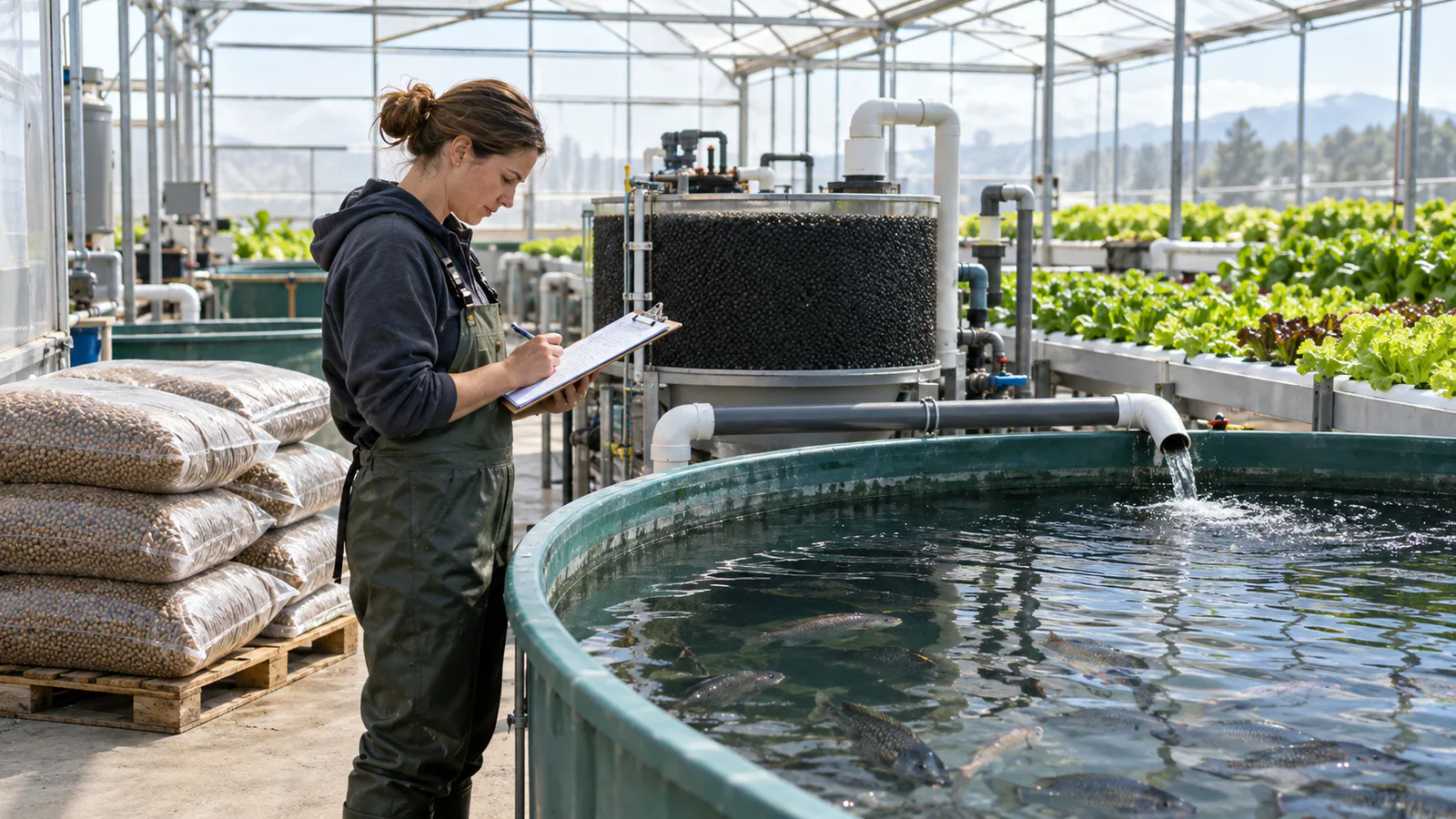
No. Fish raised in an aquaponics system are not automatically organic. Aquaponics describes a production method: fish culture and soilless plant production share a managed water-and-nutrient loop. “Organic” is a regulated marketing and certification claim whose requirements depend on the country and the product being sold. A tank, a biofilter and healthy-looking greens do not by themselves establish that claim.
This distinction matters to growers, distributors, schools and project buyers. A supplier may accurately describe a system as aquaponic, recirculating or low-discharge; it should not represent fish as organic unless the relevant certification route, documentation and label rules have been confirmed. The European Commission makes the distinction directly: aquaponics fish may be sold as organic when the applicable organic-aquaculture legislation is followed, while aquaponically grown plants are not permitted to be marketed as organic under EU soil-based crop rules. Read the Commission’s current organic-production guidance.
The short answer for buyers
Treat “organic fish” as a claim that must be verified, not as a feature supplied by the equipment. Before using the claim, establish:
- the destination market and its current organic rules;
- an eligible certification body and a documented production plan;
- traceable feed, fingerling, health-treatment and water-management records;
- stocking, welfare and handling practices required by that scheme; and
- the exact label wording approved for the product and market.
The United States Department of Agriculture explains that organic is a labeling term for products produced under applicable standards and verified by an accredited certifying agent. Its general pages should not be read as proof that a particular aquaponics fish operation is eligible; the producer must confirm the current programme and claim with a qualified certifier before printing labels or sales materials. See USDA’s explanation of organic standards and certification.
Aquaponics, organic and sustainable are different terms
Aquaponics describes the system
In aquaponics, fish feed enters the fish side; solids removal and biological filtration manage the resulting waste; plants use part of the dissolved nutrient stream; and water is recirculated. That engineering arrangement can support careful resource management, but it does not certify inputs, welfare, traceability or labeling.
Organic describes a verified production and marketing claim
Organic programmes set rules that go beyond whether water is recirculated. Depending on the market, they may address feed origin, permitted inputs, environmental conditions, animal welfare, stocking density, health care, conversion periods, records, inspections and segregation. The EU’s organic-aquaculture overview, for example, identifies species-specific production rules, water-quality requirements, maximum densities, organic feed provisions and limits on treatments. Requirements must be checked against the exact species and destination market; a web article cannot substitute for a certifier’s written determination.
Sustainable is an outcome that must be evidenced
A project can reduce water replacement or recover nutrients and still have meaningful electricity, feed, transport and material inputs. “Sustainable,” “chemical-free,” “natural” and “organic” should not be used interchangeably. Responsible commercial communication names what is measured—such as make-up water, energy, feed conversion, mortality, waste handling and production yield—rather than using a broad label as a shortcut.
Why the fish do not become organic merely by living in aquaponics
Feed is central, but not the whole answer
Fish nutrition is a major part of any organic-aquaculture assessment. The feed itself, ingredient origin, storage, batch traceability and permitted supplements can matter. Changing to a product described informally as “natural” is not the same as meeting a programme’s approved-feed requirements. A buyer should request product specifications, batch documents and confirmation from the intended certifier before changing a production claim.
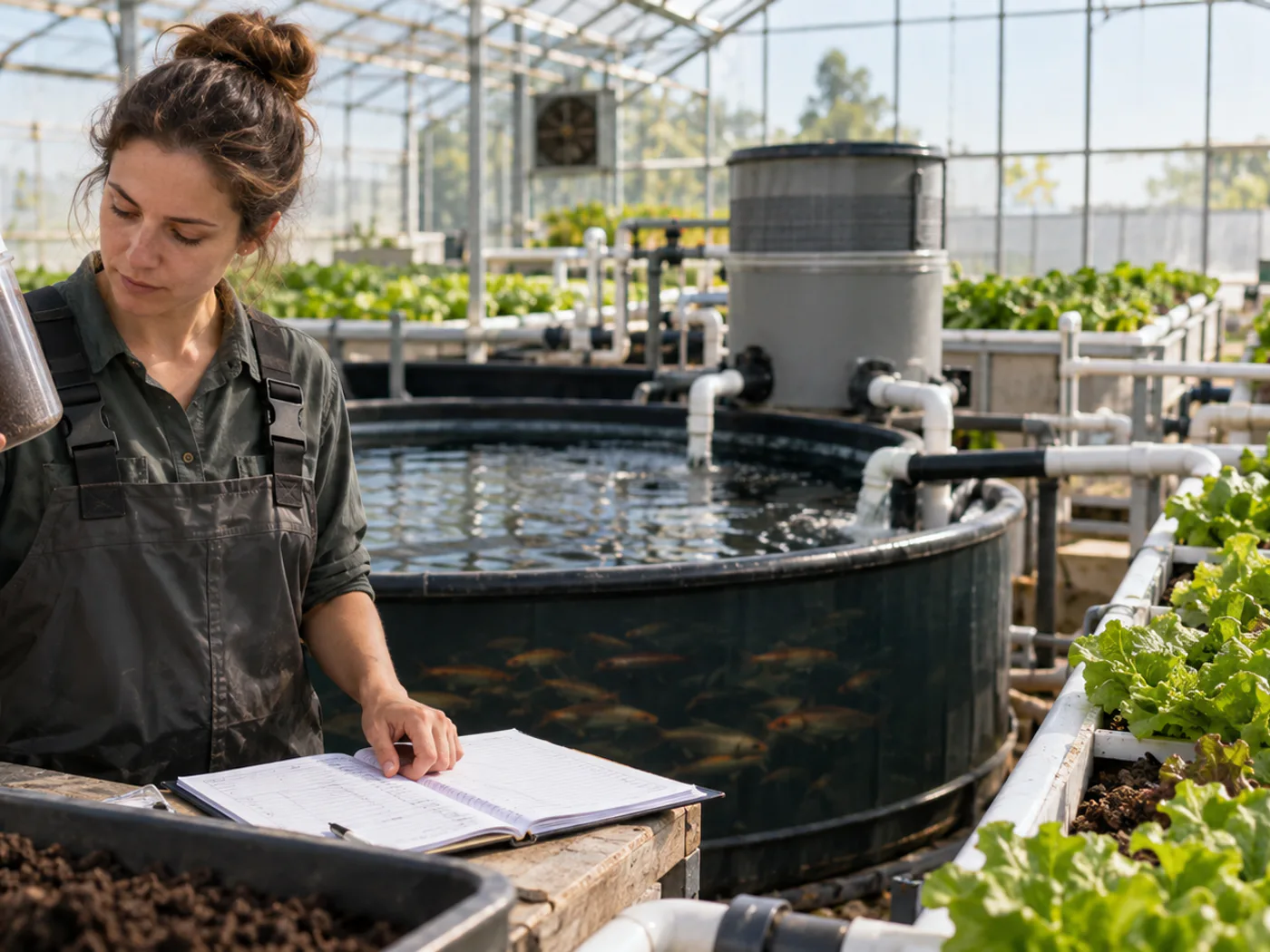
Stocking density and welfare are operational issues
Organic aquaculture requirements can include maximum densities and welfare obligations. A design team therefore cannot decide certification from tank volume alone. Biomass changes as fish grow; oxygen demand, filtration duty and handling frequency change as feed rates rise. The operating plan needs species, final biomass, feed profile, oxygen capacity, emergency response and harvest method—not only a tank-size figure. For a planning framework, see How Many Fish in an Aquaponics System?.
Treatments, cleaning and water inputs require records
Fish health comes first. No organic claim justifies withholding necessary treatment from sick or injured fish. But a treatment or input that is not allowed by a selected standard can affect the product’s eligibility or marketing status. The same practical caution applies to disinfectants, water conditioners, pest-control products, mineral additions and feed additives. Keep product labels, dates, rates, batch numbers, reason for use and the decision-maker in a permanent record.
Traceability follows the fish, not just the water loop
Certification is usually assessed through documented control, not a single test at harvest. Traceability may include hatchery or fingerling records, stocking dates, mortality logs, feed receipts, feeding records, health events, harvest lots, packing and sales records. A project that combines certified and non-certified activity also needs a documented segregation plan so that fish, feed, equipment and paperwork are not confused.
A practical pre-claim checklist
Before a company says “organic fish,” work through the following review with the market’s certification body or a qualified compliance adviser.
1. Define the exact product and market
Identify species, life stage, country of sale, buyer type and intended label wording. “Organic tilapia for an EU retailer” is a usable question; “our aquaponics fish are organic, right?” is not. A processor, restaurant and export distributor may each have additional handling or traceability expectations.
2. Confirm the applicable standard before production changes
Ask the certifier whether aquaculture and the selected species are within scope, what transition or conversion conditions apply, and which records will be reviewed. Do this before marketing, not after a shipment inspection. Rules change and differ by jurisdiction.
3. Map every input and intervention
List feed, supplements, salt, buffers, water conditioners, disease treatments, cleaning products, pest-control materials and packaging-contact materials. Record who approves each input and where proof of status is stored. Do not assume that a product marketed for hydroponics, ponds or gardens is appropriate for fish or certification.
4. Connect the production plan to the system design
During installation preparation, identify tanks, solids removal, biofiltration, aeration, backup power, drains and water-test points on a simple flow drawing. The layout must allow staff to observe fish, clean equipment and take records without bypassing safeguards. During factory testing and shipment inspection, confirm that the supplied equipment list matches that controlled plan.
5. Build a record routine people can actually follow
A record sheet that is too complicated will not be completed during busy harvest days. Use clear daily entries for feed, fish observation, mortality, water checks and corrective actions; use weekly or batch records for inputs and cleaning; assign one accountable person to review missing entries. The operating routine in How to Maintain an Aquaponics System is useful for structuring the water-quality and equipment side of that recordkeeping.
What buyers should request from a system supplier
An aquaponics equipment supplier can support a compliant project, but should not promise certification on behalf of the operator. A credible proposal can provide a process-flow drawing, tank and filtration specifications, materials list, pump and aeration scope, electrical needs, cleaning access and commissioning guidance. It should also state clearly which items are outside its scope: certification, fish-health services, feed selection, farm records, local permits, laboratory testing and label approval.
At a factory acceptance test, practical checks include labelled pipework, valve access, pump operation, aeration distribution, drainage, component count and safe access for filter cleaning. At shipment inspection, photograph the supplied components and record serial numbers where relevant. These steps do not create organic status, but they support traceability and disciplined operation after installation.
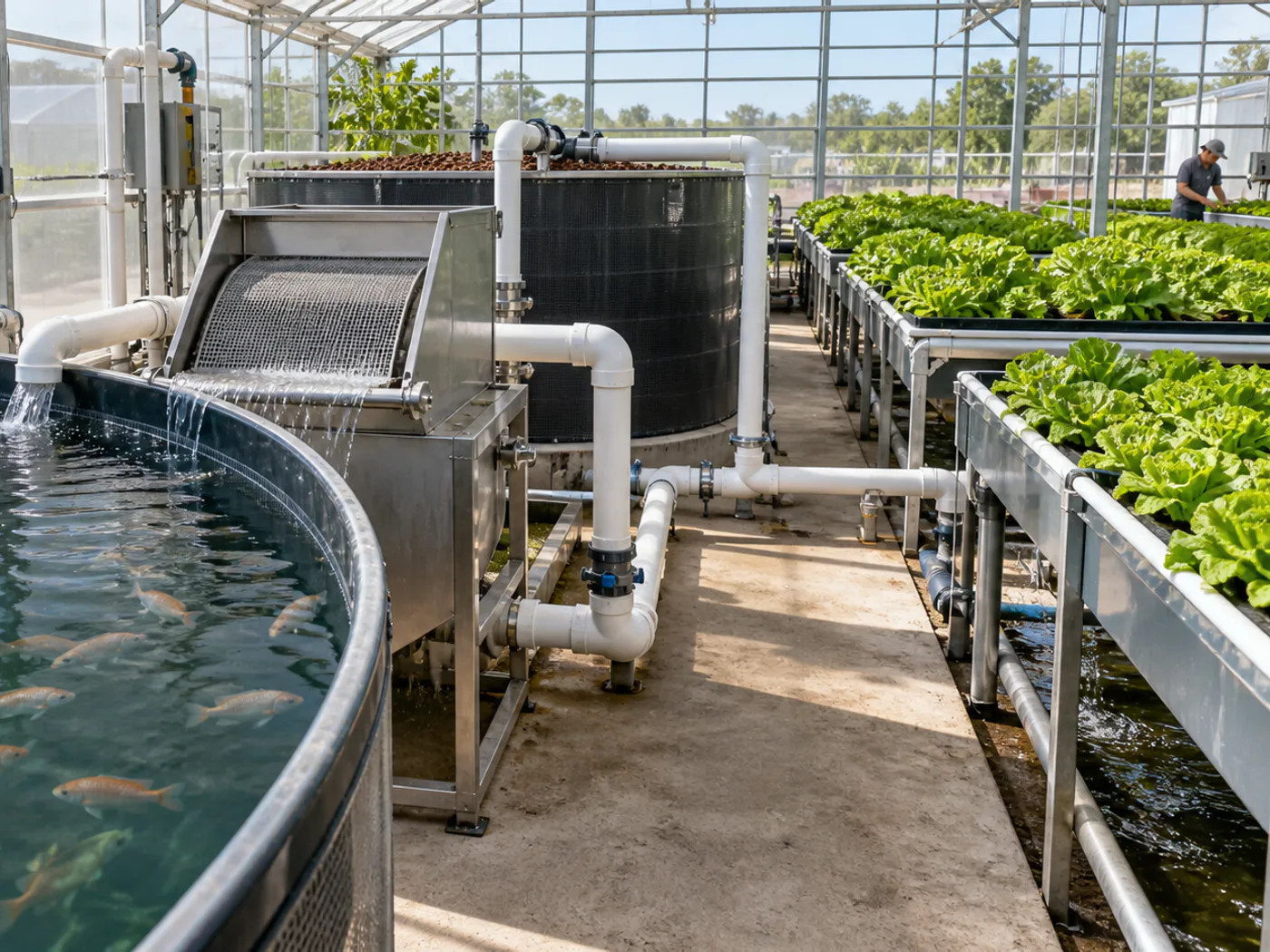
> CTA — Planning an export-ready aquaponics project? Send your fish species, target market, intended production scale and site plan. We can help define the equipment scope, process-flow documentation and installation preparation needed for a practical supplier quotation. Send Your Requirements.
Common claim mistakes to avoid
“The plants clean the water, so the fish are organic”
Plants can use dissolved nutrients, but they do not verify feed, welfare, treatments or chain of custody. This statement confuses a biological function with a certification decision.
“No soil means no chemical risk”
Soilless production still uses water, feed, plumbing, cleaning procedures and sometimes supplemental materials. Risks and allowed inputs need active control, regardless of whether crops grow in soil.
“We will add the certification logo later”
Certification normally depends on the production system and records over time. Waiting until harvest can leave missing evidence or unapproved inputs that cannot be reconstructed.
“Organic” is safer than a precise description
It is safer—and often more useful—to make claims the operation can prove today: “recirculating aquaponics system,” “traceable feed batches,” or “water-quality records maintained.” Add a regulated claim only after documented approval.
FAQ
Can fish from aquaponics be certified organic?
Potentially, where the destination market has an applicable organic-aquaculture route and the producer meets it. The answer depends on jurisdiction, species, feed, welfare, inputs, records and certification. Obtain a written assessment from an approved certifier before making the claim.
Are aquaponics vegetables automatically organic if the fish are organic?
No. Fish and plants can be governed differently. In the EU, for example, aquaponic plants are not eligible for the organic claim under the soil-based crop rule, even though fish may be eligible under organic-aquaculture rules. Check the relevant market rules separately for each product.
Can a system supplier guarantee organic certification?
No responsible equipment supplier should guarantee it. The supplier can document equipment and support process design; certification is decided by the competent certification route and the farm’s complete operating evidence.
Does a water test prove organic status?
No. Water testing is important for fish welfare and system control, but certification is a broader review of approved production practices, inputs, records and traceability.
Conclusion
Aquaponics fish are not organic by default. The defensible approach is to separate the engineering claim from the certification claim: build an observable, maintainable system; document feed, fish health, water management and harvest lots; then follow the exact requirements of the destination market and certifier. This protects buyers, operators and the credibility of the final label.
CTA — Need a system scope that supports disciplined fish production? Contact Us with your species, target capacity, greenhouse dimensions and destination market. We will prepare a clear equipment and installation-preparation discussion without making unsupported certification promises.

