
Introduction
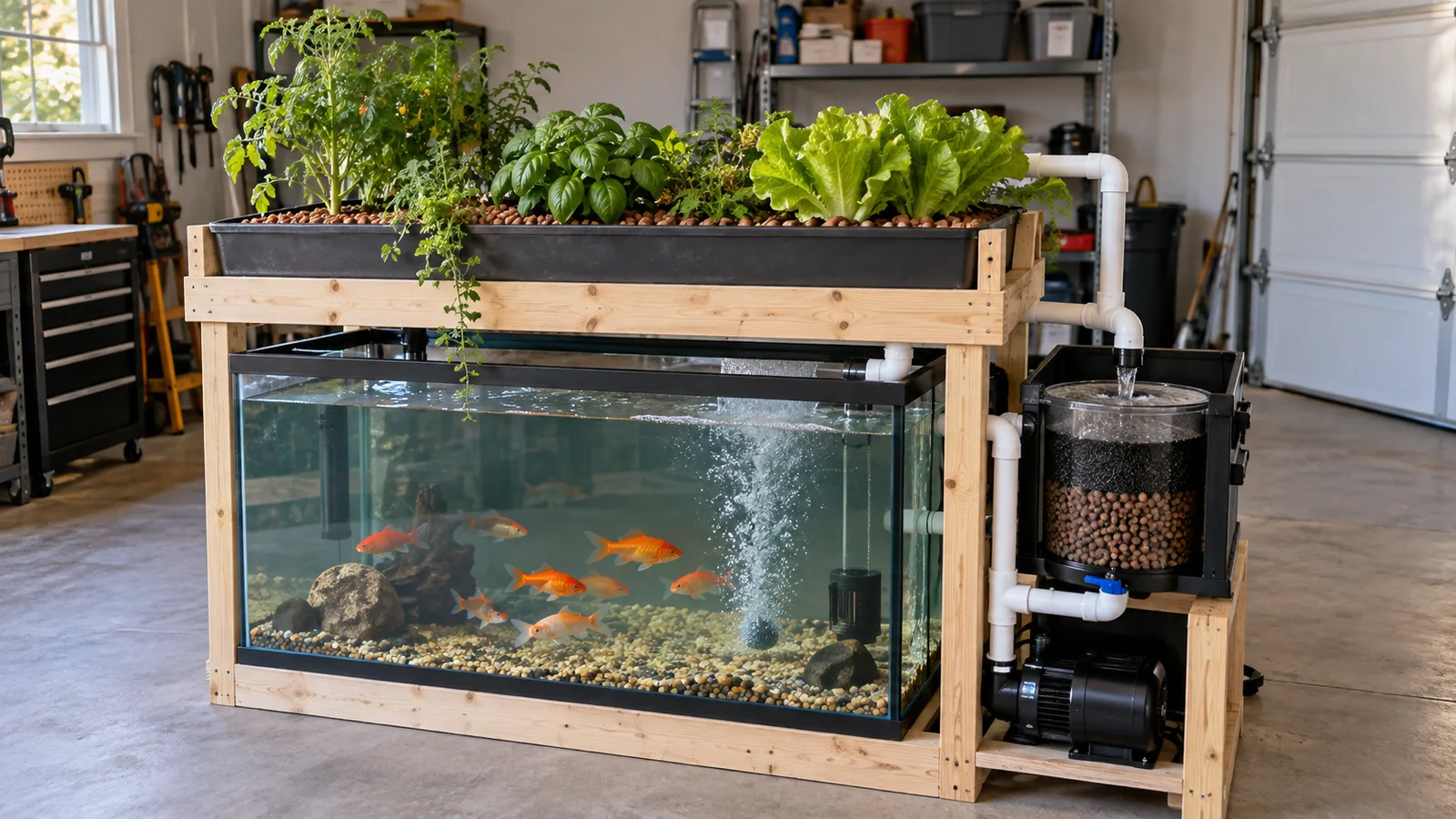
An affordable home aquaponics system is not simply the least expensive box online. It is a system whose purchase cost, missing components, energy demand, replacement parts and maintenance fit the owner’s budget for more than the first week. A low purchase price can become expensive if the tank leaks, the pump cannot be serviced, the indoor light is inadequate or the operator lacks a way to test water.
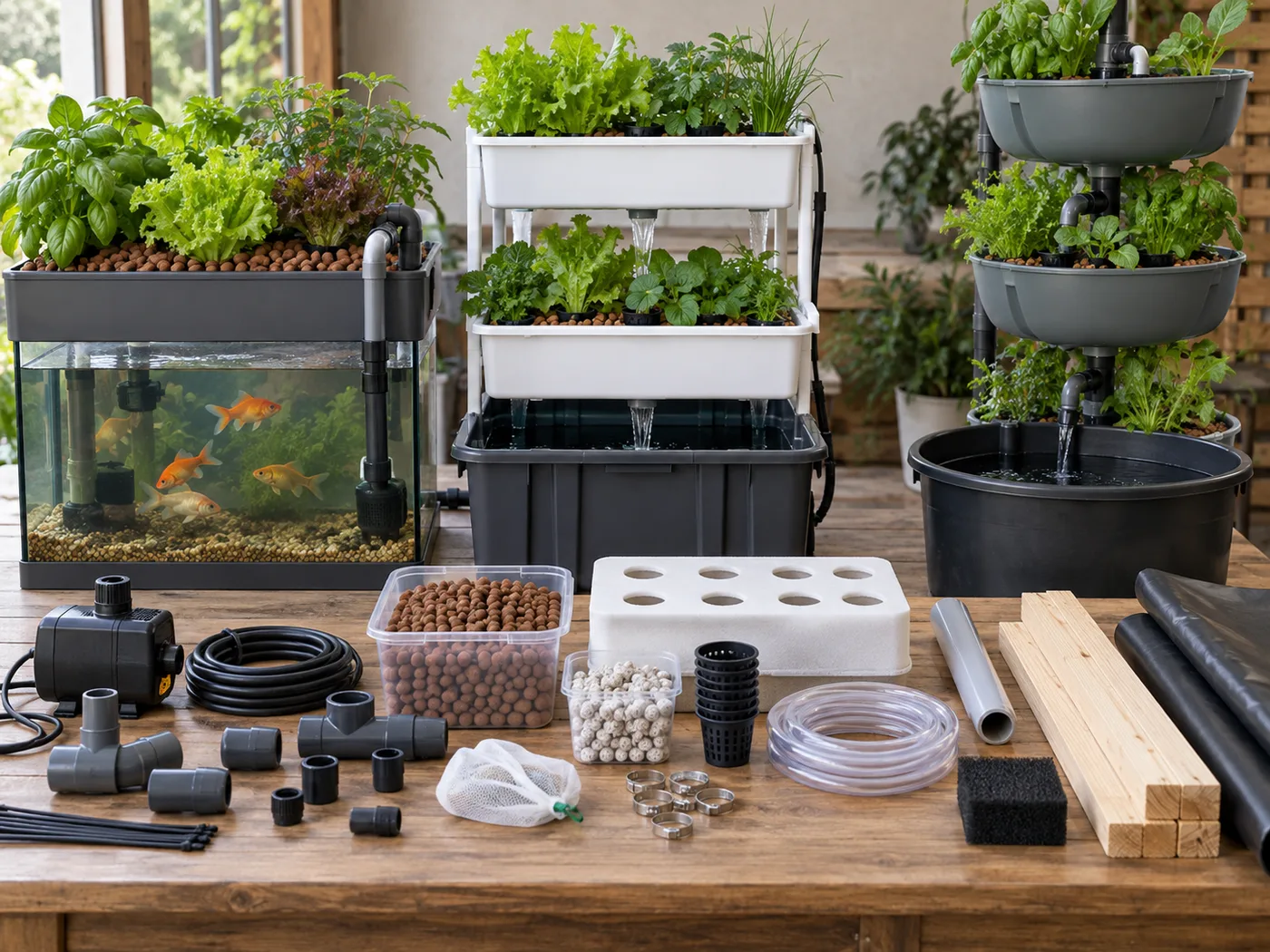
For home use, the honest choice is usually between three paths: a compact ready-made kit, a modular system assembled from compatible components, or a carefully planned DIY build. Each can be sensible. The correct path depends on whether the buyer values convenience, flexibility or hands-on construction more highly.
The short answer
Choose a ready-made kit when compatibility and instructions matter most. Choose modular components when the buyer has a defined space and wants to upgrade individual parts. Choose DIY only when there is time to plan flow, filtration, electrical safety and start-up testing. Do not reduce the budget by omitting aeration, solids handling, water testing or safe electrical protection.
Define “affordable” as total cost of ownership
List the purchase price, freight or local delivery, water treatment, test kit, fish care, feed, seedling material, light, heater or cooling needs, replacement parts and electricity. Then add a modest allowance for a spill tray, plumbing adjustment and a backup air plan proportionate to the fish load. This is more realistic than comparing only the advertised system price.
Small systems are particularly sensitive to climate. Heating water in a cool garage or basement may change the operating budget more than a small difference in the price of a grow bed. Review how to heat aquaponics water before choosing warm-water fish for a cold location.
Path 1: a compact kit
A kit can reduce purchasing mistakes because the tank interface, grow bed, pump and fittings were intended to work together. It is still important to check what is not supplied. Some kits require a separately purchased aquarium; others leave lighting, test equipment and temperature control to the owner. Ask for dimensions, electrical rating, pump access, warranty, replacement-part availability and a list of included media, net pots or grow supports.
Compact kits are often best for herbs, small greens, observation and gradual learning. They should not be marketed to a home buyer as a replacement for a large vegetable garden. A realistic crop expectation keeps fish stocking and plant density conservative.
Path 2: a modular small system
Modular systems suit a utility room, patio or covered outdoor area where the owner wants more water volume or a different grow-bed arrangement. The benefit is serviceability: a pump, air unit, filter or grow bed can be replaced individually. The risk is compatibility. Record pipe diameter, fittings, head height, pump curve, drain capacity and tank dimensions before placing orders.
During installation preparation, lay out the water path from tank to solids removal, biofiltration, grow bed and return. Ensure that a blocked line does not drain the fish tank or overflow the grow area. Our aquaponics design guide covers the value of mapping isolation valves, drains and sample points before purchase.
Path 3: DIY with a disciplined parts list
DIY may lower initial cost when suitable food-grade containers and local parts are available, but it transfers design responsibility to the owner. The University of Maryland Extension guide demonstrates why even a low-cost build needs a planned tank, pump, biofilter, pipework and grow-bed route. Read the material and build guidance.
DIY is a poor economy if fittings must be repeatedly rebuilt, leaks are discovered after stocking fish, or the system cannot be cleaned. Make a build drawing, test the water path without fish, photograph every connection and keep spare common fittings.
Components that should not be removed from the budget
Water testing
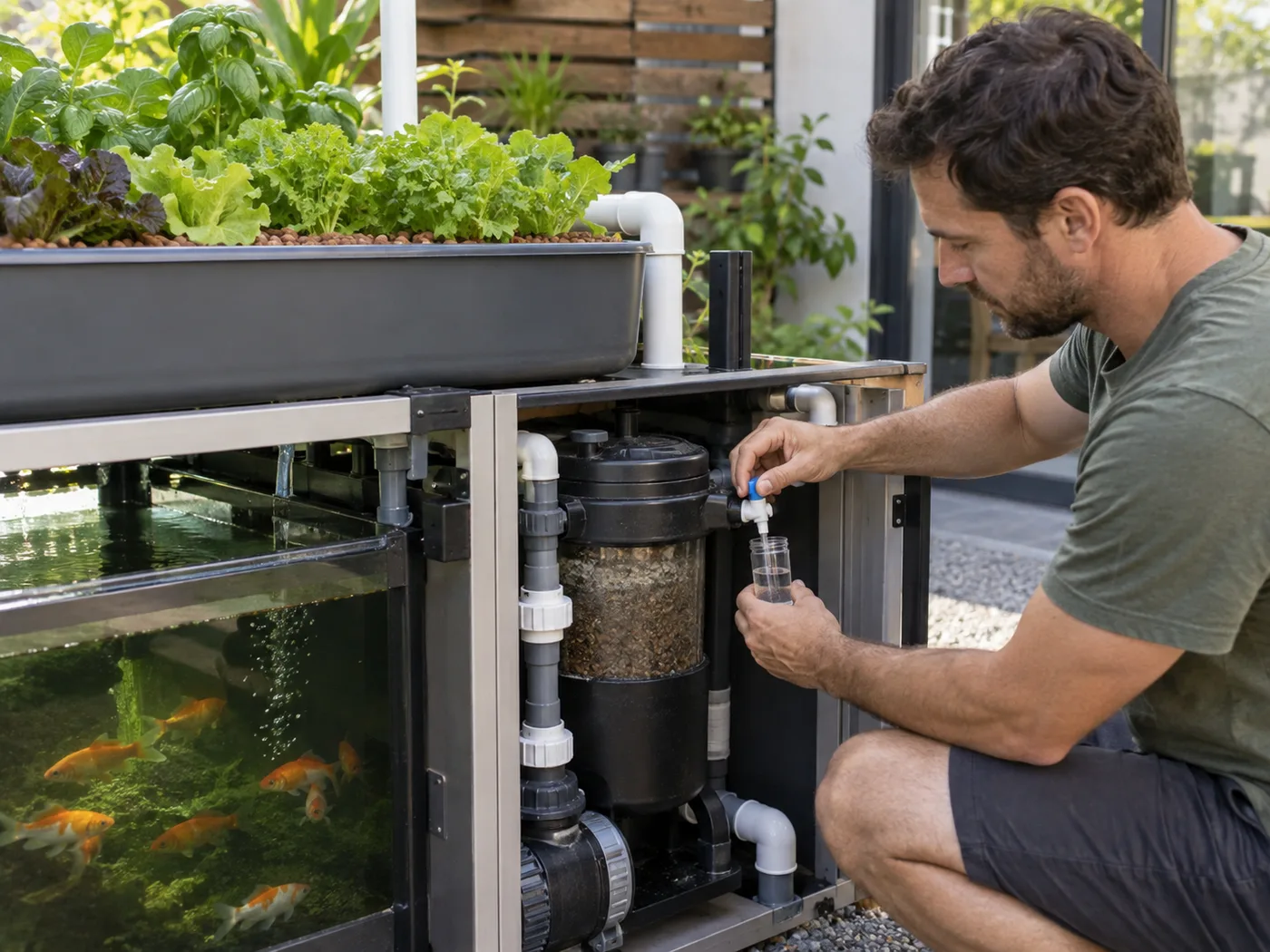
Testing equipment is not an accessory. During cycling and after major changes, the owner needs a way to monitor the parameters in the operating plan. A system cannot be managed by water clarity alone.
Aeration and power safety
Fish require oxygen and a pump or aeration interruption can become urgent. Use protected outlets, drip loops and cable routing that keeps connections out of splash zones. Match backup planning to the tank size, climate and fish load.
Solids and biofiltration access
Even a small system creates solids. Design a route that allows captured material to be removed before it breaks down in narrow plumbing or the grow zone. Read how to maintain an aquaponics system before assuming a compact setup is maintenance-free.
The Southern Regional Aquaculture Center explains that small-scale systems range from hobby units to expanded household production and highlights the biological conversion that supports plant nutrition. Read SRAC’s small-scale aquaponics principles.
A home-buyer decision table
- Choose a kit when the priority is quick, compatible assembly and a compact footprint.
- Choose modular equipment when you need a custom tank or grow-bed size and can verify the water path.
- Choose DIY when you can build, test, document and maintain the system safely.
- Pause the purchase when the site has no protected electrical supply, no spill-management plan, unsuitable seasonal temperature or no person assigned to daily fish observation.
Build a budget without hiding risk
Separate essential, optional and deferred purchases
Essential items are those needed for safe circulation, aeration, filtration, testing and basic plant support. Optional items might include a cosmetic enclosure, automation, upgraded lighting or a larger second grow zone. Deferred items are expansion components that should wait until the first water-quality and maintenance record is stable. This separation helps a household avoid purchasing decorative features before it has funded the parts that protect fish and prevent water damage.
Use conservative figures for consumables. Feed, test reagents, water conditioning, seeds, replacement media and cleaning supplies do not appear in every product listing. Nor do the cost of a heat wave, a cold snap or a replacement pump. The point is not to overstate risk; it is to make the decision with an operating budget rather than a checkout-page number.
Compare space efficiency honestly
A small footprint does not always mean low cost. Indoor systems may use purchased light and need climate control; outdoor systems may need weather protection and seasonal management. Consider the space needed to stand beside the system, lift a lid, remove a filter basket, harvest plants and mop a spill. A container tucked under a stairwell may be inexpensive to buy but expensive to operate if routine tasks become awkward.
Keep expansion reversible
For a first home system, select fittings and connections that can be isolated. Leave a way to add a second grow bed or temporarily remove one without interrupting essential fish circulation. A reversible layout lets the owner learn from actual feed, crop and cleaning records rather than committing all budget to capacity that the first season cannot support.
A practical pre-purchase worksheet
Write down the proposed tank volume, water route, pump rating, air equipment, grow area, crop target, fish plan, source-water treatment and operating owner. Then identify the lowest point where water could collect if a fitting fails, the nearest protected power outlet, the planned clean-out route for solids and the backup response if a pump or air supply stops. If those answers are not clear, postpone purchase and resolve the site plan.
During shipment inspection, count fittings and check pump, air unit, media, tank, grow bed and manuals against the order. Before fish arrive, run a leak and flow test long enough to identify slow drips or unstable drains. These steps cost little compared with correcting a flooded floor or a failed start-up after stocking.
When a more expensive system is actually better value
Higher price can be justified when it buys a documented water path, durable materials, accessible filtration, replaceable parts, clear manuals and realistic support. It is not justified merely by more planting holes or a larger advertised harvest. Compare the life-cycle question: will the owner be able to clean, inspect and source parts for the system after the first warranty period? A modest but serviceable unit often has better value than a low-price system that becomes unusable after one failed component.
Keep affordability tied to safe operation
An affordable system is one that can be operated safely and consistently after it arrives, not simply one with the lowest checkout price. Before comparing packages, list the costs that are unavoidable for the actual location: a protected electrical outlet, water treatment where required, test supplies, fish feed, seedling material, backup aeration, replacement consumables, lighting for a fully indoor space and a practical water-containment solution. These items do not make a system expensive by definition; they make the project honest.
The same principle applies to DIY choices. Reusing a suitable tank or locally available pipe can reduce cost when the condition, material and design are known. Cutting cost by using a container that cannot be cleaned, unsupported plumbing, unknown electrical equipment or a location with no spill protection transfers risk to fish, floors and the operator. A small system has less water buffer, so a minor component failure may need attention quickly.
Build in stages without creating incompatible systems
Many home buyers want to begin small and expand. That can work when the first stage is designed as a stable module rather than a collection of unrelated parts. Keep notes on pipe size, thread standard, pump duty, electrical supply, tank capacity and available filter space. Leave physical room for a future grow module and service access, but do not increase plant sites or fish loading merely because an empty space exists.
After one stable operating cycle, use records to identify the true limit. If water quality and fish behavior are stable but there is not enough crop area, a growing module may be the next investment. If filters require frequent attention, improve solids handling before adding plants. If temperature fluctuates, correct the location or insulation before buying more equipment. This staged approach protects a limited budget because it solves the actual constraint.
Ask for a transparent delivered scope
For a shipped kit, request a packing list before payment and compare it at delivery. Confirm whether the quoted price includes tank, pump, air equipment, grow bed, media or net pots, valves, tubing, supports, instructions and warranty. Ask what must be purchased locally and who handles damage claims. During shipment inspection, photograph cartons, check tank surfaces and fittings, and ensure electrical items match the intended local supply.
Transparent scope is especially valuable for first-time owners. It reduces the chance that a low initial price becomes a delayed project because essential fittings, tools or safety equipment were omitted. The best low-cost choice is the one whose required work, maintenance and exclusions are clearly explained.
FAQ
Is DIY always cheaper than a kit?
No. It can reduce material cost, but tools, fittings, design changes, freight and time can offset the savings. Compare a complete parts list, not just the tank price.
What is the cheapest safe way to begin?
Start with a modest, observable system sized to the available space and commit to testing and cycling before fish loading. Avoid cutting cost by removing aeration, filtration or electrical protection.
Can a small home system feed a family?
It can produce learning value and a useful quantity of herbs or greens, but small systems should not be purchased with unrealistic production expectations. Crop output follows light, water quality, plant area, fish feed and operator care.
Conclusion
Affordability means a system can be purchased, started and maintained without hidden compromises to fish welfare or safety. Compare kit, modular and DIY paths with the same complete-cost checklist. The best first home system is the one you can inspect, test, clean and operate consistently.
CTA — Want a budget-conscious equipment checklist? Send Your Requirements with your space, climate, target crops, fish plan and preferred budget range.

