
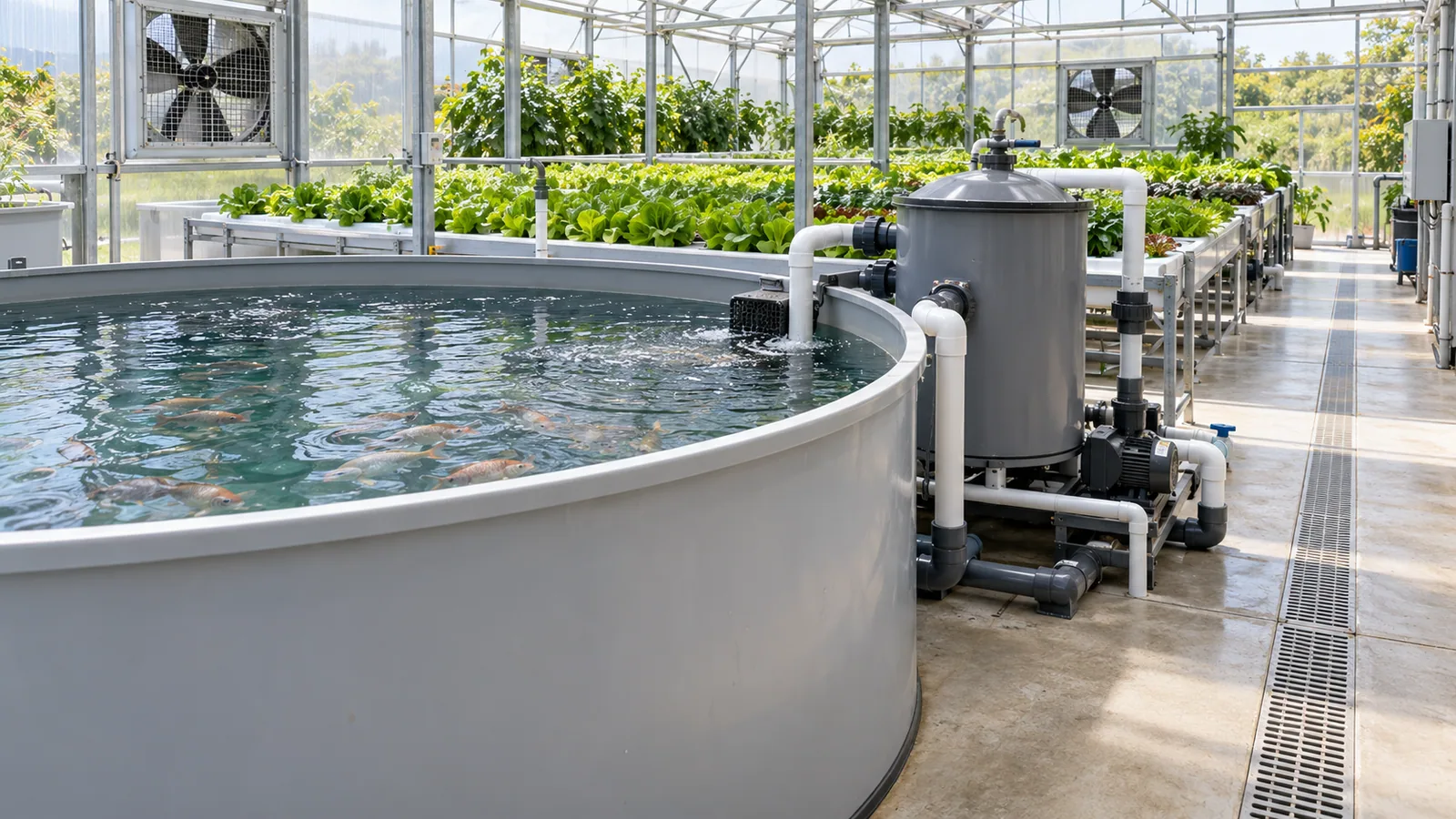
A healthy, well-managed aquaponics system should not produce a strong offensive smell. Operators may notice a mild earthy, plant, feed or clean-water odor near tanks and grow areas, but persistent rotten-egg, sewage-like, sour, rancid or dead-animal odors are warning signs. They often point to trapped solids, uneaten feed, a dead fish, low-oxygen zones, clogged filters, stagnant pipework, unhealthy roots, an unclean drain or inadequate room ventilation.
Odor should be investigated rather than covered with fragrance or disinfectant. Aquaponics connects fish, plants, bacteria and water treatment; a chemical used to mask a smell may harm fish, nitrifying organisms or food crops. The practical response is to locate the source, check life-support equipment and water conditions, remove accumulated organic material safely, and correct the operating cause.
What should a normal aquaponics system smell like?
Normal odor is usually faint and local. A fish-feed container may smell like feed when opened. A mature media bed may have a mild earthy smell. Plant roots and harvested vegetation have their own scent. These should not dominate the room or remain on clothing after a short visit.
An odor becomes a concern when it is new, strong, spreading, associated with cloudy water, reduced flow, slimy accumulation, abnormal fish behavior, dying roots or increased mortality. Record when and where it occurs. Smell near a filter during cleaning may have a different cause from an odor present continuously across an indoor facility.
Do not diagnose solely by smell. Use it as an observation that triggers inspection and appropriate water testing. The Alabama Cooperative Extension tabletop aquaponics guide identifies mechanical filtration, biological filtration, circulation, temperature control and aeration as core system functions; those are the first functions to verify when an odor appears, even though a commercial installation operates at a larger scale.
Common causes of unpleasant aquaponics odors
Accumulated fish waste and uneaten feed
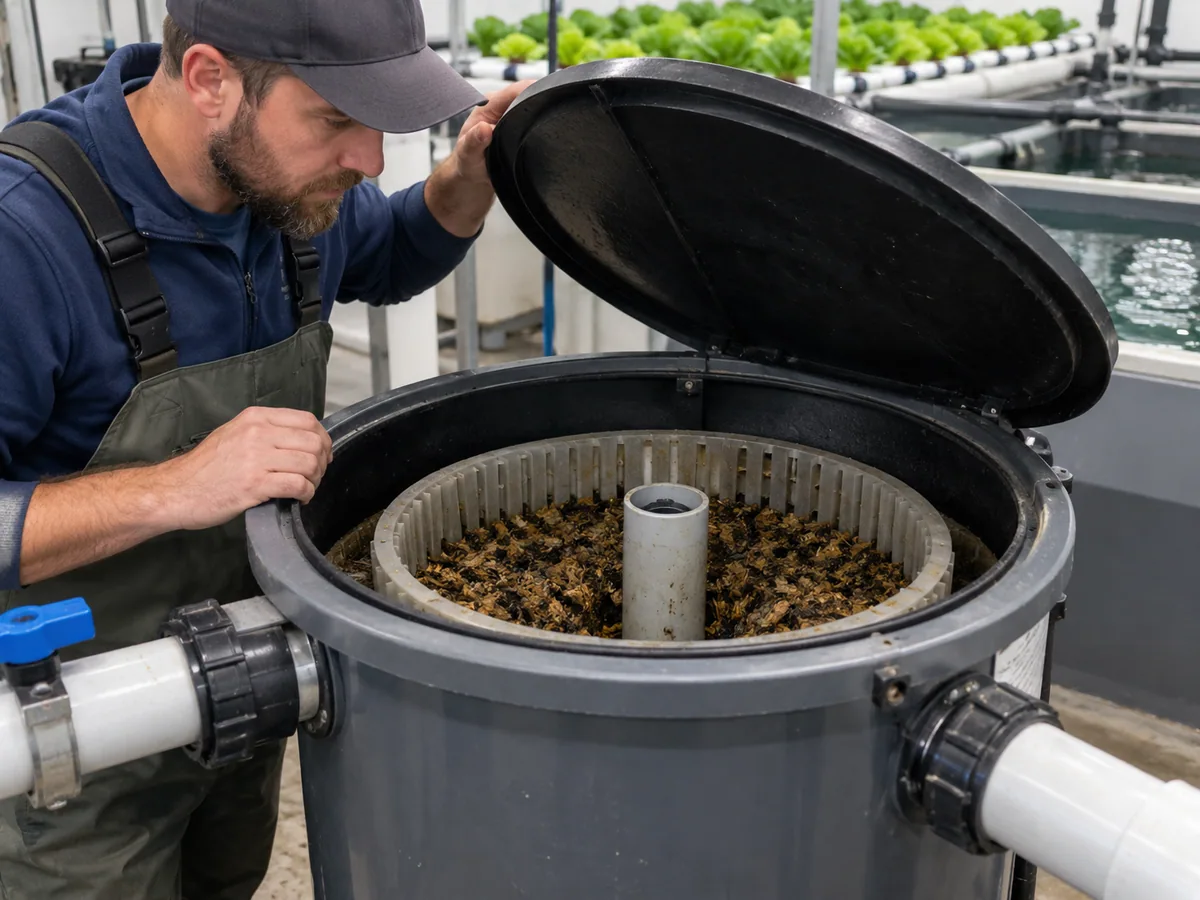
Feed and fish waste consume oxygen as they decompose. If mechanical filtration is undersized, bypassed or cleaned too infrequently, solids can collect in tank corners, pipe low points, sumps, media beds or the bottom of a filter. In oxygen-poor deposits, anaerobic processes can produce strong odors.
Check the recent feed record, fish biomass, filter cleaning interval and flow pattern. A system that handled the original fish load may become overloaded as fish grow. Do not respond by cleaning every biological surface at once; remove trapped solids from the appropriate mechanical components while preserving the biofilter’s function.
Dead fish or other organic material
A fish can become trapped behind pipework, inside a screened area or under equipment where it is not immediately visible. Dead leaves, roots, insects or small animals can also decompose in drains, sumps or gutters. Inspect inaccessible zones safely. Use tank covers and guards that prevent escape or entry while remaining removable for inspection.
If fish mortality is involved, document the event and check water quality and equipment status. Our fish-disease signs response guide explains why observation, records and professional escalation should come before improvised treatment.
Low dissolved oxygen and anaerobic zones
Low flow, a failed air pump, clogged diffuser, overloaded submerged media or compressed organic solids can create oxygen-poor areas. A tank may still show bubbles while a sump, filter base or root mat has poor exchange. Inspect the complete water path and compare outlet conditions with the normal record.
An FAO technical report on integrated aquaculture and hydroponic production describes how retained filter solids can create anaerobic zones and why the cleaning interval changes their biological effect. An odor does not replace dissolved-oxygen measurement, but it can justify checking aeration, flow, temperature and organic loading promptly.
Unhealthy plant roots
Healthy roots vary in colour by crop, water conditions and age, so colour alone is not a diagnosis. A sudden combination of sliminess, tissue breakdown, restricted flow and unpleasant odor deserves investigation. Check water temperature, oxygen, channel flow, upstream solids removal, planting density and dead plant material.
Remove clearly decomposing plant material using the site’s crop and sanitation procedure. Avoid washing nursery disinfectants or plant-protection products into the fish loop. If the problem is isolated to one channel, compare that channel with a healthy one before changing the whole system.
Dirty drains, floors and standing water
The aquaponics loop may be healthy while the room smells because filter-cleaning water, spilled feed, wet cardboard, plant waste or drain traps are neglected. Inspect floor drains, waste containers, harvest areas and the route used for captured solids. Separate production-water diagnosis from housekeeping diagnosis.
Installation preparation should define floor falls, drain locations, cleaning-water routes and permitted disposal. A drain behind a tank that cannot be reached will eventually become an operating problem.
Humidity and inadequate ventilation
Indoor systems release moisture through open water, splashing and plant transpiration. High humidity can support condensation and microbial growth on building surfaces even when tank water is acceptable. Check ventilation, dehumidification, insulation, cold surfaces and hidden condensation. Building moisture control is a different task from adding tank aeration.
A step-by-step odor investigation
Step 1: Protect fish life support
Confirm circulation, aeration, tank water level and equipment power. Observe fish without unnecessary handling. If fish show distress, follow the emergency response and seek appropriate technical or fish-health support.
Step 2: Locate the odor
Walk a consistent route: fish tank, mechanical filter, biofilter, sump, pump, grow zone, return, floor drains, feed storage and waste area. Note whether the odor is strongest before or after a component. Avoid leaning over unsafe openings or entering confined spaces.
Step 3: Review recent changes
Look for increased feeding, larger fish biomass, new fish, plant removal, filter cleaning, power interruption, high temperature, reduced flow, additives, construction or a changed drain routine. A timeline often reveals more than an isolated water reading.
Step 4: Test and inspect
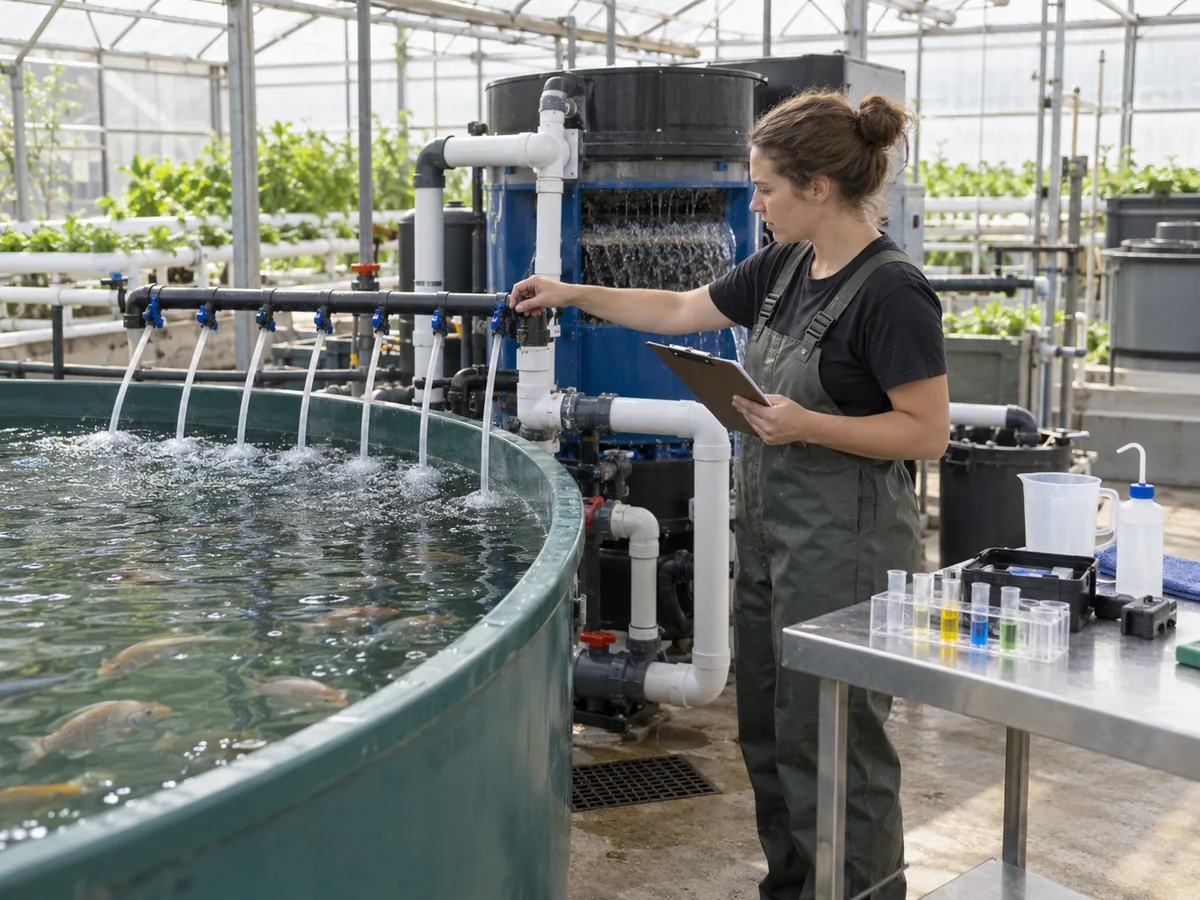
Use maintained methods to check relevant water parameters, including temperature, pH, ammonia/nitrite and dissolved oxygen where available. Inspect solids devices, air distribution, pump intake, return flow and root zones. Compare results with the system’s normal trend and species-specific guidance.
Step 5: Correct the cause gradually
Remove dead material, restore flow or aeration, clean the appropriate mechanical component and reduce feeding when technically appropriate. Avoid simultaneous aggressive cleaning of the entire system. Record what was done and confirm that odor, water readings, flow and fish behavior improve.
> Need a system layout with accessible filters, drains and service aisles? Send Your Requirements with the tank arrangement, grow method, indoor/outdoor location and planned fish load.
How often should filters be cleaned to prevent odor?
There is no universal calendar. Cleaning frequency depends on feed input, fish size, solids-capture design, flow, temperature and the equipment’s capacity. Inspect a mechanical filter based on measurable condition: captured-solids volume, water level difference, pressure/head loss, flow reduction, visible bypass and odor.
A filter requiring very frequent cleaning may be appropriately capturing a high load, or it may be undersized. A filter cleaned rarely may be oversized, lightly loaded or allowing solids to bypass. Use records to distinguish these cases. Our screen-filter selection guide provides placement and cleaning considerations for that specific component.
Biofilters should not be sterilized because they look stained or earthy. Their job depends on living microbial populations. Follow the equipment design and use a cleaning method that protects biological function. If the media is clogged with solids, investigate upstream mechanical filtration and loading rather than repeatedly stripping the biofilter.
Odor control for indoor, restaurant and public installations
Public-facing systems require more conservative housekeeping and access planning. Keep feed in sealed, dry storage; provide covered waste containers; route filter-cleaning water away from customer areas; and make every filter accessible without carrying waste through a dining or teaching space. Separate food preparation areas from aquaculture maintenance according to local requirements.
Ventilation should be assessed as part of the building system. Moist air and odors can migrate through doors, ceiling spaces or shared HVAC routes. A product supplier can define tank and filter equipment requirements, but local mechanical, drainage and food-safety professionals may need to address the building interfaces.
During factory testing, request evidence that filters, drains and covers fit correctly and can be opened for service. During shipment inspection, confirm covers, drain fittings, seals and waste-handling accessories. During site commissioning, run a cleaning cycle and verify that captured solids can leave the production area without spills.
Turn odor control into measurable acceptance criteria
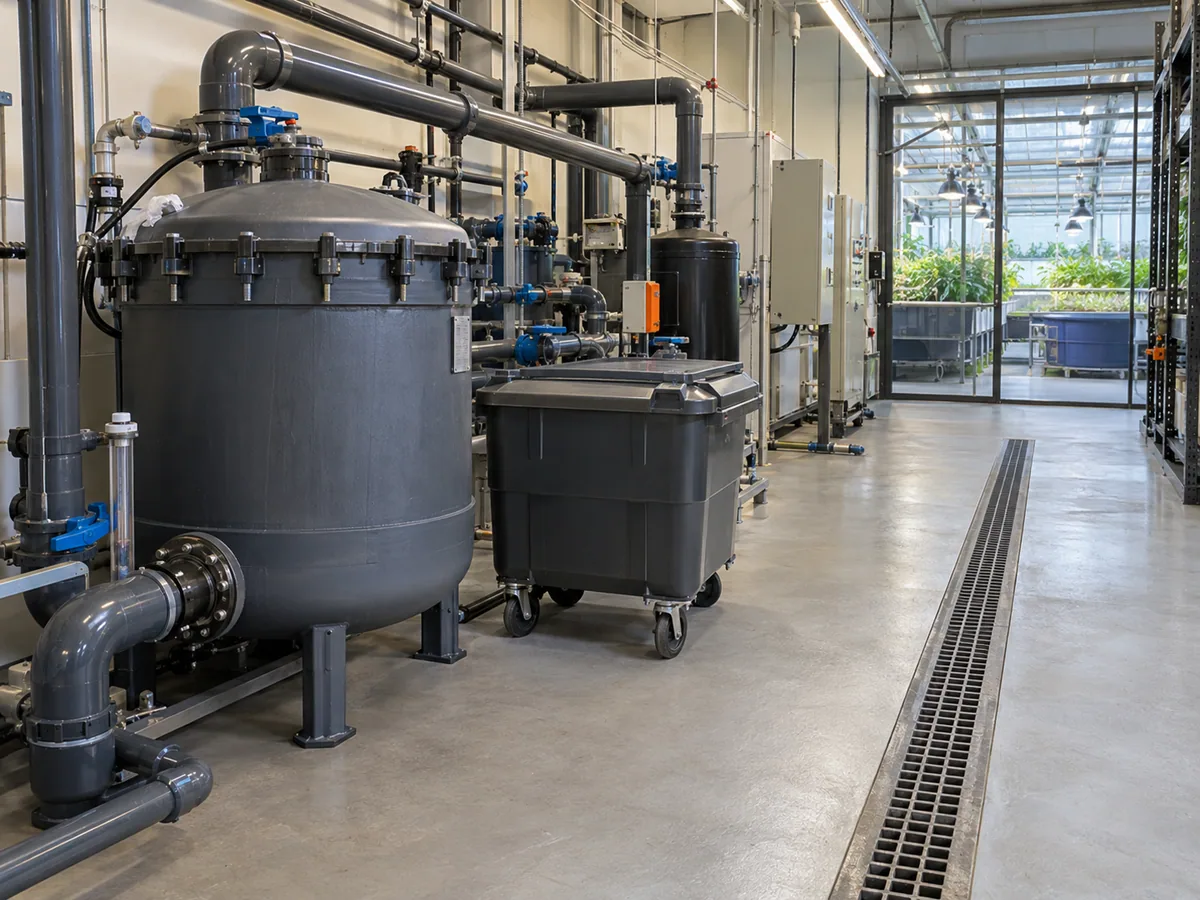
“No smell” is too subjective for a supply contract or handover checklist. A better approach is to define the physical and operating conditions that prevent odor. The equipment scope can require accessible solids capture, drainable low points, removable covers, appropriate air distribution, a contained waste route and clearance to inspect every filter. The operating scope can identify feed records, filter-cleaning indicators, mortality checks and housekeeping responsibilities.
At commissioning, observe the system through a normal feeding and filtration cycle. Confirm that water reaches the intended tank outlets, no stagnant bypasses are visible, air reaches each specified zone, and the mechanical filter can be isolated and cleaned without overflowing untreated waste into the room. Follow the cleaning water through the drain route and check whether uncovered solids remain in warm service areas.
For indoor projects, record room temperature, relative humidity and ventilation condition during occupied and unoccupied periods. An odor that appears only overnight may point to reduced ventilation rather than a new aquatic problem; a smell that follows every filter cleaning may indicate an inadequate waste container or drain trap. These observations help separate building-interface issues from water-loop issues.
The handover should also identify who investigates an odor report, which parameters they test, where cleaning tools and personal protective equipment are stored, and how maintenance is documented. This is especially important in schools, restaurants and community facilities, where the daily observer may not be the trained system operator. Clear ownership prevents a small accumulation from becoming a persistent public complaint.
Use an odor map instead of guessing
When a smell is intermittent, mark the system layout with observation points and check them at the same times for several days. Useful points include the tank outlet, solids filter, biofilter, sump, plant return, floor drain, feed store and waste container. Record odor character and intensity in simple terms, together with feed, filter cleaning, room ventilation, temperature and any pump or air-pump event. The aim is not laboratory odor analysis; it is a repeatable comparison that shows where and when the problem begins.
Location changes can reveal the pathway. If the smell is strongest at the mechanical filter and improves immediately after captured solids are removed, cleaning frequency or filter capacity deserves review. If it is strongest at a distant grow channel while the tank area remains normal, inspect flow, roots and low points in that branch. A room-wide odor that worsens when doors close may involve ventilation or drains as well as the water loop.
Avoid asking several people to smell directly over open filters or chemical containers. Use safe access and do not treat odor as proof of a particular gas. A rotten-egg-like observation can be associated with oxygen-poor decomposition, but the response should still include ventilation, equipment inspection and appropriate measurements rather than a close-range sniff test.
After corrective work, repeat the same route under comparable operating conditions. Closing an incident requires more than a temporarily masked smell: flow should be restored, accumulated material removed, relevant water readings stable, fish and roots normal, and the source prevented from recurring. The resulting odor map can become part of the maintenance checklist and operator training.
What not to use to hide aquaponics odor
Do not add fragrances, household disinfectants, drain cleaners, algaecides or unverified microbial products to the fish loop. Do not spray chemicals near open tanks without evaluating aquatic and crop exposure. An “aquarium-safe” marketing phrase may not address food crops, biological filters or the actual product application.
If cleaning products are needed for floors or non-water-contact surfaces, define product, dilution, application, rinse and spill control under the site sanitation plan. Store chemicals away from feed, seeds and water-treatment equipment.
Buyer checklist for a low-odor system
- Mechanical solids removal matched to feed load
- Accessible filter cleaning and waste route
- Reliable tank and biofilter aeration
- Pipework without inaccessible stagnant traps
- Removable tank and sump covers
- Reachable floor drains and spill control
- Sealed feed and waste storage
- Indoor ventilation and condensation plan
- Operating logs and emergency contacts
- Training for filter cleaning and mortality response
FAQ
Does fish waste always make aquaponics smell?
No. In a correctly sized and maintained system, waste is captured and biologically processed without producing strong room-wide odor. Persistent smell suggests that material is accumulating or decomposing in an unsuitable location.
Is an earthy smell normal?
A faint earthy or plant-like smell can be normal near media and roots. A sudden strong, sour, rotten or sulfur-like smell should trigger inspection.
Can I use deodorizer near the fish tank?
Avoid fragrances and aerosol chemicals near open water unless their safety and application have been professionally verified. Remove the source of the odor rather than masking it.
Why does my system smell only after filter cleaning?
Captured solids can smell when disturbed. Review cleaning frequency, waste containment, drain route and ventilation. A brief local odor during controlled waste removal differs from a persistent system odor.
Conclusion
Aquaponics should not smell strongly when solids removal, aeration, flow, drainage and housekeeping are working together. Treat odor as useful evidence: locate it, verify life support, review changes, inspect the water path and remove the cause without damaging the biofilter. Accessible equipment and clear cleaning routes are easier to design before installation than to retrofit after customers or students occupy the space.
Planning an indoor or public-facing aquaponics system? Contact Us to discuss filter access, drain routing, covers and operator handover.

