
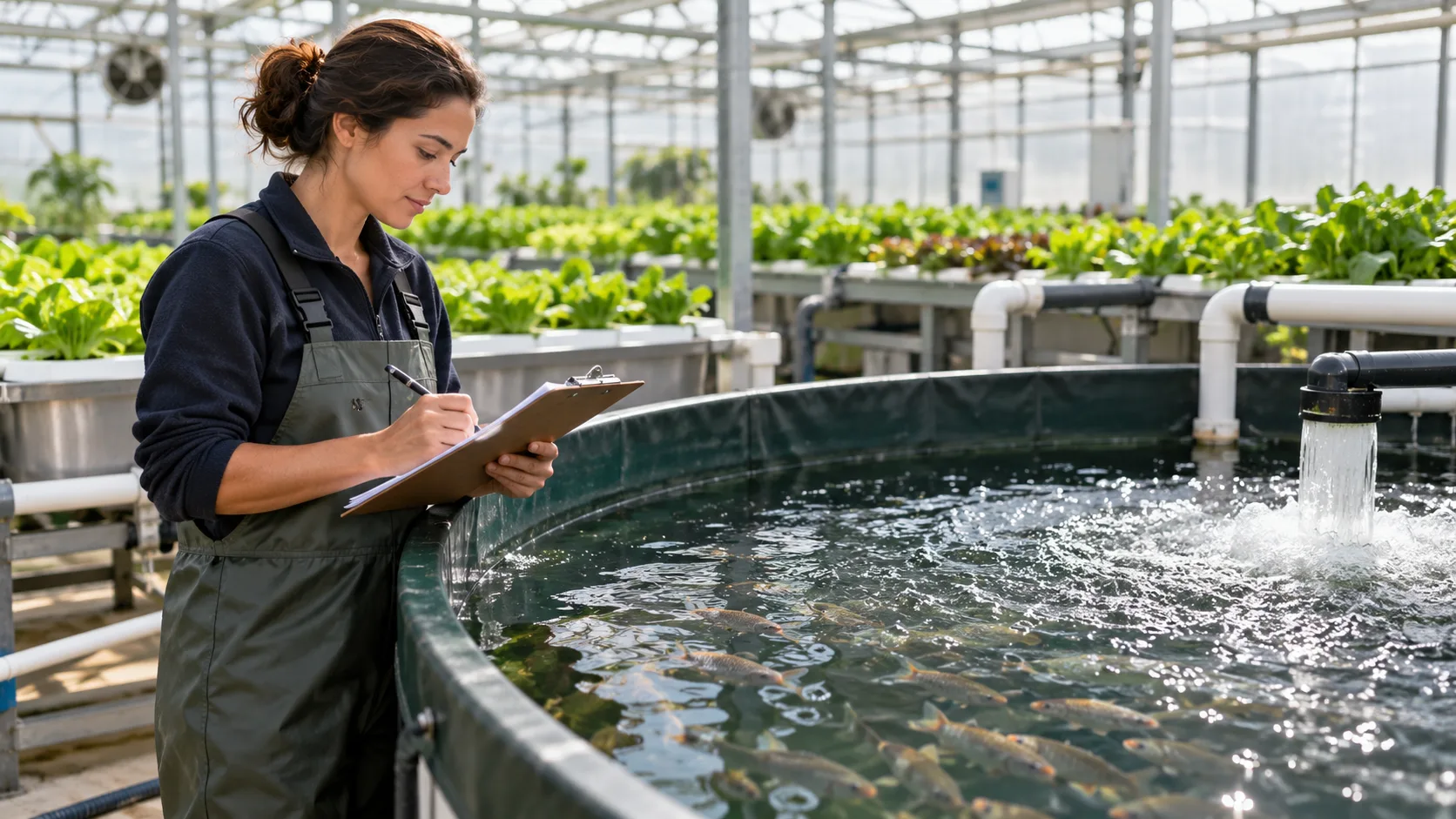
When fish show unusual behaviour, visible lesions, loss of appetite, abnormal swimming, surface gathering or unexplained mortality, the reliable first response is not an online medication recipe. It is to protect life support, document what changed, check water conditions, reduce avoidable stress, isolate only when the system design and professional advice support it, and seek fish-health diagnosis where signs persist, spread or involve food fish. In aquaponics, an incorrect treatment can affect fish, biofilter organisms, plants, worker safety and—where fish enter the food chain—food-residue compliance.
This article is a decision and escalation guide, not a diagnosis or dosing guide. Similar signs can arise from poor water quality, low oxygen, handling stress, parasites, bacteria, fungi, viral disease, feed problems or equipment faults. The FDA’s aquaculture drug guidance notes that lawful fish-drug use depends on the fish species, condition and label directions, and that some situations require veterinary involvement.
Start by protecting the whole system
Before trying to name a disease, check whether the fish have continuous circulation and aeration, whether the tank water level is normal, and whether a pump, blower, filter or heater has changed state. Check temperature and the system’s normal water-quality records using maintained test methods. Look for an obstruction, sudden feeding change, dead fish, unusual odour, recent delivery, cleaning activity, source-water change or power event.
Do not rapidly change multiple variables. An improvised large water change, unfamiliar additive, drastic temperature change or excessive handling can worsen stress and erase the evidence a veterinarian or laboratory needs. If oxygen delivery or water circulation has failed, restore safe operation according to the site emergency plan first. Our fish-tank aeration guide explains why backup air, alarm ownership and documented checks should be in place before fish load rises.
Record signs before taking action
Create a dated observation record. Include fish species and approximate size, tank identifier, number affected, number dead, onset time, appetite, swimming pattern, skin/gill observations without unnecessary handling, water temperature, recent test readings, feeding amount, new fish or plant arrivals, maintenance, chemical exposure and photographs or short video. Compare the affected tank with an apparently normal tank only if the systems are truly comparable.
Useful observations are specific: “four fish near the air outlet at 07:10 after a power interruption” is more actionable than “fish look ill.” Do not diagnose from one photograph or assume that a named appearance proves a pathogen. A white spot, frayed fin or flashing behaviour can have several causes.
Separate diagnosis from treatment
Diagnosis determines whether any treatment is appropriate. For food fish, a product seen in a hobby forum may be unlawful, unsuitable for the species or condition, incompatible with recirculating equipment, or create residue risk. FDA explains that approved products must be used according to their label; its approved aquaculture-drug resource should be read with the current product label and veterinary advice, not used as a menu for self-prescribing.
The choice is also not simply “treat” or “do nothing.” A fish-health professional may recommend supportive correction of water conditions, targeted diagnostic sampling, quarantine, observation, a specific lawful intervention, humane removal of a severely affected animal, or a temporary production pause. The correct decision depends on species, diagnostic evidence, local rules and whether fish are intended for consumption.
> Need a system layout that supports safe fish observation and isolation planning? Send Your Requirements with your tank arrangement, species, production purpose and local site constraints.
Quarantine and isolation: plan them before an incident
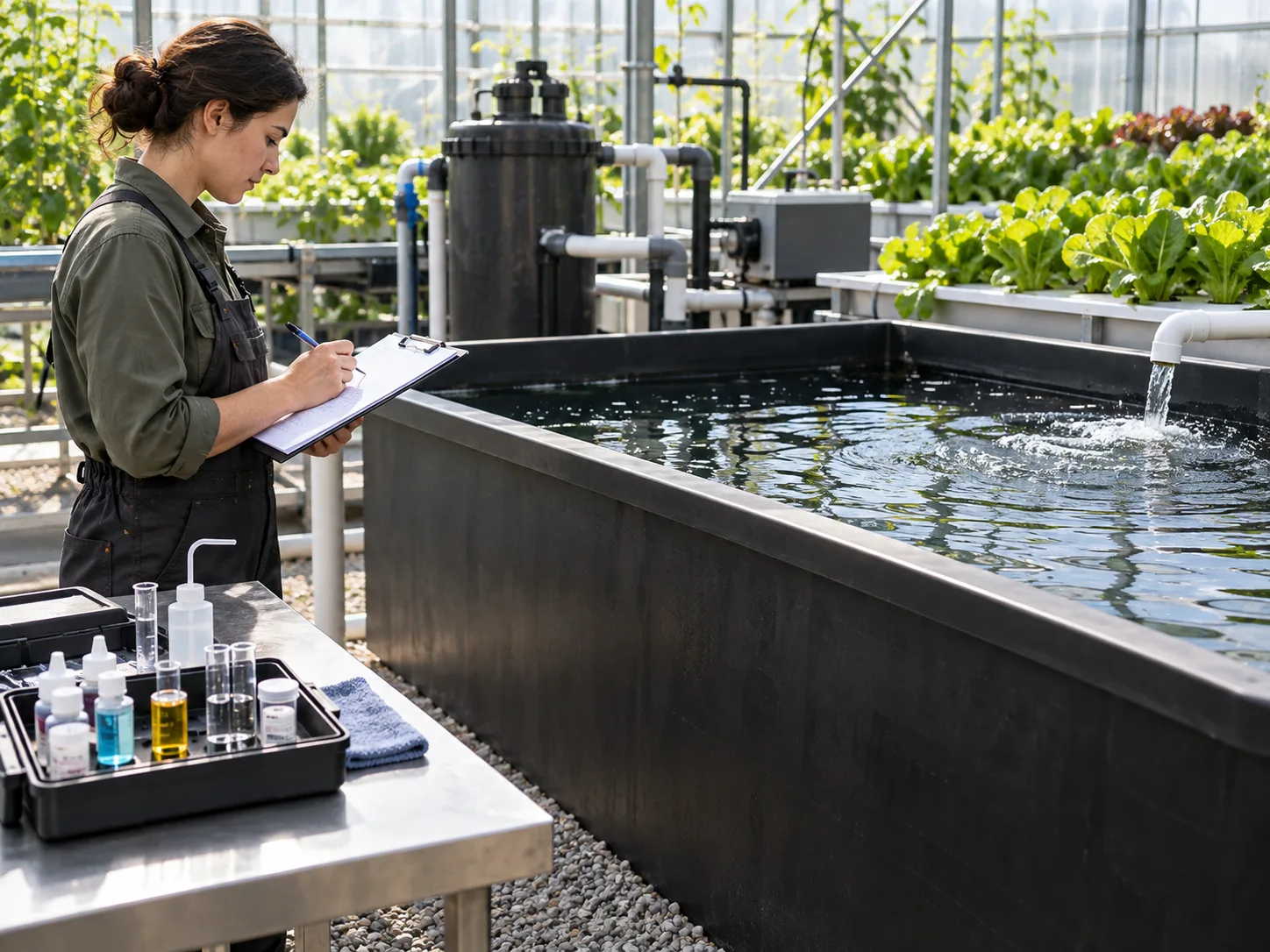
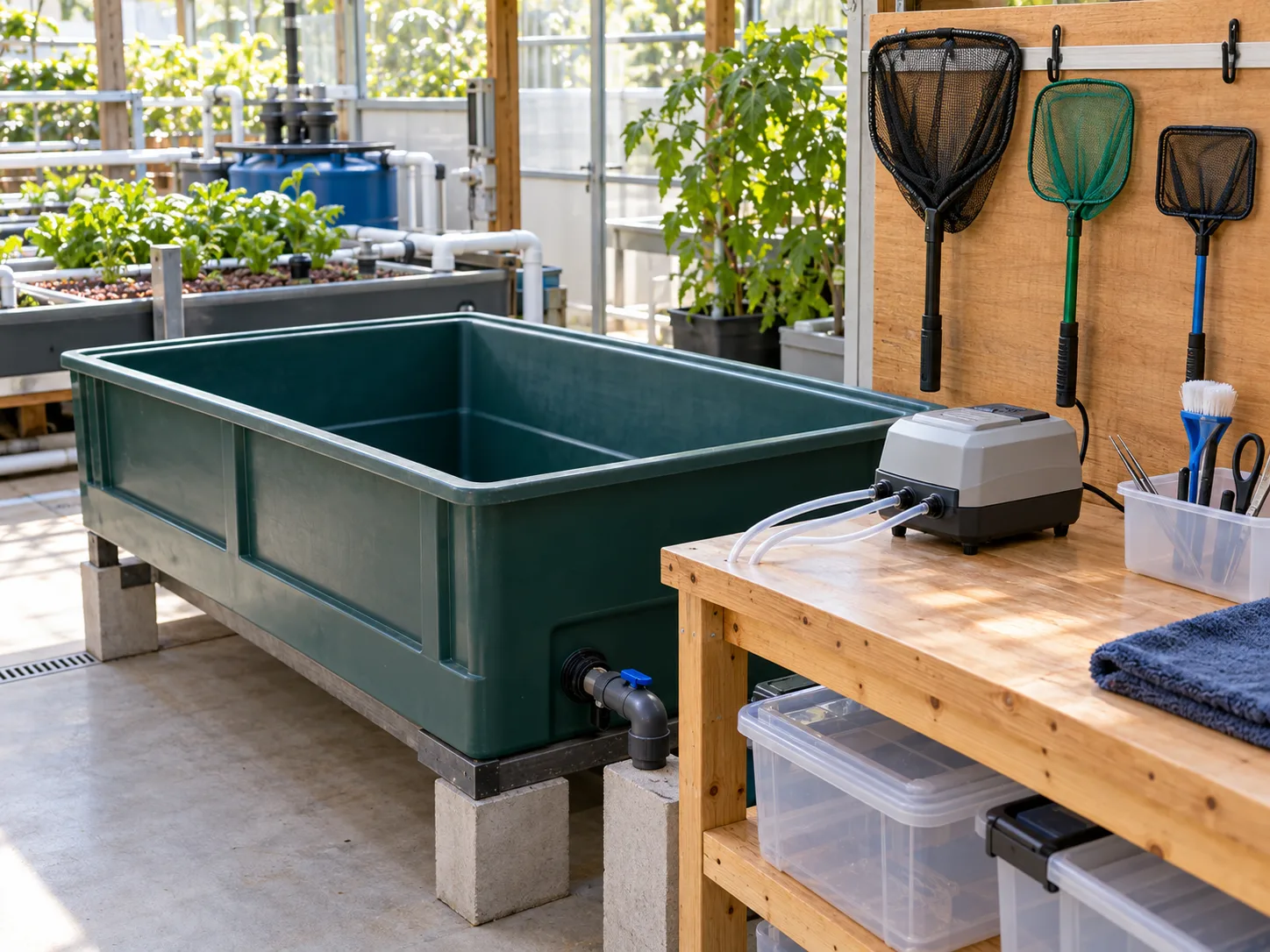
Quarantine is a biosecurity tool, not a universal emergency action. Moving fish can add stress and spread contaminated water or equipment if nets, hoses and hands are not managed. A properly planned quarantine zone has independent or carefully controlled water handling, aeration, testing tools, cleaning tools, clear records and a defined decision authority.
For a new system, ask the supplier to identify how a separate tank could be connected or maintained without accidentally returning unassessed water to the main fish loop. During installation preparation, preserve space, drain access and an emergency air connection. For an existing system, do not improvise a transfer solely because a social-media comment suggests it; discuss the risk with an aquatic veterinarian or local fish-health resource.
Know when escalation is urgent
Seek professional help promptly if mortality is increasing, several tanks are affected, fish show severe respiratory distress, there is a possible reportable disease, food fish may be implicated, a medication has been used incorrectly, or the event follows a shipment or significant biosecurity breach. The USDA APHIS aquaculture-health programme advises owners who suspect animal disease to contact a veterinarian for evaluation.
Prepare the record before calling. Ask the professional whether samples are needed and how they should be collected, preserved and sent. Do not collect or ship samples casually; testing protocols are sensitive to timing and handling. Keep a record of all advice and any product used, including batch/lot, label, date, tank, species, person applying it and instructions received.
Preventing recurrence through operating discipline
Many fish-health events are reduced by stable routine rather than a treatment cabinet. This includes sourcing fish from known routes, controlled introduction, not exceeding system capacity, reliable aeration, solids removal, biofilter care, appropriate feed storage, equipment cleaning separation and consistent water records. Prevention cannot guarantee that disease will never occur, but it improves detection and limits avoidable stress.
Factory testing and shipment inspection also belong to prevention. Before fish arrive, confirm pump, air equipment, alarm and water-path operation; check that valves and drains are accessible; and make sure the destination team knows who acts after a power loss. A system that is difficult to inspect will be difficult to protect. See our maintenance guide for a daily, weekly and monthly operating framework.
Protect people, plants and records during an incident
An aquaponics incident can create more than a fish-health question. Keep visitors and untrained staff away from the affected work area, particularly when equipment has failed or a professional is evaluating samples. Use separate, labelled tools for the affected zone where advised; wash hands and follow the site sanitation procedure before moving to another tank or plant area. Do not allow an urgent response to bypass electrical safety or spill-control practice.
Protect the written record as carefully as the equipment. A dated log of mortality, observations, water readings, fish movements, feed, cleaning and external advice helps assess whether the incident is isolated or repeating. If fish or produce are sold, retain relevant treatment and withdrawal documentation in the production records. The record should be factual; do not write an unconfirmed disease name as if it were a laboratory result.
For supplied equipment, notify the supplier when a suspected system fault may be involved, but preserve the condition first with photographs and readings. A supplier may be able to diagnose a pump, aeration, alarm or water-flow issue from the record. That support should complement, not replace, veterinary or diagnostic decision-making.
Design the next project for biosecurity
Biosecurity starts at layout. Allow room for a separate receiving/quarantine process, hand-washing or tool-cleaning point, clear traffic flow, accessible drain routes and storage for dedicated nets and test tools. Avoid a design where every tank must be crossed to reach one isolation valve. Mark equipment zones and keep operating instructions visible, especially where several staff or volunteers share responsibility.
During factory testing, ask for confirmation of the supplied isolation valves, tank drains, aeration branches and accessible cleanout points. At shipment inspection, verify that biosecurity-related accessories, manuals and spare seals are present. At site commissioning, run through the response card with the people who will actually be on call. These steps will not eliminate disease risk, but they make the first response calmer and more defensible.
Use a simple incident triage level
Not every unusual observation needs the same response, but every observation should be recorded. A practical site procedure can define three levels. Level 1 is an isolated, mild observation with stable life-support conditions: record it, recheck the tank and do not make unapproved changes. Level 2 is repeated signs, reduced appetite or several affected fish: notify the responsible operator, verify water and equipment status, suspend unnecessary handling and seek timely fish-health advice. Level 3 is severe respiratory distress, rapid mortality, multi-tank signs, a possible reportable disease or any concern involving food-fish compliance: activate the escalation card and contact the appropriate veterinarian or authority promptly.
The levels are a communication aid, not a medical classification. Do not use them to delay action when fish welfare is clearly at risk. Their purpose is to ensure that a volunteer, technician and manager know who should be called, what evidence to collect and which actions are prohibited without authorisation.
Verify recovery before returning to normal operations
After the immediate concern appears to improve, do not assume the incident is closed. Review observations, water-quality trends, equipment condition, mortality, feed response and the advice received. Check that any corrective action did not create a new issue in the biofilter, grow area or records. If fish were isolated, follow professional guidance before moving them or their water into any other zone.
Hold a short incident review with the operating team. Ask what was detected first, what information was missing, whether the contact list worked, whether emergency air or isolation access was adequate and which record needs improvement. Update the response card and operator training based on the actual event. This closes the loop between fish welfare, equipment reliability and future prevention.
Supplier questions that support fish-health readiness
Before purchase, ask the supplier: Can each tank be observed and accessed safely? Where are drains and isolation valves? Is emergency aeration supplied or identified? Can a quarantine or receiving area be accommodated? What operating manuals and water-test records are provided? Which site works must be completed locally? These are design questions, but they influence the speed and quality of a future fish-health response.
Do not ask a system supplier to promise disease-free production. A responsible supplier can state equipment scope, factory testing results, installation-preparation responsibilities and available training. Fish sourcing, biosecurity, daily husbandry, veterinary diagnosis and regulatory compliance remain operating responsibilities that must be owned by the project team.
Train for observation, not improvised diagnosis
Every person assigned to fish care should know the normal appearance and routine of the tank: expected feeding response, normal swim pattern, usual water level, location of air outlets and the sound of operating equipment. Training should use the site’s actual response card and records, not only generic disease photographs. A short supervised walk-through at handover is valuable: have the operator locate the emergency air source, explain the escalation path and complete one observation entry.
This form of training reduces delay without encouraging unqualified treatment. It gives staff confidence to report a concern early and gives a veterinarian or supplier a better starting record when specialist support is required.
What not to do
- Do not add unverified chemicals, salt, antibiotics or “cures” to a coupled system without species-specific professional guidance.
- Do not treat a symptom as proof of a pathogen.
- Do not use a product intended for people, terrestrial animals or another fish species unless a qualified veterinarian lawfully directs it.
- Do not ignore potential food-fish withdrawal, residue and recordkeeping obligations.
- Do not share nets, buckets or test tools between affected and unaffected zones without a documented sanitation process.
- Do not conceal mortality or treatment history from a buyer, veterinarian, laboratory or regulator.
Build a fish-health response card
Place a concise response card at the system. It should show: primary/secondary operator contacts; safe electrical isolation; emergency aeration check; normal water-test locations; observation record template; veterinarian or diagnostic contact; isolation-tool location; and a statement that treatments require authorised guidance. Review this at operator handover, after any incident and when fish species or production purpose changes.
FAQ
Can I treat sick fish while plants remain in the aquaponics system?
Do not assume that a fish treatment is compatible with plants, biofilter organisms, equipment or food-production requirements. Obtain diagnosis and species/site-appropriate professional guidance before introducing any treatment into a shared loop.
Are poor water readings a fish disease?
No. Poor water conditions can cause stress and signs that resemble disease, and they can increase disease susceptibility. Stabilising life support and recording actual readings are important first steps, but they do not rule out a pathogen.
Can a supplier diagnose fish disease remotely?
A system supplier may help interpret equipment status or records, but diagnosis and treatment decisions should be made by appropriately qualified fish-health professionals. Send supplier records so equipment faults can be ruled in or out without confusing that support with veterinary care.
Conclusion
Reliable fish-health response in aquaponics starts with evidence and system stability, not an unverified treatment. Protect aeration and circulation, record specific signs, involve qualified fish-health support when needed, respect food-fish and drug requirements, and use each event to improve biosecurity and operating records. That protects fish welfare and the integrity of the whole aquaponics system.
Planning a project that needs accessible tanks, clear water paths and emergency-support features? Contact Us to discuss practical layout and equipment scope.

