
Introduction
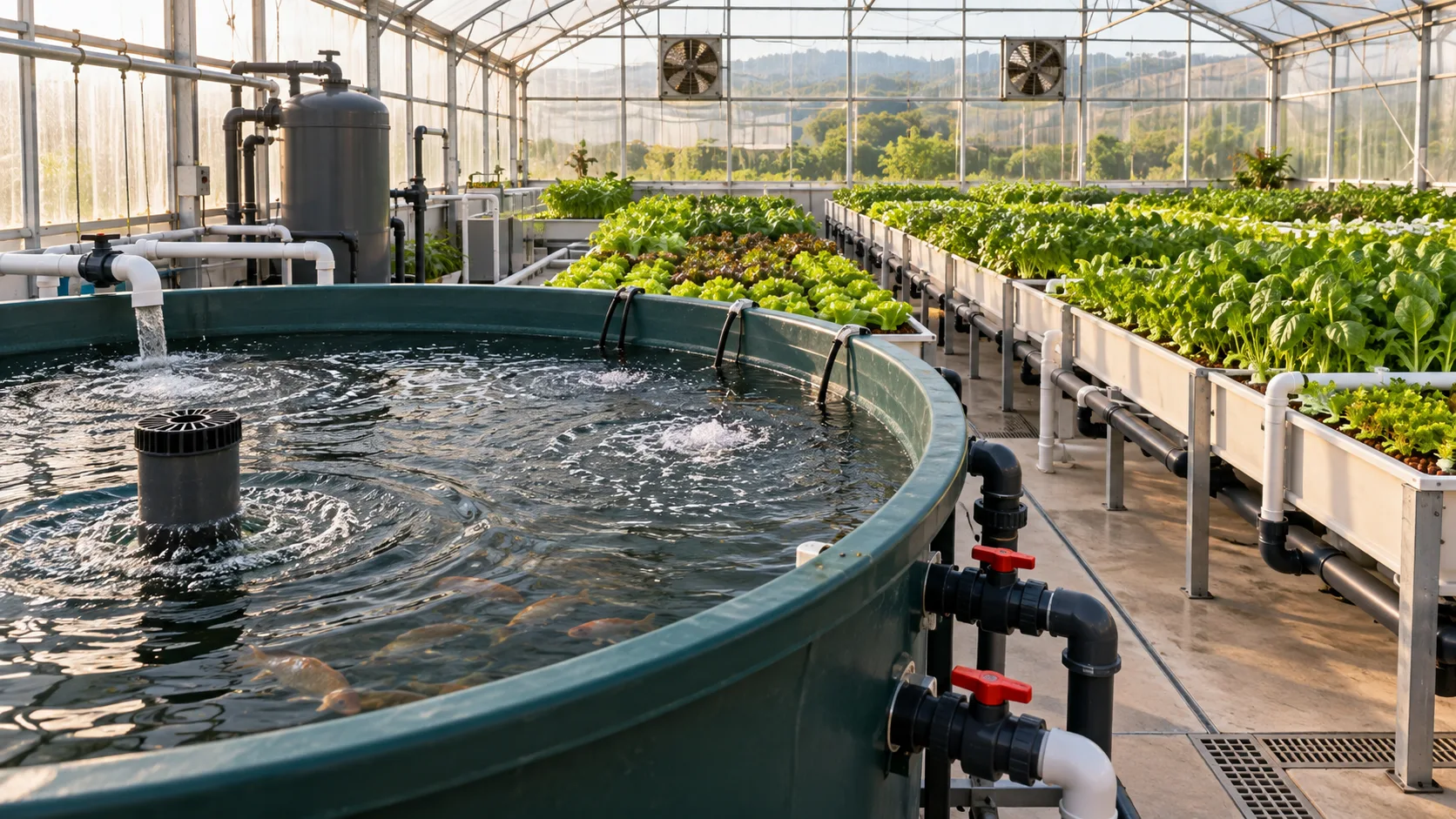
When buyers search for durable fish tank brands for aquaponics, they are often looking for a short list of names. A better procurement decision starts with the tank’s job in the water loop. The same vessel may be asked to hold fish, collect solids, accept bulkhead fittings, support aeration, tolerate sunlight, survive freight and remain cleanable after years of use. A famous name cannot compensate for the wrong material, geometry, drain arrangement or support detail.
This guide does not declare one brand universally best. It explains how to compare brands and suppliers using published specifications and project evidence. That is especially useful for importers, installers and greenhouse developers: durability must be considered together with delivered condition, local plumbing, replacement availability and the operator’s ability to inspect the tank safely.
The short answer
Choose a fish tank brand only after comparing the exact model’s material, wall and rim construction, intended use, UV exposure rating, drainage, fitting locations, support requirements, cleaning access, warranty, packing method and local service route. For small indoor systems, a light, accessible molded tank may be practical. For a larger grow-out or recirculating aquaculture loop, geometry, bottom drain, structural support and flow pattern can matter more than a catalogue’s headline capacity. Request drawings and a written scope before payment.
Start with the operating duty, not the logo
Write a one-page tank brief before reviewing brands. Include fish species, planned biomass range, water temperature, indoor or outdoor location, expected sun exposure, water depth, required drain route, fish-handling method, aeration, available floor loading, door width, lift access, local pipe standard and whether the tank is for grow-out, quarantine, nursery, sump or demonstration use. A tank suitable for a lightly stocked education display may be unsuitable for an intensive commercial holding area.
The brief also prevents a common mistake: using a generic water-storage tank without checking whether it is appropriate for fish, potable-water contact, sunlight, cleaning or the planned fittings. A supplier should be able to say what the exact vessel is designed to do and what lies outside its scope.
Compare the material before comparing capacity
Rotationally molded polyethylene
Polyethylene tanks are common because they can be light, corrosion resistant, smooth and available in standard shapes. Evaluate the resin specification, UV stabilization where outdoor use is planned, molded rim, bottom shape, color, service temperature, supported fitting locations and whether the manufacturer permits field drilling. Do not infer wall thickness or structural strength from gallon capacity alone.
Dura-Cast, for example, publishes aquaculture vessels made from FDA-compliant, UV-stabilized polyethylene resin and describes options such as open-top and cone-bottom tanks. Its aquaculture tank information is useful as an example of the details a buyer should request from any manufacturer; it is not evidence that one tank format suits every project.
Fiberglass-reinforced plastic
FRP tanks can offer rigid geometry, smooth gel-coated interiors and customization for drains, raceways or site constraints. Ask about laminate specification, gel coat, support base, reinforcement at penetrations, repair method and whether a proposed cleaning chemical is permitted. FRP can be a strong option for demanding aquaculture use, but transport damage and field modifications deserve careful attention.
Lined or framed tanks
Fabric or HDPE-lined framed tanks can provide large volume with compact shipping, but their durability depends on liner thickness, welding quality, frame alignment, ground preparation, protective underlay, drain design and protection against puncture. They are not interchangeable with a rigid molded tank. Confirm the expected installation sequence, inspection points and what happens if a liner is damaged after the system is stocked.
Geometry affects fish welfare and maintenance
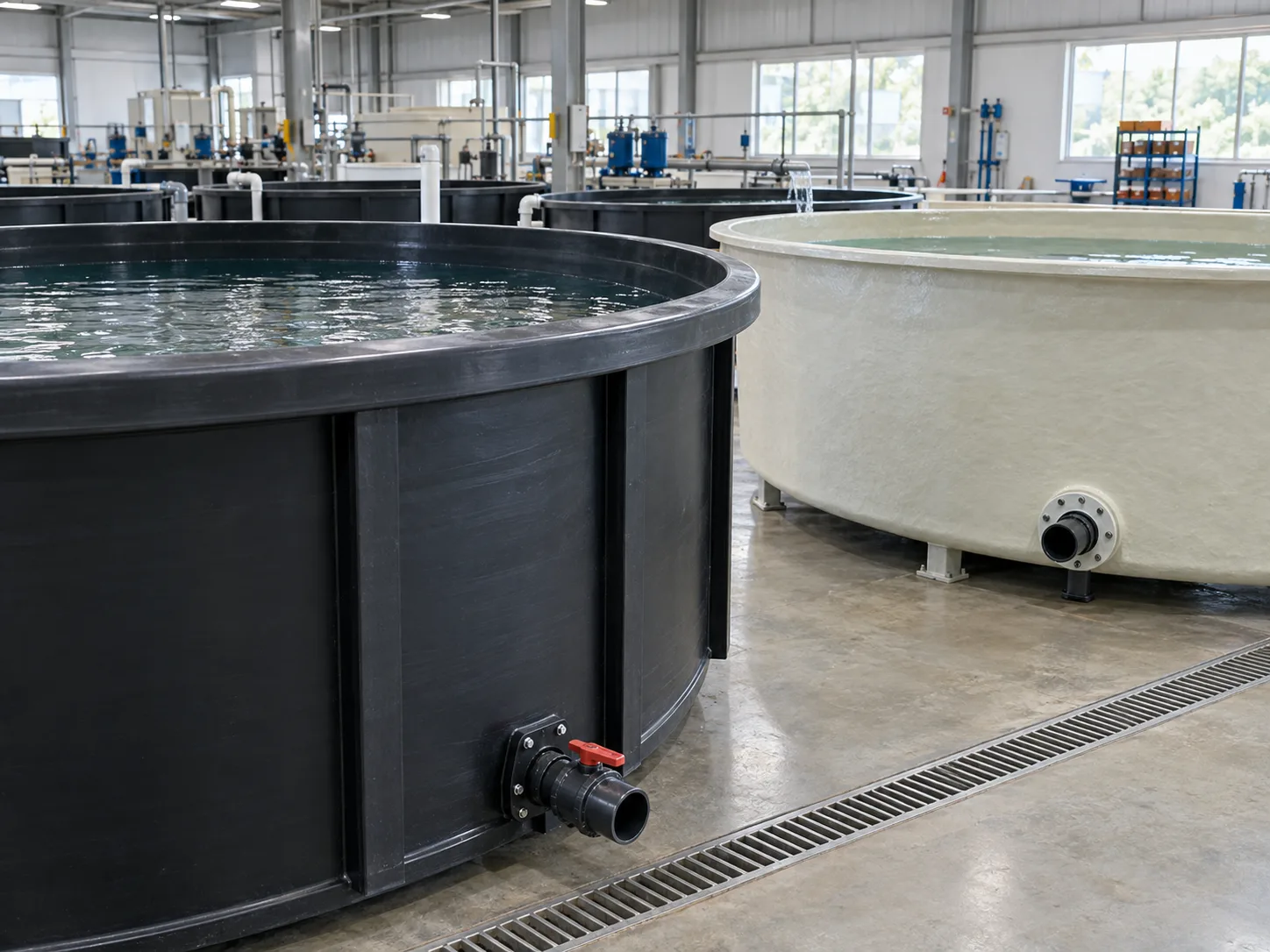
Round tanks can support rotational flow patterns and may simplify solids collection when inlet direction, water depth and drain layout are designed together. Rectangular tanks can use space efficiently and may suit certain nursery, grading or education layouts, but corners and flow dead zones need attention. Cone-bottom tanks can make solids removal more direct, yet require a compatible stand, drain elevation and safe access below the tank.
Ask the supplier to identify the inlet, outlet, overflow, bottom drain, stand height and service clearance on a drawing. A product application should not be accepted only from a beauty photograph. The drawing lets the project team check whether a valve can be reached, whether a drain has gravity fall, and whether a fish net can be used without damaging pipework.
Inspect the interfaces that usually cause trouble
Drains and penetrations
A tank may be durable while its fittings are poorly specified. Confirm the bulkhead or flange material, gasket type, thread or pipe standard, permitted hole position, support for connected pipework, isolation valve location and emergency overflow route. Ensure there is a method to drain, isolate and inspect the tank without accidentally emptying the fish loop.
Rim, cover and support
Check rim stiffness, lid or cover options, child/worker safety requirements, net support, air-line routing and whether the base needs a full flat pad, a stand or a structural frame. Outdoor projects should also review wind, rain ingress, algae control and UV exposure. Indoor projects need to review floor protection, drainage and water-containment routes before delivery.
Cleaning and observation
Ask how a worker can observe fish, remove mortalities, clean a drain, inspect a fitting and reach aeration equipment. Smooth inner walls, safe access and clear plumbing often matter more over the tank’s life than a decorative finish. If the tank has a viewing window, verify the window material, gasket, pressure boundary and cleaning instructions separately.
Our guide to choosing fish for aquaponics explains why fish species, temperature and oxygen demand should influence tank and aeration decisions. Do not select the vessel before the fish plan is credible.
Compare brands through evidence, not ratings alone
Create a supplier scorecard with the following columns: exact model; material; capacity at operating fill line; dimensions; empty weight; UV or location limitation; bottom and drain geometry; fittings included; pipe standard; support requirement; warranty; spare fittings; lead time; packing; factory-test scope; and technical contact. Include a final column for open assumptions.
Aquaculture Systems Technologies distinguishes fiberglass and polyethylene offerings and publishes the types of projects they serve in its aquaponics and aquaculture tank catalogue. Again, use published supplier material as a starting point, then request confirmation for the exact model, order quantity and intended use.
Avoid unsupported “best brand” claims. A brand can have a strong catalogue and still be the wrong choice if it cannot provide a compatible drain, arrive through the site door, meet local electrical or plumbing interfaces, or deliver replacement fittings to the destination.
Factory testing, shipment inspection and handover
For a packaged system, factory testing can confirm model identity, visible fit of supplied bulkheads, drain valves, frame connections and labels before packing. It cannot validate the finished site foundation or local pipe installation. Agree in advance which checks will be recorded and whether photographs or video are supplied.
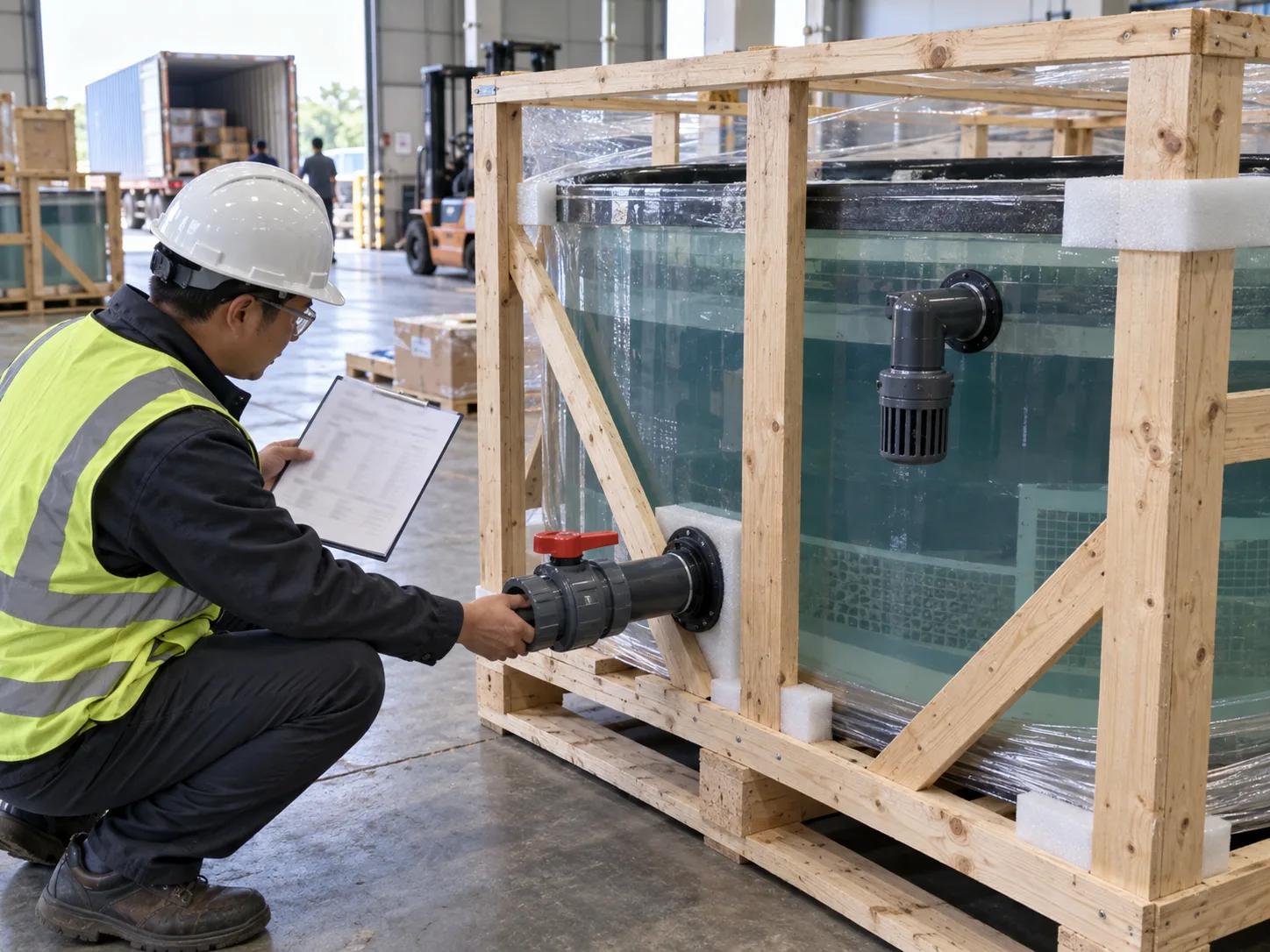
At shipment inspection, compare the packing list with tank bodies, stands, lids, drains, fittings and spare kits. Photograph tank surfaces, corners, crate bracing, serial or batch labels and any vulnerable window or flange area. On arrival, inspect before installation and note visible damage under the applicable freight procedure. Retain the packaging until the tank is checked for fit and leaks.
During installation preparation, level the base, protect the floor, independently support pipework, install accessible valves and complete a water-only leak test. Stock fish only after the system’s drains, overflow, power, aeration and return path have been checked under actual local conditions.
Plan the tank’s service life before ordering
Tank durability is partly a purchasing decision and partly an operating decision. Build a maintenance plan into the quotation: state who checks drains, which fittings are routinely tightened or replaced, how a tank is cleaned between cohorts, what records are retained after an impact, and how a damaged component is isolated without stopping the rest of the system. A smooth tank interior is useful only when staff can physically reach it with the intended cleaning tools and can safely remove discharged water.
For an export order, request a first-spares list before the container closes. It may include matching bulkhead gaskets, drain valves, pipe adapters, air-line fittings, a repair kit appropriate to the tank material, and any window or cover hardware that is difficult to source locally. The correct list depends on the project; do not order expensive spares by habit. Instead, rank each part by likelihood of failure, consequence of failure and local availability.
Assess transport as part of durability
A strong vessel can still arrive with a damaged rim, distorted flange or cracked accessory if it is packed poorly. Ask how the tank is braced, whether heavy fittings are packed inside it, how forks will lift the crate, and whether lifting points are marked. Receiving teams should check door clearance, unloading equipment and a dry, protected storage area before delivery. Photograph any concern before a tank is moved or unwrapped. These actions do not replace freight insurance or contract terms; they make a later discussion factual.
Test the installed tank as a system component
After a water-only fill, inspect the base for movement, every penetration for weeping, the overflow for capacity and all connected pipework for stress. Run circulation and aeration long enough to observe water level, vibration, return splash and access during normal operation. For a round tank, observe whether the intended inlet direction and drain behaviour are producing the expected circulation rather than assuming shape alone will manage solids. Correct an alignment or pipe-support issue before fish increase the consequence of a failure.
Questions to send a tank supplier
1. What is the exact tank material, intended application and outdoor exposure limit?
2. What capacity is safe at the intended operating water level?
3. Which bottom drain, overflow, bulkheads, valves and stands are included?
4. Can the tank be field drilled, and which locations are approved?
5. What base, support and pipe-support requirements apply?
6. What cleaning methods and chemicals are permitted?
7. Which visible defects, freight damage and installation records are required for a warranty claim?
8. Which fittings and seals should be ordered as first spares?
For a complete process review, pair this checklist with the commercial aquaponics buyer’s guide. The tank is one component of a loop that also requires solids control, biofiltration, pumping, aeration and safe operating access.
FAQ
Is HDPE always better than fiberglass for aquaponics?
No. Both may be appropriate depending on scale, geometry, transport, location, drainage and support. Compare the exact product specification rather than treating material names as a performance guarantee.
What makes a fish tank durable outdoors?
Suitable material and UV protection, correct base support, protected fittings, sensible plumbing loads, controlled impact risk and maintenance access all contribute. Confirm the manufacturer’s limits for the exact product.
Can I drill any fish tank for bulkhead fittings?
No. Obtain the supplier’s approved locations and method first. Unapproved drilling can compromise structure, sealing or warranty coverage.
Conclusion
The right aquaponics fish tank brand is the supplier whose exact model can be evidenced against the project’s fish plan, water path, site constraints and service needs. Compare materials, interfaces, drawings, packing and support—not only capacity and online reviews.
CTA — Need a tank-and-water-loop checklist for your project? Send Your Requirements with your fish species, site dimensions, target capacity and destination country.

