
Introduction
Pest control in aquaponics needs a different decision process from ordinary container gardening. Fish, plants and nitrifying bacteria share a water loop, so a product applied to foliage, roots or grow media may have consequences beyond the insect it targets. “Natural,” “organic” and “safe for vegetables” are not enough to establish that a treatment is compatible with a recirculating aquaculture system. The label, formulation, application route, crop, fish species, local law and possibility of water contact all matter.
The most dependable approach is integrated pest management (IPM): prevent entry, inspect crops, identify the pest, decide whether action is justified, use physical and biological controls first, and only consider a pesticide after a site-specific compatibility and regulatory review. This article explains common low-risk methods and the practical boundaries that protect the shared loop. It is not a pesticide recommendation or a substitute for the product label, local extension service, aquaculture professional or licensed pest-control adviser.
The short answer
The safest first-line methods for aquaponics plants are exclusion, clean plant material, routine scouting, removal of affected leaves, hand removal, traps used away from water, sanitation, environmental adjustment and properly managed biological controls. If a treatment may drip, drift, enter the media, contact return water or leave residues that can be washed into the fish loop, do not assume it is safe. Isolate the affected plant area where possible; verify the product label and local registration; and seek expert guidance before using any pesticide around fish, beneficial bacteria or food crops.
Why aquaponics changes the pest-control question
In soil, a grower may apply a product and rely on soil buffering, drainage or a separate irrigation routine. In a coupled aquaponics system, runoff can return to the fish tank. A spray can drift onto a water surface, a systemic product can create a food-crop issue, and a concentrated cleaner can harm the microbial community that converts fish waste into plant-available nutrients. This does not mean every pest requires panic or that no intervention is possible. It means each intervention needs a route-of-exposure check.
Ask five questions before doing anything:
1. What organism is present, and is it actually causing meaningful damage?
2. Which crop and growth stage are affected?
3. Can droplets, rinse water, media particles or residues reach the recirculating water?
4. Is there a non-chemical option that can reduce the problem first?
5. If a product is being considered, does its current label permit the intended crop, method and site, and does a qualified adviser consider it compatible with the aquaponics setup?
The U.S. Environmental Protection Agency describes IPM as a process of action thresholds, monitoring and identification, prevention, then choosing lower-risk controls before broad pesticide use. Its IPM principles provide a sound framework for aquaponics, where “least hazard” must include fish and water biology as well as people and plants.
Start with prevention before pests arrive
Inspect incoming plants and materials
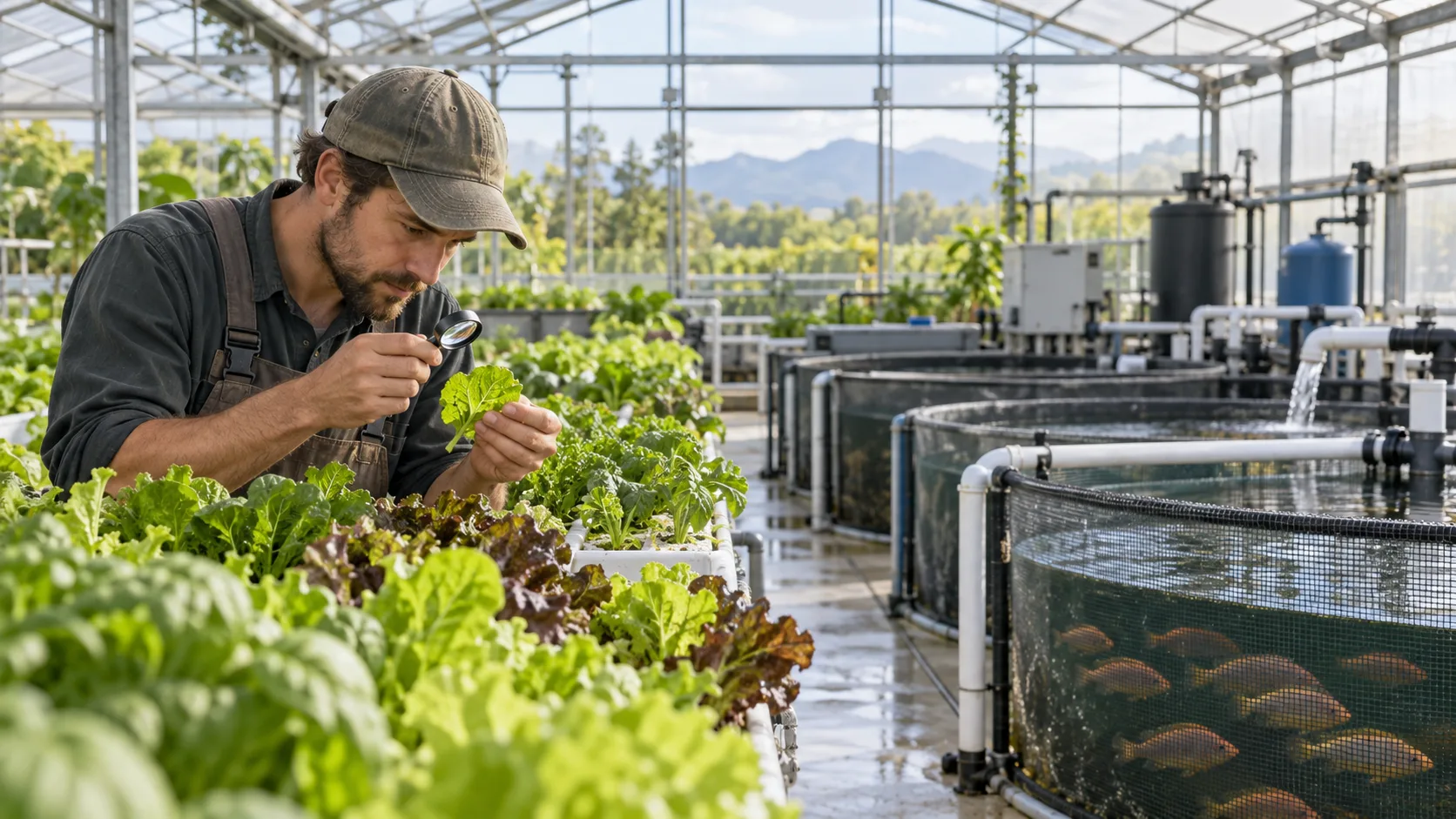
Many pest outbreaks enter on transplants, cuttings, packaging, tools or clothing. Hold new plant material apart from the main grow area when practical. Inspect undersides of leaves, stems, plugs and roots under good light. Look for live insects, webbing, eggs, frass, distorted new growth, stippling and honeydew. A short receiving inspection is far easier than treating a large planted system after pests spread.
Ask nursery suppliers about their crop-protection practices and do not assume a clean-looking plant is pest free. For commercial projects, record supplier, delivery date, crop variety, observed condition and any corrective action. This makes repeat problems traceable without inventing blame.
Use physical exclusion and sensible airflow
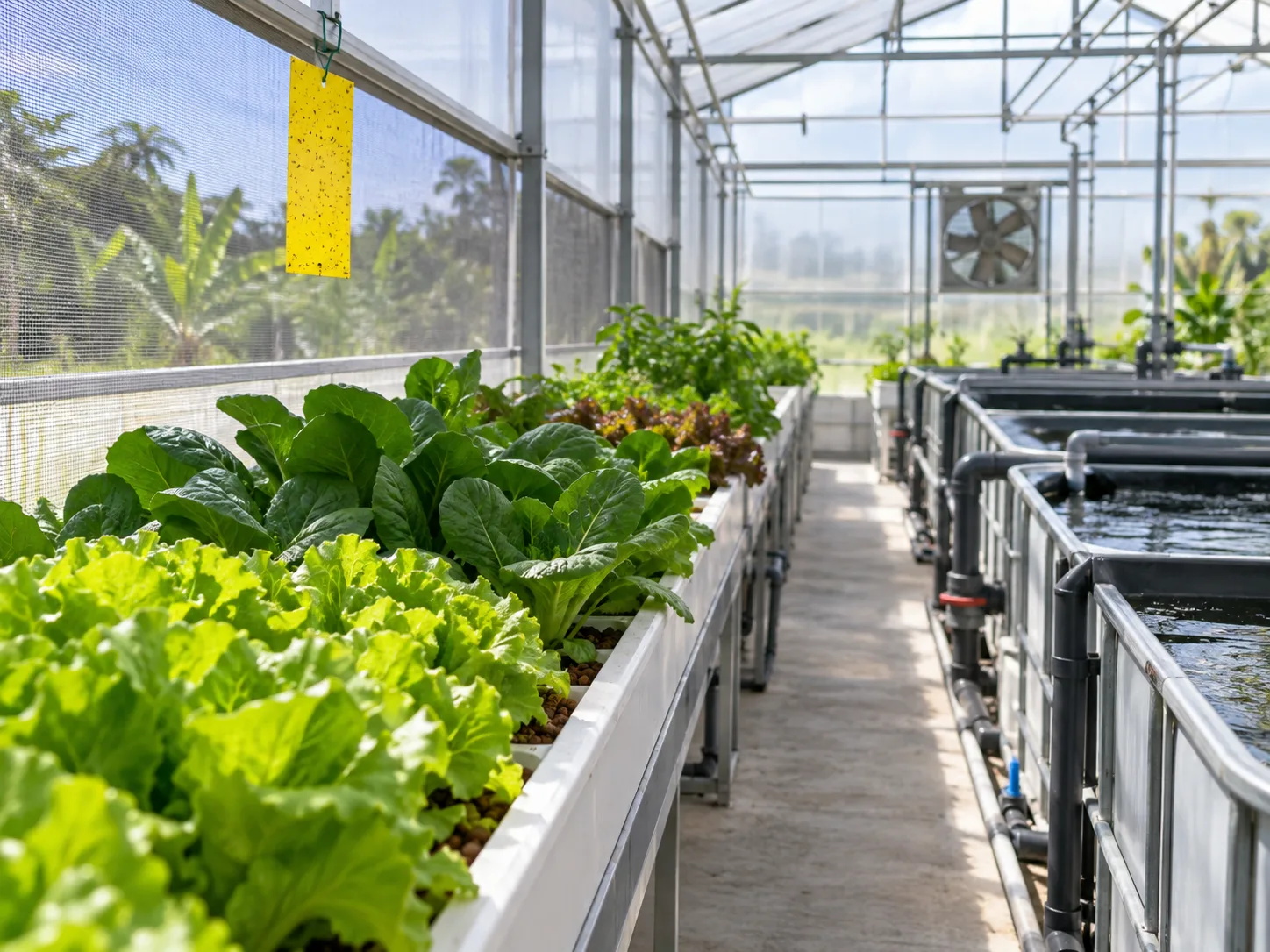
Fine insect screens at doors, vents and intake openings can reduce entry of flying pests. They must be chosen carefully: overly restrictive mesh can reduce ventilation, raise temperature and create another plant-stress problem. Keep doors closed, repair gaps, manage weeds around entrances and avoid storing infested ornamentals beside production crops. In a greenhouse, balance insect exclusion with the airflow required for crop health and temperature control.
Keep crop areas clean and observable
Remove decaying leaves, dropped fruit, spent plants and algae-prone debris before they become shelter for pests. Keep walkways and bench undersides visible. Avoid leaving cardboard, unused pots or dense weeds near the growing area. Good sanitation does not sterilize an aquaponics system; it reduces hiding places and makes monitoring more reliable.
Avoid creating stressed plants
Pests often become more damaging when plants are stressed by insufficient light, poor airflow, inappropriate temperature, root problems, overcrowding or a nutrient imbalance. Do not respond to every yellow leaf with a spray. Check the basics first: crop spacing, plant age, water level, root appearance, temperature, light, solids accumulation and whether a pump or air issue has changed conditions.
Scout, identify and set a response threshold
Build a simple scouting routine
Walk the crop at least weekly, and more often when young plants or a known pest pressure require it. Check the same representative zones: near doors, vents, fans, outside walls, shaded corners and older crop blocks. Turn leaves over. Use a hand lens where helpful. Record crop, zone, pest or symptom, approximate incidence, beneficial insects observed and action taken.
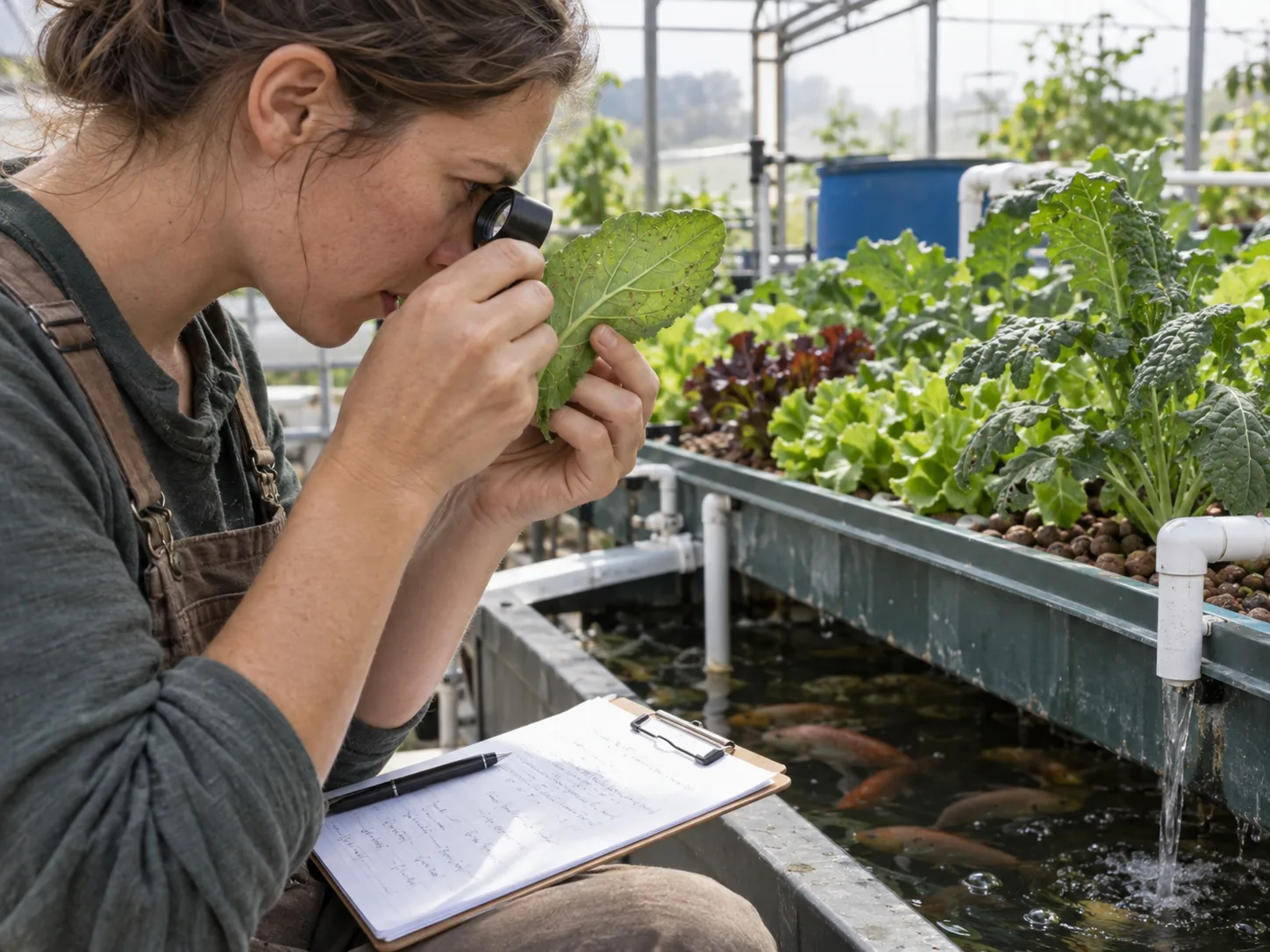
Yellow or blue sticky cards can help monitor flying insects, but they are a monitoring device, not a complete treatment plan. Position them so adhesive cannot fall into water, contact edible surfaces unnecessarily or trap released beneficial insects. Count and compare trends rather than reacting to one caught insect.
Identify before controlling
Aphids, whiteflies, fungus gnats, thrips, spider mites, caterpillars and leaf miners need different responses. Some insects are predators or parasitoids and should not be removed casually. Some symptoms that resemble insect damage are nutrient, root-zone or environmental issues. Take clear photos and use a local extension service, crop consultant or qualified adviser if identification is uncertain.
Set a practical threshold. A single aphid on a non-critical leaf may justify observation and removal, while rapidly increasing pests in a young lettuce crop can justify faster action. The threshold depends on crop value, stage, cosmetic standards, pest reproduction rate, season, available labour and the risk of spread—not a universal number copied from another farm.
Common low-risk controls for aquaponics plants
Physical removal and selective pruning
For a small infestation, hand removal, a soft brush, a targeted water-free wipe or removal of badly affected leaves can be effective. Seal and remove plant waste from the greenhouse rather than leaving it near the grow beds. When pruning, use clean tools and avoid dropping debris into media or water channels.
If a plant is heavily infested, removing it can be more responsible than trying multiple treatments beside a fish loop. This is especially true when the plant is small, the pest reproduces quickly, or the required treatment has uncertain aquaponics compatibility. Crop loss is frustrating, but a localized removal may prevent a system-wide risk.
Barriers, screens and traps
Screens, door discipline, weed control, collars and crop covers can reduce pest access. Sticky cards and species-appropriate traps can support monitoring and reduce a portion of flying adults. Keep all adhesives, lures and supports above the water path and secure them so wind, condensation or maintenance cannot send them into the system. Check traps routinely; neglected cards become clutter and can capture beneficial insects.
Environmental adjustment
Improve airflow without chilling the crop, reduce excessive humidity where the crop permits, correct crowding, and remove pest reservoirs. For fungus-gnat-like problems, inspect whether persistently wet debris, plant plugs or neglected organic material rather than the aquaponics media is providing breeding habitat. Avoid a reflexive change to the system water level; root-zone changes affect plants, bacteria and hydraulic balance.
Biological control
Biological control can include beneficial predatory insects, parasitoids, predatory mites or microbial products selected for a known pest and production environment. It is not a generic “release beneficials” step. Success depends on correct identification, timing, temperature, humidity, crop canopy, pest density and avoiding broad-spectrum residues that harm the beneficial organism.
Use a reputable biological-control supplier and request application, storage and release instructions. Confirm whether the beneficial is suitable for the crop and whether any product already applied could interfere with it. Keep documentation of species, release rate, location, date and observed results. Some biological tools are best used preventively or at low pest levels; they may not rescue a severe outbreak without other measures.
Isolate and treat away from the water loop when necessary
When a problem is localized, consider moving a removable plant module or individual plant to a separate treatment area, if doing so will not damage roots or disrupt the system. This creates a physical separation between treatment and fish water. The area should have its own containment and cleaning plan; never rinse treated foliage or equipment so that runoff returns to the aquaponics tank.
This decision should be documented for commercial operations. Note the reason for removal, product if any, application date, re-entry interval, crop disposition and cleaning procedure. If produce is sold, follow food-safety and label requirements and consult qualified local support.
Pesticides: use a compatibility gate, not a “safe list”
No website can create a universal list of pesticide products “safe for aquaponics.” Formulations change, labels differ by country, crops differ, and the same active ingredient can have different routes of exposure. “Organic” does not mean safe for fish. “Food-crop approved” does not mean safe in recirculating water. “Natural oil” does not mean harmless to gills, biofilm or insects used as biological controls.
Before any pesticide use, stop and verify the current label for the exact product and formulation; the permitted crop and application site; worker protection requirements; harvest interval; aquatic warnings; and local regulations. Determine whether overspray, drift or drainage can reach water. Discuss the situation with a qualified extension professional, licensed adviser or relevant authority—especially for commercial food production or when fish are present.
Do not spray a pesticide into the aquaponics water, add a pesticide to the fish tank, dose the recirculating loop to control a foliar pest, or rely on social-media dilution recipes. Avoid routine “preventive” sprays. If an adviser determines that a labelled use is appropriate, isolate the area, protect water surfaces and return channels, use the exact label directions and retain application records. When compatibility is uncertain, choose physical removal or crop disposal over an unverified experiment.
The U.S. EPA’s greenhouse and nursery resource page provides regulatory context for agricultural production, but it is not a product approval for an aquaponics system. Use the label and competent local advice for actual decisions.
Protect fish, bacteria and people during routine work
Separate pest-management tools from fish-handling and water-testing tools. Label spray bottles clearly; never reuse a chemical container for feed, water testing or harvest. Store products in a secured area away from tanks, air pumps and food handling. Use the personal protective equipment on the label and follow worker-entry instructions.
When cleaning benches, screens or traps, collect debris rather than washing it into drains connected to the system. If a spill occurs near water, stop the source, prevent entry to the loop and seek appropriate technical guidance immediately. Do not attempt to “neutralize” an unknown product inside the fish tank; improvised treatment can worsen exposure.
In a supplier handover, pest control should be included in the operating discussion even though it is not usually an equipment function. During installation preparation, identify a plant-quarantine area, secure chemical storage away from water, hand-wash facilities, waste bins, insect-screen locations and a clear route for removing infested plant waste. During shipment inspection, confirm that any supplied screens, covers or plant modules match the order; once the greenhouse is operating, the local team owns scouting and crop-protection decisions.
A practical 24-hour response to a new outbreak
First, photograph the symptom and affected area. Second, isolate or flag the crop block and prevent workers from carrying pests to clean zones. Third, inspect adjacent plants and traps to estimate spread. Fourth, identify the organism or seek help identifying it. Fifth, remove severely affected leaves or plants where the risk is clear. Sixth, correct immediate environmental issues such as weeds, debris, broken screens or crowding. Seventh, decide whether a biological release, physical control or off-system treatment is appropriate. Finally, record what happened and revisit the zone within a defined interval.
This sequence is intentionally conservative. It prevents a rush to spray before the pest, exposure route and crop status are understood. For many early infestations, disciplined observation and removal are the lowest-risk controls.
Build pest management into the production plan
An aquaponics crop plan should include pest thresholds, scouting calendar, incoming-plant procedure, sanitation ownership, beneficial-control contacts, emergency isolation area, approved-record template and escalation contacts. Train every operator to recognize the difference between a pest observation, a suspected disease, a water-quality issue and an equipment fault. A plant worker who finds insects should know whom to tell and what not to spray.
System design can help. Choose accessible grow zones, service corridors, washable surfaces, water-return lines that can be protected during plant work, and a layout that allows a crop module to be isolated. Our guide to maintaining an aquaponics system is useful for joining crop observations with daily checks of fish, filters, pumps and water. For crop selection, how aquaponics is used in agriculture explains why crop, labour and operating routines should be planned together.
FAQ
Can I use neem oil in aquaponics?
Do not assume so. “Natural” is not a compatibility decision. Check the exact current label, crop and site restrictions, potential water exposure and local advice. If any drift or runoff could enter the fish loop, choose a safer physical or isolation approach until qualified guidance is obtained.
Are beneficial insects safe around aquaponics fish?
They are commonly used in protected cropping, but suitability depends on the species, target pest, crop environment and any residues already present. Buy from a reputable supplier and follow its release guidance. Keep records and do not treat a beneficial release as a substitute for scouting.
How do I control aphids without spraying the system?
Inspect and identify them, remove or prune affected material, manage weeds and entry points, monitor spread, and consider appropriate biological control or isolated treatment with qualified advice. Avoid allowing any treatment runoff to reach the water loop.
Why are sticky traps not enough?
They mainly help monitor and catch some flying adults. They do not identify every pest, remove eggs or larvae from plants, or correct the conditions that allow an infestation to grow.
Conclusion
Safe aquaponics pest control begins with prevention and accurate observation, not a product bottle. Exclusion, clean plant material, scouting, sanitation, physical removal, environmental correction and carefully selected biological controls protect the crop while respecting the shared fish-and-bacteria water loop. When chemical use is being considered, isolate the risk, follow the exact label and obtain qualified local guidance rather than experimenting in the recirculating system.
CTA — Planning a protected aquaponics growing area? Ask for Product Catalog and share your crop plan, system layout, climate and project location. YAFAN can help you define a serviceable equipment and installation-preparation scope.

