
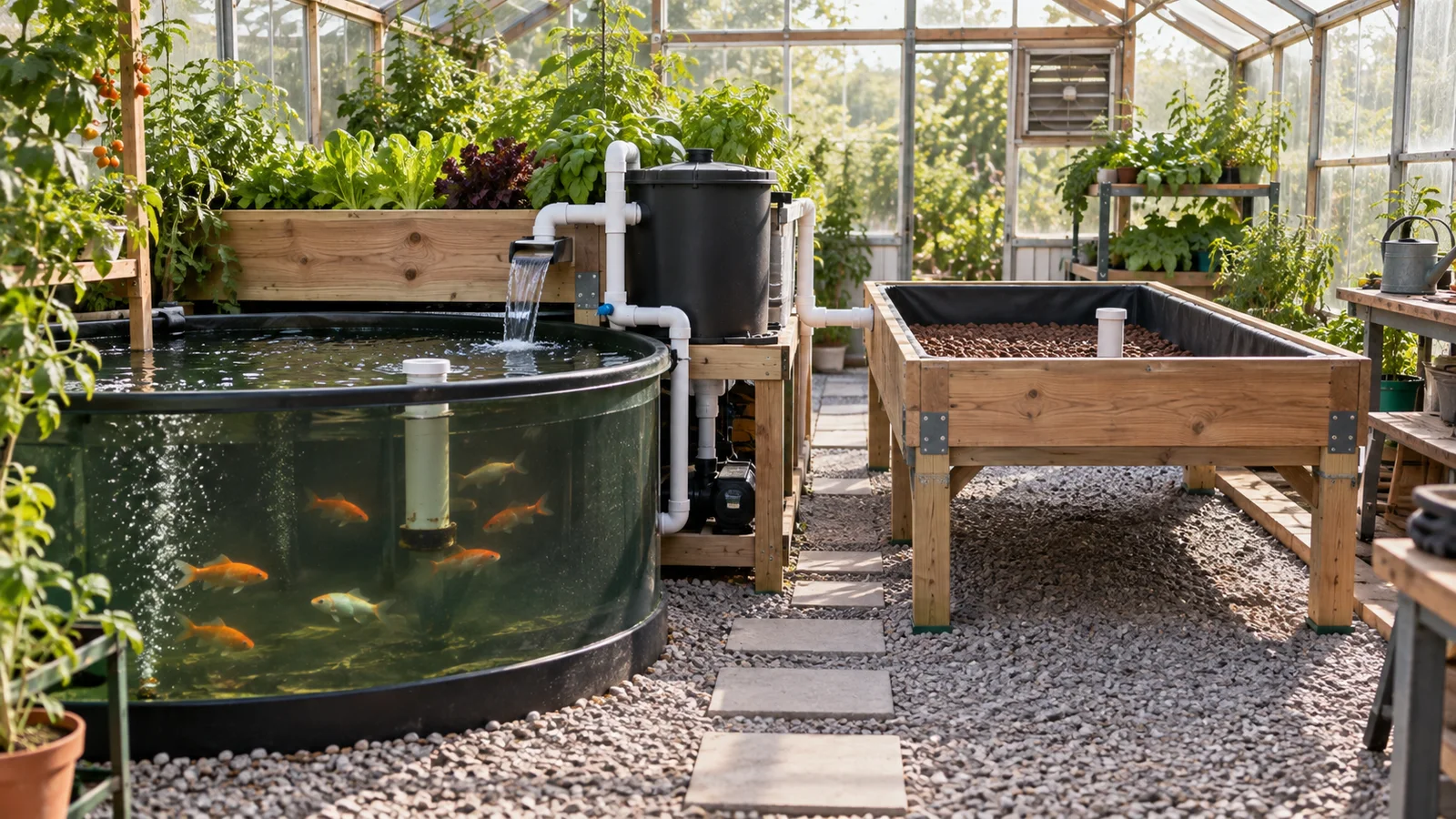
Introduction
A home aquaponics system that has produced a few healthy crops can make expansion seem simple: add another grow bed, use a larger fish tank or keep more fish. In practice, an enlargement changes the balance between feed input, solids production, biofiltration, plant uptake, oxygen demand, water movement and the operator’s daily workload. A system can look larger while its life-support capacity remains unchanged.
The safest way to scale up is to use records from the existing system, identify the limiting component, and expand in stages. Do not assume that doubling plant sites or tank volume doubles safe fish capacity. The correct upgrade depends on the actual system type, water temperature, fish species, feed rate, filtration method, crop plan, climate and available maintenance time.
The short answer
Scale up only after the current system has stable water-quality records, reliable circulation and aeration, a repeatable cleaning routine and enough site capacity for larger equipment. Size the next phase around daily feed input and the required solids removal, biofiltration, water flow and oxygenation—not around the number of empty plant holes. Add capacity in a controlled sequence, test with water, introduce biological loading gradually and retain the ability to isolate the new module.
The Southern Regional Aquaculture Center notes that standard aquaponics designs scale components together: tank size, pipes, pump rates, aeration and infrastructure must remain proportional. Read SRAC’s system-design guidance. It is a technical planning reference, not a universal stocking prescription.
Start with evidence from the existing system
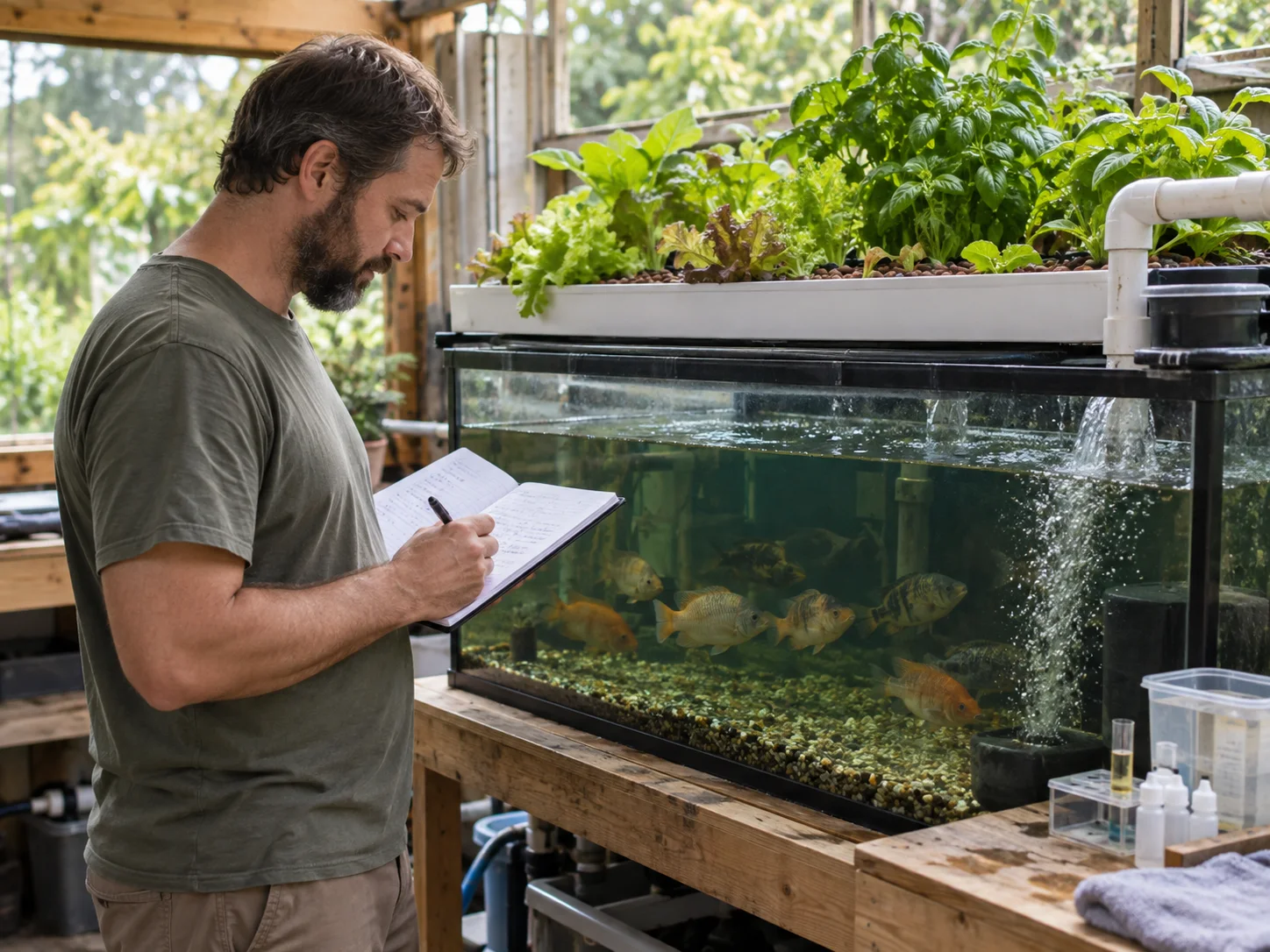
Before drawing an expansion, collect at least one stable operating period of records: water temperature, pH, ammonia, nitrite, nitrate, feed amount, fish observations, pump run time, air-pump condition, filter cleaning frequency, plant survival, crop harvest, water top-up and fault events. These data reveal the constraint.
For example, a system that already needs frequent filter cleaning should not gain fish load before solids handling is improved. A system with good water tests but unused planting space may need better crop scheduling rather than more equipment. A system that loses flow as filters foul needs service access or a different filtration arrangement before a second bed is connected.
Write the expansion objective in one sentence: “support one additional leafy-green bed,” “move from ornamental fish observation to a larger educational display,” or “add a second isolated crop zone.” A clear objective prevents the common error of adding every component at once.
Recalculate biology before adding fish or plants
Feed input is the practical bridge
Fish feed creates the nutrient input and solids that filters and plants must handle. Fish number alone is unreliable because fish species, size, temperature, feed and health change. Record actual feed, then ask whether mechanical filtration can capture solids, whether the biofilter has adequate active surface area, and whether crops can use nutrients at the intended planting and harvest rhythm.
Do not use extra fish simply to make a new grow bed productive. Increased fish biomass raises oxygen demand and waste production before it reliably raises usable nutrients. Add fish gradually only after the expanded water path, filters and aeration have been tested and the biological system has time to respond.
Mechanical and biological filtration
Small systems may operate with accessible filter pads or media beds, but a larger load can make hand cleaning too frequent or allow fines to reach roots and pipes. Rutgers Extension explains that larger systems may need more capable mechanical filtration, while biofilter cleaning and aeration remain important to avoid poor biological performance. See Rutgers’ overview of aquaponics components.
Expansion may require a settling stage, screen or radial-flow unit, larger biofilter, improved drain route, or a means to isolate and clean one unit without stopping the entire system. Select the solution around actual solids load and maintenance access, not a fashionable component name.
Treat water flow and aeration as life-support systems
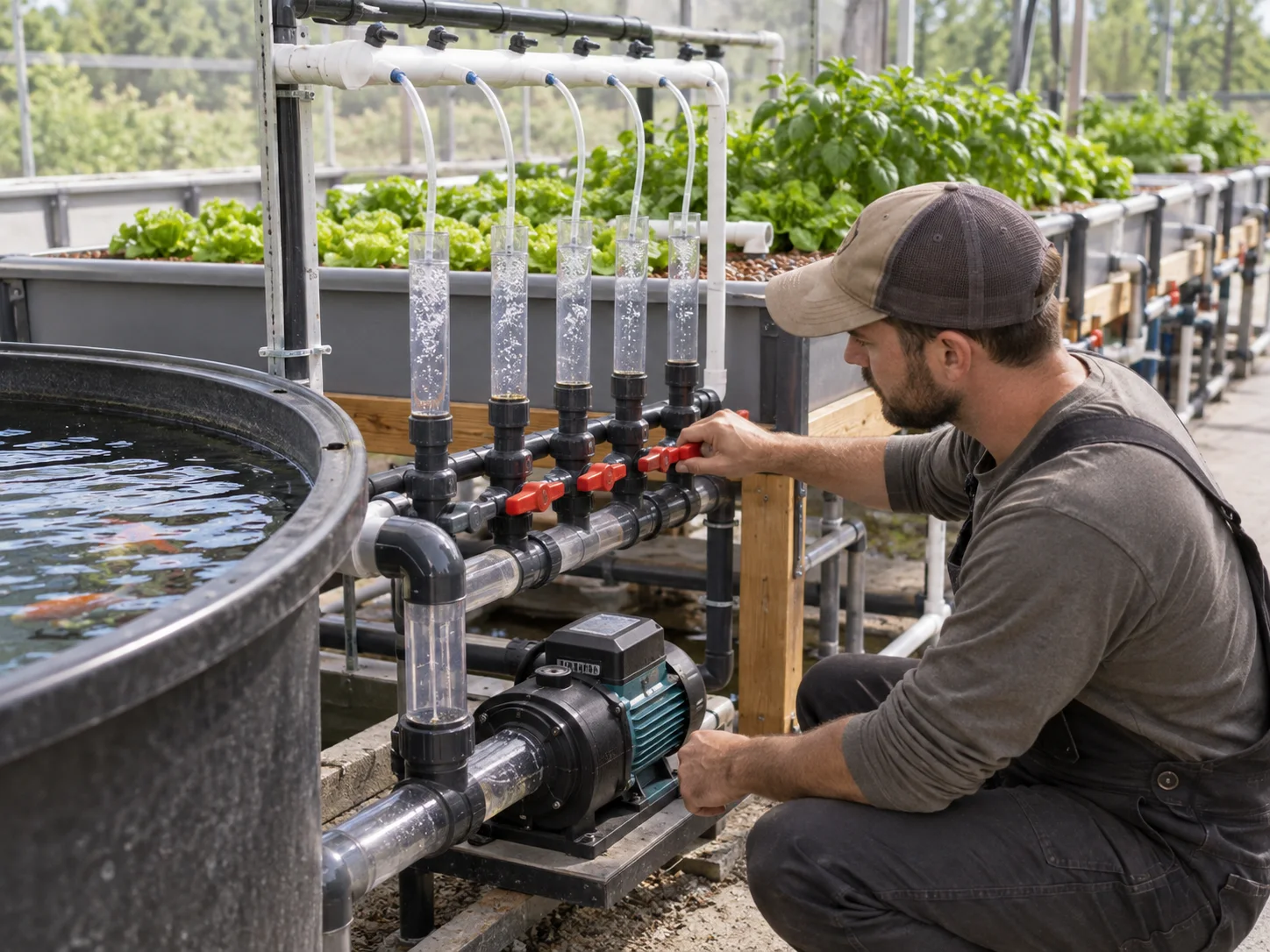
An additional tank or grow module changes water volume, elevation and pipe resistance. Confirm the actual pump curve at the intended total dynamic head, not only its maximum advertised flow. Check pipe diameter, fittings, lift height, return route, valve positions and the effect of a partially dirty filter. A pump that appears adequate with one clean bed may not support two beds after several days of operation.
Aeration is separate from circulation. Fish, beneficial bacteria and many root zones depend on oxygen. Expand air delivery with suitable distribution, valves and diffusers; keep the system inspectable and consider an appropriate backup plan for the risk level. Never turn down essential aeration solely to reduce noise or electricity use.
Review the physical site before equipment is ordered
Water volume, wet media and steel frames can impose substantial loads. Confirm the actual foundation, floor, deck or greenhouse surface with an appropriately qualified local professional when needed. Plan for a drain or spill response, safe access around tanks, enough room to remove filters and pumps, hose routes, lighting, ventilation and delivery access.
Review electrical capacity early. A larger pump, blower, heater, chiller, fan or grow light should not be added to an overloaded extension lead. Define local voltage, protected outlets, cable routing, weather exposure and a safe isolation point before installation. Climate control can become a much larger operational load than the water pump when a household system moves indoors or into a colder season.
Choose an expansion architecture
Add a matched module
Adding a compatible grow module can be the least disruptive path when the existing tank, filtration and pumps have verified reserve capacity. Keep isolation valves and unions so that the new zone can be tested and serviced independently. Confirm that an added bed does not lower the fish-tank water level beyond the safe pump operating range.
Add capacity to the fish side
Adding fish-tank volume can improve water buffering but is not automatically an expansion of biological capacity. New tank volume needs circulation, oxygenation, solids collection and a safe overflow path. If the old filter was already near its practical cleaning limit, enlarge or separate the filter train first.
Build a parallel system
For some home sites, two independently manageable systems can be safer than forcing every new component into one loop. A parallel system allows separate cycling, fish quarantine or crop trials and can reduce the impact of a single plumbing mistake. It also creates duplicated maintenance tasks, so choose it only when the benefit is clear.
Scale the operating routine as well as the hardware
An enlarged system needs a larger operating plan. List who checks fish behavior, verifies flow and aeration, removes captured solids, records water tests, replaces consumables and responds when an alarm or leak occurs. A household can often manage a modest system through informal observation; after expansion, unclear responsibility becomes a genuine operating risk.
Turn the old routine into a simple written schedule. Daily tasks may include fish observation, water level, pump discharge and air-stone check. Weekly tasks may include water tests, solids removal, root-zone inspection and a review of feed totals. Monthly tasks may include pump cleaning, valve exercise, pipe support inspection, spare-parts check and a review of energy use. Adjust frequency to actual conditions rather than copying a calendar from another project.
Labor is also a sizing factor. More crop area brings seedlings, harvesting, washing, plant support and waste handling. More fish biomass brings feed storage, observation and possibly grading or local compliance responsibilities. If the expansion depends on one operator, provide a clear handover sheet and train a second responsible person. Factory testing and shipment inspection documents can be attached to that sheet so the household knows what equipment was supplied and where normal valve positions, isolation points and spare parts are located.
An expansion is ready to proceed when the system has both capacity and a credible routine to use that capacity. If a proposed module would add more work than the household can perform reliably, phase the project or simplify the crop plan before adding fish load.
Commission the next phase gradually
Use a staged sequence:
1. finalize drawings, equipment schedule and local site responsibilities;
2. conduct factory testing where equipment is supplied as a package;
3. complete shipment inspection against the packing list;
4. install, leak-test and verify drains with water only;
5. confirm pump flow and aeration under normal water level;
6. connect the new biological surface or module and observe water quality;
7. increase plants and fish loading gradually while recording results.
Take photographs of valve positions, equipment labels, final pipe routes and electrical isolation points. Those records make later maintenance, warranty questions and future expansion much easier.
Mid-article CTA
Planning a larger second phase? Send your current tank volume, filtration layout, fish species, typical feed amount, target expansion and site photographs. Send Your Current Layout before purchasing tanks or grow modules.
Common mistakes when scaling up
- Adding fish before adding filtration and oxygen capacity.
- Extending pipework without recalculating pump head and return levels.
- Adding plant sites without a crop schedule or nutrient record.
- Hiding filters and valves where they cannot be cleaned.
- Using unprotected electrical extensions near water.
- Treating a new module as biologically mature on installation day.
- Expanding the hardware without expanding the inspection and maintenance routine.
For day-to-day records after an upgrade, use our aquaponics maintenance guide. If the system is modular, retain specifications and approved spare routes using our replacement-parts guide.
FAQ
Can I just add another grow bed to my home system?
Only if the current water level, pump, filtration, aeration, plumbing and biological capacity have enough verified reserve. Test the new bed with water first and add planting gradually.
Should I enlarge the fish tank or the grow area first?
Neither is universally first. Start with the limiting factor revealed by records. If water quality and solids handling are limiting, correct filtration and aeration. If fish and water are stable but crop space is the constraint, a controlled additional grow module may be appropriate.
Does a larger system need less maintenance?
More water volume can provide more buffer against a small change, but a larger system has more components, solids and safety points to inspect. It needs a clearer routine, not less attention.
When can I add more fish after expansion?
After the new water path is leak-free, flow and aeration are stable, filtration is operating as planned, and water testing shows the biological system is coping. Increase loading gradually under local fish-welfare and legal requirements.
Conclusion
Scaling a home aquaponics system is a controlled engineering and operating change, not a simple multiplication exercise. Begin with stable records, define one expansion objective, reassess feed-driven biological load, and verify filtration, aeration, flow, site utilities and service access before equipment arrives. A staged installation and careful handover protect both the original system and the larger one you want to build.
Final CTA
Ask for a Modular Expansion Checklist. Contact Us with your current layout and target capacity so we can help identify the information a supplier needs before proposing the next module.

