
Introduction
The best aquaponics kit for a beginner is rarely the one with the largest number of planting holes or the loudest “complete system” claim. It is the kit whose water volume, included components, instructions and daily-care requirement fit the buyer’s real space and routine. A small desktop unit can be a good learning tool; it is not automatically a low-maintenance food-production system. A larger home kit may offer more stability, but it also adds weight, water, electricity, cleaning and fish-welfare responsibility.
For U.S. buyers, start with the job of the first system: learn the nitrogen cycle, keep a small ornamental fish group, grow herbs, support a classroom lesson, or build confidence before a larger backyard project. That decision prevents a common mismatch—buying an attractive aquarium-top planter while expecting the output of a greenhouse bed.
The short answer
Choose a beginner kit only after confirming five things: the tank is included or clearly excluded; circulation and aeration are suitable for the planned fish; the grow section has usable biological and mechanical filtration; replacement parts and instructions are available; and the buyer has a safe location with power, floor protection and time for water testing.
An aquarium conversion kit is often sensible for someone who already owns a compatible tank. A compact all-in-one educational system can suit a desk, school or apartment. A small media-bed or barrel-style system is a better next step when the goal is to learn plumbing, solids handling and outdoor operation. Do not interpret “beginner” as “no monitoring required.”
Start with the system category, not a brand list
Aquarium-top conversion kits
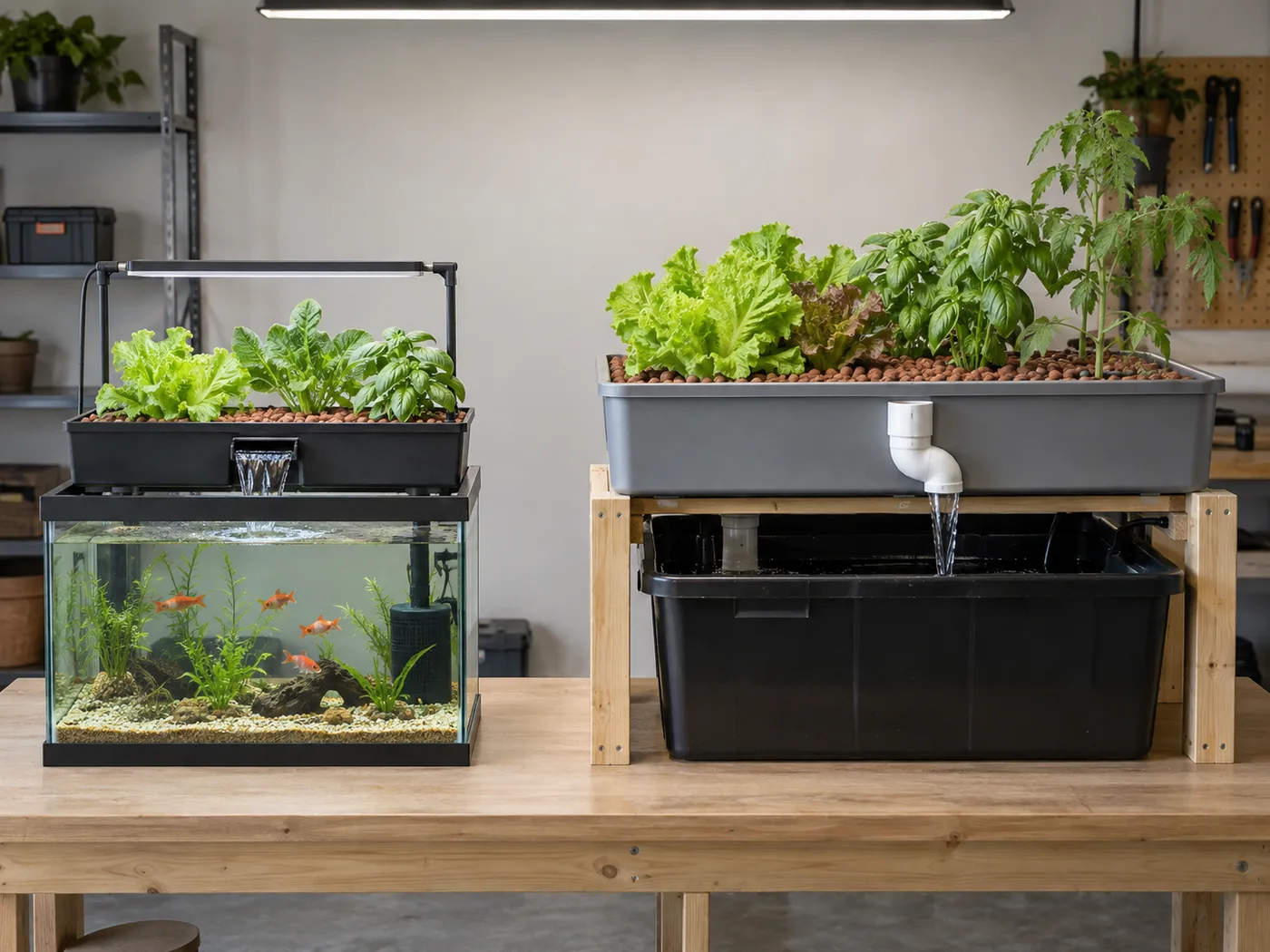
These use an existing aquarium as the fish tank and place a small grow bed above it. They are compact, visible and useful for learning basic cycling and plant care. The limitation is that many products do not include the aquarium, light, fish, test kit or heater. Treat compatibility, pump access and the written list of exclusions as more useful evidence than a generic “complete” label. Texas A&M AgriLife’s beginner material is designed for homeowners and DIY hobbyists and usefully frames those first choices around system type, start-up needs and crops rather than a brand ranking. See the Texas A&M beginner course overview.
All-in-one tabletop or classroom units
An all-in-one unit can simplify the first purchase because the tank, grow area and circulation route are designed together. It should still be evaluated for access: Can the pump be removed? Can accumulated solids be reached? Is the air supply visible? Is there a manual that explains cycling and a power-loss response? A small clear tank is excellent for observation, but it changes temperature and water chemistry faster than a larger body of water.
Small media-bed or backyard starter systems
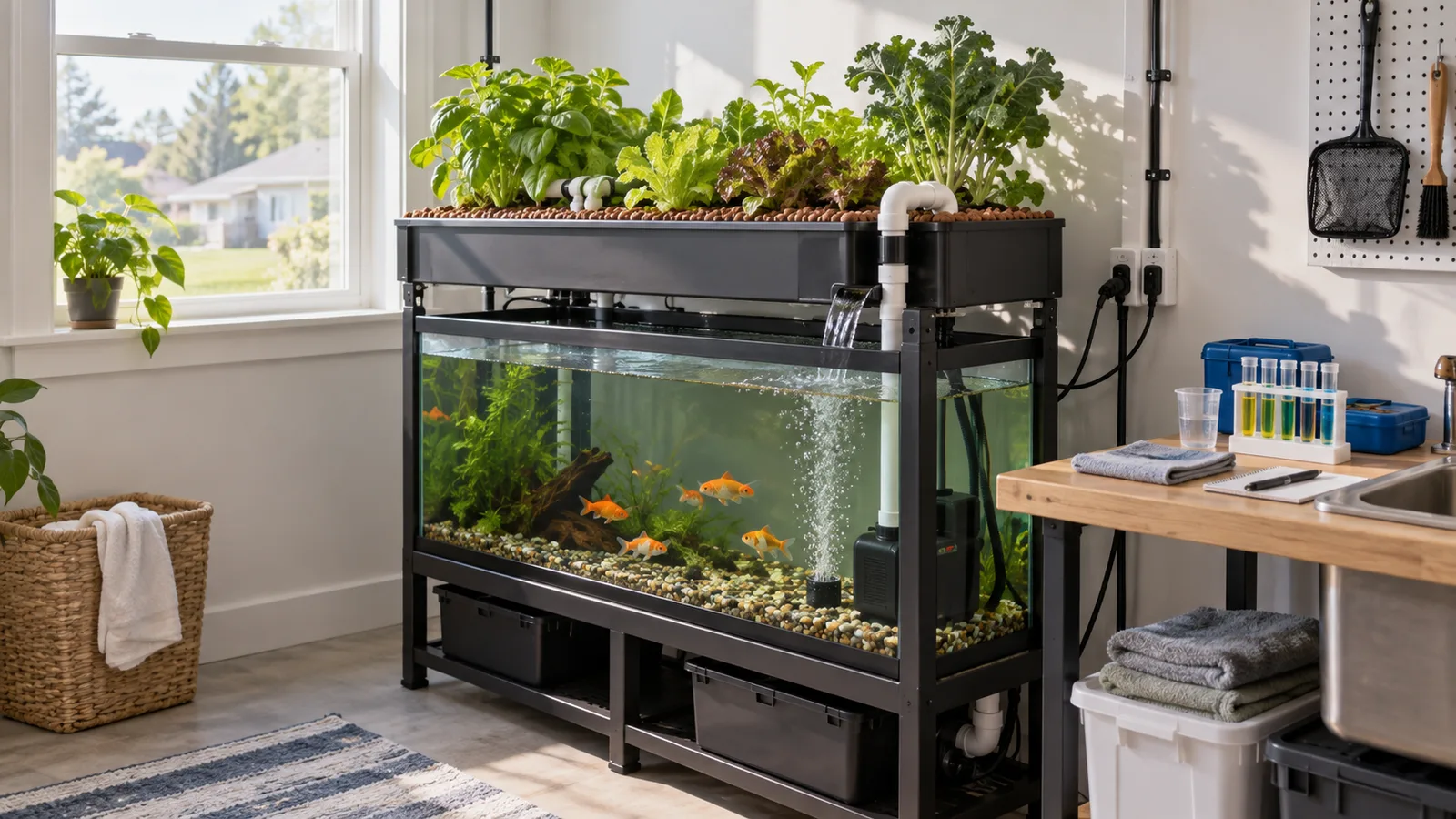
These generally take more floor space but expose the operator to the elements that matter in a scalable system: a fish tank, pump, grow bed, media, drain route, biofiltration and service access. They are appropriate when the buyer accepts basic assembly and has a protected outdoor or garage location. For a first project, choose a layout that lets one person test water, clean a filter and inspect every connection without moving large components.
What “complete” should mean
Before placing an order, ask for an inclusion list rather than relying on product photographs. A usable list identifies the tank; pump and rated flow; air pump and diffusers; grow bed or channels; media or net pots; plumbing, valves and fittings; light if the system is indoors; test equipment; instructions; and warranty terms. It should separately identify what the buyer must source locally, such as a GFCI-protected outlet, water conditioner, seedling material, fish, feed, heater or temperature protection.
Factory testing is relevant even for small systems. Ask whether a representative unit is leak-tested, whether fittings are marked, and whether the shipment includes a packing list. At delivery, inspect tanks, grow beds, pump, pipe fittings and electrical components before filling the system.
Compare water stability before plant capacity
New buyers are often drawn to the number of plant sites. For a beginner, usable water volume and stable filtration deserve more attention. A larger tank can provide more time to detect a feeding error, a blocked return or temperature change. That does not justify overstocking fish; it simply provides more practical operating margin.
Plan to test and log temperature, pH, ammonia and nitrite during start-up. A plant that looks healthy does not prove the fish water is safe. Our guide to cycling an aquaponics system explains why a clear tank is not evidence that the biofilter is mature. For an initial crop, choose modest leafy greens or herbs rather than a heavy fruiting crop with large nutrient and support demands.
A practical U.S. buyer checklist
- Measure the intended location, including doorways, counter load, splash clearance and a path to a sink or drain.
- Confirm the electrical plan: GFCI protection, drip loops and no extension-cord connection near water.
- Check seasonal room or outdoor temperature against the selected fish and crop requirements.
- Ask whether the seller stocks replacement pumps, timers, fittings and media.
- Read the start-up manual before buying, not after delivery.
- Budget for the items outside the box, including test supplies, fish care and lighting where needed.
Rutgers NJAES likewise emphasizes that water-quality monitoring, system design and crop selection remain active requirements as a system starts up. See Rutgers’ introduction to aquaponics systems.
Common beginner mistakes
Do not add fish heavily on the day a kit is assembled. Do not select fish only because they are inexpensive or attractive. Do not hide pumps and drains where they cannot be inspected. And do not assume a small system needs less discipline; it often needs more frequent observation because it has less water buffer.
If fish selection is still undecided, use our practical fish-selection guide before finalizing tank size or temperature equipment. If the goal is a learning system rather than food fish, goldfish suitability in aquaponics is a separate decision worth reviewing.
A first-month operating plan
Before water is added
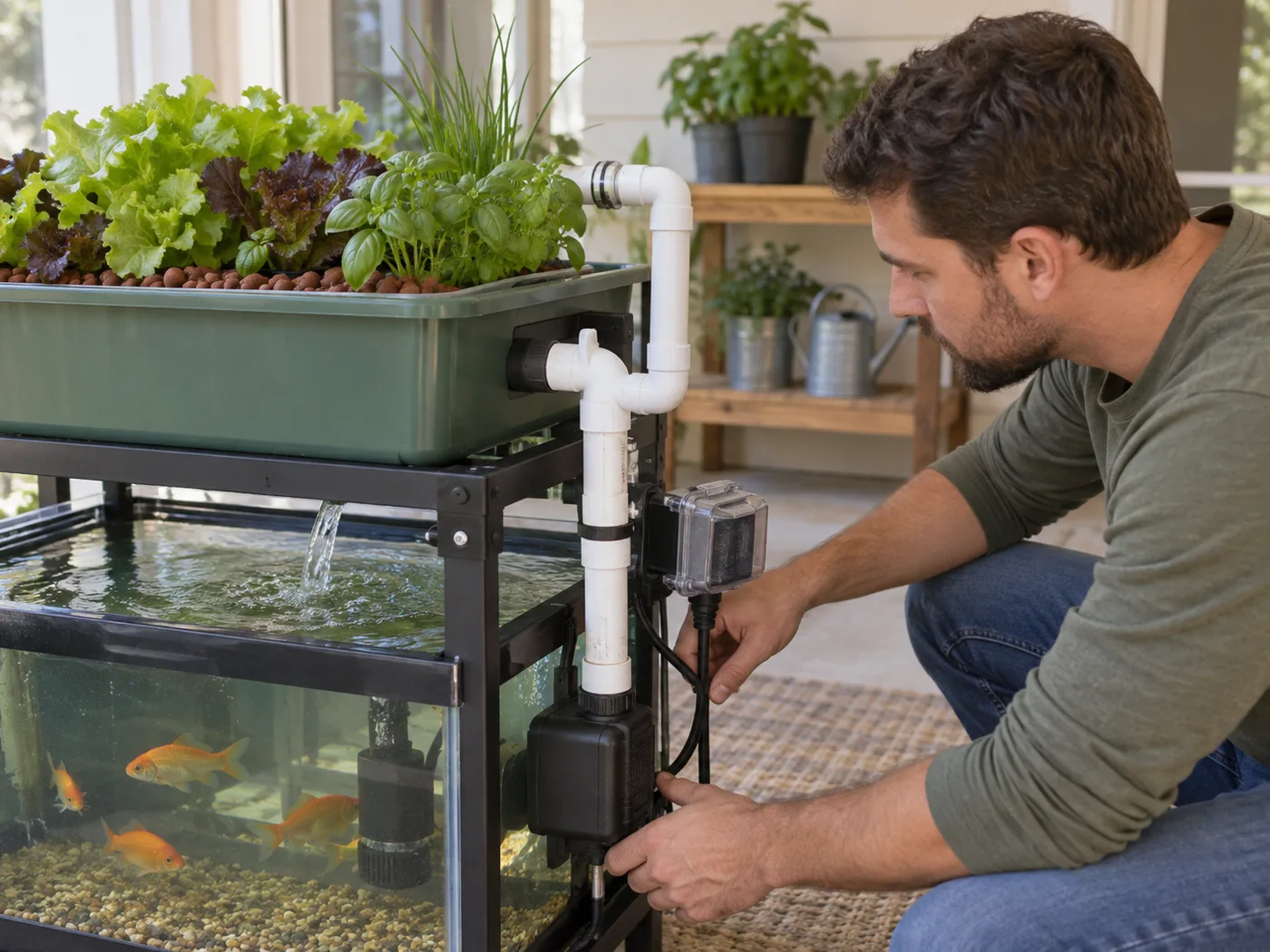
Open every carton and compare the delivered parts with the packing list. Inspect tanks and grow trays for distortion or cracks, dry-fit plumbing, check that a pump can be removed without dismantling the entire system and keep manuals with the order record. Position the equipment before filling: a full tank is heavy, and a system that seems convenient on a workbench can become difficult to service once water, media and plants are in place.
Prepare a simple operating station beside the system. It should include the selected test kit, a logbook, a thermometer, a net, a clean bucket used only for system work and the contact details for local fish-care advice. This is also the moment to label plugs, pumps, air equipment and isolation points. Factory testing can confirm that a supplier’s equipment circulates water; site preparation confirms that the purchaser can operate it safely in the actual room.
During cycling
Run the water path, check each connection and inspect the return route under normal flow. Confirm that water does not splash toward power connections and that a stopped pump does not overflow a grow tray or drain too much water from the fish tank. Calibrate or verify testing equipment according to its instructions, then log readings at a consistent time. Cycling is biological commissioning, not a countdown; loading should remain low until monitoring demonstrates that the filter community is established.
After fish and plants are introduced
Observe fish before feeding. Changes in respiration, swimming, appetite or surface behavior are often more useful than a single perfect-looking plant. Clean captured solids at the interval that the actual system requires, not at the interval assumed in advertising. Start with a limited number of plants and expand only after the water-quality record, fish behavior and crop response stay stable. This measured approach makes a small kit a credible learning system and creates a better handover record if the system moves to a school, tenant or family member.
Questions to ask an online seller
Ask whether the system is intended for indoor or outdoor use; whether it is supplied for U.S. voltage; how warranty claims are handled; and whether spare pumps, timers, fittings and grow components can be purchased separately. Request the current manual before payment. A manual that explains set-up, cycling, maintenance and troubleshooting is more valuable than a large image gallery. For shipped systems, confirm the delivery method, carton count, damage-reporting process and whether the buyer must provide unloading equipment.
If a seller uses terms such as “self-sustaining,” clarify the operating boundary. Fish still need feed, water quality must still be checked, evaporation and crop harvest still change the system, and electrical equipment still requires safe use. Transparent answers are a positive purchasing signal.
Choose a kit around the first operating month
The best beginner purchase is one that makes the first month manageable. Before ordering, picture the daily work: checking fish behavior, observing water level, feeding responsibly, inspecting the pump and air supply, testing water, cleaning captured solids and checking plants. If the equipment hides those tasks behind fixed panels or inaccessible plumbing, a “complete” kit may be less suitable than a simpler system with visible components.
Ask for a start-up sequence before purchase. It should explain dry assembly, leak testing, safe electrical routing, cycling, gradual livestock introduction, daily observations and what to do after a pump or power interruption. A useful manual also distinguishes between a routine cleaning task and a situation requiring specialist fish-health or electrical advice. This evidence matters more than a product page that promises a maintenance-free ecosystem.
Confirm the installation location first
Measure the final location and access route before a kit is shipped. Consider tank weight when filled, floor or counter capacity, splash protection, access to a sink or drain, room temperature, direct sunlight, ventilation and the route for opening cartons. Keep electrical connections above splash level with appropriate protection and drip loops. An attractive placement that prevents filter cleaning or water testing is not a good installation.
For an outdoor starter system, consider seasonal temperature, weather protection, pest access and the ability to observe fish every day. For an indoor system, plan lights, humidity, noise and a safe response to a spill. These conditions help determine whether a compact classroom-style unit, aquarium conversion or small media-bed kit is the more realistic first system.
Treat delivery as part of the purchase
When a kit arrives, inspect it before filling. Compare cartons against the packing list, check tanks and grow components for cracks or distortion, verify the pump, timer and air equipment, and dry-fit the plumbing. Photograph transport damage and report it within the supplier’s stated process. Keep labels and manuals with the purchase record so replacements can be identified later.
A beginner does not need a large system to learn well. They need a documented, observable system with enough time and space to respond safely. A modest first kit that is properly cycled and maintained provides a stronger basis for later expansion than a large package installed without preparation.
FAQ
What is the easiest aquaponics kit for a beginner?
The easiest option is the one sized for the available space and supported by clear setup, cycling and maintenance instructions. A compact aquarium conversion may be easiest for an existing tank owner; it is not automatically the best choice for a family wanting substantial food output.
Does a beginner kit include fish and plants?
Often it does not. Confirm every included item in writing and check local rules, availability and care requirements before sourcing fish.
Can a beginner start with a small kit indoors?
Yes, provided the location handles water, electricity, light, temperature and routine inspection. Protect the surface beneath the system and keep electrical connections away from splash zones.
Conclusion
A beginner kit should make safe learning easier, not conceal the work of fish care, filtration and water testing. Compare system category, true inclusions, service access and start-up support before comparing marketing claims. A modest, observable system with a realistic operating routine is a stronger first purchase than an oversized promise.
CTA — Need help defining a beginner-friendly system scope? Contact Us with your U.S. location, available space, intended crops and fish plan. We can help you identify the equipment and installation-preparation questions to resolve before ordering.

