
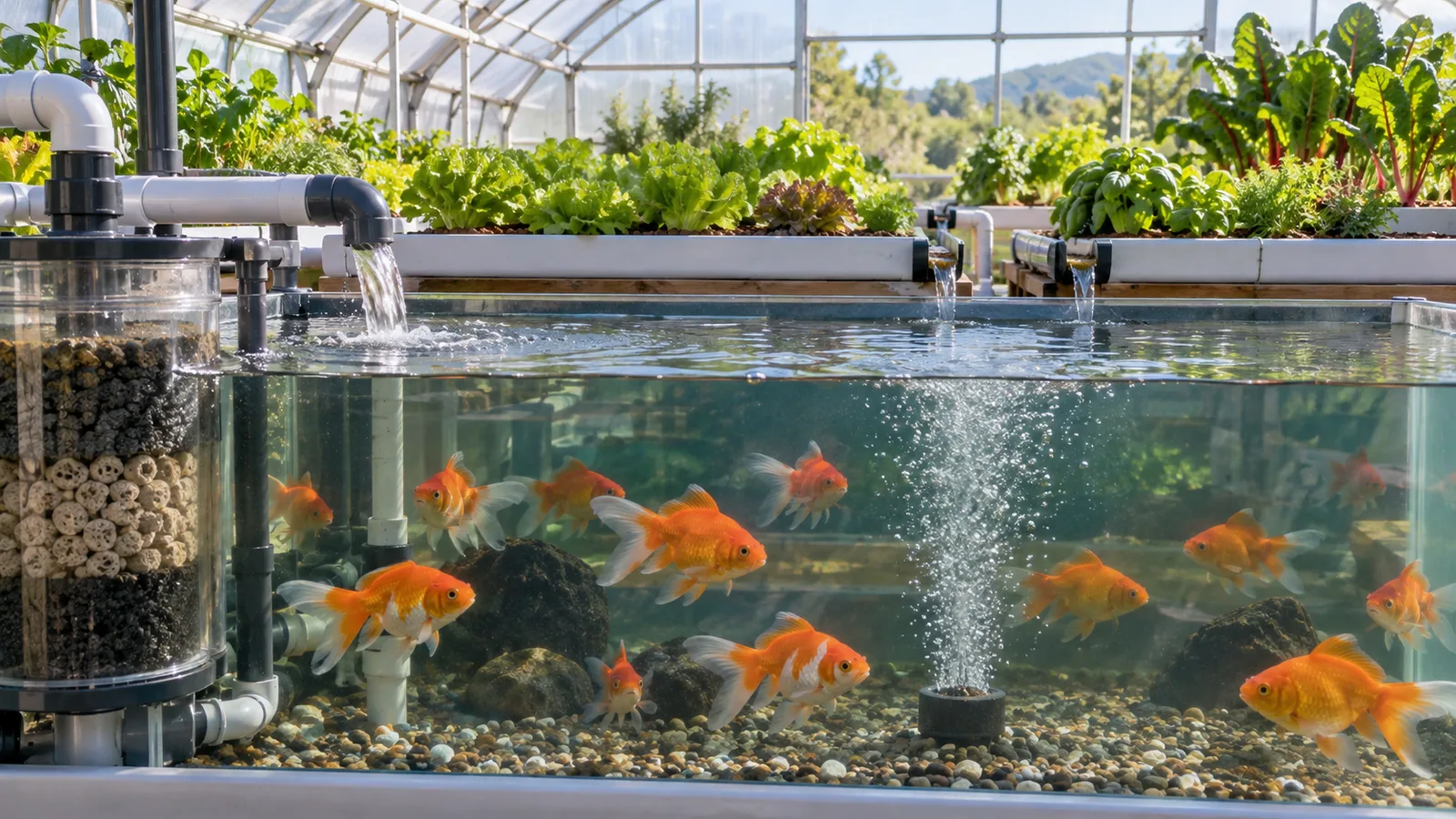
Yes. Goldfish can be used in an aquaponics system, especially for educational, demonstration, hobby and ornamental projects—but they are not automatically the best fish for every system. Their suitability depends on water temperature, tank volume, oxygen, fish welfare, local rules, desired crop output and whether the project is intended to produce food fish.
Goldfish are often chosen because they are familiar, widely available and can tolerate a temperate water range. That does not make them disposable “starter fish” or a shortcut around cycling and filtration. They need stable water quality, adequate oxygen, conservative stocking and a responsible long-term plan for care. A grower should choose them because they fit the project objective, not because they are inexpensive.
Oklahoma State University lists goldfish among fish commonly used in aquaponics. Read its aquaponics overview. USC Sea Grant’s aquaponics education material shows why water temperature, oxygen, pH, alkalinity and nitrogen compounds must be monitored together and includes goldfish in its species-temperature comparison. Read the USC Sea Grant guide.
The short answer
Goldfish are often a reasonable choice when the project is small, non-food-fish focused, located in a suitable temperature range and operated by people who can test water and care for fish daily. They are less suitable when the project requires a food-fish harvest, operates at water temperatures outside their practical range, needs very high nutrient output from a small tank, or lacks a responsible care plan.
Use a goldfish project as a controlled fish-welfare and learning system: cycle the biofilter, stock gradually, feed appropriately, provide aeration, remove solids and record water quality. Do not add plants or fish density faster than the system can support.
Goldfish fit best in certain project types
Education and demonstration systems
Goldfish can work well in schools, community projects and visitor displays because they make the fish side of the nutrient cycle visible. This use still requires an assigned adult or trained operator, holiday care arrangements, testing supplies and an emergency plan. A classroom system should be designed for reliable observation and welfare, not maximum density.
Home ornamental systems
For a home setup, goldfish can complement herbs, leafy greens and decorative planting where fish are not intended for food. The operator should still consider space for fish growth, temperature changes, tank cleaning, electrical backup and the long-term destination of the fish.
Not usually a food-production choice
Where the farm’s main objective is edible fish harvest, select a species that is legal, marketable and appropriate to the local climate and buyer requirements. Goldfish are generally an ornamental choice, so do not frame them as a substitute for a commercial food-fish species.
For a comparison of fish-selection factors such as climate, permits and market fit, read What Fish Are Good for Aquaponics?. This article focuses specifically on the suitability and care implications of goldfish.
The conditions that matter most
Temperature must fit both fish and crops
Water temperature affects fish metabolism, dissolved oxygen, plant growth and biofilter performance. Goldfish are commonly kept in temperate-to-warm water, but the practical target should come from the selected variety, local climate and the whole system—not a copied online number. Check seasonal highs and lows before placing a tank outdoors or in an unconditioned greenhouse.
Oxygen and circulation are life-support functions
Goldfish need oxygenated water, and so do biofilter organisms. Aeration, pump flow and emergency response must be sized for the fish load and the worst credible warm-weather condition. Never assume a waterfall return alone is enough aeration. Inspect air stones, diffusers, check valves and power backup as part of routine maintenance.
Tank volume, biomass and feed matter more than fish count
“How many goldfish?” is not answered safely by a fixed number. Fish size, growth, feed rate, water volume, dissolved oxygen, filter capacity, crop area and maintenance determine the real limit. Start conservatively, record biomass and feeding, and only increase load after stable measurements and fish behavior show that the system has capacity.
Solids management protects fish and plants
Goldfish produce solids that need removal before they accumulate in pipes, pump intakes, tower planters or raft troughs. Use a treatment path that suits the grow method, and clean mechanical filtration before captured material decomposes. A routine based on How to Maintain an Aquaponics System helps keep solids management visible rather than reactive.
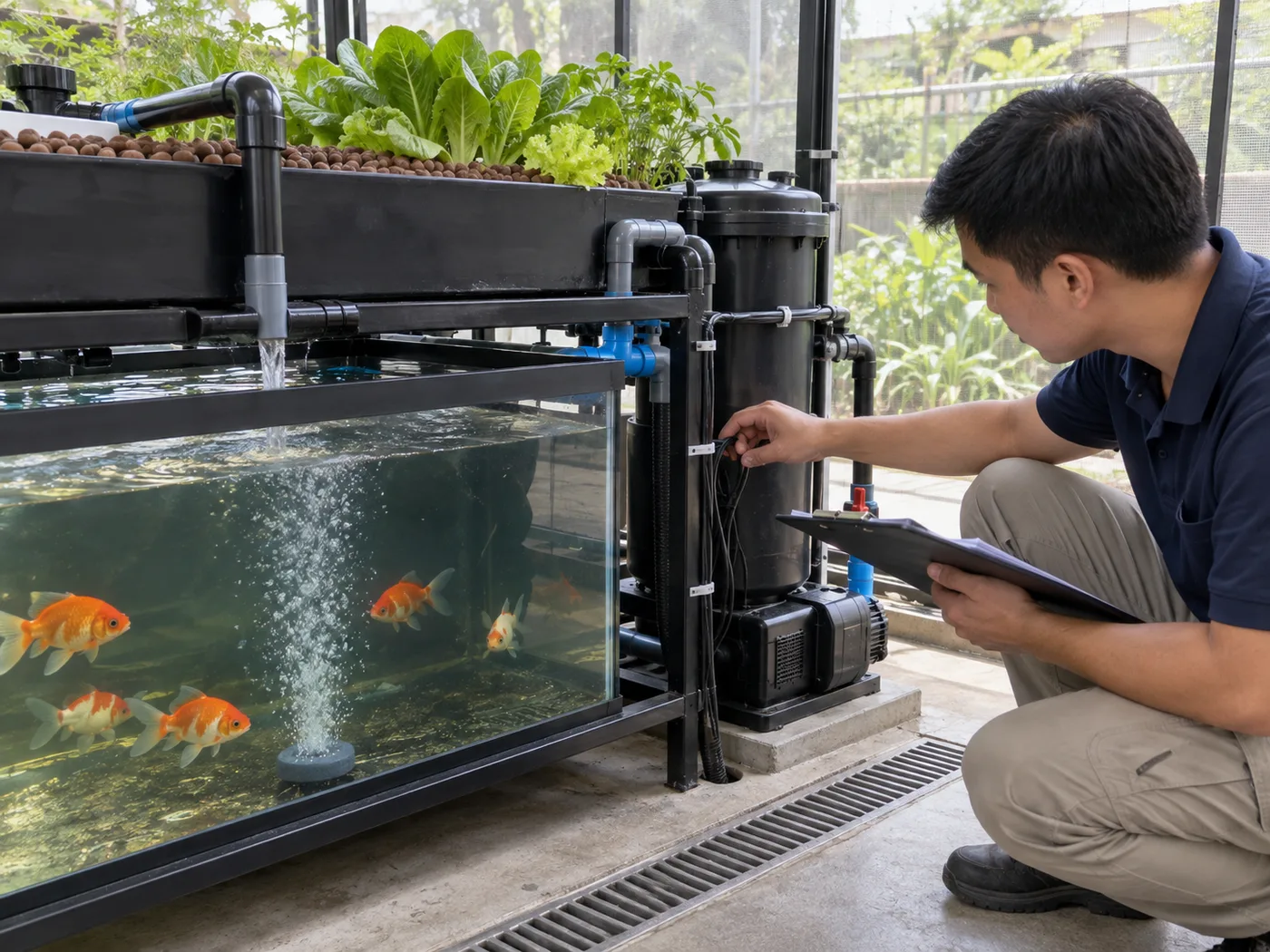
A responsible goldfish start-up sequence
1. Decide the welfare and project objective
Document whether the system is educational, ornamental, research-based or food-production oriented. Define who feeds fish, tests water, cleans filters and responds during weekends, holidays and power failures. If no one owns those tasks, delay stocking.
2. Commission and cycle before meaningful stocking
Run pumps and aeration, leak-check the water path and establish a mature biological filter before increasing fish load. A clear tank is not proof that ammonia and nitrite are safe. Use the staged preparation approach in How to Start Aquaponics and keep early loading conservative.
3. Acclimate and observe
When fish arrive, avoid sudden temperature or water-chemistry changes. Use a documented acclimation procedure appropriate to the source and species. Observe respiration, swimming, appetite and fin condition daily. Do not feed normally after a major transport, temperature event or water-quality problem until the situation is assessed.
4. Match plant demand to gradual nutrient supply
Young or lightly stocked fish may not support a dense crop. Start with a manageable number of leafy plants and observe the system before expanding. Avoid supplementing the fish tank casually to force crop growth; every input must be reviewed for fish and food-crop suitability.
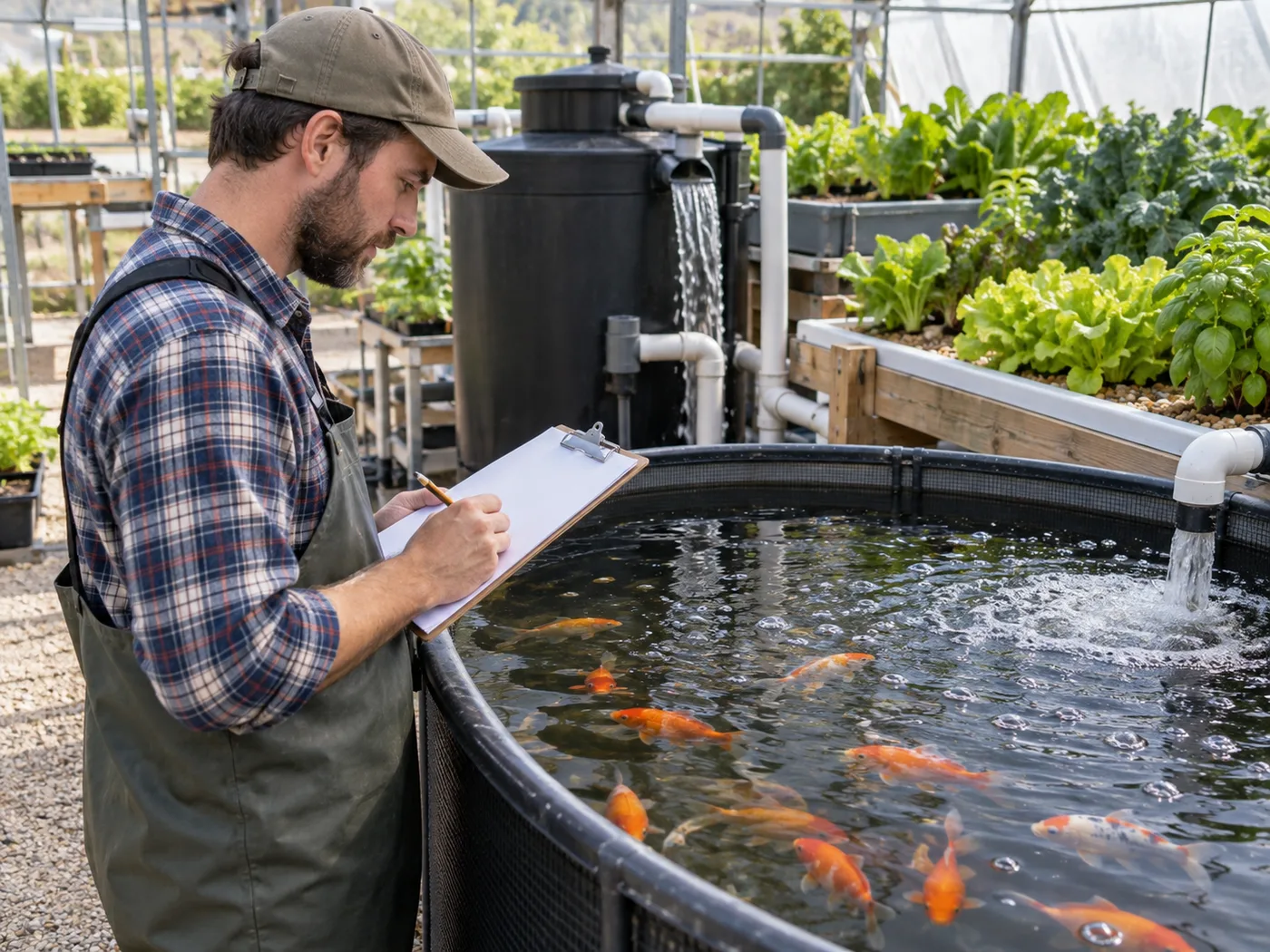
5. Keep records that help decisions
Record water temperature, pH, ammonia, nitrite, nitrate where relevant, feed, fish observations, mortality, cleaning, power events and interventions. Trend records help distinguish a feeding change from a filter issue or a seasonal temperature problem.
> CTA — Building an educational or ornamental aquaponics project? Share your tank size, location, goldfish plan, crops and operator routine. We can help define an observable equipment and filtration scope. Ask for Product Catalog.
Common mistakes to avoid
Treating goldfish as sacrificial cycling fish
Do not expose fish to an avoidable immature-biofilter event. Fish welfare should guide start-up. Use a controlled cycling plan and do not stock simply to create ammonia quickly.
Overstocking a visually small system
Small tanks change quickly. More fish can mean more feed, oxygen demand and solids than filtration and plant area can manage. Increase only against records and stable results.
Ignoring hot-weather oxygen risk
Warm water holds less dissolved oxygen while fish demand can rise. Inspect shade, insulation, aeration, water movement and emergency backup before the hottest period, not after fish gasp at the surface.
Forgetting the long-term care plan
Goldfish can live for years. Establish responsibility for school breaks, project closure, fish growth and humane rehoming before they arrive.
How goldfish affect system decisions
Crop choices should follow the real nutrient supply
Goldfish can supply nutrients to plants, but their contribution is driven by biomass and feeding, not by their species name. A small, lightly fed ornamental group will not necessarily support a dense vertical tower or a large raft bed. Begin with a modest herb or leafy-green zone and add planting only after the fish, biofilter and water-quality records are stable.
Equipment should be quiet, visible and serviceable
School and home systems benefit from equipment that supports daily observation: a tank with a clear viewing area, accessible solids removal, an audible or visible aeration check, protected electrical connections and a simple water-test station. Concealing all pipes may look tidy but can make a minor leak or blocked line hard to identify.
Delivery and quarantine are separate from routine care
New fish can arrive stressed by transport and water differences. Do not rush them into a system simply to “start producing nutrients.” Prepare the receiving water, confirm the system is cycled and follow a documented acclimation plan. Where disease, quarantine or stocking rules apply, get local veterinary or aquaculture guidance rather than relying on a generic online schedule.
A goldfish system still needs an emergency plan
Write down what the operator does if power fails, a pump stops, an air line disconnects or temperature rises quickly. Include a responsible contact, backup aeration or power arrangement suited to the project risk, and the location of test equipment. The goal is not to add costly complexity to every small system; it is to avoid leaving fish without a clear response plan.
A weekly operating checklist
- Compare fish appetite, swimming behavior and visible condition with the normal baseline.
- Confirm air output, water movement, filter condition, drain route and any alarm or backup equipment.
- Test and record the parameters selected in the system plan; investigate trends rather than reacting only to one result.
- Inspect roots, grow-bed surfaces and narrow return passages for retained solids.
- Review whether crop planting density still matches the current fish feed and water-quality capacity.
This routine makes goldfish a legitimate part of an aquaponics learning system rather than an afterthought beneath the plants.
Supplier and delivery checks
For a goldfish-focused project, request a clear scope for tank volume, aeration, solids removal, biofilter, pump, grow bed, testing tools, power requirement and safety accessories. During factory testing, verify pump flow, air distribution, drains, valve access and easy filter cleaning. At shipment inspection, confirm tanks, fittings, air equipment, test points and manuals. At site installation, complete flow, leak, electrical and access checks before fish delivery.
FAQ
Can goldfish survive in a simple aquaponics system?
They may, but survival is not the standard. The system must provide stable water quality, oxygen, suitable temperature, adequate volume and routine care. Start with a simple system only if it remains observable and maintainable.
Are goldfish good for cycling an aquaponics system?
They should not be used as disposable cycling animals. A biofilter should be commissioned through a controlled, welfare-conscious method before meaningful stocking.
What plants work with goldfish aquaponics?
Leafy greens and herbs are often a manageable starting point, but crop choice also depends on light, temperature, fish feed input and system design. Start modestly and expand from records.
Conclusion
Goldfish can be a practical aquaponics choice for ornamental and educational systems when their care is treated seriously. Match the fish to the climate and project objective, cycle before stocking, manage solids and oxygen, and use records to control loading. The right result is a stable learning or display system—not simply fish placed beneath plants.
CTA — Need a practical school, community or ornamental system plan? Contact Us with your tank location, intended fish, crops and responsible operating team.

