
Introduction
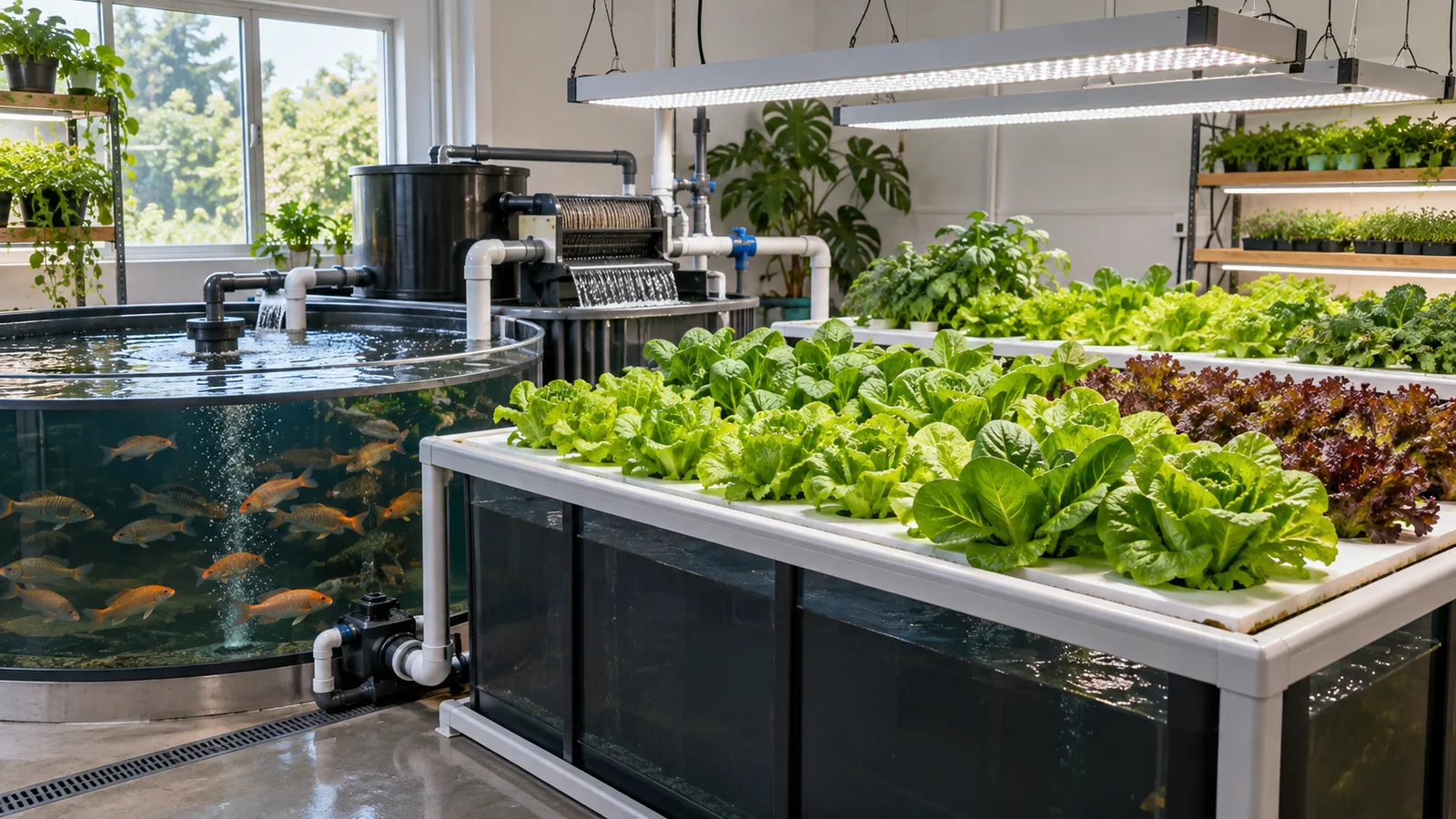
The best indoor aquaponics system for leafy greens is not the one with the most planting holes. It is the one that keeps water quality, root-zone oxygen, lighting, temperature, solids management and maintenance access stable in the room you actually have. Lettuce, basil, Asian greens and many herbs have comparatively short crop cycles, but indoor production makes every pump, light, heat source and cleaning task more visible.
For many indoor leafy-green projects, a deep-water culture (DWC) raft section is the most forgiving production format once solids are adequately removed and water is well aerated. NFT can be productive and compact but is less tolerant of pump interruptions and unmanaged solids. Media beds are flexible for a small mixed-crop system; tower systems save floor space but need disciplined filtration and uniform distribution.
The short answer
Choose DWC for steady, accessible leafy-green production and straightforward crop handling. Choose NFT when filtered water, reliable power and a narrow leafy-green crop plan are established. Choose a media bed for a small home or learning system where flexibility and simple observation matter more than maximum plant density. Choose a tower only when vertical space is valuable and the operator can maintain clean distribution lines.
The crop should not be added until fish care, biofiltration and water tests are stable. Leafy greens can be fast, but they cannot correct an unstable fish loop.
Why leafy greens suit aquaponics
Leafy crops generally have modest structural demands compared with fruiting crops and can be harvested on shorter cycles. A technical SRAC guide identifies leafy greens as common aquaponic greenhouse crops and discusses DWC and NFT among the frequently used production approaches. Read SRAC’s greenhouse-crops guide.
Suitability is not a yield guarantee. Variety, water temperature, pH, nutrient balance, dissolved oxygen, light intensity, harvest timing and air movement all change the result. Record the crop and environmental conditions instead of copying a planting schedule from a different climate or system size.
The fish and plant sections must also be treated as one operating system. Oklahoma State University’s SRAC 454 guidance explains the linked production concept and the need to size circulation, aeration and treatment equipment for the actual system rather than for a crop photograph. Read the SRAC 454 technical guide.
Option 1: DWC raft beds
In DWC, plants sit in rafts above aerated water with roots suspended in the nutrient stream. The surface is easy to inspect and transplanting/harvesting can be efficient. This format is often a strong choice for lettuce and other leafy greens because roots have consistent access to water and the growing area can be organized by crop stage.
The design requirement is effective upstream solids removal. Fish solids must not be allowed to settle beneath rafts or accumulate in root zones. Provide access to lift rafts, clean channels, inspect aeration and isolate a section if necessary. For a home system, a modest, well-serviced DWC zone is usually more useful than a large raft bed with no access aisle.
Option 2: NFT channels
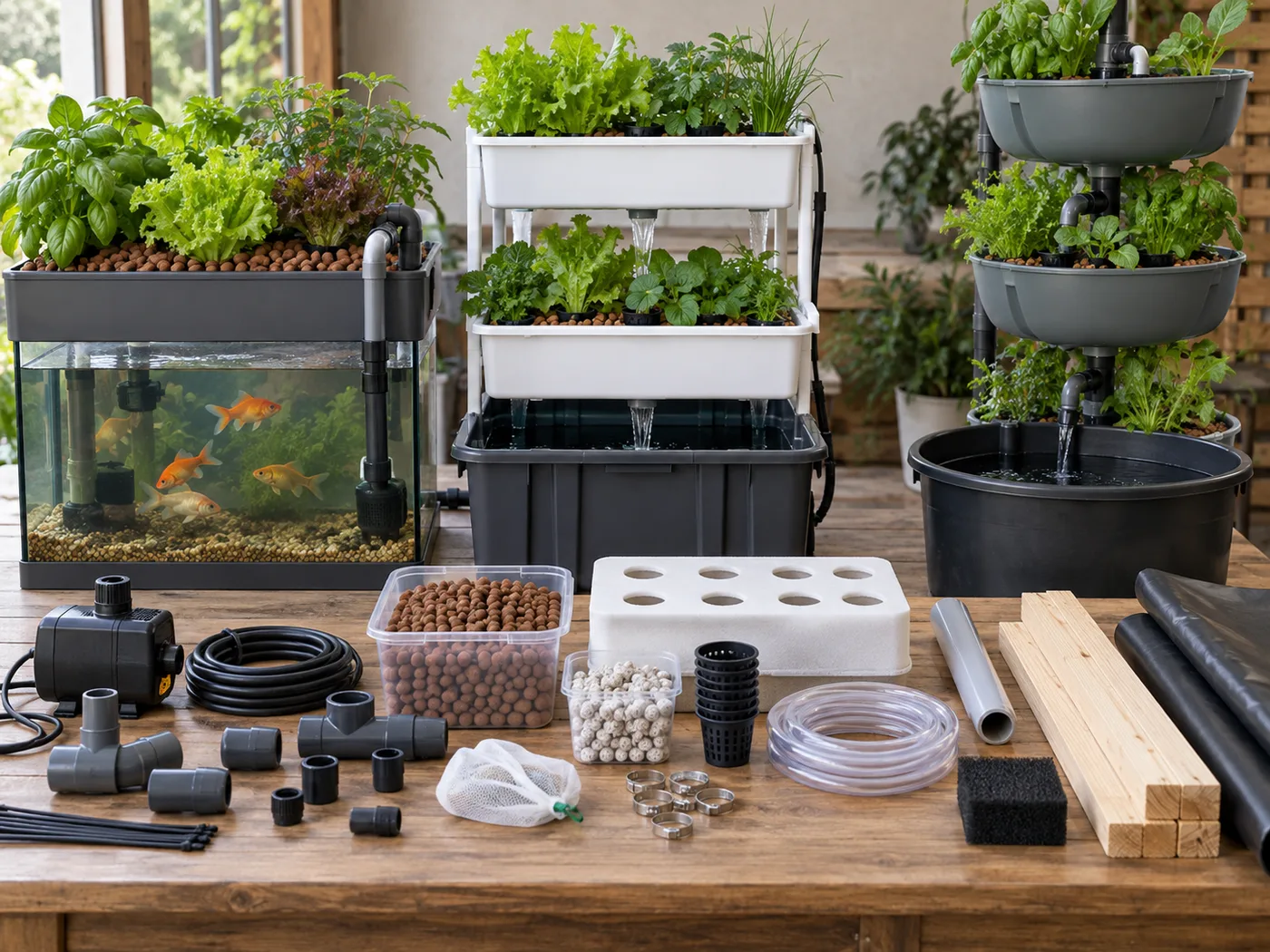
NFT moves a shallow flow through channels and can use vertical or bench space efficiently. It can fit basil, lettuce and other light-rooted greens where upstream clarification is reliable. The same feature that makes NFT compact makes it sensitive: a blocked channel, failing pump or uneven slope can dry roots quickly.
Use a cleanable pre-filter, adequate channel slope, accessible return points and a response plan for power interruption. Do not force a large-rooted crop into an undersized channel. A factory testing checklist for a supplied NFT module should include even distribution, no standing water, secure supports and a verified return path before shipment.
Option 3: media beds
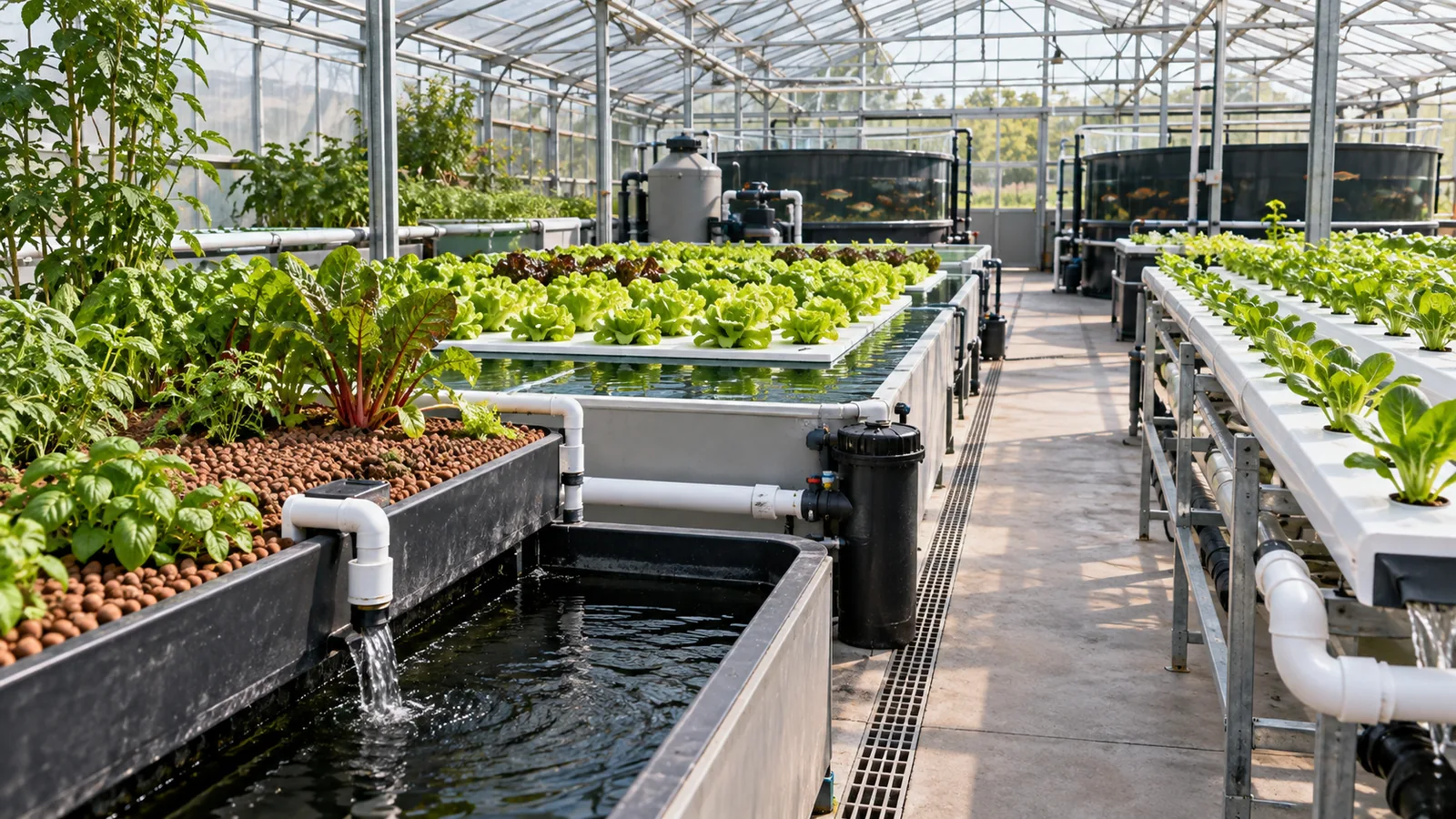
Media beds combine plant support and biological surface area, and they are useful for small indoor systems with herbs, leafy greens and occasional larger plants. They allow direct observation and can tolerate small changes in crop choice. However, media must be selected, washed and serviced carefully; a bed can become a solids trap if the water path and cleaning routine are poor.
Media-bed systems are a sensible choice for a beginner who wants a manageable learning system, not a reason to skip water testing. Read what bacteria do in aquaponics before treating the bed as a substitute for a stable biofilter plan.
Option 4: vertical towers
Towers can put many plants into a small footprint, especially for herbs and baby-leaf crops. They also place emitters, plumbing and drainage above the fish system, which makes uniform flow and solids control non-negotiable. Inspect every outlet, protect the floor from splash and give yourself enough room to remove a tower for cleaning.
For the specific integration checks, see our tower-planter guide. A tower is a crop module, not an alternative to filtration.
Design the indoor room around operation
Light and heat
Place lights so operators can reach plants and fixtures without leaning over open water. Use timers and electrical protection appropriate to a wet location. Measure rather than assume: lighting adds heat, and indoor temperature affects both plant growth and fish welfare. Separate the questions “do the leaves have enough light?” and “is the fish water within the species’ safe range?”
Water containment and access
Plan a waterproof floor or containment tray, a controlled drain route, a safe electrical layout and service clearance around the tank, filters and grow area. A visually compact system may be difficult to clean if every union and screen is behind a wall or under a bench.
Crop timing
Start one or two leafy-green varieties at a time. Record seeding, transplanting, harvest weight, root condition, water tests and any pests. These records show whether the system supports the crop before you expand plant sites.
Match the production module to the crop plan
Indoor leafy-green selection becomes clearer when the crop plan is described in operational terms. A restaurant or small retailer may value frequent, even harvests of a few lettuce varieties. A school may value visible roots, simple cleaning and a broad mix of herbs. A home grower may value compactness and the ability to harvest a small amount several times per week. These are different production objectives, even when all are called “indoor greens.”
For a steady lettuce program, divide the growing area into stages: germination outside the fish loop where appropriate, a transplant zone, a main production zone and a harvest/cleaning zone. DWC rafts can make this staging easy because plant sites can be grouped by age. The raft itself does not create uniformity; spacing, air movement, light distribution, water temperature and a dependable transplant schedule do.
For basil, leafy herbs and compact Asian greens, NFT or a well-maintained vertical module may be useful where quick access and clean water are available. Avoid using the same crop density for every cultivar. Dense foliage can hold humidity, restrict airflow and make pest checks harder. Start with enough space to see the plants and reach the plumbing, then use records to decide whether an increase is justified.
Root-zone checks operators can actually perform
The root zone should be visible or accessible in any format selected for indoors. Healthy roots are not judged by a single colour description: cultivar, nutrients and water conditions vary. Instead, check for sudden change, unpleasant odour, slimy solids, uneven wetting, accumulated debris and plants that differ sharply from neighbours. Compare those observations with water temperature, dissolved-oxygen records and the condition of upstream filtration.
In a raft system, lift a representative raft at planned intervals rather than waiting for a crop problem. In NFT, inspect the beginning, middle and end of several channels because a distribution failure may affect only part of the run. In a media bed, check that flooding and draining are even and that no zone remains saturated or dry. These routine checks are a more credible indicator of operating health than a product photograph.
Water quality, plants and fish: avoid one-sided corrections
An indoor grower can be tempted to treat a leaf symptom as a plant-only issue. In aquaponics, a rapid addition intended to correct plants may affect fish and nitrifying bacteria. First confirm the symptom, then review pH, temperature, ammonia, nitrite, nitrate, alkalinity where relevant, feed input, recent cleaning and light conditions. Consider whether the symptom appears on new or old leaves, across the entire system or in one module.
If an adjustment is necessary, change one controllable factor at a time and record the date, dosage, method and response. Do not claim that a crop will thrive at one universal pH or temperature; the operating compromise must fit the fish, plant and bacteria system together. The aim is a stable, documented range—not a dramatic correction that looks effective for one day.
This is also why installation preparation should include reachable test points, a safe work surface for testing, labels on valves and a place to retain records. A system that is difficult to test is difficult to improve.
Indoor biosecurity and food-handling habits
Indoor does not mean pest-free or maintenance-free. People, tools, new seedlings and open doors can introduce pests or contamination. Keep transplant trays, harvest containers and floor-cleaning tools separate from fish-water equipment where possible. Clean hands and tools before moving between tanks, filters and edible leaves. Remove dead plant material promptly rather than allowing it to fall into the loop.
At harvest, use clean containers and avoid placing edible leaves on the floor, tank rim or filter cover. If the system is supplied for a school, restaurant or community project, write these routines into the handover instructions. They are simple habits, but they strengthen traceability and help ensure that product application matches the operator’s actual capability.
Commission an indoor leafy-green system in stages
Commissioning should begin before plants are installed. During factory testing or site acceptance, verify that tank, filter and grow-section levels remain stable; that each distribution point reaches its intended module; that drainage has a safe route; and that electrical equipment is protected from splash and condensation. Test alarms and backup aeration before livestock creates urgency.
When the water loop and biological filtration are stable, introduce a small crop block rather than filling every site. Observe one complete crop interval: transplanting, daily inspection, root checks, harvest, raft/channel cleaning and replanting. This exposes access or labour problems while the scale is manageable. Only then decide whether to add channels, rafts or towers.
The same staged process makes supplier communication more productive. Instead of asking whether a system is “best,” provide room dimensions, crop target, water source, fish species, temperature range, available labour and delivery constraints. A meaningful equipment recommendation should respond to those customer requirements.
A selection checklist
- Crop objective: salad greens, herbs, baby leaf or a mixed learning garden?
- Available floor area, ceiling height and maintenance aisle?
- Power resilience and backup aeration plan?
- Existing solids removal and biofiltration capacity?
- Ability to clean channels, lift rafts and inspect roots?
- Water temperature and light-management plan?
- Delivery, installation preparation and safe drainage route?
Labour and access are selection criteria
The indoor format must suit the person who will operate it on an ordinary weekday. Count the steps required to feed fish, rinse a screen, test water, transplant seedlings, inspect roots, harvest leaves and clean the growing surface. If any task requires moving heavy equipment, leaning over open water or disconnecting multiple pipes, it is likely to be skipped when the schedule is busy. That creates a higher operating risk than a slightly smaller growing area.
During site planning, mark service aisles, door swings, drainage points and storage for nets, test kits and harvest containers. Ask the supplier to show access points in the layout drawing rather than relying on a top-down product image. Installation preparation should also consider where a wet component can be placed during cleaning and how spills will be contained. These details help a home, school or commercial operator keep the indoor system clean and observable throughout the crop cycle.
Use records to choose the next expansion
After one stable crop cycle, compare the intended crop plan with actual observations: plant survival, harvest consistency, labour time, water tests, filter-cleaning frequency and power use. Expand only the constraint that records identify. If the crop area is stable but harvesting is slow, improve access. If water remains clean but plant sites are empty, improve transplant scheduling before adding hardware. Evidence-led expansion is safer than adding more towers or channels because they look productive in a catalogue.
For broader planning, our aquaponics design guide helps turn these checks into a water-path and equipment plan.
FAQ
Is NFT or DWC better for indoor lettuce?
DWC is often more forgiving for leafy greens because roots remain in an aerated water body and crop handling is accessible. NFT can be a good fit when water is well filtered, channels are correctly designed and the system has reliable flow. The better option depends on service capacity, not a universal ranking.
Can I grow leafy greens without grow lights indoors?
Only if the site provides sufficient, dependable natural light for the crop and season. Most fully indoor rooms need a planned lighting approach. Avoid treating a window as a guaranteed production specification.
Why are roots brown in an indoor system?
Check root health, dissolved oxygen, water temperature, accumulated solids, flow distribution and disease risk. Do not add a product before finding the physical cause.
Conclusion
DWC, NFT, media beds and towers can all grow leafy greens indoors, but they have different failure points. Select the format that the team can clean, inspect and operate every week. Stable fish care and filtration are the production foundation; plant density comes second.
CTA — Planning an indoor leafy-green project? Ask for Product Catalog and send your room dimensions, crop list, water source and target growing area.

