
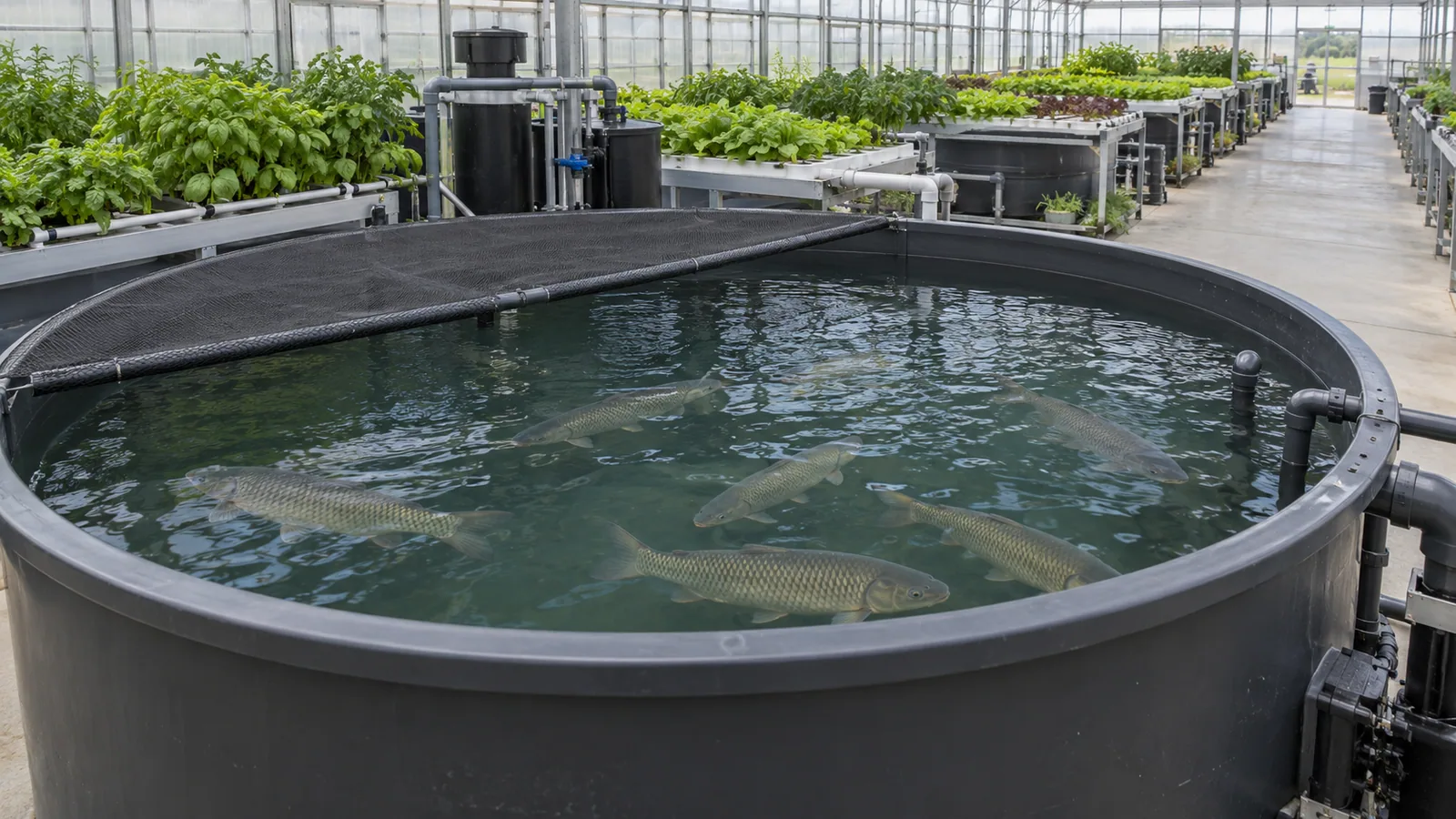
Grass carp may eat limited amounts of some soft or filamentous algae, especially when young or when preferred plants are unavailable, but they are not a reliable algae-control solution for an aquaponics system. Grass carp primarily consume larger aquatic vegetation. They do not reliably control green-water phytoplankton, and using them as “clean-up fish” can add biomass, oxygen demand, feed uncertainty, solids and nutrients to a system that is already experiencing an algae problem.
The better approach is to identify the algae or growth correctly and correct the condition supporting it. In aquaponics, the most common controls are reducing light on fish tanks and nutrient-rich plumbing, removing accumulated solids, maintaining appropriate circulation and aeration, repairing leaks or splash zones, and balancing crop uptake with feeding and fish biomass. Any proposed chemical treatment must be evaluated for fish, biofilter and food-crop safety as well as local legality.
The species name also matters. Grass carp (*Ctenopharyngodon idella*), common carp (*Cyprinus carpio*), silver carp and bighead carp have different feeding behaviors. Advice about one “carp” should not be transferred to another without verification.
What grass carp actually eat
Grass carp are large herbivorous fish best known for consuming submerged aquatic plants. Their feeding preference changes with fish size, water temperature and available vegetation. Young fish may consume a broader range of small organisms and soft plant material, while larger fish can process substantial quantities of vascular aquatic plants.
The Texas Parks and Wildlife Department’s grass carp guidance describes grass carp as long-lived plant feeders that can grow very large and cause extensive damage when mismanaged or allowed to escape. This pond-management guidance does not provide an aquaponics stocking recommendation; it shows why “the fish eat plants” does not automatically mean “the fish will clear algae safely.”
Grass carp may graze filamentous species such as *Cladophora* or *Spirogyra* under some conditions. However, feeding on a material is not the same as controlling it. A fish that samples filamentous algae while preferring tender plants will not necessarily reduce algae faster than it grows. If enough large grass carp are added to force greater consumption, their waste production and oxygen demand also rise.
Algae is not one problem
Green water or phytoplankton
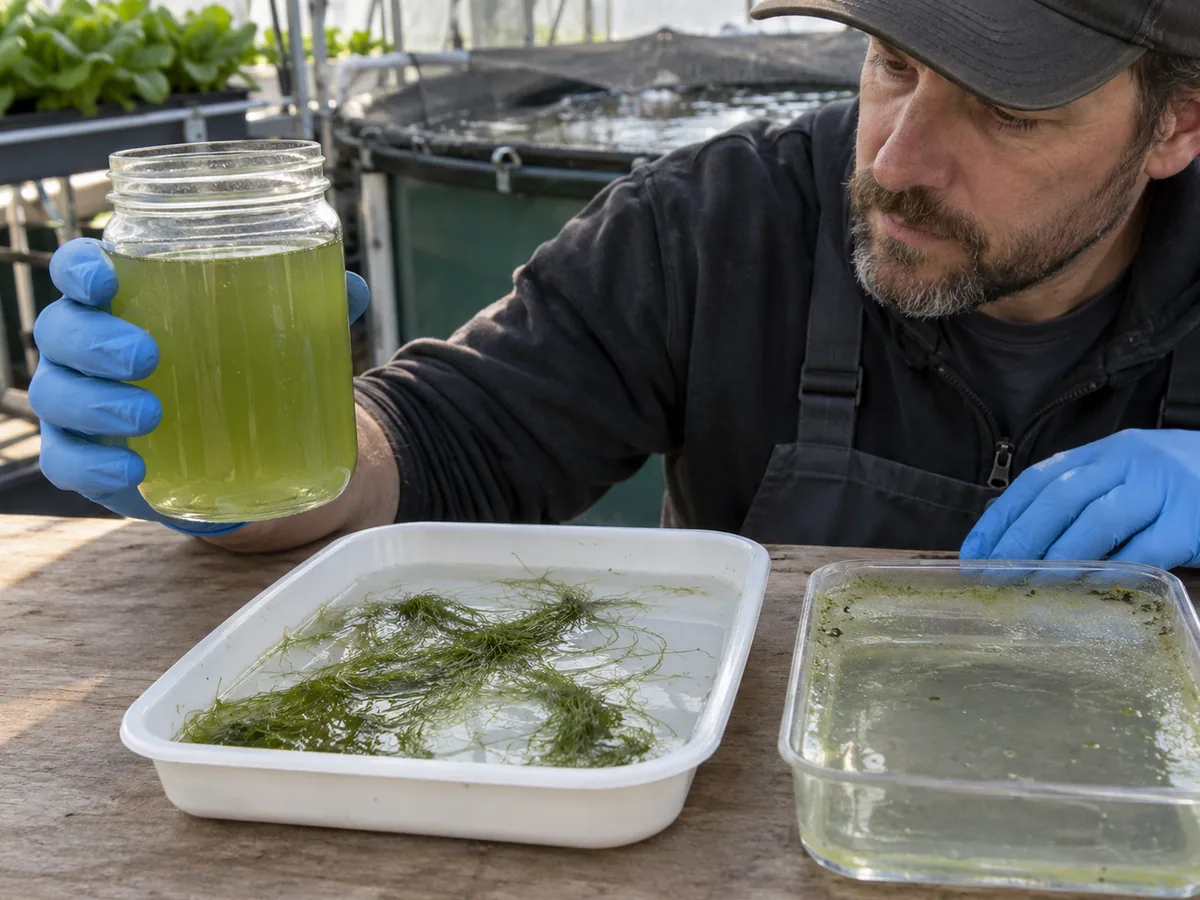
Microscopic algae suspended in water can turn an exposed tank or sump green. Grass carp are not filter feeders adapted to remove phytoplankton efficiently. A green tank is more appropriately addressed by shading the water, reviewing nutrient and solids loading, checking circulation and avoiding repeated disturbance that keeps nutrients available in the water column.
Filamentous algae
Long strands or mats may develop on illuminated surfaces, slow channels or wet edges. Grass carp may consume some types, but their access is limited by the physical design. A fish in a tank cannot clean narrow pipes, plant channels, screen filters, raft undersides or shallow splash zones. Manual removal and prevention are more controlled than stocking a large fish and hoping its preference matches the growth.
Surface biofilm
Slippery green or brown films on tank walls and pipes may contain algae, bacteria and trapped solids. A thin biofilm is not automatically harmful, and attempting to make every wetted surface sterile can damage biological stability. Inspect whether it blocks flow, traps excessive solids, creates a slip hazard or hides a maintenance problem. Clean selectively with methods compatible with the system.
Cyanobacteria
Blue-green growth may be cyanobacteria rather than true algae. Some cyanobacteria can create toxins or severe water-quality problems. Do not assume a fish will make it safe. Restrict exposure, obtain qualified identification where risk is suspected and follow local aquaculture, food-safety and environmental guidance.
Why grass carp are usually a poor aquaponics clean-up fish
They can become too large for the intended tank
Grass carp can grow far beyond the size expected in many backyard or modular fish tanks. A fish that fits at purchase may later require more swimming volume, oxygen, structural safety and handling capability. Turning radius, tank depth, cover design and harvest access should be evaluated for adult or planned harvest size, not fingerling size.
They compete with the production plan
Every fish occupies biomass capacity and consumes oxygen. If the system was designed around tilapia, catfish, trout, ornamental fish or another production species, adding grass carp changes feed demand, waste production and stocking density. It may also complicate grading, harvest and biosecurity. Our aquaponics fish-selection guide explains why temperature, legality, market purpose and operator experience should be decided before species are added.
Their waste can reinforce the algae cycle
Grass carp do not make plant material disappear. Part of what they consume is converted to body mass; the remainder becomes dissolved and solid waste. In a pond, nutrient recycling after vegetation consumption can support phytoplankton. In a closed aquaponics loop, additional waste must still pass through solids removal and biofiltration. Adding fish to reduce algae can therefore increase the load that helped the algae grow.
They may eat valuable plant material
Aquaponics plants are part of the crop, not nuisance vegetation. If fish can reach roots, floating plants, tender cuttings or detached crop material, herbivorous feeding may damage production or alter nutrient uptake. A species chosen for an appetite for plants deserves especially careful separation from the plant component.
Removal and handling are not simple
A fast, large fish can be difficult to net safely in tanks containing pipes, diffusers and drains. Unplanned removal stresses fish and can damage equipment. An algae-control method should be controllable and reversible; adding a long-lived fish without a harvest or relocation plan is neither.
> Comparing fish species for a complete aquaponics system? Send Your Requirements with the tank volume, climate, production goal, local market and applicable species rules.
Legal and biosecurity checks come before stocking
Grass carp are regulated in many locations because they can damage aquatic vegetation if they escape. Rules may distinguish fertile diploid fish from sterile triploid fish and may govern possession, transport, stocking, containment and discharge. A permit that allows grass carp in a pond does not automatically authorize the same fish in an aquaponics business, and regulations vary by country, state and watershed.
The University of Florida’s aquatic plant management guide explains that young grass carp may feed on some filamentous algae but do not control most filamentous species effectively unless preferred vegetation is depleted and stocking is very high; it also states that grass carp do not control phytoplankton. The guide is written for lakes and ponds, so its stocking rates should never be copied into an aquaponics tank. Its feeding and regulatory cautions are useful evidence for rejecting grass carp as a simple algae remedy.
Before ordering any fish, verify the scientific name, health documentation, hatchery source, transport requirements and local permissions. Prevent escape through overflows and drains according to local requirements. Do not release unwanted fish into ponds, canals or natural water. If a supplier cannot provide correct species identification or required documentation, do not accept the shipment.
Find the actual cause of algae in aquaponics
Light reaching nutrient-rich water
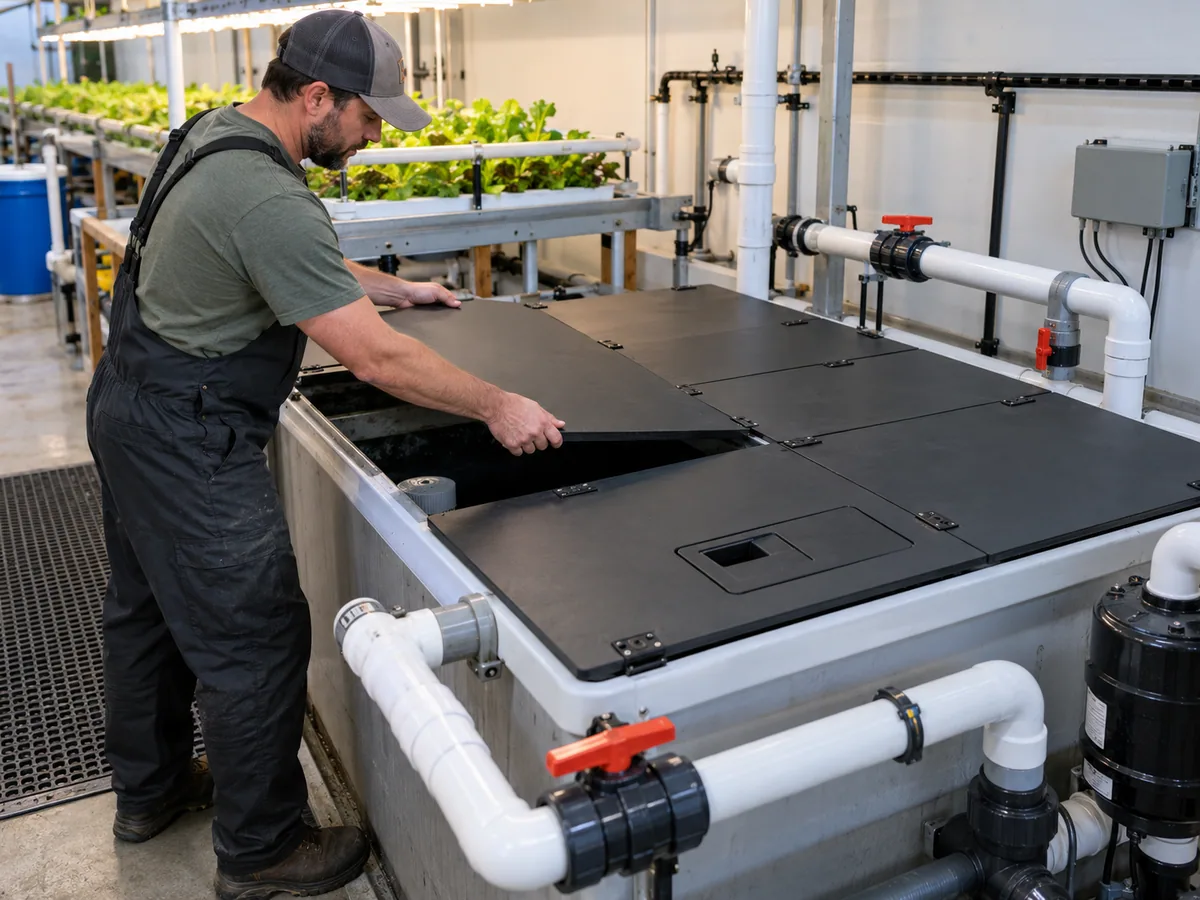
Direct sunlight or grow-light spill on a fish tank, sump, clarifier or transparent pipe is a common driver. Use opaque, aquaculture-suitable covers or materials while preserving inspection, feeding, gas exchange and safe access. Repair covers that warp or leave bright gaps. Do not paint or coat wetted surfaces with an unverified product.
Solids accumulation
Settled feed, feces and decaying roots release nutrients as they decompose and consume oxygen. Inspect tank bottoms, dead pipe legs, sump corners, grow-bed zones and filter bypasses. Remove captured solids on a planned schedule before anaerobic conditions or odors develop. The system should make the removal route visible and accessible.
Imbalanced feeding and plant uptake
Feed input is a major nutrient source. Overfeeding, rapid biomass growth, a recently harvested crop or too little active plant area can leave more nutrients available for algae. Record daily feed and mortality, observe consumption and adjust with species-appropriate guidance. Do not starve fish merely to make the water look clearer; correct the system balance.
Weak circulation or poor hydraulic distribution
Stagnant zones allow sediment and localized growth. Confirm actual flow through the tank, filtration and plant component, not just pump operation. A running pump can still deliver inadequate flow because of head loss, blockage, air lock, a closed valve or worn impeller. Clean transparent sight sections and flow indicators so operators can see changes.
Inadequate aeration
Heavy algae can create daytime oxygen but consume oxygen during darkness, while decaying algae adds biological oxygen demand. Maintain aeration based on fish and microbial load rather than assuming the algae will oxygenate the system. Sudden die-off can create a more serious oxygen problem than the original growth.
Safer, more controllable algae-management methods
Exclude unnecessary light
Use opaque fish tanks, sumps, covers and pipes in illuminated areas. Shade should not seal a tank or prevent daily inspection. Keep grow-light beams on the crop rather than on exposed water. Address reflected light and openings around pipe penetrations.
Remove algae mechanically in stages
Brush, siphon or lift accessible growth without sending a large detached mass through pumps and fish gills. Clean one section at a time when heavy removal could alter oxygen or water chemistry. Keep tools dedicated to the system to reduce contamination.
Improve solids capture and service access
Verify that the mechanical filter receives the intended flow and that captured solids can be discharged safely. Screen or drum filtration can remove particles but will not solve light exposure by itself. Our screen-filter guide explains where screening fits and why downstream biofiltration and maintenance still matter.
Balance fish, feed and crop area
Use feed and water-quality records to compare nutrient input with plant uptake and filter capacity. Replant promptly after harvest when the design depends on active crop area. Avoid sudden biomass or feed increases without confirming oxygen, solids removal and biofilter capacity.
Avoid unverified algaecides
A product labeled for ponds, pools or ornamental aquaria may not be suitable for edible fish, food crops or nitrifying bacteria. Copper and other compounds can harm aquatic organisms or accumulate. Never use household bleach, peroxide dosing, pool chemicals or improvised mixtures in an operating food-production loop without product-specific, legally applicable professional guidance.
The safe pest-control guide for aquaponics plants applies the same principle: a crop-treatment decision must account for exposure to fish, microbes and recirculating water.
Can grass carp be raised as the main production fish?
Grass carp may be cultured for food in regions where they are legal, marketable and supported by appropriate expertise. That is different from adding one or two fish as maintenance workers. A production plan must define verified seed source, lawful possession, temperature, tank volume, oxygen, formulated feed, biomass, growth target, harvest method and market.
Do not expect tank algae to provide a complete diet or a predictable nutrient input. An aquaponics nutrient balance depends on a known feed and feeding rate. Allowing fish to rely on whatever plant material grows in the system makes feed conversion, waste production and plant nutrition difficult to manage.
If grass carp are intentionally selected, disclose that choice at the design stage. Size the tank, aeration, filtration and handling equipment for the expected biomass. Protect crop roots and include escape prevention. Confirm whether off-site hatchery supply, import, sterile status or transport certification applies.
Factory, shipment and installation considerations
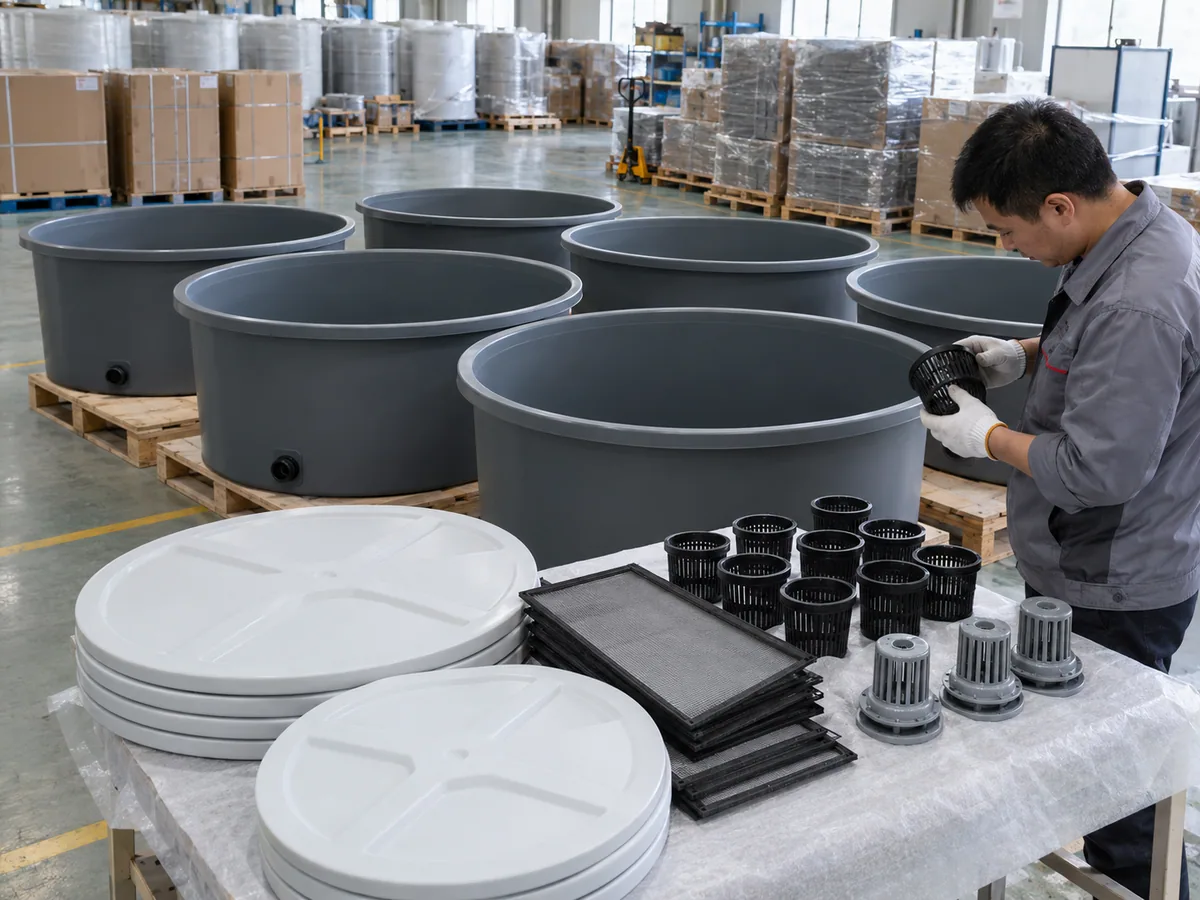
The system supplier should not promise that a particular fish will clean the tank. Instead, the design should reduce illuminated water surfaces, avoid inaccessible solids traps and provide practical cleaning access. During factory review, inspect opaque covers, screen retention, overflow barriers, drains, tank geometry and removable service panels.
Shipment inspection should verify that covers, filter screens, drain guards and spare seals match the approved packing list. Fish are normally sourced through a lawful local or specialist hatchery rather than packed with exported system equipment. The customer requirements document should identify planned species and maximum biomass so equipment is not selected from tank volume alone.
During installation preparation, establish where captured algae and solids will go. Do not discharge nutrient-rich water or live organisms to a storm drain or natural waterway. Commission the system without full stocking, confirm light exclusion and hydraulic flow, then increase feed and biomass gradually while recording water clarity, dissolved oxygen, ammonia, nitrite and filter loading.
Decision checklist
- Has the growth been identified as phytoplankton, filamentous algae, biofilm or cyanobacteria?
- Which surfaces receive sunlight or grow-light spill?
- Are daily feed, fish biomass and active crop area recorded?
- Is solids removal working at the measured flow?
- Are there stagnant zones, bypasses or inaccessible pipe sections?
- Is the proposed fish legal to possess and transport?
- Is the scientific name confirmed?
- Can the tank, aeration and filters support adult biomass?
- Is there a lawful harvest or removal plan?
- Can the cause be corrected more predictably with shade, cleaning and hydraulic improvements?
FAQ
Will grass carp clean algae from an aquaponics fish tank?
Not reliably. They mainly consume larger aquatic plants and may graze some filamentous algae, but they do not control green-water phytoplankton. Tank shade, solids management and balanced loading are more controllable responses.
Do grass carp eat string algae?
Young grass carp may eat some soft filamentous algae, but preference and control vary. They often choose other vegetation first, and useful control may require fish numbers that are inappropriate for a compact aquaponics tank.
Can I add one grass carp as a clean-up fish?
That is usually a poor plan. One fish still adds biomass and oxygen demand, can grow large, may damage plant roots and may be regulated. Diagnose the algae source before adding another species.
Are grass carp and common carp the same fish?
No. Grass carp are *Ctenopharyngodon idella*; common carp are *Cyprinus carpio*. Their feeding behavior and regulatory status can differ. Purchase and management decisions should use the scientific name.
What fish eats green-water algae?
Some fish species filter phytoplankton, but adding them to aquaponics is not automatically safe or effective. Species compatibility, legality, system capacity, market purpose and nutrition must be reviewed. Preventing light and controlling nutrient loading is usually more predictable.
How can algae be reduced without chemicals?
Exclude light from tanks and sumps, remove accumulated growth and solids, correct circulation, avoid overfeeding and keep plant uptake matched to the production plan. Make changes gradually if a large algae mass could die or detach.
Conclusion
Grass carp can consume aquatic vegetation and may graze limited filamentous algae, but they should not be treated as an aquaponics cleaning tool. They do not reliably control phytoplankton, can grow large, increase biological loading and may be regulated. Identify the growth first, block unnecessary light, improve solids removal and circulation, and keep fish, feed and crop area balanced. Select grass carp only as a deliberately designed production species—not as a shortcut for an algae-management problem.
Need a fish-compatible tank, filtration and algae-prevention layout? Contact Us with the tank size, planned species, climate, crop method and current water-quality observations.

